





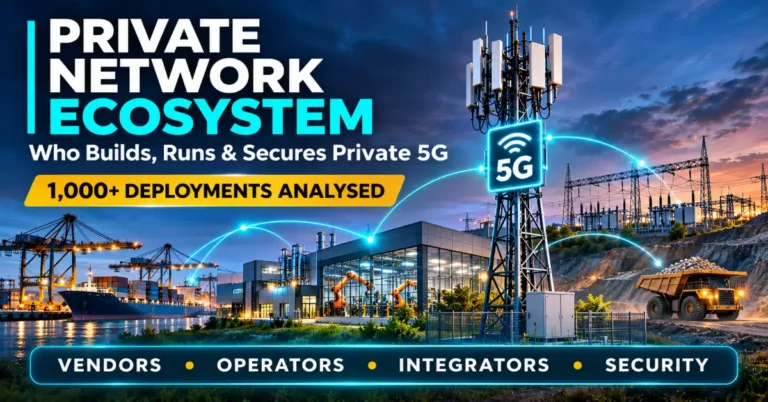
Who Are the Key Players in the Private Network Ecosystem in 2026?
The private network ecosystem in 2026 is led by Nokia and Ericsson, with Huawei strongest in China and Samsung and ZTE close behind. Around them sit enterprise IT vendors such as HPE and Cisco, specialists such as Celona and Druid Software, operators such as Verizon, Vodafone and Deutsche Telekom, managed service providers such as NTT DATA and Boldyn Networks, spectrum holders such as Anterix, and security platforms such as OneLayer.

No single company delivers a private network on its own. A typical deployment combines radio, core, spectrum, devices, edge computing, security and integration, often from several suppliers. This guide maps who does what today, based on current activity rather than past reputation. It draws first on TeckNexus’s own evidence: our analysis of more than 1,000 private network deployments, the annual TeckNexus Private Network Leadership Awards, regular interviews with vendors, operators and enterprise users, and more than 30 private network decision tools. Third-party analyst data adds the market-size view. For the basics of the model itself, see our guide to private vs public 5G networks.
Why the Private Network Ecosystem Matters Now
The private network ecosystem is changing faster than at any point since enterprise private LTE and 5G took off. Three shifts explain why buyers need a current map.
- The market is in production, not trials. Deployments are now counted in thousands, and large industrial users are rolling out across dozens of sites. Cargill, for example, had private 5G running at around 50 sites in early 2026, as covered in our Cargill and Celona case study.
- The supplier map is being redrawn. In the same week of October 2026, Nokia agreed to sell its Enterprise Campus Edge business and Ericsson folded its private 5G unit into its core networks organisation. AWS and Microsoft left managed private 5G in 2025.
- Demand is shifting to mission-critical and wide-area networks. Utilities, defence, rail, ports and mining are driving the largest projects, and physical AI (robots, autonomous vehicles and machine vision) is becoming a reason to buy rather than a slide in a pitch deck.
For enterprises, this means vendor choice now depends as much on ownership, partner channels and long-term commitment as on technology.
Private Network Ecosystem by the Numbers
The first rows show the TeckNexus evidence base behind this guide. The rest are independent analyst figures on the size and shape of the private network ecosystem in 2026.
| Metric | Figure | Source |
| Private network deployments analysed by TeckNexus | More than 1,000 across manufacturing, utilities, ports, airports, mining, defence and other sectors | TeckNexus Private Network Intelligence |
| Private network decision tools published by TeckNexus | More than 30, including readiness assessments, ROI and TCO calculators and an RFP scorecard | TeckNexus Solutions |
| Private Network Leadership Awards | Annual awards recognising deployments, partners and technologies, judged on submitted evidence | TeckNexus Awards |
| Private LTE/5G networks deployed worldwide (end of 2025, excluding trials) | About 6,500, up from 4,700 a year earlier | Berg Insight |
| Private LTE/5G solution revenue, 2025 | About $2.4bn, forecast to reach $12bn in 2030 | Berg Insight |
| Organisations deploying private LTE or 5G (contracts above EUR 100,000) | 2,003 across 88 countries at end of Q1 2026 | GSA |
| Share of private wireless RAN revenue held by the top five suppliers, 1H 2026 | About 95% (Nokia, Ericsson, Huawei, ZTE, Samsung) | Dell’Oro Group |
| China’s share of private wireless RAN revenue, 2025 | 40% to 50% | Dell’Oro Group |
| Private wireless RAN revenue growth outlook | 10% to 13% CAGR over the next five years | Dell’Oro Group |
| Annual private 5G spending forecast | More than $6.6bn by 2029, around 34% CAGR from 2026 | SNS Telecom & IT |
| Private LTE/5G spend forecast | About $7bn by 2030 | Analysys Mason |
The forecasts differ because each firm measures a different slice: Dell’Oro counts radio equipment only, while Berg, SNS and Analysys Mason include core, devices and services to varying degrees. The direction is consistent. Growth is steady rather than explosive, and it is concentrating in larger, wide-area and mission-critical networks.
How We Selected the Private Network Ecosystem Players
This guide has no fixed number of players. Selection starts with what TeckNexus sees first-hand, and we included a company when it met at least two of these five tests.
- Deployment evidence: the company appears in live deployments in the TeckNexus Private Network Intelligence dataset of more than 1,000 networks, or in named contracts and go-lives announced in 2025 or 2026.
- Peer and customer recognition: the company or its customers have won or been shortlisted in the TeckNexus Private Network Leadership Awards, where entries are judged on submitted deployment evidence.
- Industry engagement: the company’s strategy and results were discussed directly with TeckNexus through interviews, magazine features or briefings.
- Clear role and commitment: a defined part of the private network stack, with private networks a stated priority. Where ownership or structure has changed, we say so.
- Independent recognition: coverage in recent analyst work from Gartner, Forrester, Dell’Oro, Berg Insight, GSA, Omdia, Transforma Insights or Analysys Mason.
We profile the most active players in detail, and each role section ends with a table listing every company we track in that role, nearly 300 in total. Companies are grouped by role. Within each group we list larger players first where market data supports it; otherwise the order is not a ranking. Many companies play more than one role, so we place each where it is most active.
The Private Network Ecosystem at a Glance
The table below summarises the eight roles in the 2026 private network ecosystem and the players featured in each.
| Role | What they do | Players featured |
| Network equipment vendors | Radio, core and end-to-end systems | Nokia, Ericsson, Huawei, Samsung, ZTE |
| Enterprise and specialist platforms | Simplified private 5G for enterprise IT and OT teams | HPE, Cisco, Celona, JMA Wireless, Airspan, Druid Software, Mavenir |
| Industrial automation vendors | Private 5G built into factory and process automation portfolios | Siemens |
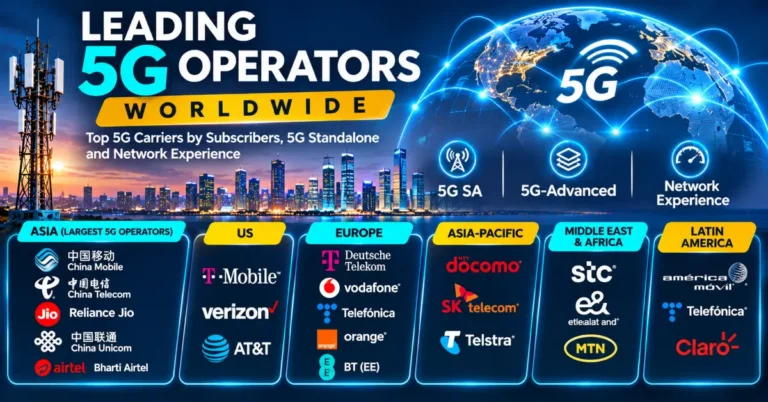
| Mobile operators | Spectrum, private and hybrid networks, managed services | Verizon Business, AT&T, T-Mobile, Deutsche Telekom, Vodafone Business, Orange Business, Telefonica Tech |
| Integrators and managed service providers | Design, build and operate across vendors and countries | NTT DATA, Kyndryl, Boldyn Networks |
| Spectrum and shared-spectrum players | Licensed and shared spectrum access | Anterix, Federated Wireless |
| Security and device management | Zero trust, OT asset visibility, SIM and device control | OneLayer, Palo Alto Networks |
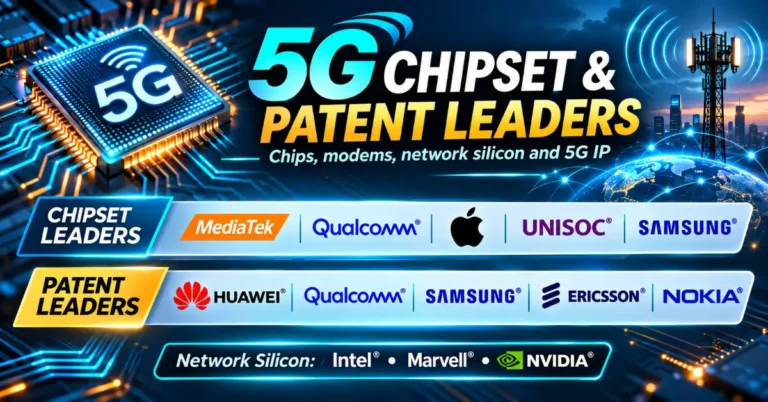
| Devices, modules and chipsets | 5G chips, modules, routers, gateways and rugged devices | Qualcomm, MediaTek, Quectel, Telit Cinterion, Semtech, Ericsson (Cradlepoint), Digi, Inseego |
| Edge computing and AI infrastructure | Servers, GPUs and software platforms that run applications next to the network | Nvidia, Dell Technologies, HPE, Lenovo, Intel, Red Hat |
| Cloud providers | Edge platforms and marketplaces rather than managed private 5G | Google, Oracle, AWS, Microsoft |
Private Network Ecosystem: Network Equipment Vendors
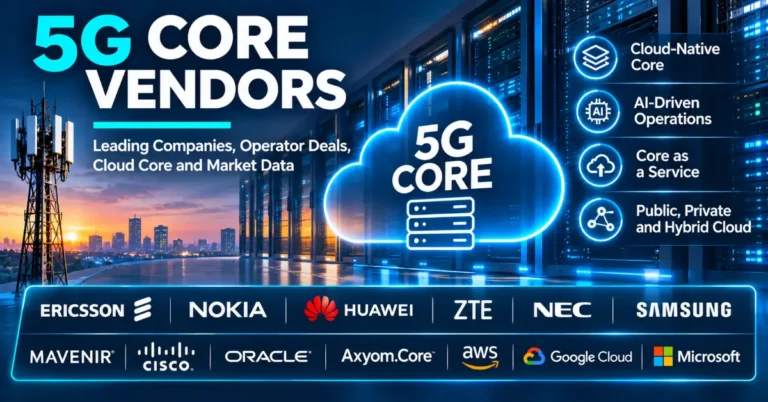
Nokia and Ericsson are the leading private network equipment vendors. They appear in more deployments than any other suppliers in TeckNexus analysis of more than 1,000 private networks, and Berg Insight ranks Nokia as the largest vendor by customers and deployments. Huawei, Samsung and ZTE complete the five suppliers that hold about 95% of private wireless RAN revenue, according to Dell’Oro Group. What changed in 2026 is how the two Nordic leaders organise their enterprise businesses.
Nokia
Role: End-to-end private wireless, from campus networks to mission-critical utility and rail systems.
Berg Insight ranked Nokia as the largest private LTE/5G solution vendor at the end of 2025, with about 960 customers and more than 2,000 deployments. On 13 October 2026, Nokia signed an agreement to sell its Enterprise Campus Edge (ECE) business to AURELIUS. ECE, which includes the Digital Automation Cloud (DAC) platform and serves nearly 900 customers, will become a standalone company. The deal is expected to close in the first half of 2027.
Nokia has said it remains committed to private 5G and will keep supplying radios and core for private wireless, increasingly through operator partners and for mission-critical industries. Recent examples include grid modernisation with Exelon and rail maintenance with SNCF. Nokia and NTT DATA won a 2024 TeckNexus award for private network excellence in smart cities for the Brownsville project. Buyers of campus networks should confirm which entity will support their contracts after the sale closes.
Ericsson
Role: Private 5G and neutral host systems, plus Wireless WAN routers from the former Cradlepoint business.
With its Q3 2026 results, Ericsson dissolved its Enterprise Wireless Solutions business area. Ericsson Private 5G and neutral host products move into Business Area Networks, alongside its main radio portfolio, while Wireless WAN stays a standalone business under Market Area Americas. Our analysis of the Ericsson changes explains what this means for enterprise buyers.
Ericsson won two 2024 TeckNexus Private Network Leadership Awards, for mining and for airports with Purdue University and Saab. Its go-to-market leans on partners. In 2026 it extended Ericsson Private 5G to Verizon Business’s international customers and partnered with NTT DATA on a turnkey private 5G and physical AI offer. Deployments range from Minneapolis-St Paul airport to the Port of Tyne with BT.
Huawei
Role: End-to-end private 5G, strongest in China’s industrial market.
Huawei is the leading private network supplier in China, which Dell’Oro estimates accounted for 40% to 50% of global private wireless RAN revenue in 2025. That makes Huawei a large supplier by revenue, but its activity is concentrated in China and selected markets in Asia, the Middle East and Latin America, where it works mainly through operators on mining, ports and manufacturing projects.
Samsung
Role: Virtualised private 5G core and radio, with a growing defence and enterprise base.
Samsung is applying its virtualised RAN experience to enterprise networks through its Network in a Server product. In September 2026 it was sole vendor for a private 5G smart office at Hana Financial Group’s new headquarters with SK Telecom, and it is supplying AI-RAN projects with KT and SK Telecom that deploy 5G standalone private networks in shipyards and petrochemical plants. It also works with NTT East in Japan and with KT on a private 5G network for the Republic of Korea Navy.
ZTE
Role: End-to-end private 5G, mainly in China and Asia.
ZTE is one of the five suppliers that together hold about 95% of private wireless RAN revenue. Like Huawei, it focuses on operator-led industrial projects in China, with expansion in Asia. Both Huawei and ZTE are on the US FCC Covered List, so their private network business is outside the United States.
Other equipment vendors are also active in this category. NEC supplies private 5G in Japan and, with partners, in Europe. Fujitsu‘s network business, now 1Finity, supplies Open RAN radios. Two new entrants stand out in 2026 review: Dell Technologies has launched an Open RAN radio unit for band n79 and an end-to-end private 5G system for federal and defence users, and LG Electronics has entered the market with Open RAN radios made by Samji Electronics.
All network equipment vendors covered in this guide:
| Segment | Companies |
| End-to-end network equipment | Nokia, Ericsson, Huawei, ZTE, Samsung, NEC, 1Finity (Fujitsu), Dell Technologies, LG Electronics |
Private Network Ecosystem: Enterprise and Specialist Platforms
These companies aim to make private cellular as easy to buy and run as Wi-Fi. They hold a smaller share of the market than the big five, but Transforma Insights notes that specialist radio, core and full-stack providers are gaining momentum and adding competitive pressure.
HPE (Athonet)
Role: Private 5G core and integrated Wi-Fi plus cellular for enterprises and operators.
HPE bought Italian core specialist Athonet in 2023 and now sells HPE Aruba Networking Private 5G, which packages the Athonet core with small cells, SIMs and management. Its goal is to manage private 5G, Wi-Fi, wired and SD-WAN networks from one platform. The Athonet core is also used by operators and integrators, including Kyndryl, and featured in the Marine Corps project led by Federated Wireless.
Cisco
Role: Private 5G core and integration with enterprise networking, delivered through partners.
Cisco does not make radios. It supplies its 5G standalone core and management software and works with radio and integration partners such as NEC and NTT DATA. A recent example is the Brownsville smart city network with NTT DATA. Cisco positions private 5G as a complement to Wi-Fi within its wider enterprise and AI infrastructure portfolio.
Celona
Role: Full-stack enterprise private 5G (radio, core and cloud management).
Celona has raised more than $135 million and serves more than 100 enterprise customers, mostly in manufacturing, logistics, mining and ports. Its best-known deployments are with Cargill and with NTT DATA at Celanese. In April 2026 it agreed to collaborate with Rakuten Symphony on open RAN private 5G and partnered with OneLayer on security. In August 2026 it launched Orion, an agentic converged wireless platform that combines private 5G, Wi-Fi, public cellular and Starlink satellite connectivity under one subscription for physical and agentic AI workloads. Orion is managed by Orchestrator AI, which runs on Celona’s own model and works with enterprises’ chosen AI platforms, includes Celona Wi-Fi 7 access points at no extra cost, and becomes available from the fourth quarter of 2026.
JMA Wireless
Role: US-made software RAN (XRAN) and radios for private and multi-operator networks.
JMA’s private wireless platform runs its XRAN virtualised RAN software on standard servers with its CellHub radios. Its US-designed and US-made positioning has won it defence work, including the Marine Corps Logistics Base Albany network with Federated Wireless and HPE.
Airspan Networks
Role: Small cells, Open RAN and DAS for operators and private networks.
Airspan has expanded from small cells into in-building systems. In February 2026 it launched its MobileAccess digital DAS in Europe, which supports both multi-operator public coverage and private 5G on one infrastructure. It also targets public safety and defence.
Druid Software
Role: Specialist private 4G/5G core (Raemis) for enterprise and mission-critical networks.
Irish core specialist Druid is often chosen where survivability matters, such as defence, shipping and utilities. In July 2026 it acquired the team and IP of Node-H, a Munich RAN software developer, to integrate more closely with radio partners. Druid also works with OneLayer and Heddian on a utility package and has a validated core on Oracle Cloud Infrastructure.
Mavenir
Role: Cloud-native core and Open RAN software used in private networks.
Mavenir supplies software-based core and radio for private networks through operator and integrator partners, including Boldyn Networks. Since its 2025 recapitalisation it has focused on software, and its private network role is mainly as a core and RAN software supplier within partner-led deployments.
Many more specialists compete in this category, and several have changed shape recently. Firecell and Accelleran merged to offer pre-integrated European private 5G, GXC is now part of Motive Companies, and Globalstar‘s XCOM RAN unit sells terrestrial private 5G. Amarisoft and BubbleRAN jointly launched an AI-native Open RAN system for private networks, BLiNQ Networks added new outdoor small cells, and Apeiroon and SendBuffer were founded by Athonet alumni to build portable and compact core systems.
All enterprise, specialist and Open RAN vendors covered in this guide:
| Segment | Companies |
| Full-stack enterprise private 5G | Celona, HPE Aruba Networking Private 5G (Athonet), Cisco, JMA Wireless, Firecell/Accelleran, GXC (Motive Companies), XCOM RAN (Globalstar), Waveform, Ataya, Highway 9 Networks |
| Radio, small cells and Open RAN | Airspan Networks, Baicells, BLiNQ Networks, Moso Networks, Sercomm, Benetel, Askey, Parallel Wireless, Radisys, Mavenir, Rakuten Symphony, Skylark Wireless, NuRAN Wireless, Alpha Wireless, Telrad Networks, Microamp Solutions, Eridan Communications, Abside Networks, SOLiD, Comba Telecom, Qucell (Accuver), WNC, Samji Electronics, Pegatron, Alpha Networks, LITEON, AsiaInfo Technologies, IS-Wireless, Lekha Wireless |
| Private 4G/5G core | HPE (Athonet), Druid Software, Cisco, Ericsson, Nokia, Mavenir, Pente Networks, Blue Arcus, Tecore Networks, Cumucore, AttoCore, A5G Networks, Expeto, Enea, Axyom.Core, Bloxtel, Oracle, Amarisoft, BubbleRAN, SendBuffer, NextEPC, PROTEI, Effnet, IPLOOK |
| Portable, tactical and mission-critical systems | Apeiroon, Teltronic (Amper), Star Solutions, Oceus Networks, SEMPRE, GuardStack/Blackned (Rheinmetall), Fenix Group (Nokia), ASELSAN, Kontron, Siemens, Eviden |
Private Network Ecosystem: Industrial Automation Vendors
Industrial automation companies are no longer only private network users. Siemens now sells private 5G in its own right.
Siemens
Role: Industrial-grade private 5G infrastructure (core, RAN, radios and routers) for factories and process plants.
In April 2026 Siemens expanded its private 5G infrastructure to 15 markets across Europe and the Americas, with a CBRS radio for US manufacturers. It sells the system as part of its automation portfolio, with OT network management and security, and announced a verified cybersecurity solution with Palo Alto Networks at MWC 2026. Its pitch is that factories can run private 5G on their own premises without relying on an operator.
Other industrial technology companies are also building private 5G into their offers. GE Vernova supplies gateways, core and radio bundles for utility networks through the AnterixAccelerator scheme. Riedel Communications bought German campus network specialist MECSware. On the machine side, Epiroc integrates private networks into mining automation through its 3D-P business, and robot makers Boston Dynamics and AgiBot recommend private 5G for their products in industrial settings.
All industrial and OT technology vendors covered in this guide:
| Segment | Companies |
| Industrial and OT technology vendors | Siemens, GE Vernova, Riedel Communications (MECSware), Kontron, Phoenix Contact, Moxa, Belden, Westermo, HMS Networks, Epiroc (3D-P) |
Private Network Ecosystem: Mobile Operators
Operators remain the largest sales channel in many countries, especially in Europe and Asia. Several were evaluated in the 2026 Gartner Magic Quadrant for 4G and 5G Private Mobile Network Services, and their offers now range from fully on-site networks to hybrid models that combine public 5G, network slicing and local edge computing.
Verizon Business
Role: Private 5G, private wireless and neutral host networks in the US and internationally.
Verizon was named a Leader again in the 2026 Gartner Magic Quadrant for private mobile network services, the only US-based service provider in that quadrant. In 2026 it began offering Ericsson Private 5G to international customers.
AT&T and T-Mobile
Role: Hybrid private 5G, network slicing and edge services in the US.
T-Mobile is pairing its 5G-Advanced public network and slicing with local private 5G and edge compute, with showcase deployments in Major League Baseball and the 2026 PGA Championship. AT&T positions private 5G as part of an edge AI offer with partners including Cisco and Nvidia, and works with Celona on in-building neutral host deployments.
Deutsche Telekom
Role: Campus networks in Germany and Europe, often with Ericsson.
Deutsche Telekom has one of Europe’s longest-running campus network businesses. In July 2026 it deployed a private 5G campus network with Ericsson at HHLA’s Container Terminal Altenwerder in Hamburg to support automated port operations.
Vodafone Business
Role: Mobile private networks across Europe and beyond its operating countries.
Vodafone Business said in February 2026 that it counts 173 commercial private 5G deployments across 96 customers in roughly 20 countries, about 60% of them fully on site. Recent projects include gas network operator Snam in Italy and a 5G standalone network at a Czech nuclear power plant.
Orange Business and Telefonica Tech
Role: Mobile private networks for European enterprises.
Orange Business was named a Leader in the 2026 Gartner Magic Quadrant and sells both standalone private networks and hybrid networks built on its public 5G standalone network. Telefonica Tech, also evaluated by Gartner, is active in Spain, Germany, the UK and Latin America, and has built a tactical 5G bubble offer for defence and public safety.
BT Group (BT Business)
Role: Private 5G, managed networks and network slicing in the UK, mostly with Ericsson.
BT Business sells private 5G as a managed service with Ericsson. It built the first 5G-integrated port network in the UK and Ireland at Belfast Harbour and a site-wide private 4G and 5G network at the Port of Tyne, one of Ericsson’s largest private 5G deployments, where the port runs AI applications. BT also has a multi-year contract to connect 162 British Army sites, starting with Wi-Fi and moving to private 5G, and is adding commercial network slicing on EE‘s 5G standalone network in 2026.
Rogers, Bell and Telus
Role: Private wireless networks for mining, resources and industry in Canada.
Canada’s private network market is led by mining. Rogers connected the Detour Lake gold mine, an 80 km² open-pit operation that became Canada’s first mine fully connected by private 5G, and with Ericsson switched on Canada’s first underground private 5G network at the NORCAT mine in Sudbury. Bell runs a fully managed private 5G and LTE network at MacLean Engineering’s research and training mine in Sudbury, with seamless handover between private and public networks, and works with integrator Meglab on mining projects. Telus sells Private Wireless Networks that combine its licensed spectrum with a dedicated on-site core.
SK Telecom
Role: Private 5G and AI infrastructure for Korean enterprises.
In September 2026, SK Telecom began building the financial sector’s first private 5G smart office with Hana Financial Group and Samsung, covering 16 floors of the group’s new Cheongna headquarters for about 3,000 employees. It is also building an AI-RAN pilot network with Ericsson at KG Mobility‘s Pyeongtaek factory to support autonomous logistics and other physical AI services. KT is the other main operator in Korea’s private 5G market, alongside enterprises that hold their own local 5G licences.
Reliance Jio and Bharti Airtel
Role: Captive private networks and network slicing for Indian enterprises.
India allows enterprises to buy captive private networks from operators. Bharti Airtel ran India‘s first private 5G trial at Bosch’s Bengaluru facility, deployed a captive network with Tech Mahindra at Mahindra’s Chakan plant, and reports strong demand from manufacturers. Reliance Jio runs its own 5G standalone core, offers live network slices for enterprises and has built a compact standalone “5G-in-a-box” private network for factories, warehouses and campuses.
Telstra and Optus
Role: Private 4G and 5G networks for mining, ports, logistics and defence in Australia.
Telstra is one of the most experienced operators in private mining networks, with private LTE at Roy Hill and South32’s Cannington mine, and with Ericsson supported Newmont’s private 5G at its Cadia mine, where a single 5G radio now runs a fleet of remote-controlled dozers. With Aqura Technologies it has deployed dozens of private 4G and 5G networks across mining, logistics, ports and defence. Optus sells private 4G and 5G networks combined with satellite connectivity for automation and remote operations at mine sites.
China Mobile, China Unicom and China Telecom
Role: Operator-led industrial 5G private networks at national scale.
China has the largest private 5G market in the world, built mainly by its three state-owned operators. By mid-2026 China had more than 80,000 5G industry virtual private networks and 1,260 5G factories, according to the Ministry of Industry and Information Technology. A June 2026 national plan targets 50,000 industrial 5G private networks by 2030 and launches pilots of enterprise-led 5G standalone private networks. China Mobile, the largest provider, sells tiered private network services from shared slices to fully dedicated networks, and its international arm supports Chinese manufacturers building private 5G overseas.
Latin American operators
Role: Private LTE and 5G for mining, ports, oil and gas and agriculture across Latin America.
Brazil is the largest private network market in Latin America, followed by Mexico, Chile, Peru, Colombia and Argentina, with mining the main driver in Chile and Peru. Operators act as both spectrum holders and integrators. America Móvil’s Claro built a private LTE network with Nokia at Gold Fields’ Salares Norte mine in Chile, and Claro Peru is focusing private 5G on mining and ports. In Brazil, TIM has built private networks for Alcoa, Anglo American and Lundin Mining and is deploying LTE along the Caminhos da Serra Gaúcha highways, while Telefônica’s Vivo acts as integrator for private LTE projects with Nokia. Telefónica Movistar built a private LTE network at the Las Bambas copper mine in Peru, and Entel has piloted private 5G with Ericsson in Chile across health, manufacturing, agriculture, forestry and transport.
Beyond these, most large operators now sell private or hybrid networks. Viettel has developed its own private 5G RAN and core portfolio, Orange bought the Dome deployable core assets of Obvios for sovereign defence networks, and US cable operators now sell private networks to business customers.
All mobile operators covered in this guide:
| Segment | Companies |
| Operators: North America | Verizon Business, AT&T, T-Mobile, Rogers, Telus, Bell, Comcast Business, Spectrum Private Networks (Charter), Cox Private Networks |
| Operators: Europe | Deutsche Telekom, Vodafone Business, Orange Business, Telefonica Tech, BT, Telia, Telenor, Swisscom, KPN, Proximus, Elisa, A1 Telekom Austria |
| Operators: Asia Pacific | China Mobile, China Unicom, China Telecom, NTT DOCOMO, NTT East, KDDI, SK Telecom, KT, Telstra, Optus, Singtel, Bharti Airtel, Reliance Jio, Viettel, AIS |
| Operators: Middle East and Africa | stc, e&, du, Ooredoo, Zain, MTN, Vodacom |
| Operators: Latin America | Claro and Telcel (América Móvil), TIM Brasil, Vivo, Movistar (Telefónica), Entel, Tigo (Millicom) |
Private Network Ecosystem: Integrators and Managed Service Providers
As deployments move from one site to dozens, enterprises want a single partner to design, build and run networks across vendors and countries. This is now one of the fastest-moving parts of the private network ecosystem.
NTT DATA
Role: Global design, deployment and managed operations for private 5G.
NTT DATA was named a Leader in the 2026 Gartner Magic Quadrant for private mobile network services. It works across vendors, including Celona at Celanese, Cisco in Brownsville and Ericsson, with which it launched a turnkey private 5G and physical AI offer in 2026. Its customers include Fraport at Frankfurt airport.
Kyndryl
Role: Private wireless services combined with IT, OT and cloud integration.
Kyndryl offers private wireless services with Nokia and with HPE’s Athonet, aimed at Industry 4.0 projects where the network must link into IT systems, cloud and AI. It was included in the 2026 Gartner Magic Quadrant.
Boldyn Networks
Role: Private 5G as a service and neutral host networks.
Boldyn was named a Leader in The Forrester Wave: Private 5G Services, Q4 2025 and reports more than 130 private networks deployed. It acquired German specialist Smart Mobile Labs in 2025 and combines private networks with large neutral host projects, such as the New York City subway. In 2026 it was selected to design, build and operate private wireless at Ontario International Airport, as reported in our September 2026 Private Network Insights.
The integrator category is the largest and most varied in the private network ecosystem. The integrators are winning a growing share of new contracts in markets with local spectrum, sometimes in partnership with operators.
Recent moves include Heddian buying Kajeet’s private wireless deployment business in the US and Aerix taking over Telet’s private 5G networks in the UK. Defence primes such as Booz Allen Hamilton, Lockheed Martin and Northrop Grumman are also active as US military programmes scale up.
Neutral host specialists are part of the same picture. Boingo Wireless won two 2025 TeckNexus awards, for sports and event venues and for neutral host, for networks at airports, stadiums and military bases.
Smaller regional integrators matter too. Our 2026 case studies include COCUS at Salzgitter’s steelworks, Star Solutions at the Red Dog mine and Cumucore’s work on TSN over 5G for physical AI.
All integrators, managed service providers and neutral host companies covered in this guide:
| Segment | Companies |
| Global integrators and managed service providers | NTT DATA, Kyndryl, Boldyn Networks, Accenture, Capgemini, Fujitsu, Tata Communications, TCS, Infosys, Wipro, Tech Mahindra, HCLTech, World Wide Technology, Insight Enterprises, Logicalis, Eviden |
| Defence and government integrators | Booz Allen Hamilton, Lockheed Martin, Northrop Grumman, Peraton Labs, Oceus Networks, SEMPRE, Sherpa 6, TekSynap, Federated Wireless |
| Regional private wireless integrators: North America | Betacom, Heddian, Hughes, BearCom, CTS (Communication Technology Services), Resolution Wireless, Scientel Solutions, Metro Wireless, Burns & McDonnell, Black & Veatch, Future Technologies Venture, Fortress Solutions, Alliance Corporation, RSRF, Ambra Solutions, Westcan ACS, InfiniG |
| Regional private wireless integrators: Europe | COCUS, BAYFU, Aerix, Axians, SPIE Group, TDF, Hub One, Telent, AWTG, Citymesh, Weaccess Group, Opticoms, m3connect, MUGLER, Alsatis, Axione |
| Regional private wireless integrators: Asia Pacific | NS Solutions, OPTAGE, LG CNS, CJ OliveNetworks, Megazone Cloud, Vocus, Aqura Technologies (Telstra Purple) |
| Neutral host and shared infrastructure | Boldyn Networks, Boingo Wireless, Freshwave, Shared Access, American Tower, Digita, Tillman Digital Cities, InfiniG, Airtower Networks, JMA Wireless, Betacom, ANDREW (Amphenol), Airspan Networks |
Private Network Ecosystem: Spectrum and Shared-Spectrum Players
Access to spectrum decides who can build a private network. In the US, two companies shape that access for very different users.
Anterix
Role: Licensed 900 MHz spectrum for US utility private LTE networks.
In February 2026 the FCC expanded the 900 MHz broadband allocation from 6 MHz to 10 MHz, which strengthens Anterix’s position with utilities. Its AnterixAccelerator offer, backed by Ericsson, Nokia and GE Vernova, aims to speed up utility deployments, and NorthWestern Energy signed for a full 10 MHz network. Anterix is also testing satellite direct-to-device integration with Lynk.
Federated Wireless
Role: CBRS spectrum access system and private wireless services.
Federated Wireless runs one of the main CBRS spectrum access systems, the shared band used by most US private networks. In March 2026 its network at Marine Corps Logistics Base Albany became the first fully private 5G network authorised to operate within the Department of War, as covered in our Federated Wireless case study. It added CBRS active DAS support in January 2026 to extend indoor 5G.
Among other CBRS spectrum access system administrators, Google Cloud is exiting its spectrum access system, and CommScope’s system, now part of ANDREW (Amphenol), has been discontinued. Other spectrum holders also lease or sell licensed spectrum for private networks, while regulators in more than 30 countries now offer shared or local licences.
All spectrum players covered in this guide:
| Segment | Companies |
| Spectrum holders | Anterix, Ambra Solutions, Globalstar, Ligado Networks, MidWave Wireless, Tampnet |
| CBRS spectrum access systems | Federated Wireless, Sony, Key Bridge Wireless, RED Technologies; Google Cloud (exiting); CommScope SAS, now ANDREW (discontinued) |
Private Network Ecosystem: Devices, Modules and Chipsets
A private network is only useful if machines, vehicles, sensors and workers can connect to it. The device layer has matured, with more industrial modules, 5G RedCap devices for lower-cost sensors and support for the frequency bands used by private networks.
Qualcomm and MediaTek supply most 5G modem chipsets, module makers such as Quectel and Telit Cinterion build them into industrial equipment, and routers from Ericsson’s Cradlepoint business, Digi International and others connect machines that have no built-in cellular. Video specialists such as Haivision, a 2025 TeckNexus award winner for user equipment, carry live video over private 5G.
Device support is still one of the most common causes of delay in deployments, so buyers should check band and feature support early.
All device, module and connectivity players covered in this guide:
| Segment | Companies |
| Chipsets | Qualcomm, MediaTek, Intel, Nvidia |
| Modules | Quectel, Telit Cinterion, Fibocom, Semtech (Sierra Wireless), Sunsea, Lierda, Cavli Wireless |
| Routers and gateways | Ericsson (Cradlepoint), Digi International, Inseego, Teltonika Networks, Peplink, MultiTech, InHand Networks, Robustel, Siemens SCALANCE, Moxa, Advantech, Lantronix, Celerway, INSYS icom, Horizon |
| Rugged handsets, cameras and specialist devices | Samsung, Apple, Zebra Technologies, Sonim, Bittium, HMD, CROSSCALL, Ascom, Hytera, Siyata, RugGear, i.safe MOBILE, Getac, Panasonic Connect, Axis Communications, Haivision, LiveU, Dejero, TVU Networks, Rajant |
| SIM and eSIM | Thales, Giesecke+Devrient, Kigen, Smartjac, sysmocom |
| IoT connectivity | Onomondo, Monogoto, floLIVE, 1NCE |
Private Network Ecosystem: Edge Computing and AI Infrastructure
Physical AI has turned edge computing from an option into a core part of many private network projects. Video analytics, robot control and digital twins need compute close to the network to keep latency low and data on site.
Nvidia supplies GPUs and its Aerial platform for AI-RAN, server makers host private 5G core software and industrial AI applications on site, and cloud-native platforms provide the Kubernetes and virtualisation layers that many core and RAN vendors run on.
All edge computing and AI infrastructure players covered in this guide:
| Segment | Companies |
| Edge computing and AI infrastructure | Nvidia, Dell Technologies, HPE, Lenovo, Supermicro, QCT, Intel, Red Hat, Wind River, VMware by Broadcom |
Private Network Ecosystem: Security and Device Management
Security is now a standard part of most large deployments, because enterprise IT and OT security tools cannot see devices on a cellular network without help.
OneLayer
Role: Zero trust security, OT asset visibility and device management for private LTE and 5G.
OneLayer raised $28 million in Series A funding in October 2025 and has partnerships across the ecosystem, including Nokia for utilities, Ericsson and Celona. Its platform is used by utilities such as Evergy. Read our OneLayer zero trust case study for details. OneLayer won the 2026 TeckNexus award for Excellence in Private Network Security.
Palo Alto Networks
Role: Network security extended to private 5G.
Palo Alto Networks partnered with Siemens on a verified cybersecurity solution for industrial private 5G at MWC 2026. Other network security vendors also offer private 5G security, mainly through operator and integrator partners, and SIM and eSIM suppliers handle secure device identity.
All security players covered in this guide:
| Segment | Companies |
| Security | OneLayer, Palo Alto Networks, Fortinet, Zscaler, Check Point, Claroty, CTOne (Trend Micro), SecurityGen, Thales, Kigen |
Private Network Ecosystem: Orchestration, Planning, Test and Sensing
A layer of software and tools now sits around the network itself, helping enterprises plan, run and prove their private networks.
Orchestration platforms increasingly use AI to automate multi-site networks. Sensing is also emerging: ODC is working with the US military on drone detection over private 5G-Advanced, and Tiami Networks is deploying RAN-integrated sensing at US Air Force Global Strike Command bases, early steps towards the integrated sensing expected in 6G.
All orchestration, planning, test, transport and sensing players covered in this guide:
| Segment | Companies |
| Orchestration and automation | Highway 9 Networks, Neutroon Technologies, Nearby Computing, Netcracker (NEC), Weaver Labs |
| Planning and design software | Infovista, Ranplan Wireless, iBwave, Eino, Blare Tech |
| Test, measurement and assurance | Keysight Technologies, Rohde & Schwarz, VIAVI Solutions, NETSCOUT, Anritsu |
| Transport and backhaul | Ceragon Networks, Aviat, Ciena, Canoga Perkins, Fibrolan |
| Sensing | ODC, Tiami Networks |
Private Network Ecosystem: The Changing Role of Cloud Providers
AWS and Microsoft once aimed to become major private 5G providers. Both have stepped back. Analysys Mason notes that AWS withdrew AWS Private 5G in May 2025, and Microsoft retired Azure Private 5G Core on 30 September 2025, pointing customers to partner solutions from Nokia, Ericsson and others.
Cloud providers still matter, but as edge platforms, marketplaces and AI infrastructure rather than as network operators. Oracle Cloud Infrastructure, for example, has validated Druid Software’s core, and private network data increasingly flows into cloud analytics and AI tools.
All cloud providers covered in this guide:
| Segment | Companies |
| Cloud providers | Oracle Cloud Infrastructure, Google Cloud, AWS (AWS Private 5G discontinued in 2025), Microsoft Azure (Azure Private 5G Core retired in 2025) |
If your company is active in private networks and missing from this list, contact TeckNexus so we can review it for the next update.
Six Shifts Reshaping the Private Network Ecosystem
Taken together, the profiles above point to six shifts that buyers and suppliers should plan around.
| Shift | What it looks like in 2026 |
| Large vendors restructure their enterprise units | Nokia is selling Enterprise Campus Edge to AURELIUS; Ericsson has moved private 5G into Business Area Networks |
| Cloud providers become partners, not operators | AWS and Microsoft ended managed private 5G in 2025 and now work through partners |
| Industrial vendors sell their own networks | Siemens offers private 5G in 15 markets as part of its automation portfolio |
| Operators move to hybrid offers | Public 5G, slicing and on-site core combined; Verizon and Orange Business named Gartner Leaders |
| Security becomes a standard layer | Specialists such as OneLayer work alongside Nokia, Ericsson and Celona |
| Demand shifts to mission-critical networks and physical AI | Utilities, defence, rail and ports lead the largest projects; robots and machine vision drive campus demand |
Private Network Ecosystem Ownership Changes, 2024 to 2026
Consolidation has reshaped the private network ecosystem over the last two years. The table below lists the main deals, drawing on company announcements.
| Deal | What it means |
| Nokia Enterprise Campus Edge to AURELIUS (pending, 1H 2027) | Nokia’s campus private wireless and DAC platform becomes a standalone company |
| Ericsson Enterprise Wireless Solutions reorganised (Q4 2026) | Private 5G and neutral host move into Business Area Networks |
| Amazon to acquire Globalstar (pending, 2027) | Brings Globalstar’s XCOM RAN private 5G business under Amazon |
| Corning small cell RAN and DAS to Airspan Networks | Expands Airspan’s in-building portfolio |
| CommScope wireless assets to Amphenol | Now operating as ANDREW (Amphenol) |
| Firecell and Accelleran merger | Combined European private 5G core and RAN supplier |
| Druid Software acquires Node-H team and IP (2026) | Adds RAN software skills to a core specialist |
| GXC to Motive Companies | Private cellular systems join a wider technology group |
| MECSware to Riedel Communications | Campus network specialist joins a broadcast and events firm |
| Teltronic to Amper | Critical communications and private 4G/5G vendor joins a Spanish defence group |
| Blackned majority stake to Rheinmetall | Tactical core middleware moves into a defence prime |
| Fenix Group to Nokia | Strengthens Nokia in tactical and defence networks |
| Obvios Dome core assets to Orange | Supports sovereign deployable networks in Europe |
| Smart Mobile Labs and Cellnex private networks unit to Boldyn Networks | Builds Boldyn’s European private network business |
| Kajeet private wireless deployment business to Heddian | Consolidates US private wireless integration |
| Telet’s private 5G networks to Aerix | Consolidates UK private 5G operations |
What the 2026 Private Network Ecosystem Means for Buyers
For enterprises planning a private network in 2027, the changes above lead to five practical questions.
- Who will support the network in five years? Check ownership, the support entity and the product roadmap, especially for campus networks bought from units that are being sold or merged.
- Which channel fits? Buying direct, through an operator or through an integrator changes the price, the service levels and who carries the risk.
- How will spectrum be secured? Options include local licences, shared bands such as CBRS, operator spectrum and, for utilities, dedicated bands such as 900 MHz.
- Is security built in from day one? Ask how cellular devices will appear in existing IT and OT security tools.
- Can it scale across sites? Multi-site rollouts need consistent design, central management and a partner that operates in every country involved.
TeckNexus’s independent decision tools help with each step, from site readiness checklists and ROI calculators to the Private Network RFP Scorecard Generator. TeckNexus owns the methodology behind these tools, and no vendor pays to influence their recommendations. For measured outcomes, deployment times and costs from real projects, see TeckNexus Private Network Intelligence, including the quarterly Private Network Intelligence Report.
Private Network Ecosystem FAQ
What is a private network ecosystem?
It is the set of companies that together deliver a private LTE or 5G network: equipment vendors, software specialists, operators, integrators, spectrum holders, device makers, security vendors and cloud or edge providers. Most deployments involve several of them.
Who are the biggest private 5G vendors?
Nokia and Ericsson lead the private network market, based on TeckNexus analysis of more than 1,000 deployments, and Berg Insight ranks Nokia as the largest vendor by customers. Together with Huawei, ZTE and Samsung, they held about 95% of private wireless RAN revenue in the first half of 2026, according to Dell’Oro Group. Huawei’s business is concentrated in China.
Is Nokia leaving the private wireless market?
No. Nokia agreed to sell its Enterprise Campus Edge business to AURELIUS, which will run it as a standalone company. Nokia says it will continue to supply radios and core for private wireless, with a focus on mission-critical networks and operator partners.
Do AWS and Microsoft still offer private 5G?
No. AWS ended AWS Private 5G in May 2025, and Microsoft retired Azure Private 5G Core in September 2025. Both now support private networks through partners and their cloud and edge platforms.
Who offers private 5G as a managed service?
Operators such as Verizon Business, Vodafone Business, Orange Business and Deutsche Telekom, and integrators such as NTT DATA, Kyndryl and Boldyn Networks, all offer design, build and operate services. Many specialists, including Celona, also sell subscription models.
How does TeckNexus track the private network ecosystem?
TeckNexus has analysed more than 1,000 private network deployments, publishes a quarterly Private Network Intelligence Report, runs the annual Private Network Leadership Awards and offers more than 30 private network decision tools. This first-hand evidence, combined with interviews with vendors, operators and enterprise users, is the basis for this guide.
How many private LTE and 5G networks are there?
Berg Insight counted about 6,500 private LTE and 5G networks worldwide at the end of 2025, excluding trials. GSA counted 2,003 organisations with contracts above EUR 100,000 across 88 countries by the end of Q1 2026.
For more analysis like this, subscribe to the TeckNexus Newsletter, explore our 2027 programs, or partner with us to share your perspective and generate leads.