




Leading 5G Operators Worldwide in 2026: The Carriers Setting the Pace
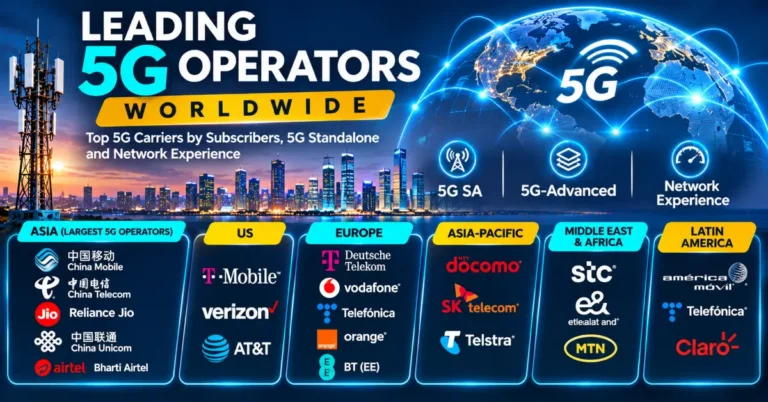
By scale, China Mobile is the world’s largest 5G operator, with more than 700 million 5G customers, followed by China Telecom, Reliance Jio and China Unicom. By technology, T-Mobile US, the Chinese operators and du and e& in the UAE lead on 5G standalone and 5G-Advanced. Deutsche Telekom, Vodafone, Orange and Telefónica lead in Europe, and NTT DOCOMO, KDDI, SoftBank and SK Telecom in Japan and Korea.

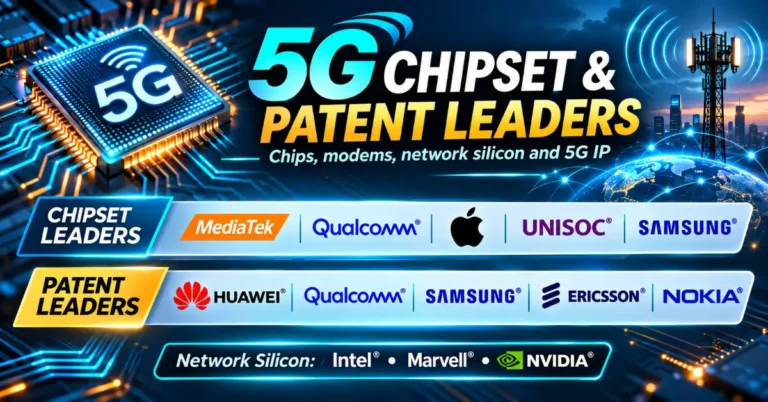
There is no single ranking of 5G operators, because leadership depends on what you measure: subscriber scale, how far an operator has moved to 5G standalone and 5G-Advanced, or the network experience customers actually get. This guide looks at all three. It is part of our 5G ecosystem series; see also our guides to 5G core vendors, 5G chipset and patent leaders and telco and IT cloud vendors.
Why Leading 5G Operators Matter in 2026
Four shifts make 2026 a turning point for 5G operators.
- 5G is now the mainstream mobile technology. There are more than three billion 5G subscriptions worldwide, and in the largest markets most new smartphone customers join on 5G.
- Standalone 5G separates leaders from followers. Only about a quarter of operators with 5G have launched standalone service, which is needed for network slicing, RedCap devices and 5G-Advanced.
- 5G-Advanced is commercial. Leading operators in China, the US and the Gulf have launched 5G-Advanced, with better uplink, lower latency and AI-driven network features.
- Operators are looking beyond connectivity. The leaders are using 5G standalone to sell network slices, fixed wireless access, satellite-to-phone services and AI and computing services.
How We Selected the Leading 5G Operators
We assessed operators on four criteria, using public information available in November 2026.
- Scale: 5G subscribers and 5G network coverage reported by the operators.
- Network evolution: progress on 5G standalone, 5G-Advanced, network slicing and cloud-native core.
- Network experience: independent results from Opensignal‘s 2026 5G Global Awards and Ookla‘s 5G standalone research.
- Innovation and reach: notable 2026 firsts, multi-country footprints and new 5G services.
Subscriber figures are company-reported, and operators define 5G customers in slightly different ways, so figures are not strictly comparable.

Leading 5G Operators at a Glance
The table below summarises the leading 5G operators and what sets each apart in 2026.
| Operator | Home market | 5G position | 2026 highlight |
| China Mobile | China | 702 million 5G customers (September 2026) | World’s largest 5G network, about 2.94 million 5G base stations |
| China Telecom | China | 322.5 million 5G customers (June 2026) | One of the highest 5G shares of any large operator |
| Reliance Jio | India | 285 million 5G users (June 2026) | One of the largest 5G standalone networks |
| China Unicom | China | 248.5 million 5G customers (June 2026) | 5G-Advanced launches |
| Bharti Airtel | India and Africa | World’s second-largest operator by mobile customers | Highest ARPU in India |
| T-Mobile US | United States | Nationwide 5G standalone and 5G-Advanced | Opensignal Global Winner for 5G Coverage Experience |
| Verizon and ATT | United States | Nationwide 5G standalone since autumn 2025 | Network slicing and RedCap for business |
| Deutsche Telekom | Germany and Europe | Widest 5G coverage in Germany | Opensignal Global Winner for 5G Games Experience |
| Telefónica | Spain, Germany, UK and Brazil | 5G standalone across its full 5G footprint in Spain, Germany and Brazil | Nationwide voice over 5G standalone in Spain |
| VodafoneThree and BT (EE) | United Kingdom | 5G standalone above 60% (VodafoneThree) and 80% (EE) of the population | Both target 99% standalone coverage by 2030 |
| Telstra | Australia | 5G reaches about 95% of Australians | Broadest 5G coverage in Australia (Opensignal) |
| Viettel | Vietnam | Most of Vietnam’s 5G base stations | Vietnam passed 27 million 5G subscribers in 2026 |
| América Móvil | Mexico and Latin America | Only national 5G network in Mexico | New 5G launches in Costa Rica, Ecuador and Peru |
| NTT DOCOMO, KDDI and SoftBank | Japan | Nationwide 5G with growing standalone | KDDI (au) and SoftBank Global Winners for 5G Reliability; DOCOMO core on AWS |
| du and e& | United Arab Emirates | 5G standalone and 5G-Advanced | Fastest 5G standalone data rates in the world |
| stc and Zain KSA | Saudi Arabia | Nationwide 5G with standalone | Zain KSA first commercial 5G-Advanced in the Kingdom |
The Largest 5G Operators by Subscribers
China and India account for most of the world’s 5G customers, and their operators dominate any ranking by scale.
China Mobile
Home market: China
China Mobile runs the world’s largest mobile and 5G network. Its 5G network customers reached 687 million at the end of June 2026, according to its 2026 interim results, and about 702 million by the end of September, roughly 69% of its 1.01 billion mobile customers. It operated about 2.94 million 5G base stations at mid-year and is directing more investment towards AI computing and 5G-Advanced capacity.
China Telecom
Home market: China
China Telecom had 322.5 million 5G network customers out of 442.4 million mobile customers at the end of June 2026, one of the highest 5G shares of any large operator. It shares its 5G radio network with China Unicom, which lowers the cost of national coverage for both.
Reliance Jio
Home market: India
Jio is India’s largest wireless operator and runs one of the world’s largest 5G standalone networks. It had 285 million 5G users at the end of June 2026, up 73 million in a year. In September 2026, Jio and T-Mobile US announced the first commercially available 5G standalone roaming service.
China Unicom
Home market: China
China Unicom reported 248.5 million 5G network customers in June 2026. Like China Mobile and China Telecom, it is an early adopter of 5G standalone and has launched 5G-Advanced services.
Bharti Airtel
Home market: India, Sri Lanka and Africa
Airtel describes itself as the world’s second-largest operator by mobile customers, citing GSMA Intelligence, with operations across India and 14 African countries. It has the highest average revenue per user among Indian operators, at Rs 264 in the June 2026 quarter, and is expanding 5G fixed wireless access through its AirFiber service.
Leading 5G Operators in North America
The three US national operators now all run nationwide 5G standalone networks, but they moved at very different speeds.
T-Mobile US
Home market: United States
T-Mobile launched the world’s first nationwide 5G standalone network in 2020 and in 2025 became the first US operator with a nationwide 5G-Advanced network. It uses that lead for network slicing, including its T-Priority slice for first responders, and was named Opensignal’s 2026 Global Winner for 5G Coverage Experience among large countries. It plans to add agentic AI services to its 5G-Advanced network by the end of 2026.
Verizon
Home market: United States
Verizon launched its nationwide 5G standalone core in autumn 2025 and is focusing standalone services, such as network slicing for public safety and enterprises, on business customers first. It is also a leader in private 5G services for enterprises in the US and internationally.
AT&T
Home market: United States
AT&T deployed its 5G standalone network nationwide in October 2025 and uses it for RedCap IoT devices and a 5G standalone IoT platform built with Cisco. It is pairing 5G with fibre in a converged strategy.
In Canada, Telus and Bell were named Opensignal Global Leaders for 5G Coverage Experience in 2026, and Rogers is building out 5G standalone and network slicing services.
Leading 5G Operators in Europe
Europe moved more slowly to 5G standalone than China or the US, but 2025 and 2026 brought nationwide standalone launches in Germany and Spain and fast rollouts in the UK and France.
Deutsche Telekom
Home market: Germany, other European markets and, through T-Mobile, the US
Deutsche Telekom has the widest 5G coverage in Germany, reaching about 87% of the country’s territory according to Germany’s Federal Network Agency, and announced nationwide 5G standalone coverage in July 2025. Telekom Germany was Opensignal’s 2026 Global Winner for 5G Games Experience among large countries, and in 2026 it reported up to 65% energy savings in its cloud-native 5G core.
Vodafone Group and VodafoneThree
Home market: UK, Germany, Türkiye and other European markets, plus Africa through Vodacom
Vodafone activated nationwide 5G standalone in Germany, and in the UK its joint venture with Three, formed in June 2025, is the country’s largest mobile operator. VodafoneThree is investing £11 billion and raised 5G standalone population coverage from 46% to 60% in its first year, with targets of 99% by 2030 and 99.96% by 2034. In September 2026 it launched consumer plans that use network slicing. Vodafone is also one of the largest providers of private 5G networks to enterprises.
Telefónica
Home market: Spain, Germany, the UK (Virgin Media O2) and Brazil (Vivo)
Telefónica reports 5G population coverage of 99% in Germany, 96% in Spain, 88% in the UK and 73% in Brazil, and says 5G standalone now matches its full 5G footprint in Spain, Germany and Brazil. Movistar became the only operator in Spain offering nationwide voice over 5G standalone in December 2025, and Vivo reached 1,012 Brazilian municipalities with 29 million 5G accesses. Vivo was also Opensignal’s 2026 Global Winner for 5G Download Speed among large countries.
Orange
Home market: France, Spain (MasOrange), Belgium, Poland and Central Europe, plus Africa and the Middle East
Orange launched consumer 5G standalone in France in March 2025 and was named an Opensignal 2026 Global Leader for 5G download speed. In Spain, MasOrange is unifying its standalone 5G core across all its brands with Ericsson. In June 2026, Orange, Bouygues Telecom and Iliad signed an agreement to buy and divide Altice‘s French operator SFR, which remains subject to regulatory approval into 2027.
BT (EE)
Home market: United Kingdom
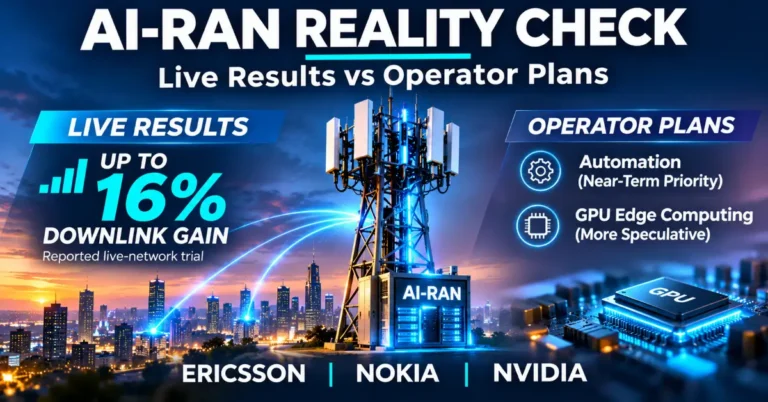
EE’s 5G standalone network, branded 5G+, reached more than 80% of the UK population in October 2026, and it aims to cover 99% by March 2030. BT is also preparing to trial AI-RAN with Nokia and Nvidia on EE’s live network. EE’s own updates track the rollout.
Other notable European 5G operators include Iliad’s Free in France, which has the highest share of time on 5G standalone in the French market according to Opensignal; the Nordic groups Telia, Telenor and Elisa; Swisscom and Sunrise in Switzerland; and Play and Orange in Poland. In Türkiye, Turkcell, Türk Telekom and Vodafone Türkiye launched commercial 5G on 1 April 2026 after a spectrum auction in October 2025.
Leading 5G Operators in Asia Pacific
Beyond China and India, operators in Japan, South Korea, Australia and South East Asia include some of the most advanced and fastest-growing 5G networks.
- Japan: KDDI’s au and SoftBank were joint Opensignal 2026 Global Winners for 5G Reliability. NTT DOCOMO launched a commercial 5G core on AWS in February 2026, and Rakuten Mobile runs a fully cloud-native network.
- South Korea: SK Telecom, KT and LG Uplus launched the world’s first commercial 5G in 2019, and the country has more than 40 million 5G subscribers. KT has run 5G standalone since 2021, while SK Telecom and LG Uplus are preparing commercial standalone launches in December 2026 under a government spectrum condition. SK Telecom was an Opensignal 2026 Global Winner for 5G Download Speed among smaller countries.
- Australia: Telstra covers about 95% of Australians with 5G, has Australia’s broadest 5G coverage according to Opensignal, and plans to accelerate its 5G standalone rollout in fiscal 2027. Optus and TPG Telecom’s Vodafone each cover more than 91% of the population.
- Singapore: Singtel was among the first operators worldwide to launch 5G-Advanced, and Singapore has one of the highest 5G standalone shares outside China.
- Vietnam: Viettel launched Vietnam’s first commercial 5G in October 2024 and accounts for most of the country’s 5G base stations. Vietnam reached 27.2 million 5G subscribers and about 93% population coverage by the third quarter of 2026, one of the fastest national rollouts anywhere.
- Indonesia: Telkomsel, Indosat Ooredoo Hutchison and XLSmart won new 700 MHz and 2.6 GHz spectrum in July 2026, with an obligation to cover 51% of the population with 5G by 2031. Indosat ran about 19,400 5G base stations across 75 cities by September 2026, and Telkomsel more than 5,400 across about 80 cities by early 2026.
Leading 5G Operators in the Middle East and Africa
Gulf operators are among the global leaders in 5G performance and 5G-Advanced, while African operators are expanding 5G quickly in their largest markets.
- United Arab Emirates: du and e& have launched 5G-Advanced and deliver some of the fastest 5G standalone speeds in the world. The UAE also has the first commercial network using the upper 6 GHz band.
- Saudi Arabia: Zain KSA, which launched the country’s first 5G standalone network in 2022, became the first in Saudi Arabia to launch commercial 5G-Advanced in July 2026. stc signed a multi-year 5G expansion agreement with Ericsson in September 2026, using new 600 MHz spectrum to extend coverage to rural areas.
- Qatar and wider region: Ooredoo runs advanced 5G in Qatar and operates across the Middle East, North Africa and South East Asia, including through Indosat Ooredoo Hutchison in Indonesia.
- Africa: MTN serves about 318 million customers across 19 markets and has deployed more than 2,100 5G sites in Nigeria. Vodacom runs more than 4,000 5G sites in South Africa and was an Opensignal 2026 Rising Star, and Safaricom has more than 1,700 5G sites in Kenya. Airtel Africa is expanding 5G across its 14 markets.
Leading 5G Operators in Latin America
Two groups dominate 5G in Latin America, with several markets launching 5G only in 2025.
- América Móvil (Claro and Telcel): Latin America’s largest operator group, with about 414 million customer lines across the Americas and Central and Eastern Europe. It operates the only national 5G network in Mexico, has Colombia’s most extensive 5G network, and launched 5G in Costa Rica, Ecuador and Peru in late 2025. Its Brazilian unit Claro has about 92 million mobile customers.
- Telefónica (Vivo): Vivo covers 73% of Brazil’s population with 5G, all of it standalone, and has agreed a satellite-to-phone partnership with Starlink to extend mobile coverage across almost all of Brazil’s territory.
- Others: TIM Brasil, Entel in Chile and Peru, and Millicom (Tigo) in Central America are also expanding 5G.
Major Multinational 5G Operator Groups
Several operator groups run 5G in many countries at once, which gives them scale in buying equipment, spectrum strategy and roaming. The table below summarises the largest.
| Group | Main 5G markets | 5G focus in 2026 |
| China Mobile | China, Hong Kong | Scale, 5G-Advanced and AI computing |
| Bharti Airtel | India, Sri Lanka and 14 African markets | 5G fixed wireless access and premium customers |
| América Móvil | Mexico, Brazil, Colombia and the wider Americas; Central and Eastern Europe (A1) | National 5G in Mexico and new 5G launches |
| Deutsche Telekom | Germany, US (T-Mobile) and Central and Eastern Europe | 5G standalone, 5G-Advanced and energy efficiency |
| Vodafone Group | UK, Germany, Türkiye, Portugal, Ireland and others; Africa (Vodacom) | 5G standalone in the UK and Germany, private 5G |
| Telefónica | Spain, Germany, UK and Brazil | Standalone across its full 5G footprint |
| Orange | France, Spain, Belgium, Poland, Romania; Africa and Middle East | Standalone in France and Spain, market consolidation |
| MTN | 19 markets across Africa and the Middle East | 5G in Nigeria and South Africa |
| e& | UAE and markets in the Middle East, Africa, Asia and Central Europe | 5G-Advanced and upper 6 GHz in the UAE |
| stc group | Saudi Arabia, Kuwait and Bahrain | Rural 5G with 600 MHz and 5G-Advanced sites |
| Ooredoo | Qatar, Indonesia and other markets in the Middle East, North Africa and Asia | 5G in Qatar and Indonesia |
| Singtel | Singapore and Australia (Optus), with stakes in regional operators | 5G-Advanced and 5G standalone |
Five Shifts Reshaping 5G Operators
Taken together, the leading operators’ 2026 activity points to five shifts.
| Shift | What it looks like in 2026 |
| Standalone becomes the dividing line | Nationwide 5G standalone in the US, China and India, while many European operators are still upgrading |
| 5G-Advanced goes commercial | T-Mobile, the Chinese operators, du, e&, Singtel and Telstra have launched it |
| Network slicing reaches customers | Slices for first responders, events and enterprises from T-Mobile, SoftBank and others |
| Operators move core to the cloud | NTT DOCOMO’s core on AWS and unified standalone cores at MasOrange and others |
| 5G meets satellite and AI | Satellite-to-phone partnerships, 5G standalone roaming and AI services built into the network |
5G Operators in 2026 by the Numbers
These figures from industry bodies and network analysts show how far 5G has spread and how unevenly operators have moved to standalone.
| Indicator | Figure | Source |
| Global 5G subscriptions | 3.1 billion at end of Q1 2026, close to 3.3 billion by end of Q2 | Ericsson Mobility Report |
| 5G subscriptions forecast | 6.4 billion by end of 2031, two-thirds of all mobile subscriptions | Ericsson Mobility Report |
| Operators with launched 5G networks | 392 (end of March 2026) | GSA |
| Operators with 5G standalone | 98 launched or soft-launched (August 2026) | GSA |
| Operators with 5G-Advanced | 35 investing, 11 launched (end of March 2026) | GSA |
| Global 5G standalone availability | 17.6% of 5G tests on standalone networks in Q4 2025; China 80.9% | Ookla and Omdia |
| Network experience leaders, large countries | T-Mobile (coverage), Vivo (download speed), Telekom Germany (games), au and SoftBank (reliability) | Opensignal 5G Global Awards 2026 |
Leading 5G Operators: Frequently Asked Questions
Which operator has the most 5G subscribers?
China Mobile has the most 5G subscribers, with about 702 million 5G network customers at the end of September 2026. China Telecom, Reliance Jio and China Unicom follow.
Which country leads in 5G?
China leads in scale and in 5G standalone adoption, with most 5G tests running on standalone networks. South Korea, the US, the UAE and Singapore are also among the leaders, depending on whether you measure coverage, speed or standalone use.
Which US carrier has the best 5G?
T-Mobile has the most mature 5G network in the US, with nationwide 5G standalone since 2020 and nationwide 5G-Advanced, and it won Opensignal’s 2026 global award for 5G coverage experience. Verizon and AT&T completed nationwide 5G standalone in 2025 and are adding new services, especially for business customers.
How many operators have launched 5G?
GSA counted 392 operators with commercial 5G networks by the end of March 2026, of which about 98 had launched 5G standalone by August 2026.
What is the difference between 5G and 5G standalone?
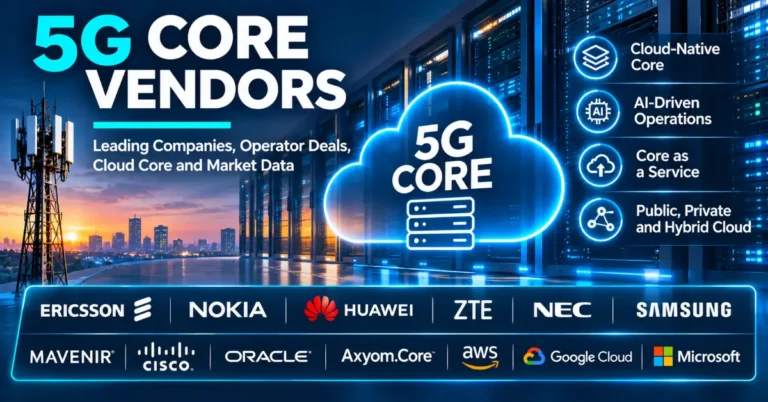
Most early 5G networks used 5G radios with a 4G core, known as non-standalone. 5G standalone uses a dedicated 5G core, which enables network slicing, lower latency, RedCap devices and 5G-Advanced. Our guide to 5G core vendors covers the companies that supply it.
For the other categories of 5G suppliers and operators, see our overview of the leading 5G companies.
For more analysis like this, subscribe to the TeckNexus Newsletter, explore our 2027 programs, or partner with us to share your perspective and generate leads.