AI Agent Competitive
Intelligence
Intelligence Journeys
AI Use Cases for Utilities
Private Broadband for Utilities

KT

August 2026's roundup: Nvidia forms $500B+ AI compute financing platforms with the world's largest asset managers, SK Telecom's SK Hyper data centre unit and Microsoft's new Hyderabad hyperscale region both go live, the custom silicon race widens to include OpenAI's own inference chip and a reported $12.9B Nvidia bid for Hugging Face, and SpaceX's infrastructure ambitions extend from a $16.8B Texas fab to orbital data centers.
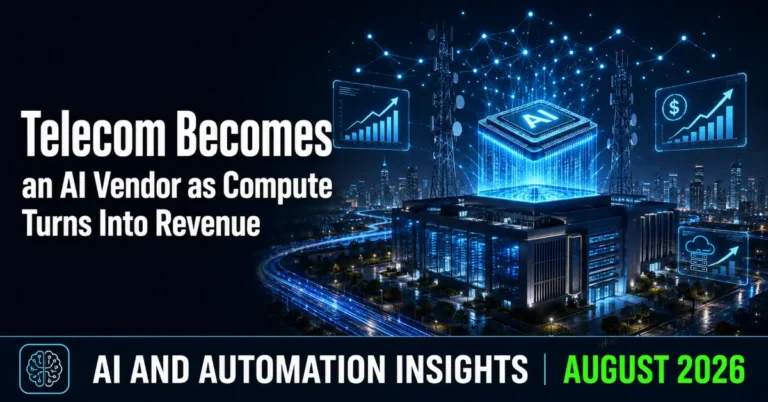
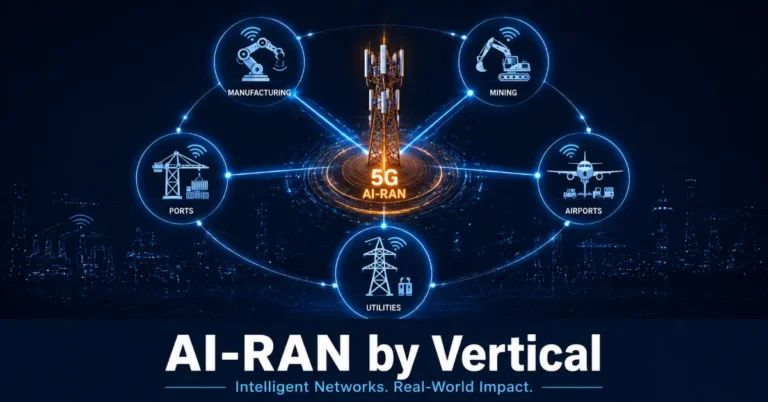
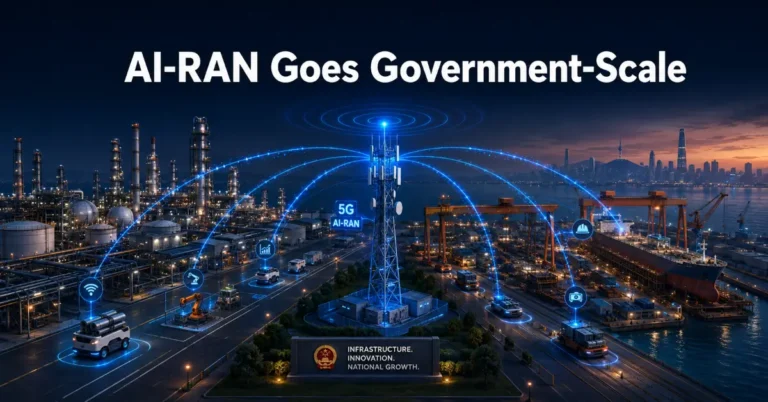
August 2026's roundup: operators from SK Telecom to Ooredoo built or monetized AI infrastructure directly, AI-RAN validation reached the device and per-user level, agentic AI moved deeper into live network operations, and governance caught up with a watermarking mandate, an incident-reporting coalition, and a hard look at why AI inference costs keep rising even as token prices fall.
Telecom operators cutting headcount while pouring capital into AI infrastructure, and chipmakers financing fabs at infrastructure scale, are two sides of the same reallocation. TeckNexus traces the connections across SK Telecom, KT, LG Uplus, T-Mobile, AT&T, Verizon, Nvidia, SK hynix, and SpaceX to show how the AI buildout has become the organising logic the telecom and semiconductor industries are restructuring around.
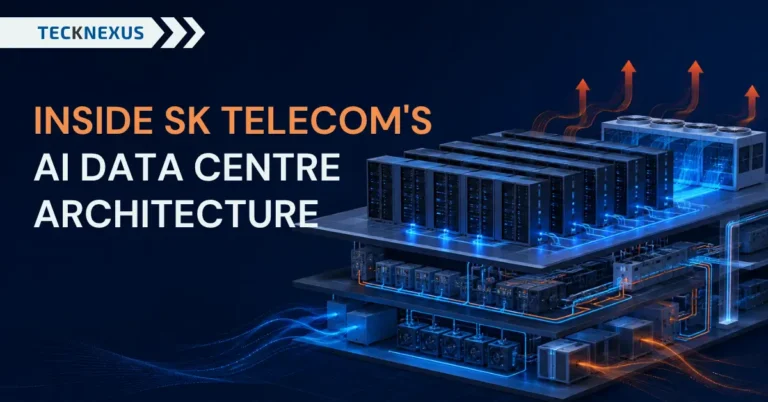
SK Telecom's SK Hyper AI data centre unit, targeting 5 gigawatts of capacity by 2029 and 15 gigawatts by 2035, comes with unusually specific technical architecture detail: a multi-silicon compute platform pairing Arm's AGI CPU with Rebellions' AI inference accelerator, a CXL-based memory pooling architecture built with Panmnesia, and named power and cooling partners in Supermicro and Schneider Electric. TeckNexus examines what each layer reveals, and why this level of disclosed detail is a rare and useful reference point for anyone planning AI infrastructure at any scale.
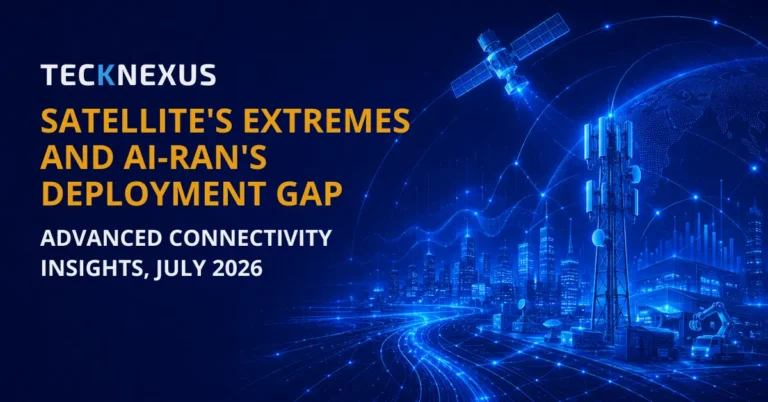
July 2026's roundup: Hughes Network Systems nears bankruptcy as SpaceX files to launch 100,000 satellites, Nokia's AI-RAN commercial deployments trail Ericsson's 15+ by a full order of magnitude, the FCC finalizes a $6.3B C-band incentive package and closes AT&T's $23B EchoStar spectrum deal, and fiber capital and industrial 5G both keep expanding globally.
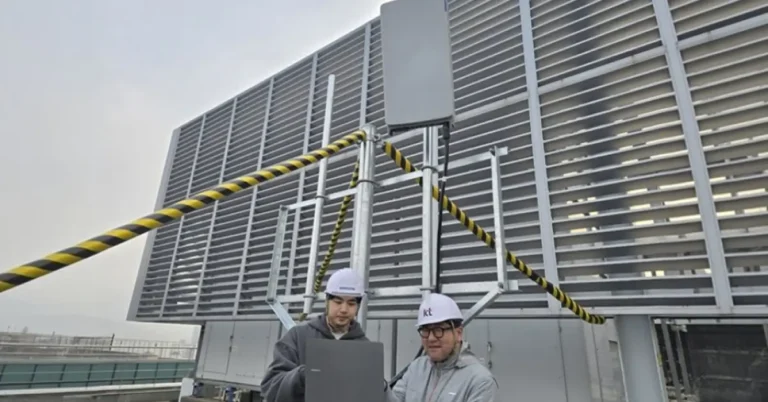
Samsung Electronics, working with KT Corporation and Keysight Technologies, has demonstrated 3 Gbps peak downlink in outdoor tests using an ultra‑dense antenna system and X‑MIMO in the 7 GHz band. The field trial took place at Samsung’s Seoul R&D Campus and pushed eight concurrent spatial streams from a base station to a single user device. The key enabler was a radio unit that packs roughly four times the antenna elements of today’s 5G massive MIMO gear into a similar physical footprint. Shorter wavelengths at 7 GHz make that density feasible without expanding the radio size.
Korea’s three national carriers have enabled Rich Communication Services (RCS) on iPhones via Apple’s recent iOS update, bringing Android–iOS parity for default messaging to a market long dominated by OTT apps. SK Telecom, KT, and LG Uplus now support RCS for iPhone users across Korea, extending capabilities that previously existed only on Android. RCS on iPhone is available on iPhone 11 series and newer models running the latest iOS update, with activation dependent on carrier support and user settings. Users gain modern chat features including group messaging with up to 100 Android participants, read receipts, typing indicators, replies, and support for richer media.

Partner Hubs

Download content, access intelligence tools, and hear from executives.

Partner Events

  • FutureNet Asia 2026
  • Network X Vienna 2026
Scroll to Top