TeckNexus · DEPLOYMENT TRACKER

Private Network Deployment Use Cases

Explore real-world private 5G, LTE, and CBRS deployments across industries and enterprise environments.

HHLA has activated a private 5G campus network at Container Terminal Altenwerder with Deutsche Telekom and Ericsson. The deployment is explicitly framed as a live digital test field rather than a finished solution — a platform for validating applications under real operating conditions before committing to production deployment. That sequencing is the most instructive element of the project for port operators evaluating similar investments.
Omantel and the Port of Salalah are deploying Oman’s first managed private 5G Standalone network to support port automation, real-time operational data, and resilient connectivity. Here’s a breakdown of the architecture, the managed-service model, and what other ports and industrial sites can learn from it.
Rössing Uranium and MTC Namibia have commissioned four private LTE towers at the Rössing open-pit mine to improve mine connectivity, safety alerts, truck dispatch, drill readings, GPS tracking and real-time operational visibility. The N$3.7 million LTE deployment forms part of a broader infrastructure upgrade of more than N$10 million and supports Rössing’s smart mining and digital transformation strategy.
Mariana Minerals has deployed Celona’s private 5G network across its Copper One copper mine and refinery in southeastern Utah. The network supports MarianaOS, the company’s software-defined mining platform, enabling autonomous drilling, self-driving haul trucks, real-time monitoring, asset tracking, edge computing, and continuous data collection. The deployment shows how private 5G can become production infrastructure for AI-driven mining operations, helping improve visibility, coordination, drilling accuracy, downtime response, and future automation.
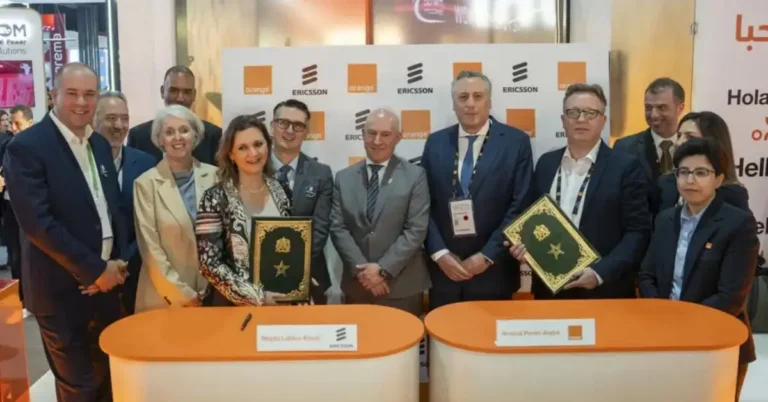
Ericsson and Orange Maroc have launched a practical private 5G initiative in Morocco, centered on Ericsson Private Networks inside Orange Maroc’s 5G Lab. The project gives enterprises in logistics, utilities, energy, mining, ports, and smart territories a place to test secure, reliable enterprise connectivity, IoT, automation, cloud, edge, and security use cases before moving toward pilots or production.
Lyttelton Port Company (LPC) introduced a private 5G network with 2degrees and Ericsson Enterprise Wireless Solutions to improve safer, more resilient port operations across difficult “metal canyon” container lanes and wide outdoor yards. The deployment supports asset tracking, job dispatch, safety alarms, and video streaming, with Ericsson Cradlepoint routers on straddle carriers using private 5G as primary and 2degrees’ public mobile network as backup. With 434,000 containers handled in FY2025, LPC is also planning next steps like wind/stormwater sensors and drone inspections feeding AI tools.
CHU Bordeaux, in collaboration with Bouygues Telecom Business and Ericsson, has launched the 5MART HO5PITAL initiative—one of France’s first 5G-enabled smart hospitals. Funded under the EU’s Connecting Europe Facility, the project aims to modernize digital healthcare infrastructure using 5G and Edge Computing to improve patient care, staff efficiency, and crisis preparedness.
The Port of Tyne has deployed a private 5G network across its 620-acre site with support from BT and Ericsson. Leveraging edge computing, AI, and drones, the port has improved safety, operational agility, and data-driven decision-making, positioning itself as one of the UK’s most advanced smart ports.
A landmark private 5G pilot at EMSTEEL with e& UAE signals how industrial networks in the region are evolving from connectivity add-ons to strategic infrastructure. The pilot delivers dedicated, high-speed wireless coverage across complex industrial spaces that are often hostile to traditional Wi‑Fi and public cellular. For manufacturers in the UAE, this is a meaningful milestone: it showcases a path to secure, deterministic wireless that can carry safety-critical and time-sensitive workloads on the shop floor. Private 5G gives factories a foundation to adopt connected worker tools, real-time quality control, AI-assisted operations, and digital twins without moving sensitive data off-site.
ZTE, China Unicom Liaoning and Dalian Changhai Airport have put a 5G-Advanced private network with integrated sensing and communications into live service to address low-altitude security at an island test flight field. The partners deployed a private 5G-Advanced architecture that fuses high-throughput connectivity with precision sensing on the same infrastructure, tailored for a maritime, island airport where traditional patrols and single-sensor radars leave blind spots for “low, slow, small” targets such as drones and bird flocks. According to the partners, the network is running 24/7 at the test flight field and has lifted low-altitude detection accuracy near 98%. By consolidating connectivity and sensing on one footprint, the deployment claims about 30% less space and roughly 25% lower capital intensity versus separate radios and radars.
Hrvatski Telekom will deploy dedicated private 5G networks at Zagreb, Zadar, and Pula airports under a €5.6 million “NextGen 5G Airports” program co-financed by the European Commission’s CEF Digital initiative. The project was selected in a competitive CEF Digital call focused on 5G and edge for smart communities, with €3.09 million in EU grant funding and the remainder financed by Hrvatski Telekom and partners. The program targets operational efficiency, safety, and a better passenger experience through dedicated, configurable, and SLA-backed wireless infrastructure. Edge computing on or near the airport premises will enable low-latency processing for video, safety systems, and time-sensitive control.
Verizon is transforming healthcare infrastructure with a dual-network approach that combines private 5G and neutral host connectivity. Hospitals like AdventHealth and Tampa General are enhancing AI-powered diagnostics, real-time telemetry, and secure staff communications—while ensuring strong public mobile coverage for patients and visitors. This hybrid model, built on Ericsson’s platform, supports HIPAA compliance, device density, and future scalability for smart hospitals.
BMW has launched a private 5G- and AI-powered EV plant in Debrecen, Hungary, its first fully AI-controlled automotive factory. With over 1,000 robots, autonomous vehicles, and digital twins integrated across a hybrid 5G network, the site sets new standards for real-time quality control, low-carbon manufacturing, and scalable production of next-gen EVs like the iX3. Operated by Magyar Telekom, the facility is a model for smart, sustainable automotive production.
Airbus has partnered with Ericsson to deploy private 5G networks at its Hamburg and Toulouse factories, transforming operations through secure, low-latency connectivity. The rollout supports AR, predictive maintenance, and IoT-driven smart manufacturing, setting a scalable model for global digital transformation.
GlobalLogic, in collaboration with Plus and Ericsson, has launched an independent private 5G network at its Kraków campus. This initiative marks a major step in accelerating Industry 4.0 in Poland, enabling real-time AI analytics, secure video surveillance, and intelligent asset management through low-latency, high-reliability 5G infrastructure tailored for industrial use cases.
Boldyn Networks and O2 have upgraded AO Arena Manchester with a cutting-edge neutral host 5G DAS. Designed to support over a million annual attendees, the shared infrastructure enhances livestreaming, digital ticketing, and real-time services. The rollout delivers seamless mobile performance for fans, vendors, and staff, setting a new standard for large venue connectivity in the UK.
Celanese and NTT DATA have deployed a fully managed Private 5G network at two Texas manufacturing plants, accelerating their Industry 4.0 roadmap. The solution enhances automation, safety, and real-time operational control by delivering reliable, high-speed connectivity at the edge. The deployment enables robotics, edge analytics, and secure communications, setting a model for digital transformation in chemical manufacturing.
Nokia and Boldyn Networks have launched a private 5G network at Callio FutureMINE in Finland, addressing underground mining’s toughest connectivity issues. The network supports autonomous vehicles, real-time visualization, and tele-remote operations, transforming safety, efficiency, and sustainability in mining. This deployment sets a global benchmark for industrial 5G use in extreme environments.
Hitachi Rail’s Hagerstown factory is now powered by a secure Private 5G Network, thanks to GlobalLogic and Ericsson. This digital transformation enables smart manufacturing capabilities such as predictive maintenance, digital twins, AI-driven inspections, and real-time automation—positioning the plant as a benchmark for Industry 4.0 in North America.
Maher Terminals has deployed Nokia’s Private 4G and Edge computing solutions to digitize operations at its 450-acre New Jersey facility. By partnering with Nokia and Future Technologies Venture LLC, the terminal now uses real-time data and rugged industrial devices to streamline cargo handling and enhance network reliability.
Boldyn Networks and Virgin Media O2 have launched the UK’s first full RAN managed 5G service at Sunderland’s Stadium of Light. Powered by JMA XRAN® and a neutral host architecture, the deployment transforms fan experience, reduces energy use by 60%, and boosts operational safety and efficiency—setting a new benchmark for smart stadiums across the UK.
Tampnet has secured a five-year contract to deliver a fully managed private 5G network with LEO satellite, LTE, and edge computing to Island Drilling’s Island Innovator rig. Operating in the North Sea, the solution ensures low-latency, AI-orchestrated data flow for safer, smarter offshore operations, enabling automation, predictive maintenance, and real-time decision-making even in extreme conditions.
Chesapeake, Virginia, in partnership with Boldyn Networks, has launched Chesapeake Connects, a city-owned private LTE and IoT network aimed at transforming public services, improving digital equity, and reducing reliance on commercial carriers. The hybrid system leverages CBRS for Fixed Wireless Access and LoRaWAN for citywide IoT, supporting smart city infrastructure like flood sensors, smart traffic lights, and more.
Airtel Congo and Wing Wah have launched Congo-Brazzaville’s first private network at the Banga Kayo oil field, aiming to boost oilfield connectivity, network security, and digital transformation in Central Africa’s energy sector. This five-year agreement supports real-time monitoring, automation, and future 5G integration, setting a new precedent for telecom and oil industry partnerships in the region.
Lufthansa Industry Solutions and Ericsson are tackling logistics bottlenecks with private 5G. At the LAX warehouse, they replaced unreliable Wi-Fi with just two private 5G radios, reducing scanning delays by 97% and eliminating paper logs. With edge computing and AI-powered inspections, their scalable solution is setting a new standard for warehouse automation and logistics connectivity.
India’s first Private 5G Captive Non-Public Network (CNPN) is now operational at Numaligarh Refinery in Assam, thanks to BSNL and NRL. This private 5G network supports real-time IoT, AI-driven analytics, and AR/VR-based workforce training, setting a new benchmark in refinery automation and cybersecurity. A major step for Digital Assam and the Atmanirbhar Bharat mission.
Ooredoo Maldives has launched the nation’s first private 5G island at Waldorf Astoria Maldives Ithaafushi by deploying a dedicated submarine cable. This infrastructure milestone provides high-speed, low-latency connectivity, enabling AI-powered guest services, immersive AR/VR experiences, and seamless digital hospitality. It sets a benchmark for smart tourism in the Maldives and redefines digital luxury for remote island resorts.
Eviden, part of the Atos Group, has deployed a dedicated 5G Private Network at the Port of Ploče in Croatia to power its Smart Port project. The network integrates AI, IoT, and edge computing to automate cargo tracking, enable real-time monitoring, and enhance safety and sustainability across maritime logistics.
At the Emirates Great Britain Sail Grand Prix in Portsmouth, Ericsson and BT combined private 5G and public 5G Standalone (SA) to enable real-time boat telemetry, low-latency video for broadcast, and immersive AR/VR fan experiences. The hybrid network, featuring Ericsson Private 5G and BT’s 5G SA slicing, created a fully connected race ecosystem spanning multiple sites and the F50 fleet.
The Istanbul Expo Center (IFM) has become Türkiye’s first venue to deploy an indoor 5G Private Network, turning its 96,000 m² exhibition space into a next-gen smart venue for digital trade fairs. The Opticoms and ADSYS project integrates IoT, edge computing, and network slicing to support real-time testing, secure enterprise connectivity, and immersive AR/VR showcases.
Memphis Light, Gas and Water (MLGW) and Nokia have launched the first standalone private 5G network by a U.S. municipal utility. This $31 million investment will modernize infrastructure across Memphis and Shelby County, enhancing real-time monitoring, outage response, cybersecurity, and smart grid capabilities for over 420,000 customers.
At the 2025 MLB All-Star Week, T-Mobile deployed a 5G Private Network to power Automated Ball-Strike (ABS) technology, immersive fan experiences, and smart event operations. Covering Truist Park and The Battery Atlanta, the network delivered ultra-low latency, network slicing for first responders, and high-speed 5G upgrades, creating a blueprint for future smart stadiums and live sports innovation.
Sedna Africa and Cornelder de Moçambique are deploying a private LTE/5G network at Beira Port to enhance safety, operational efficiency, and support Industry 4.0 initiatives. The network enables real-time tracking, IoT-based safety systems, and predictive maintenance as Mozambique invests $290M to expand port capacity.
Tulsa International Airport (TUL) has deployed a dedicated private cellular network with Communication Technology Services (CTS), replacing legacy Wi-Fi and fiber systems. The network provides secure, low-latency connectivity for airfield operations, surveillance, and perimeter gates while creating a foundation for AI-driven automation, autonomous vehicles, and next-generation airport infrastructure.
Vodacom Business has deployed a dedicated Mobile Private Network (MPN) at Sasol’s Secunda synthetic fuel facility in Mpumalanga. The secure, low-latency network replaces Wi-Fi to deliver resilient connectivity for 3,000 employees, mission-critical operations, and digital transformation initiatives including IoT, asset management, and future autonomous operations.
Tampnet has rolled out the world’s first fully autonomous private 5G network with Edge Compute offshore for Aker BP’s Edvard Grieg platform. This digital backbone provides real-time data processing, robust wireless coverage, and supports advanced offshore operations like autonomous drones, robotics, and predictive maintenance, setting a new standard for offshore oil and gas connectivity.
Verizon Business and Nokia will deploy six private 5G networks across Thames Freeport’s major logistics sites, including the Port of Tilbury, London Gateway, and Ford Dagenham to create a high-performance digital infrastructure supporting real-time logistics, AI automation, and edge computing. With plans to generate 5,000 skilled jobs and power sustainable trade, this initiative positions Thames Freeport as a next-gen smart trade corridor.
Hrvatski Telekom’s NextGen 5G Airports project will deploy Private 5G Networks at Zagreb, Zadar, and Pula Airports to boost safety, efficiency, and airport automation. By combining 5G Standalone, Edge Computing, AI, and IoT, the initiative enables drones, smart cameras, and AI tablets to digitize inspections, secure perimeters, and streamline operations, redefining aviation connectivity in Croatia.

ZTE and e& UAE have completed a successful Private 5G Network trial, showcasing high uplink speeds, multi-band adaptability, and ZTE’s NodeEngine Edge Computing platform. This trial enables rapid deployment, stronger enterprise connectivity, and practical use cases for smart industries, aligning with the UAE’s goal of becoming a digital innovation leader.
The City of Istres, France, partners with Ericsson, SPIE, and Unitel to deploy a cost-efficient Private 5G Network. This smart city blueprint reduces surveillance camera installation costs by over 80%, improves secure emergency communications, and leverages Edge Computing for AI-ready urban security. Istres sets a precedent for mid-sized European cities modernizing connectivity and resilience.
Spark and Air New Zealand have activated New Zealand’s first Private 5G Network for business operations at Auckland Airport’s logistics warehouse. Using Ericsson’s enterprise-grade 5G, the network powers a drone-robot system that automates stocktakes, keeps staff safer by removing the need for high-shelf manual scanning, and provides real-time inventory data to boost efficiency. This smart warehousing solution sets a new benchmark for airport logistics and supply chain innovation in New Zealand.
Roularta Media Group (RMG), Belgium’s leading multimedia company, is revolutionizing its printing operations with NTT DATA’s Private 5G network. This high-performance, secure infrastructure enables automation, real-time tracking, and AI-driven workflows, improving efficiency and reliability in a 24/7 printing environment. With plans to expand into Germany and the Netherlands, RMG is setting a new standard for digital printing transformation.
YYC Calgary International Airport, in partnership with TELUS, has launched Canada’s first 5G private wireless network, transforming airport operations with real-time IoT tracking, AI-driven automation, and ultra-secure connectivity. This 10-year initiative enhances passenger experience, baggage handling, and airport security, setting a new benchmark for smart airports.
DNB and EDOTCO have successfully deployed 5G In-Building Solutions (IBS) at KLIA and KLIA2, enhancing connectivity for passengers, businesses, and airport operations. This upgrade supports high-speed, low-latency networks, enabling smart airport solutions such as autonomous vehicles, AI-powered security, and digital retail. The initiative aligns with Malaysia’s push for digital transformation and its ASEAN Chairmanship goals.
JLR is transforming automotive manufacturing by deploying Ericsson Private 5G at its Solihull plant, enabling AI-driven automation, real-time IoT connectivity, and enhanced production efficiency. This Industry 4.0 transformation supports AGVs, smart sensors, and real-time analytics, ensuring faster, smarter, and more flexible vehicle production. Learn how JLR is leading the next era of digital manufacturing.
The Lower Colorado River Authority (LCRA) is partnering with Ericsson to deploy a private LTE network across 68 Texas counties, ensuring enhanced grid security, real-time communications, and future 5G readiness. This next-generation infrastructure will support electric cooperatives, municipalities, and critical services, reducing cybersecurity risks and improving operational efficiency for utilities statewide.
SailGP is enabling high-speed sailing with Ericsson Private 5G and Edge Computing, ensuring real-time race analytics, seamless connectivity, and immersive fan engagement. With Cradlepoint edge routers in each F50 catamaran, teams process over 53 billion data points per race day, optimizing performance and ensuring fairness. This 5G-powered digital transformation sets a new benchmark for sports connectivity.
Oulu University Hospital has deployed Europe’s first Private 5G Standalone (SA) network, revolutionizing healthcare with real-time patient monitoring, AI-assisted imaging, and augmented reality (AR) for surgery. Built by Boldyn Networks using Nokia Modular Private Wireless (MPW) technology, this high-speed, ultra-reliable network ensures seamless data flow, improved diagnostics, and enhanced patient safety. Learn how 5G is shaping the future of smart hospitals.
Showing Slide 1 of 49
Sponsored by Palo Alto Networks
⚡ Utilities ⏱ 8 min ✓ Free
This tool is built and hosted by TeckNexus.
Launch Tool →
Whitepaper
Airports are deploying AI surveillance, biometrics, and autonomous vehicles faster than most networks can secure them. See what 100 real-world airport deployments reveal about the airside/landside security gap — and the 4-layer framework built to close it....
Scroll to Top