Ericsson and Orange Maroc Launch Private 5G in Morocco
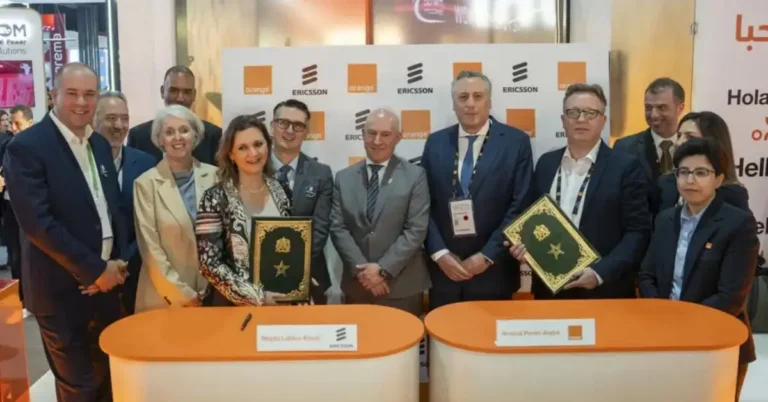
Ericsson and Orange Maroc have announced a practical enterprise connectivity initiative, not just another event-stage partnership. On April 8, 2026, at GITEX Africa 2026 in Marrakech, the two companies said they will work together to co-develop and promote enterprise-grade 5G solutions in Morocco. The core of the plan is a dedicated Ericsson Private Networks platform deployed inside Orange Maroc’s 5G Lab, where customers can explore, test, and validate industry-specific use cases before moving toward production.
Why Moroccan Enterprises Need Secure Private 5G Connectivity
Moroccan enterprises are digitizing quickly, but connectivity often becomes the bottleneck once projects move from slide decks to real operations. Sectors such as smart logistics, Utilities, energy, smart territories, mining, and ports need networks that are secure, reliable, and built for industrial workflows rather than consumer traffic. These environments also need support for Automation, IoT, and digitalized operations. In plain English, machines, sensors, people, and control systems all need to work together without dropped connections or patchwork integration. That is exactly the gap this partnership is trying to address.

How the Orange Maroc 5G Lab Validates Enterprise Private 5G
The solution is a joint go-to-market and validation model built around a live demonstration environment. Ericsson will supply a complete private 5G network platform, including its radio technology and 5G Core. Orange Maroc will host that platform in its 5G Lab and use it to build a structured B2B catalogue of use cases for enterprises in Morocco. This matters because many enterprises are interested in private 5G, but fewer want to be the first to experiment on a live industrial site with no proof points. A lab-based model lowers that barrier. It lets customers see the architecture, test scenarios, and understand where Cloud, Edge Computing, and Security fit into the broader solution.
What Is Confirmed About the Ericsson–Orange Maroc Private 5G Plan
The evidence today is solid on intent, architecture, and target sectors, but still early on public operational results. The official announcement confirms the partnership scope, the deployment of Ericsson’s private 5G platform in Orange Maroc’s 5G Lab, and the goal of building a use case catalogue for industries such as logistics, utilities, energy, mining, and other critical infrastructure segments. What it does not yet include is customer ROI data, performance benchmarks, or named production deployments. That is not a flaw. It simply means this use case is currently in a validation-and-acceleration phase rather than a mass-scale rollout phase. In enterprise networking, that is often the sensible order of operations. No one wants a network transformation program to begin with “trust us, it will probably work.”
Why Private 5G Fits Industrial IoT, Edge, and Secure Operations
The choice of Private Networks is logical for the kind of industrial environments Orange Maroc and Ericsson are targeting. Public mobile connectivity is useful, and Wi-Fi still has its place, but industrial sites often need tighter control over coverage, device behavior, resilience, and data handling. The announcement also makes clear that this is not being positioned as connectivity alone. Orange Maroc wants to combine connectivity with Cloud, Edge, and Security, while Ericsson provides the radio and core foundation. That combination is important because enterprise buyers do not buy a radio access network in isolation. They buy an operating model that supports applications, devices, workloads, and business risk.
Key Benefits of Private 5G for Moroccan Industry and Enterprise
For Moroccan enterprises, the immediate benefit is a safer path to adoption. Instead of jumping straight into a full production build, businesses can use the lab environment to test whether private 5G actually improves productivity, supports automation use cases, and reduces operational friction. The official announcement also points to cost optimization as a target outcome. That makes sense. Better connectivity can reduce downtime, simplify device management, and support more predictable digital operations over time. For Orange Maroc, the benefit is equally clear: it moves from being viewed only as a connectivity provider to being seen as an integrated digital transformation partner for enterprise customers.
How Private 5G Could Shape Morocco’s Digital Infrastructure Market
This collaboration matters beyond the two companies involved because it helps shape how Morocco’s enterprise 5G market may develop. Morocco’s official Digital Morocco 2030 strategy positions digital technology as a driver of economic and social development, and the Ericsson–Orange Maroc partnership is directly aligned with that direction. If the 5G Lab produces credible, repeatable use cases, it could make private 5G easier for industrial and public-sector players to understand and adopt. That would be especially relevant in sectors where site reliability, secure connectivity, and distributed operations matter, such as Mining, Utilities, and broader industrial infrastructure. In that sense, this is not just a vendor story. It is part of Morocco’s wider digital capacity-building effort.
Orange Maroc’s Role as an Integrated ICT and Connectivity Partner
Orange Maroc’s role in this use case is strategic. The operator is positioning itself as the customer-facing orchestrator that can package enterprise connectivity with supporting ICT capabilities. The release explicitly says the initiative strengthens Orange Maroc’s position as an integrated ICT operator able to combine connectivity with Cloud, Edge Computing, and Security. That matters because enterprise customers usually prefer one accountable partner that can tie together network access, service integration, and local support. In practical terms, Orange Maroc becomes the bridge between advanced telecom infrastructure and Morocco’s sector-specific digital transformation needs.
Ericsson’s Role in Delivering the Private 5G Platform
Ericsson’s role is to provide the technical engine behind the initiative. According to the announcement, Ericsson will deliver the complete private 5G network platform, including advanced radio and 5G Core technologies. That gives Orange Maroc a working environment where enterprise scenarios can be demonstrated and refined with real infrastructure rather than theory. Ericsson also brings credibility in turning 5G from a generic mobile technology into a business tool for industrial use cases. In this partnership, Ericsson is not just shipping hardware. It is enabling the platform on which Orange Maroc can build market-ready enterprise solutions.
Current Status of the Morocco Private 5G Initiative
As of April 2026, the initiative is in the announced and build-out stage. The partnership has been publicly launched, the target enterprise sectors have been identified, and the private 5G platform is set to be deployed in Orange Maroc’s 5G Lab. The stated next step is to use that environment to structure a catalogue of B2B use cases and let Moroccan enterprises test and validate solutions. So the status is not “fully commercial at scale” yet. It is better described as “commercially aimed, technically grounded, and moving into demonstration and validation.” That distinction is useful because it sets the right expectations.
The broader national backdrop is Morocco’s Digital Morocco 2030 strategy, which gives this partnership a clear policy context. Then, on April 8, 2026, Ericsson and Orange Maroc formally announced the collaboration at GITEX Africa 2026 in Marrakech. From here, the logical progression is lab deployment, use case demonstration, enterprise validation, and then pilot or commercial rollouts in selected sectors. The first two items are confirmed publicly. The later steps are a reasonable inference based on how the initiative is structured and described.
Market Validation and Early Signals for Private 5G in Morocco
The strongest endorsement available today is institutional rather than testimonial. The partnership was launched publicly at a major regional technology event and explicitly tied to Morocco’s digital transformation ambitions. The announcement also frames the initiative as a catalyst for new strategic partnerships with industrial and institutional players in Morocco. What we do not yet have are named enterprise customer endorsements or published performance outcomes from live deployments. That is worth stating clearly. It keeps the story credible. Right now, the value of this use case lies in market readiness, ecosystem building, and the creation of a practical on-ramp for enterprise Private Networks in Morocco.