Edge/MEC

Edge computing and multi-access edge computing (MEC) place processing close to where data is generated — at the network edge rather than in distant centralized clouds — to cut latency and reduce backhaul. For applications that demand fast, local responses, such as industrial automation, computer vision, AR, and autonomous systems, the edge is often what makes them viable. Edge is tightly linked to 5G standalone, private networks, and AI inference, and is a key area where operators, hyperscalers, and enterprises both compete and partner. For decision-makers, the questions are where edge genuinely beats centralized cloud and how to balance on-premises, network-edge, and public-cloud processing. This channel covers edge and MEC across operator, hyperscaler, and enterprise deployments — architectures, partnerships, and use cases — with analysis of where moving compute to the edge actually pays off.

Vodafone Business and Geely Technology Europe have expanded their partnership to combine on-site private 5G, cloud connectivity, and managed IoT services. The deal spans Geely's R&D facilities in Germany and Sweden through to production vehicles on European roads - creating a single connectivity stack from vehicle development lab to connected car.
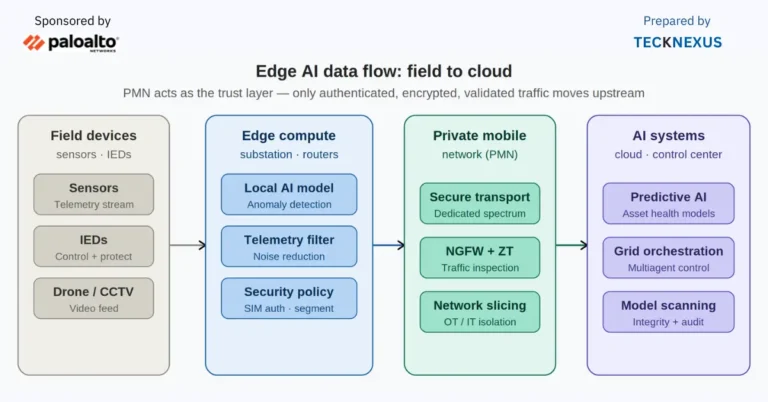
Edge AI is reshaping how utilities manage the grid — moving intelligence from the control room to the substation itself. Small language models, autonomous agents, and hardened edge routers are enabling faster fault detection, predictive maintenance, and real-time load optimization. But distributed intelligence demands distributed security. Here's what utilities need to build both.
Registration is now open for Small Cells World Summit 2026, the global conference series dedicated to small cells, DAS and the wireless ecosystem. With 2026 forecast as a defining year for small cells deployment, the SCWS agenda will focus on network sharing, outdoor and venue connectivity, AI RAN, Edge AI, 6G rollout, non-terrestrial networks, private enterprise networks and neutral host in-building solutions.
Ericsson and Orange Maroc have launched a practical private 5G initiative in Morocco, centered on Ericsson Private Networks inside Orange Maroc’s 5G Lab. The project gives enterprises in logistics, utilities, energy, mining, ports, and smart territories a place to test secure, reliable enterprise connectivity, IoT, automation, cloud, edge, and security use cases before moving toward pilots or production.
Live Streamed on Mon, 2 Mar at 11:15 - 12:45 CET

Visionary voices from around the globe take the stage to reflect on the expanding scope of connectivity, from core networks to cloud platforms to the emerging capabilities that stretch beyond our planet. Join us to explore how the interplay of innovation, leadership and global collaboration can drive meaningful transformation. Discover how bold thinking and shared ambition can build on this momentum and redefine what is possible in an increasingly connected world.
Deutsche Telekom, Orange, Telefónica, TIM, and Vodafone unveiled a live, pan‑European edge federation at MWC 2026, marking a practical step toward an interoperable edge cloud that spans national borders. The five largest European operators demonstrated the European Edge Continuum, a federated edge capability now running in lab and pre‑production environments. The initiative provides a single entry point to deploy and manage applications across multiple operators’ edge nodes, with automated placement, security controls, and mobility‑aware continuity. The platform draws on components developed under the IPCEI‑CIS program backed by the EU’s NextGenerationEU funds, and is positioned for industrialization and commercial rollout next.
Private LTE, 5G, and CBRS networks are becoming the backbone of industrial operations. This article maps private network security vendors to a Four Pillars framework—Core Controls, Device Visibility, Detection & Response, and Orchestration—revealing where structural gaps emerge in real-world industrial deployments. From slice isolation and SIM lifecycle governance to OT micro-segmentation and SOC integration, it explains why layered enforcement—not vendor breadth—determines private 5G security resilience.
Telefónica Tech selected Nearby Computing’s NearbyOne OSS platform to power its Neutral Host 5G deployments. Purpose-built for Mobile Private Networks (MPNs), the cloud-native, vendor-neutral orchestration platform enables end-to-end automation, secure multitenancy, and full-stack observability. The result is a more agile and scalable Neutral Host model—delivering approximately 30% OPEX savings, faster service delivery, and the flexibility to support enterprise use cases across multiple industries.
The Small Cell Forum has opened entries for the SCF Mobile Network Awards 2026, which recognise technical innovation and commercial progress across the wireless connectivity ecosystem. The awards are open to the wider industry, not just SCF members, and cover six categories, alongside the return of the Judge’s Choice award. Updated categories reflect developments in areas such as AI, cloudification, and Open RAN. Winners will be announced at Small Cells World Summit in London on 2nd June 2026, with entries closing on 3rd April 2026.
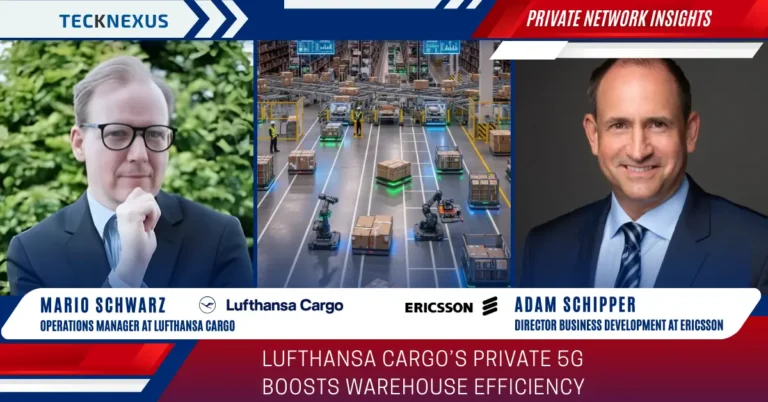
Lufthansa Cargo, in partnership with Ericsson and Lufthansa Industry Solutions, replaced 17 Wi-Fi access points with just two Private 5G radios at its LAX facility. The result: 97% fewer scanning delays, instant digital workflows, and edge-powered AI inspections. This strategic shift boosts efficiency and sets a new standard for scalable, connected logistics using private 5G.
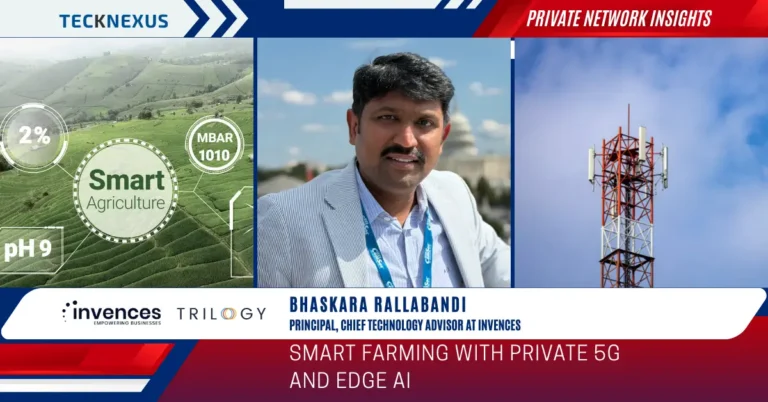
Invences & Trilogy are advancing smart farming with FarmGrid, a platform powered by private 5G, digital twins, and edge AI. Deployed across North Dakota, Nebraska, and California, FarmGrid delivers real-time farm monitoring, improves agricultural productivity, and extends rural broadband access. Using Azure IoT, Open RAN, and edge computing, the platform connects farmers with actionable data and sustainable practices.
Mobile Private Networks (MPNs) have reached a critical juncture, evolving from niche deployments to scalable, production-ready solutions. Enterprises are now embracing MPN-as-a-Service, combining edge computing, AI-driven operations, and hybrid spectrum strategies to deliver low-latency, secure, and flexible connectivity. Discover how Wi-Fi integration, automation, and vendor-agnostic deployment models are accelerating MPN adoption across industries.

Frequently Asked Questions

What’s the difference between ‘the cloud’ and ‘the edge’ in telecom?
Cloud computing typically runs in a relatively small number of large, centralized data centers, often located far from any individual user, which is efficient for many workloads but introduces unavoidable physical distance, and therefore latency, between where data is generated and where it’s processed. Edge computing, specifically MEC, places computing resources much closer to where data actually originates, at cell towers, base stations, or local facilities, cutting the round-trip delay for applications where that distance meaningfully matters. The tradeoff is that edge sites generally have far less raw computing capacity than a massive centralized data center, so edge deployments tend to handle specific, latency-sensitive workloads locally while still relying on the broader cloud for less time-critical processing and coordination.
Is MEC mainly a telecom-specific concept, or does it apply more broadly?
It started as a mobile-network-specific concept, originally called Mobile Edge Computing when ETSI introduced it in the mid-2010s, focused on placing computing resources within mobile radio access network infrastructure. ETSI broadened the concept to Multi-access Edge Computing in 2017 specifically to extend it beyond cellular networks to also cover fixed-line broadband and Wi-Fi access, recognizing that the underlying need, computing resources close to the point of data generation, applies regardless of access technology. Current standards work is extending the concept further still, with ETSI’s MEC group releasing Phase 4 specifications in late 2025 focused on developer-friendly APIs for vertical industries and explicit alignment with emerging 6G requirements.
What applications actually benefit from edge computing?
The clearest use cases are ones where milliseconds genuinely matter, or where large amounts of locally generated data would otherwise need to travel back to a distant data center unnecessarily. Autonomous vehicles need to process sensor data and make navigation decisions in near real time, where even modest added latency could be meaningful for safety. Industrial automation and predictive maintenance benefit from edge processing of sensor data from factory equipment. AR and VR applications need responsive, low-latency rendering support. Smart city video analytics, like traffic monitoring, generates enormous volumes of video data far more efficient to process locally. Increasingly, running AI inference closer to users for real-time applications is becoming one of the most significant edge use cases of all.
Why are telecom operators excited about edge computing as a revenue source?
Beyond reducing backhaul costs, edge sites give telecom operators something cloud hyperscalers don’t have by default: physical proximity and direct integration with the radio network across thousands of locations nationwide. This positions operators uniquely to offer latency-sensitive computing services that a centralized cloud data center simply can’t match on responsiveness, regardless of raw computing power. Operators are increasingly positioning these edge locations specifically as AI inference points, sometimes described as compact ‘AI factories,’ capable of running real-time AI workloads close to users. This opens a genuinely new monetization path beyond selling connectivity itself, letting operators compete in the broader computing and AI infrastructure market using distributed physical infrastructure cloud-only providers would need years to replicate.
How mature is MEC deployment in 2026?
By 2026, MEC has moved well past the concept or early-pilot stage into active, expanding commercial deployment. ETSI’s MEC group has produced more than 50 technical specifications covering reference architectures, service enablers, and deployment guidelines, and released its Phase 4 work in late 2025, focused on developer-friendly APIs and explicit alignment with open-source projects and 6G preparation. Telecom operators worldwide are actively pairing MEC deployments with private 5G networks, AI workloads, and Open RAN integration in live commercial deployments rather than isolated trials. The technology continues to mature rather than being fully settled; convergence between MEC and Open RAN architectures remains an active area of development.
How does edge computing relate to private 5G networks?
Edge computing and private 5G networks are frequently deployed together because they solve complementary problems for the same enterprise use cases. A private 5G network provides dedicated, reliable, high-performance wireless connectivity across a facility like a factory or port, while edge computing provides the local processing power needed to actually act on the data that connectivity carries, without sending everything back to a distant cloud data center. A manufacturing facility, for example, might use private 5G to connect cameras and sensors across the factory floor, with an edge deployment at that same facility processing video analytics or controlling automated machinery in near real time. This pairing is one of the most common patterns in enterprise digital transformation projects today.
What’s the difference between edge computing and Open RAN’s ‘Cloud RAN’ concept?
Edge computing and Cloud RAN address related but distinct parts of the network. Cloud RAN refers specifically to running radio access network functions, the software controlling how a cell site transmits and receives wireless signals, on cloud-based, software-defined infrastructure rather than dedicated radio hardware. Edge computing, particularly MEC, refers more broadly to running general-purpose application workloads, not just radio network functions, close to the network edge, things like video analytics, AI inference, or industrial automation software. In practice, the two concepts increasingly converge physically, since the same edge infrastructure supporting Cloud RAN’s virtualized radio functions can often also host MEC application workloads on shared hardware.
What are the biggest technical challenges in deploying edge computing at scale?
Deploying edge computing at scale introduces several persistent technical challenges. Managing and orchestrating computing resources across potentially thousands of geographically distributed edge sites is meaningfully more complex than managing a small number of centralized data centers, since each edge location has limited physical space, power, and cooling capacity. Ensuring consistent security across so many distributed locations, each a potential point of vulnerability, requires more extensive security architecture than securing a handful of centralized facilities. There’s also a workload placement challenge: deciding which tasks genuinely benefit from edge processing versus which are better handled centrally, since over-provisioning edge capacity for workloads that don’t truly require it can be an inefficient use of limited, expensive infrastructure.

Your Brand. Our Intelligence Tools.

Capture leads at the point of evaluation. Talk to Us →

Sponsored by Palo Alto Networks
⚡ Utilities ⏱ 8 min ✓ Free
This tool is built and hosted by TeckNexus.
Launch Tool →
Whitepaper
This whitepaper explains how utilities can use secure AI-enabled private mobile networks to modernize operations, support distributed intelligence, improve resilience, and strengthen cybersecurity across critical infrastructure. It covers AI applications, private network advantages, zero trust principles, multilayered security architecture, and governance considerations for AI-ready utility environments....
Whitepaper
Non-terrestrial networks are rapidly evolving from experimental satellite systems into an increasingly important part of the global 5G connectivity landscape. This eBook, developed by Radisys in collaboration with TeckNexus, explores how 3GPP standardization, satellite architecture innovation, and software-driven network design are reshaping NTN deployment models. It examines the transition from...
Whitepaper
Private cellular networks are transforming industrial operations, but securing private 5G, LTE, and CBRS infrastructure requires more than legacy IT/OT tools. This whitepaper by TeckNexus and sponsored by OneLayer outlines a 4-pillar framework to protect critical systems, offering clear guidance for evaluating security vendors, deploying zero trust, and integrating IT,...
Scroll to Top