AI Agent Competitive
Intelligence
Intelligence
Private Network
Intelligence
Intelligence
Intelligence Journeys
AI Use Case Planning for Utilities
Utilities Private Broadband Planning
Intelligence Tools
By Tool Type
▼
By Industry
▼
Access Type
▼
Monthly Trackers
▼
Resources
▼
Technology Hubs
▼
Partner Hubs
▼


Home » Orchestration
Orchestration
Orchestration is the software-driven coordination of network resources, services, and functions across complex, multi-domain, multi-vendor environments. As networks become virtualized and cloud-native, orchestration automates how services are designed, deployed, scaled, and healed — turning manual, siloed processes into programmable workflows. It is foundational to network slicing, automation, and autonomous operations, sitting at the layer where intent is translated into network action. For operators, effective orchestration is what makes virtualization and automation deliver real agility rather than added complexity; standards from ETSI and TM Forum shape how it’s implemented. This channel covers network orchestration across NFV, cloud-native, and multi-domain environments — including service orchestration, closed-loop control, and the platforms operators use — with analysis of how orchestration enables slicing, automation, and the broader move toward autonomous networks.
- Tech News & Insight
- September 18, 2026
- Hema Kadia
AI agent vendor lock-in isn't determined by which language model powers the agent, that layer is increasingly commoditised. It's determined by three architectural choices made well below the model layer: how the business context layer is stored, whether system integrations use open standards, and how portable the orchestration logic actually is. This guide sets out a practical checklist for evaluating agent portability before committing to a platform, not after.
- Tech News & Insight
- August 18, 2026
- Hema Kadia
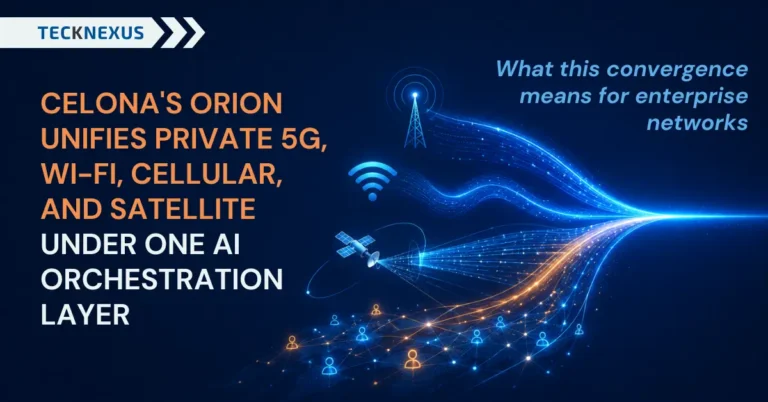
Celona's launch of Orion — unifying private 5G, Wi-Fi, public cellular, and satellite under a single deterministic fabric with an added AI orchestration layer — is a useful case study in where converged wireless architecture is heading. TeckNexus examines why multi-technology convergence is a meaningful architectural advance, what Orchestrator AI can add across a converged network, and the single-vendor subscription bundling model Celona has built around it.
- Tech News & Insight
- August 13, 2026
- Hema Kadia
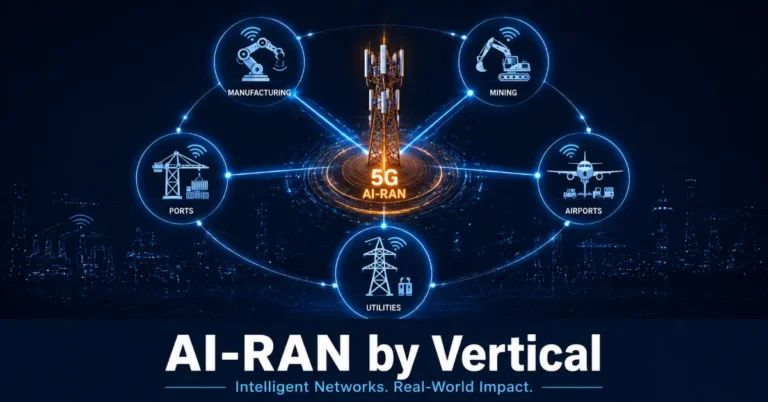
South Korea's government-backed AI-RAN pilot only names two industrial settings directly. Here's what its technical requirements actually translate to for the other three verticals still waiting on a named deployment.
- Tech News & Insight
- August 9, 2026
- Hema Kadia

Nokia and Google Cloud's network agents no longer just recommend fixes — they diagnose faults and propose remediations that a human approves rather than performs. That single word, "approves," is where the real governance work needs to happen.
- Tech News & Insight
- July 3, 2026
- Hema Kadia
June 2026's roundup: agentic AI moves from pilot to operational core across telecom networks, satellite consolidates through Rocket Lab's $8B Iridium acquisition and SpaceX's $75B IPO, AI-RAN's GPU divide matures into shipping products, US spectrum auctions return after a four-year hiatus, and telecom M&A accelerates globally.
- Tech News & Insight
- July 2, 2026
- Hema Kadia
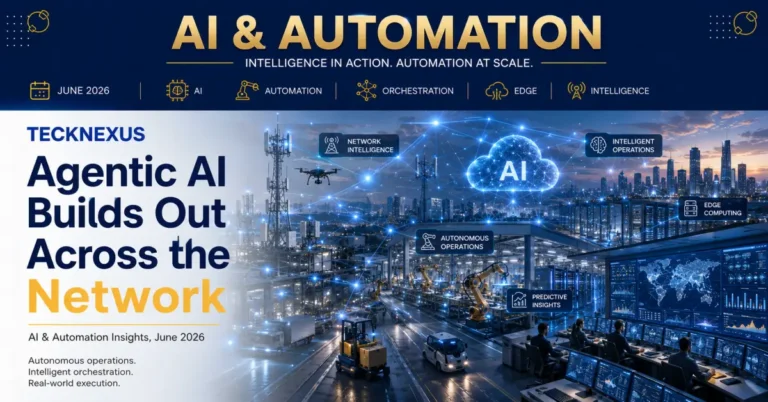
June 2026 showed agentic AI scaling from pilot to platform: industry-wide standards momentum, AI-RAN field trials from Nokia, Amdocs and KDDI, and fresh capital across data centers on three continents. This full roundup covers every deployment, partnership, funding round and governance move from the month, with tools to prioritise AI use cases and plan the network around them.
- Tech News & Insight
- June 2, 2026
- Hema Kadia
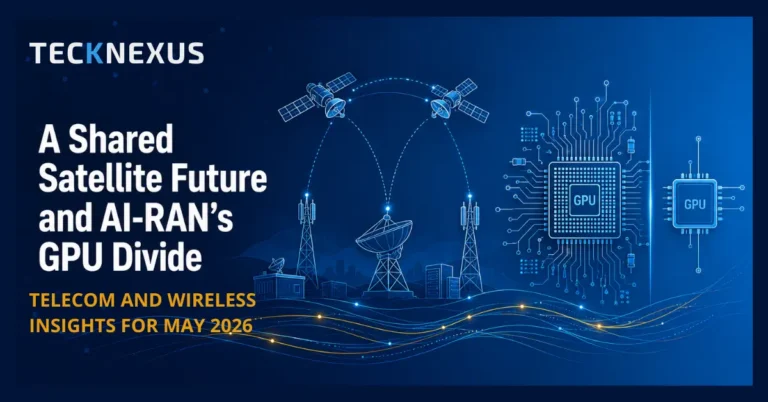
May 2026's roundup: AT&T, T-Mobile, and Verizon explore a joint satellite D2D venture, Ericsson tests GPU-free AI-RAN against Nvidia's GPU-embedded approach at the same two operators, 5G-Advanced sensing moves into live security deployments, and fiber capital both consolidates and expands.
- Tech News & Insight
- May 7, 2026
- Hema Kadia

Deutsche Telekom's transition from Ericsson to Mavenir as its primary 5G standalone core provider represents a fundamental rethinking of how Tier 1 operators architect and operate networks in the cloud-native era. Mavenir now carries all standalone 5G traffic in Germany, while Ericsson handles legacy 4G and non-standalone 5G. Driven by the Horizontal TelCo Cloud initiative, the shift has already produced measurable results including 65% energy savings in live testing and three commercial network slicing deployments, with Apple FaceTime set to leverage these capabilities at consumer scale via iOS 26.
- Tech News & Insight
- April 29, 2026
- Hema Kadia

P‑CAL’s secure mesh provided resilient communications across a complex yard, validating control loops and telemetry in the presence of interference, variable traffic density and human activity. As deployments scale, many terminals will adopt hybrid connectivity: private 5G for wide‑area mobility and interference resilience, Wi‑Fi/Wi‑Fi 6E/7 for indoor assets, and mesh for redundancy in hard‑to‑reach zones. This mirrors global port trends, where operators are rolling out private 5G to support autonomous trucks, AI‑driven analytics, drones and mobile cranes. Expect edge compute (MEC) on‑premises to host perception, fleet orchestration and video intelligence with strict latency and data‑sovereignty requirements.
- Tech News & Insight
- April 22, 2026
- Hema Kadia

SK Telecom is reorganizing around artificial intelligence to accelerate a B2B push, with a sharp focus on public sector and defense opportunities in South Korea. At a town hall marking six months in the role, SK Telecom’s CEO signaled a decisive shift: make AI the company’s growth engine and align operations, culture, and go-to-market around enterprise needs. The operator outlined an organizational, technology, and culture overhaul to strengthen competitiveness across B2B AI. The company will scale its AI data center footprint by combining capabilities from SK Group affiliates and global partners. SK Telecom advanced its in-house foundation model to a second phase.
- Tech News & Insight
- April 22, 2026
- Hema Kadia

Intel and Google expanded a multiyear partnership that doubles down on Xeon CPUs and custom infrastructure processing units to scale AI with better efficiency and predictability. Google committed to multiple generations of Intel Xeon for AI, inference, and general-purpose workloads across its global cloud. The latest Xeon 6 processors are already powering Google Cloud’s workload-optimized instances, including C4 and N4, to coordinate large-scale training, serve latency-sensitive inference, and run mainstream compute. In parallel, the companies will broaden co-development of custom ASIC-based IPUs that offload networking, storage, and security from host CPUs to improve utilization and deliver more stable performance at hyperscale.
Frequently Asked Questions
What does ‘network orchestration’ mean?
Orchestration refers to the software systems that automatically coordinate, deploy, and manage the many virtualized components of a modern network, ensuring different network functions work together correctly without requiring manual configuration of each piece individually. This includes deciding where a given virtualized network function should actually run within available cloud infrastructure, scaling that function up or down based on real-time demand, handling failures by automatically restarting or relocating affected functions, and coordinating how multiple different functions interact to deliver a complete end-to-end service. Without orchestration, operators would need to manually configure and monitor potentially thousands of individual virtualized components, a task that isn’t realistic at the scale modern 5G networks operate.
How does orchestration relate to NFV (Network Functions Virtualization)?
NFV makes network functions run as software rather than dedicated hardware, taking something like a firewall or a core network routing function that traditionally required its own purpose-built equipment and running it instead on standard servers. Orchestration is the layer that manages those virtualized functions across their full lifecycle, deciding where they run, how they scale, and how they’re connected to other functions to deliver a complete service. The two technologies are deeply complementary: NFV provides the flexibility of running network functions as software, while orchestration provides the practical coordination layer needed to actually manage that flexibility at scale.
Why is orchestration becoming more important with Open RAN and multi-vendor systems?
When a network combines hardware and software from multiple different vendors instead of one integrated supplier, as is increasingly common with Open RAN adoption, orchestration tools become essential for coordinating those different components into a single, reliably functioning network. Without sophisticated orchestration, operators would need to manually manage the interactions between different vendors’ equipment and software, a task that becomes exponentially more complex as the number of distinct vendors involved grows. Modern orchestration platforms increasingly need to support multi-vendor environments specifically, a requirement that has shaped how orchestration software itself has evolved as Open RAN adoption has grown.
What’s the relationship between orchestration and network slicing?
Orchestration systems are what actually create, configure, and manage individual network slices in practice, translating a business requirement, such as guaranteed low latency for a specific customer’s application, into the technical configuration that delivers it across potentially multiple different layers of network infrastructure. This includes initially provisioning the slice with the right combination of resources, continuously monitoring whether it’s delivering its promised performance, and dynamically adjusting resource allocation as conditions change over time. More advanced orchestration approaches aim to automate much of this slice lifecycle management directly, reducing the need for engineers to manually configure and adjust each slice throughout its operational lifetime.
What’s the difference between orchestration and automation?
Automation generally refers to executing a specific, often narrowly defined task without manual intervention, like automatically restarting a failed software process or adjusting a single configuration parameter in response to a defined trigger. Orchestration refers to the broader coordination of multiple automated tasks and virtualized network components across their full lifecycle, making higher-level decisions about how different pieces of the network should work together to deliver a complete service. In practice, orchestration systems typically rely on underlying automation capabilities to actually carry out the individual tasks they coordinate, providing higher-level decision-making while automation provides the lower-level execution mechanism.
What standards or frameworks govern how orchestration systems work?
Several industry standards bodies have developed frameworks specifically for network orchestration. ETSI’s NFV Management and Orchestration framework, commonly abbreviated MANO, defines a widely referenced architecture for how virtualized network functions should be orchestrated, covering how resources are allocated and how the lifecycle of virtualized functions is managed. The Linux Foundation hosts several relevant open-source orchestration projects, including ONAP, the Open Network Automation Platform, which provides an open-source framework operators can adopt and customize rather than building proprietary orchestration systems entirely from scratch. These frameworks help ensure orchestration systems from different vendors can interoperate to some degree.
What happens if an orchestration system itself fails or makes a mistake?
Because orchestration systems control how network resources are allocated and how virtualized functions are deployed across potentially large portions of a network, a mistake or failure in the orchestration layer itself can have an outsized impact compared to a failure in a single individual network function, since orchestration errors can propagate across many different parts of the network simultaneously. Operators generally mitigate this risk through careful testing of orchestration changes before deployment, often using digital twins or staged rollout environments to validate orchestration logic before applying it to live, customer-facing infrastructure, and by building redundancy and rollback capabilities into orchestration systems so a problematic decision can be detected and reversed quickly.
How is AI changing network orchestration?
AI is increasingly being incorporated into orchestration systems to help make more sophisticated, real-time decisions about resource allocation and network configuration than purely rule-based orchestration logic could handle on its own. Rather than relying solely on pre-defined rules, AI-enhanced orchestration can analyze patterns across vast amounts of network data to predict capacity needs before they become critical, optimize how resources are distributed across competing demands, like multiple network slices needing guaranteed performance simultaneously, and increasingly, make autonomous adjustments within defined guardrails without requiring a human engineer to manually approve each change. This convergence is part of the broader industry movement toward more autonomous, self-managing networks.