Private LTE Mining Expands at Rössing Uranium in Namibia
Rössing Uranium has taken a practical step toward smarter mining by commissioning four private LTE towers at its open-pit mine in Namibia. The project was delivered with MTC, Namibia’s mobile telecommunications provider, to improve voice and high-speed data connectivity across key operational zones. The new network expands coverage across the 50-year-old open pit and surrounding areas, where reliable communication is not a nice-to-have. It is part of daily safety, production, and decision-making.
The deployment shows how Private Networks can support industrial operations that need dependable, site-specific connectivity. In mining, weak signal areas can delay decisions, reduce visibility, and increase operational risk. Rössing’s new private LTE network is designed to reduce those blind spots.
This use case also reflects a broader shift in Mining. Mines are becoming more data-driven. Trucks, drills, safety systems, dispatch platforms, GPS tools, and monitoring applications all depend on steady connectivity. Heavy machines still do the heavy lifting, but data now does a lot of the thinking.
Why Open-Pit Mines Need Reliable Private LTE Connectivity
Open-pit mines are difficult places to connect. They cover wide areas. They include moving machinery, changing terrain, dust, vibration, and safety-critical operations. Standard public mobile coverage may not always meet the needs of such an environment.
At Rössing, the challenge was clear. Modern mining systems depend on real-time data, but inconsistent connectivity can limit visibility across the site. Rössing Uranium Managing Director Johan Coetzee said that truck dispatch, drill readings, and safety alerts all depend on strong and uninterrupted communication. Without reliable connectivity, the mine operates with reduced visibility.
The safety challenge is just as important. Open-pit conditions can change quickly. Slopes can shift. Trucks and drills move constantly. Teams need rapid communication when something changes. Delayed alerts or poor coverage can affect response times.
There was also an operational efficiency challenge. Fleet management, GPS tracking, automated dispatch, and other digital tools need a stable network. Without that, teams may rely on manual updates or delayed information. That works until it does not. And in mining, “almost real time” can be a risky phrase.
MTC and Rössing Deploy Four Private LTE Sites for Smart Mining
MTC and Rössing deployed four dedicated private LTE sites across the mine. The network was designed to expand coverage and deliver improved mobile voice and high-speed data connectivity in important operational areas.
The solution uses private LTE rather than relying only on public mobile coverage. That matters because a private network can be planned around the mine’s specific geography, traffic needs, and operational priorities. It can support teams, machines, applications, and safety systems in areas where connectivity is mission-critical.
This is a strong example of 4G/LTE being used as an industrial connectivity layer. While 5G gets much of the attention, LTE remains highly relevant for mining sites that need reliable coverage, mature devices, and proven performance. It is often the sensible choice when the goal is to solve a real operational problem rather than chase the newest acronym.
The upgraded infrastructure also creates a better base for future digital tools. With improved connectivity, Rössing can support smarter fleet coordination, faster data exchange, real-time monitoring, and more responsive field operations.
Rössing’s LTE Network Investment Supports Real-Time Mining Operations
Rössing confirmed that the four private LTE towers were commissioned in April 2026. The LTE expansion required an investment of N$3.7 million for the towers and contributed to a broader infrastructure upgrade of more than N$10 million.
The company described the network as part of its digital transformation journey and as an enabler for advanced technologies aligned with smart mining practices. MTC also highlighted the project as an example of its enterprise strategy, focused on customized connectivity solutions for private-sector partners.
The New Era report said the private LTE network supports seamless, real-time communication in an environment where reliability is critical to mine safety and operational efficiency. It also noted that the network enables better coordination, faster decision-making, and the use of modern digital tools on the ground.
The evidence points to one main idea: connectivity is now part of the mining production system. It is not just office Wi-Fi with a harder hat.
Why Private LTE Fits Large Industrial Mining Sites
Private LTE was a practical technology choice for this use case. It offers wide-area coverage, mobility support, and reliable data connectivity for large industrial environments. For an open-pit mine, those traits matter.
The network supports voice and high-speed data services across key zones. It can help connect field workers, vehicles, control teams, and digital mining applications. It also supports future integration with IoT devices, fleet systems, and operational platforms.
A private LTE network also gives the mine more control over performance and coverage design. That is important in a mining environment where some areas may be more safety-sensitive or operationally important than others.
Over time, Rössing could use the LTE foundation to support more advanced capabilities. These may include connected sensors, remote monitoring, automated dispatch, predictive maintenance, and eventually migration paths toward 5G Private Networks where the business case makes sense.
Private LTE Improves Mine Safety, Visibility and Productivity
The first benefit is better safety. Reliable connectivity allows teams to receive alerts, share updates, and respond faster when conditions change. In a dynamic open-pit environment, seconds can matter.
The second benefit is operational visibility. With stronger connectivity, Rössing can improve tracking of trucks, drills, and field activities. This helps teams understand what is happening across the mine instead of depending on delayed or incomplete information.
The third benefit is better coordination. Mine operations involve many moving parts. Dispatch teams, operators, supervisors, maintenance teams, and safety personnel all need timely information. A private LTE network helps connect those groups more effectively.
The fourth benefit is support for smarter digital tools. Fleet management, GPS tracking, automated dispatch, and real-time monitoring all need reliable data links. The network gives Rössing a stronger base for those systems.
Finally, the network supports productivity. Better communication can reduce uncertainty, improve planning, and help teams avoid avoidable delays. It will not make mining simple. Mining is not simple. But it can make operations less guessy, which is a technical term only in spirit.
What Rössing’s Private LTE Deployment Means for African Mining
This project is important for Namibia’s mining sector because it shows how telecom operators and mining companies can work together on practical digital transformation. It is not only about adding towers. It is about designing connectivity around industrial workflows.
As mines become more data-driven, private LTE and private 5G networks will become more common. Mining companies need networks that can support safety systems, connected vehicles, sensors, digital twins, worker communication, and eventually more automated operations.
The Rössing deployment also shows that smart mining does not always start with full automation. It often starts with basic but reliable connectivity. Once the network foundation is in place, companies can add more digital use cases step by step.
For African mining markets, this is especially relevant. Many sites are remote, harsh, and operationally complex. Public network coverage may be limited or inconsistent. Private industrial networks can fill that gap and help mines improve safety, productivity, and sustainability.
How Rössing Uranium Is Using Connectivity for Mining Modernization
Rössing Uranium’s role was to define the operational need and invest in connectivity as part of its modernization strategy. The company recognized that mining now runs on both machines and data.
By commissioning the four LTE towers, Rössing improved its ability to support real-time communication, fleet visibility, drill data, safety alerts, and operational coordination. The company positioned the network as part of its broader effort to modernize infrastructure, improve productivity, and align with global mining standards.
This is a useful example for other industrial firms. Digital transformation should not start with a buzzword deck. It should start with a practical question: where does poor connectivity create risk, delay, or cost?
Rössing appears to have answered that question with a targeted private LTE deployment.
MTC Namibia’s Role in Industrial Private Network Deployment
MTC’s role was to design, deploy, and support the private LTE network. The company provided the telecom infrastructure needed to improve mobile voice and data services across the mine.
MTC Managing Director Dr. Licky Erastus said the project improves how people connect and work on the ground. He also described it as an enabler of safer, smarter, and more efficient mining operations.
The deployment also reflects MTC’s enterprise business strategy. The operator has been focusing on customized enterprise solutions for private-sector partners. In this case, MTC moved beyond consumer mobile connectivity and delivered an industry-specific network for mining.
That partner role is important. Telecom operators have a strong opportunity in industrial Monetization if they can package connectivity, service quality, coverage planning, and operational support around sector-specific needs.
Rössing’s Private LTE Network Is Now Operational
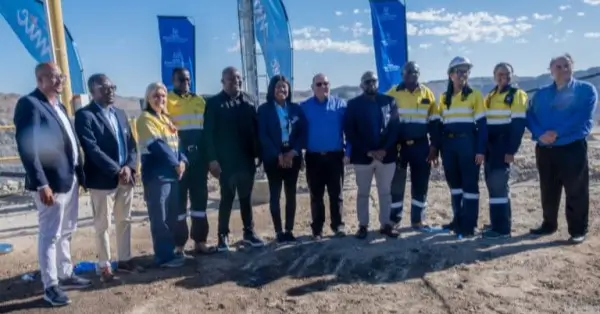
The network has been commissioned and inaugurated at Rössing Uranium’s mine. The deployment includes four dedicated private LTE sites serving key operational zones at the mine.
The solution is now part of Rössing’s operational infrastructure. It supports current needs such as voice, high-speed data, real-time communication, and digital tool integration.
The next phase will likely focus on how the mine uses this connectivity. The real value will come from connected workflows, better data use, faster response, and stronger integration with mining systems.
Rössing’s official announcement was published on April 23, 2026. The company said the four private LTE towers were commissioned that week at the open pit.
New Era reported on April 30, 2026, that MTC had deployed the four dedicated LTE sites at Rössing Uranium mine to improve mobile voice and high-speed data connectivity in key operational areas.
The deployment forms part of a broader infrastructure upgrade worth more than N$10 million, with N$3.7 million invested in the LTE towers.
Rössing and MTC Leaders Highlight Safety and Smart Mining Benefits
Johan Coetzee, Managing Director of Rössing Uranium, emphasized that reliable connectivity is central to safety and visibility. He said every truck dispatch, drill reading, and safety alert depends on strong communication. He also noted that a robust network allows real-time monitoring and rapid response.
Dr. Licky Erastus, Managing Director of MTC, described the project as an enabler of safer, smarter, and more efficient mining. He said reliable, high-performance communication gives teams better tools to make real-time decisions and work with greater confidence.
Together, these endorsements make the use case clear. The project is not only about network coverage. It is about using Private Networks to improve safety, visibility, and operational confidence in one of Namibia’s most important industrial sectors.