How Private 5G Is Changing Modern Mining Operations
Mining is becoming more software-driven. That sounds odd for an industry built around rock, drills, trucks, and refineries. But the shift is real. Mariana Minerals is showing how modern mining can use Private Networks, 5G, AI, and Edge Computing to improve daily operations.
Mariana Minerals has deployed a private 5G network from Celona across its Copper One mine and refinery in southeastern Utah. The deployment creates the connectivity layer for MarianaOS, the company’s software-defined mining platform. The network is designed to support autonomous drilling, self-driving haul trucks, real-time monitoring, asset tracking, and continuous data collection across a difficult mining environment.
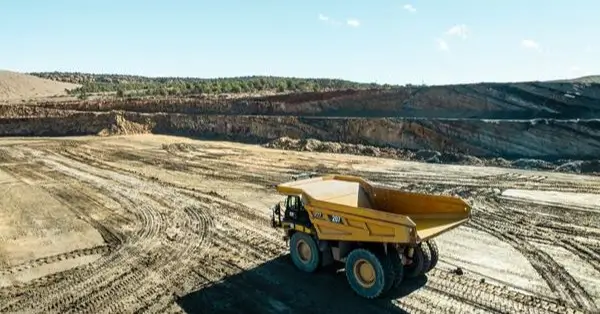
This is not just another wireless upgrade. It is a practical example of how 5G Private Networks can help industrial companies move from slow, manual processes to connected, automated operations. In mining, that matters. A delayed signal can mean a delayed truck, a missed drilling target, or downtime that nobody wants to explain in the Monday meeting.
Why Mining Sites Need Reliable Private Wireless Networks
Mining sites are hard places for networks. They are large, dusty, remote, and constantly changing. Equipment moves. Terrain shifts. Weather can interfere. Distance between assets can be significant. Traditional Wi-Fi often struggles in these environments, especially when coverage must reach moving machines, sensors, and edge systems across wide outdoor areas.
Mariana Minerals faced a common mining challenge: how to connect every critical asset in real time. Legacy mining networks often rely on Wi-Fi, manual reporting, and periodic data collection. That can create gaps in visibility. Teams may know what happened after the fact, but not always what is happening right now.
For autonomous mining, that is not good enough. Autonomous drills need optimized drilling patterns. Self-driving haul trucks need precise tracking and coordination. Support equipment needs to be visible. Operators need live data from the field. And MarianaOS needs a steady flow of data to monitor, analyze, and improve operations.
The challenge was clear: Mariana needed a secure, reliable, low-latency wireless network that could support real-time operations across Copper One.
Mariana Minerals Deploys Celona 5G LAN at Copper One
Mariana Minerals selected Celona’s 5G LAN to deploy a private 5G network across Copper One. This network provides a unified wireless layer for industrial operations. It is built to deliver reliable, low-latency performance across equipment, sensors, and edge systems throughout the mine.
The private 5G network acts as the communications backbone for MarianaOS. Data from connected assets flows continuously into the platform. MarianaOS then uses that data for monitoring, analytics, decision-making, and operational coordination.
With this setup, MarianaOS can send optimized drill patterns to autonomous drilling equipment. It can also track and orchestrate self-driving haul trucks and support equipment with high precision. According to the announcement, private 5G also allows a single operator to remotely manage multiple autonomous drills.
This is where Automation and IoT become useful rather than buzzword soup. Sensors, machines, vehicles, and software systems can work together because the network is stable enough to support them.
Private 5G Moves from Trial to Production Mining Network
The deployment has been publicly announced by both Celona and reported by Data Center Dynamics. The network is deployed at Copper One, Mariana’s fully operational copper mine and refinery in southeastern Utah. It is intended to support real-time mining operations and future automation across the site.
The GlobeNewswire announcement states that the private 5G network supports continuous data collection, improved asset tracking, faster response to operational changes, and a move from periodic manual reporting to continuous system awareness. It also notes that geological data can be relayed back to the control room in real time to refine the site’s digital twin, improving drilling accuracy and fragmentation outcomes.
Data Center Dynamics also reported that the Celona 5G LAN provides low-latency performance across equipment, sensors, and edge systems, and that Mariana expects the improved data foundation to improve productivity, reduce downtime, and enable more coordinated operations.
In short, the evidence points to one main point: Mariana is using private 5G as a production network, not as a small technology trial.
Why Private 5G, AI, and Edge Computing Fit Autonomous Mining
Mariana’s choice of private 5G makes sense for mining. Compared with traditional Wi-Fi, private 5G is better suited for wide-area coverage, mobility, predictable performance, and secure industrial connectivity. That is important when the connected assets are not just laptops and tablets, but drills, haul trucks, sensors, and control systems.
Celona’s 5G LAN is designed as a turnkey enterprise private wireless platform. It allows companies to deploy and operate private cellular networks that integrate into existing enterprise infrastructure. Celona describes its platform as a private 5G solution for secure and reliable wireless connectivity for critical business applications.
For Mariana, the network supports several technology layers:
- Private Networks provide site-wide control and predictable performance.
- 5G enables mobility, low latency, and high-bandwidth connectivity.
- Edge Computing supports local data processing close to equipment and operations.
- AI and machine learning tools help optimize mining decisions.
- Network Automation supports faster coordination across machines and workflows.
This mix is practical. Mining does not need technology theater. It needs tools that work in the field, under pressure, with heavy equipment nearby and very little patience for network drama.
Key Benefits of Private 5G for Autonomous Mining Operations
The biggest benefit is real-time visibility. Mariana can collect data continuously from equipment, sensors, and systems across Copper One. That changes how teams manage the mine. Instead of waiting for manual updates, operators can see what is happening as it happens.
Another benefit is improved coordination. Autonomous drills, haul trucks, and support equipment can be tracked and managed through MarianaOS. That can help reduce delays, improve routing, and support safer movement of machines across the site.
Private 5G also supports better drilling performance. By sending optimized drill patterns to autonomous equipment and feeding geological data back to the control room, Mariana can refine the digital twin and improve drilling accuracy. Better drilling can also improve fragmentation, which affects downstream processing and efficiency.
There are also operational benefits. The deployment is expected to reduce downtime, improve asset tracking, speed up response to changes, and create a more coordinated mining operation.
Finally, there is a workforce benefit. If one operator can remotely manage multiple autonomous drills, teams can work more efficiently. It also reduces the need for people to be physically close to every machine in the field. In mining, keeping people farther from risk is usually a good idea.
What Copper One Shows About the Future of Connected Mining
This use case matters beyond one copper mine in Utah. Copper demand is rising due to AI infrastructure, energy storage, defense systems, electric vehicles, and grid modernization. The GlobeNewswire announcement states that the U.S. imports about 50% of its refined copper and that domestic demand is projected to nearly double by 2035.
That creates pressure on mining companies to improve productivity while managing safety, cost, and environmental constraints. Better connectivity will not solve every mining problem. It will not make permitting faster or ore grades better. But it can make existing operations more efficient, more visible, and easier to automate.
For the Mining sector, this deployment shows how private 5G can become core infrastructure. It can support autonomous fleets, remote operations, digital twins, predictive maintenance, machine learning, and connected worker systems.
The broader lesson is simple: industrial automation depends on industrial-grade connectivity. Without it, autonomy becomes fragile. With it, companies can build more reliable digital operations.
How Mariana Minerals Uses MarianaOS for Software-Defined Mining
Mariana Minerals is the mining operator and owner of the Copper One operation. The company is using MarianaOS as the unifying platform for mining operations. MarianaOS connects data, analytics, monitoring, and decision-making into one software-defined layer.
Mariana describes itself as a software-first, vertically integrated minerals company. It engineers, builds, and operates mines and refineries it owns. The company also uses proprietary AI and machine learning tools to speed project execution and optimize production across critical metals.
In this use case, Mariana’s role is not limited to adopting connectivity. It is building an operating model around data. The private 5G network feeds MarianaOS, and MarianaOS helps coordinate the mine. That is the important part. Connectivity has value because it supports a clear operational system.
Celona’s Role in Enabling Secure 5G Mining Connectivity
Celona provides the private 5G network platform. Its 5G LAN delivers the wireless layer that connects equipment, sensors, edge systems, and MarianaOS across Copper One. Celona’s role is to provide the secure, deterministic connectivity needed for real-time operations.
Rajeev Shah, co-founder and CEO of Celona, said modern mining needs more than automation. It needs deterministic, secure connectivity between every system in the operation. He added that deploying 5G LAN at Copper One gives Mariana critical infrastructure for AI-driven operations at scale.
That statement captures the partner role well. Celona is not only supplying a network. It is enabling the control layer that lets autonomous and software-defined mining systems function reliably.
Current Status and Timeline of the Copper One Private 5G Deployment
The private 5G network has been deployed across Mariana’s operations at Copper One. The deployment was announced on April 23, 2026, and reported by Data Center Dynamics on April 27, 2026.
Copper One is described as a fully operational copper mine and refinery in southeastern Utah. The network is already positioned as the core connectivity infrastructure for MarianaOS and current real-time mining operations.
- 2019: Celona was founded and began developing its enterprise private wireless and 5G LAN platform.
- 2022: Celona raised a $60 million Series C funding round led by DigitalBridge Ventures, according to Data Center Dynamics.
- April 23, 2026: Mariana Minerals and Celona announced the deployment of a private 5G network at Copper One in southeastern Utah.
- April 27, 2026: Data Center Dynamics reported the deployment and highlighted its role in supporting mining data collection, autonomous systems, and edge operations.
- Next phase: The network is expected to support future deployments of advanced automation, machine learning, and autonomous systems as Mariana expands its software-defined mining model.
What Mariana Minerals and Celona Leaders Say About AI-Driven Mining
Rajeev Shah, co-founder and CEO of Celona, said the deployment gives Mariana the infrastructure needed to support AI-driven operations at scale. His point is direct: automation needs secure and predictable connectivity to work properly.
Turner Caldwell, co-founder and CEO of Mariana Minerals, said the U.S. has a copper problem and a narrow window to fix it. He also said Celona 5G LAN gives Mariana the connectivity foundation to run a modern mining operation where every asset is connected and every decision is driven by real-time data.
That is the core message of this use case. Private 5G is not being used as a shiny add-on. It is being used as production infrastructure for a connected mine. For mining companies looking at autonomy, digital twins, and AI-driven operations, Mariana Minerals and Celona offer a useful model: connect the site first, then let the software do more of the heavy lifting.