Telus

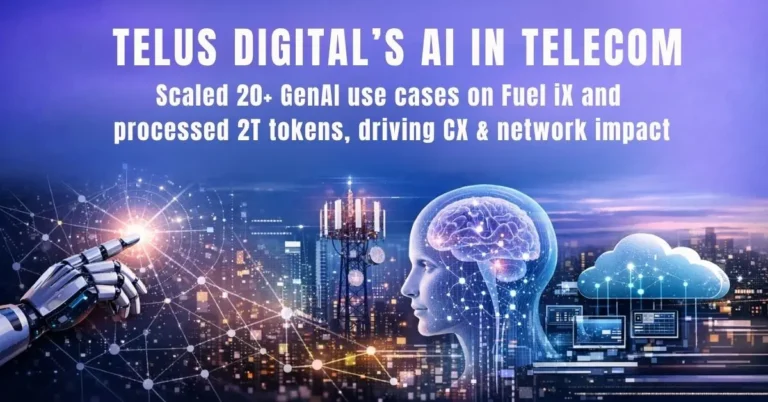
TELUS Digital is using Mobile World Congress 2026 to move the AI-in-telecom conversation from pilots to proven production at scale. TELUS Digital reports processing more than two trillion tokens in 2025 through its Fuel iX generative AI platform for TELUS operations and customers. The portfolio spans AI for customer experience, application safety, and network modernization—built and battle-tested within TELUS before client rollout. The Network Design Services practice applies AI to planning and optimization while charting a path from legacy network stacks to cloud-native, automated environments.
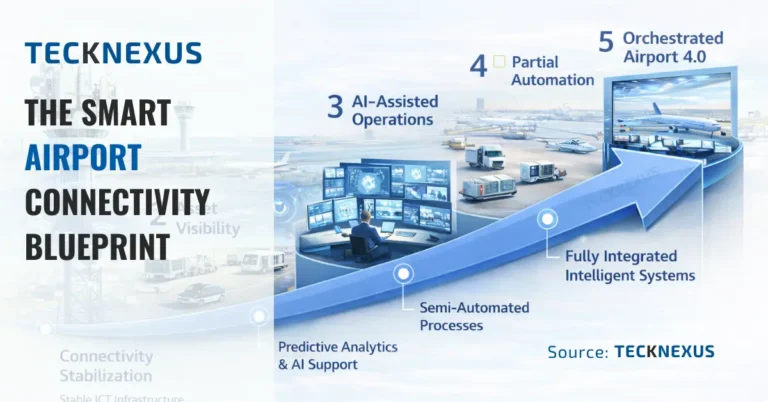
From Singapore to Schiphol, airports are embracing private networks for airports alongside AI and digital twins to drive operational efficiency, predictive maintenance, sustainability, and smarter passenger flows. This article explores 12 real-world deployments showcasing how private network deployments for aviation are shaping the future of Airport 4.0 globally.
Rogers Communications has moved from beta to a commercial footprint for satellite-to-mobile in Canada, extending basic connectivity and select apps to consumer smartphones while adding an industrial IoT tier for remote operations. The new Rogers Satellite service enables a curated set of popular apps to work beyond terrestrial coverage, including WhatsApp calling, Google Maps, AccuWeather, X, and CalTopo on most modern smartphones. In parallel, Rogers introduced satellite-to-mobile for IoT businesses, targeting asset tracking along highways and rail, as well as sensor telemetry in forestry, mining, and other resource sectors where terrestrial cellular is sparse.
Telus is in active talks to bring partners into its data-centre and AI business, signaling a capital-light approach to scale sovereign AI compute in Canada. Partner capital can accelerate GPU procurement, facility buildouts, and interconnect investments while aligning with customers that require sovereign environments distinct from hyperscale public clouds. Management addressed investor concerns about potential AI compute oversupply by emphasizing a modular build strategy, adding capacity in phases as demand materializes. The timing aligns with tightening data-residency requirements, heightened AI adoption, and demand for local alternatives to U.S.-centric infrastructure. This reduces stranded capital risk in a market with volatile GPU supply, rapid chip roadmaps, and evolving workload profiles.
TELUS has taken full ownership of TELUS Digital, a move designed to consolidate AI-powered customer experience, SaaS, and automation capabilities across its telecom, health, and agriculture businesses while unlocking material cost efficiencies. TELUS acquired all remaining TELUS Digital shares for US$4.50 per share, valuing the transaction at approximately US$539 million and issuing a small portion of TELUS common shares alongside cash to complete the deal; the entity will be delisted from the TSX and NYSE and cease public reporting. Management targets roughly US$150 million in annual efficiencies from automation, business simplification, and tighter cross-selling.
TELUS moved beyond experiments to enterprise adoption: 57,000 employees actively use gen AI, more than 13,000 custom AI solutions are in production, and 47 large-scale solutions have generated over $90 million in benefits to date. Time savings exceed 500,000 hours, driven by an average of roughly 40 minutes saved per AI interaction. The scale is notable: Fuel iX now processes on the order of 100 billion tokens per month, a signal that the platform is embedded in day-to-day work rather than isolated to innovation teams. TELUS designed for trust from the start: its Fuel iXpowered customer support tool achieved ISO 31700-1 Privacy by Design certification, a first for a gen AI solution.
As Open RAN moves from trials to large-scale adoption, telecom giants like NTT Docomo, AT&T, and TELUS share their real-world deployment strategies. From multivendor interoperability to automation and security, this article explores key operational insights, ecosystem collaborations, and future directions in Open RAN architecture.
YYC Calgary International Airport, in partnership with TELUS, has launched Canada’s first 5G private wireless network, transforming airport operations with real-time IoT tracking, AI-driven automation, and ultra-secure connectivity. This 10-year initiative enhances passenger experience, baggage handling, and airport security, setting a new benchmark for smart airports.
The telecommunications industry is undergoing a transformative shift driven by the synergy of fiber optic cables and Generative Artificial Intelligence (GenAI). This powerful combination enhances network operations, providing high-speed, low-latency data transmission essential for AI models. As telcos like SK Telecom and TELUS integrate AI into their services, strategic investments in fiber infrastructure and AI expertise are crucial. Discover how this convergence is enabling network management, boosting efficiency, and setting the stage for future advancements in the telecom sector.
In this 180th episode of The G2 on 5G, we cover:
1. Telus partners with Samsung Networks for LTE and 5G open and virtualized RAN
2. Verizon inks Private 5G deal with NHL
3. T-Mobile leans into uplink transmit switching for 5G uplink optimization
4. AT&T and FirstNet sign 10-year, $8 billion deal including 1,000 new sites, SA 5G
5. Nokia and Dell team up for private cellular networking
6. Vodafone HyperRealityHub

Your Brand. Our Intelligence Tools.

Capture leads at the point of evaluation. Talk to Us →

Sponsored by Palo Alto Networks
⚡ Utilities ⏱ 8 min ✓ Free
This tool is built and hosted by TeckNexus.
Launch Tool →
Whitepaper
This whitepaper explains how utilities can use secure AI-enabled private mobile networks to modernize operations, support distributed intelligence, improve resilience, and strengthen cybersecurity across critical infrastructure. It covers AI applications, private network advantages, zero trust principles, multilayered security architecture, and governance considerations for AI-ready utility environments....
Whitepaper
Non-terrestrial networks are rapidly evolving from experimental satellite systems into an increasingly important part of the global 5G connectivity landscape. This eBook, developed by Radisys in collaboration with TeckNexus, explores how 3GPP standardization, satellite architecture innovation, and software-driven network design are reshaping NTN deployment models. It examines the transition from...
Whitepaper
Private cellular networks are transforming industrial operations, but securing private 5G, LTE, and CBRS infrastructure requires more than legacy IT/OT tools. This whitepaper by TeckNexus and sponsored by OneLayer outlines a 4-pillar framework to protect critical systems, offering clear guidance for evaluating security vendors, deploying zero trust, and integrating IT,...
Scroll to Top