Others

New data from the Car Connectivity Consortiumโ€™s 2025 Future of Vehicle Connectivity Report signals how OEMs, suppliers, and mobile platforms will prioritize standards, security, and interoperability to scale the next phase of software-defined vehicles. The market is past pilots: executives are moving budget into customer experience and fleet productivity where ROI is visible within a year, but only if solutions are secure, easy to use, and proven to interoperate across brands, devices, and regions. The CCCโ€™s data provides a directional roadmap for where to invest in the in-vehicle wireless stack and the edge-to-cloud controls that make those experiences trustworthy.
SkyMirrโ€™s Sky5G Wireless Router being named a CES 2026 Innovation Awards Honoree signals that antenna-first design is emerging as a decisive lever for 5G customer-premises equipment performance and reliability. The Consumer Technology Associationโ€™s awards program recognizes design and engineering that materially advances user outcomes, and SkyMirrโ€™s selection draws attention to a core differentiator: its MuLCAT (Multi-Layer Coupling Controlled Antenna Technology) architecture. Rather than treating the antenna as a downstream component, MuLCAT integrates a multi-layer coupling approach to increase isolation, broaden usable bandwidth, and suppress interference in compact enclosures.
Nokia delivered a stronger-than-expected third quarter, with comparable operating profit reaching โ‚ฌ435 million against consensus of about โ‚ฌ342 million. Group net sales rose 12% to โ‚ฌ4.83 billion, above forecasts, driven by Optical Networks and cloud-related demand tied to AI data centers. The stock jumped double digits intraday and added billions in market value, reflecting newfound confidence after a challenging first half. The recovery now is concentrated in network infrastructure rather than mobile RAN, underscoring where customers are actually spending to handle AI-era traffic patterns. Nokia nudged its full-year operating profit outlook to โ‚ฌ1.7โ€“2.2 billion, with a reporting change related to scaling down passive venture investments partly in play.
New usage data shows AT&T subscribers are tapping into T-Mobileโ€™s Starlink-powered T-Satellite more than expected, signaling a rapid shift in how carriers and customers think about direct-to-device connectivity. Speedtest intelligence indicates T-Mobile users account for the majority of direct-to-device (D2D) connections to Starlink, roughly six in ten overall and more than seven in ten among devices reporting active service at connection time. The surprise is AT&Tโ€™s footprint: about a third of observed connections come from AT&T subscribers, while Verizonโ€™s share is minimal.
Indiaโ€™s mobile industry lobby is pushing for tariff corrections as network spending rises faster than service revenues. The Cellular Operators Association of India (COAI) says operators face a growing mismatch between capital outlays and tariff-led returns. By its estimate, the cumulative gap up to 2024 was already around Rs 10,000 crore and is widening in 2025 as data consumption accelerates. COAI argues that a handful of large traffic generators (LTGs) are responsible for most network load without directly contributing to network build costs. Expect a mix of tariff rationalization, plan redesign, and targeted capex as operators chase sustainable returns.
The AI value gap is wideningโ€”and itโ€™s now a strategy problem, not a tooling problem. Fresh research shows a small cohort of โ€œfuture-builtโ€ companies converting AI into material P&L impact while most firms lag despite sizable spend. BCGโ€™s 2025 assessment of 1,250 senior executives finds only 5% of companies have the capabilities to consistently generate outsized AI value, with 35% scaling and beginning to see benefits, and a full 60% reporting little to no financial impact to date.
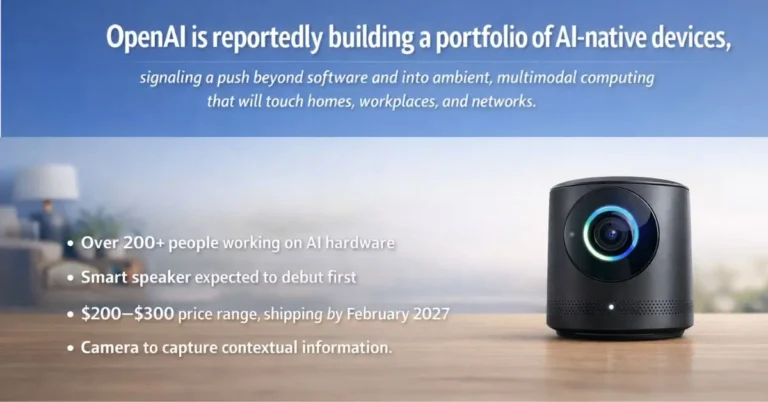
OpenAI is reportedly preparing a standalone app for its next-gen video model, positioning AI-only short video as a consumer format in its own right. The app reportedly delivers a vertical feed with swipe navigation, reactions, and remixing familiar mechanics that lower friction for discovery and creation. Every clip is generated by Sora 2 rather than uploaded, with current limits around 10 seconds per video. A recommendation engine powers a personalized โ€œFor Youโ€ experience, aligning with how short-form attention is won and retained today. A notable feature is identity verification tied to likeness usage. Expect provenance signals and watermarking frameworks (for example, C2PA-style manifests) to become table stakes for platforms that remix human likeness at scale.
Wayveโ€™s end-to-end driving AI is now running in Nissan Ariya electric vehicles in Tokyo, marking a pragmatic step toward consumer deployment in 2027. The test vehicles combine a camera-first approach with radar and a lidar unit for redundancy, aligning with Japanโ€™s dense urban environment and complex traffic patterns. The initial commercial target is โ€œeyes on, hands offโ€ Level 2 driver assistance, with drivers remaining responsible and ready to take over. Nvidia has signed a letter of intent for a potential $500 million investment in Wayveโ€™s next funding round, reinforcing the compute-intensive nature of the program.
Argentinaโ€™s regulator ENACOM has created a new licensing framework and reserved spectrum to let enterprises run stand-alone private mobile networks across critical industries. ENACOM has designated the 2300โ€“2400 MHz band for Private Wireless Broadband Systems, a category designed for on-premise, non-public LTE/5G networks serving operational technology and enterprise applications rather than consumer subscribers. The framework supports high-throughput, low-latency, and massive IoT use cases, enabling enhanced video, automation, and machine communications across industrial campuses and field operations; 2.3 GHz maps to widely supported 3GPP Band 40 (LTE TDD) and NR n40, giving enterprises access to a mature device and radio ecosystem.
With the FCC under pressure to deliver 300 MHz of auctionable spectrum, a group of Senate Republicans is urging the agency to preserve the shared 3.5 GHz CBRS band and the unlicensed 6 GHz band that underpin private 5G and nextโ€‘gen Wiโ€‘Fi. Ten Senate Republicans, including five members of the Senate Commerce Committee, sent a letter urging the FCC to ensure existing operations in the 6 GHz and Citizens Broadband Radio Service (CBRS) bands continue โ€œwithout disruption.โ€ NTIA Administrator Arielle Roth called for preserving 6 GHz for Wiโ€‘Fi, a stance applauded by NCTA as a recognition that unlicensed spectrum is an economic engine.
The quarterโ€™s growth underscores a resilient access capex cycle despite macro uncertainty, with fiber and fixed wireless access (FWA) deployments offsetting sluggish cable spend. Fiber PON platforms and 5G FWA customer premises equipment (CPE) drove the uptick, while DOCSIS infrastructure outlays fell 13% year over year on weaker Remote PHY Device (RPD) purchases and a slowdown in new virtual CMTS (vCMTS) licenses. The competitive center of gravity in broadband is shifting. Operators prioritizing XGS-PON rollouts and 5G FWA are growing faster and spending more, while cable operators are pacing upgrades and deferring some distributed access architecture (DAA) investments.

Others News Feed

TeckNexus Newsletters

I acknowledge and agree to receive TeckNexus communications in line with the T&C and privacy policy.ย 

Tech News & Insight
Enterprises adopting private 5G, LTE, or CBRS networks need more than encryption to stay secure. This article explains the 4 pillars of private network security: core controls, device visibility, real-time threat detection, and orchestration. Learn how to protect SIM and device identities, isolate traffic, secure OT and IoT, and choose...

Sponsored by: OneLayer

     
Whitepaper
Private cellular networks are transforming industrial operations, but securing private 5G, LTE, and CBRS infrastructure requires more than legacy IT/OT tools. This whitepaper by TeckNexus and sponsored by OneLayer outlines a 4-pillar framework to protect critical systems, offering clear guidance for evaluating security vendors, deploying zero trust, and integrating IT,...
Whitepaper
Telecom networks are facing unprecedented complexity with 5G, IoT, and cloud services. Traditional service assurance methods are becoming obsolete, making AI-driven, real-time analytics essential for competitive advantage. This independent industry whitepaper explores how DPUs, GPUs, and Generative AI (GenAI) are enabling predictive automation, reducing operational costs, and improving service quality....
Scroll to Top

Feature Your Brand in Private Network Magazines

With Award-Winning Deployments & Industry Leaders
Sponsorship placements open until Nov 21, 2025