Cox

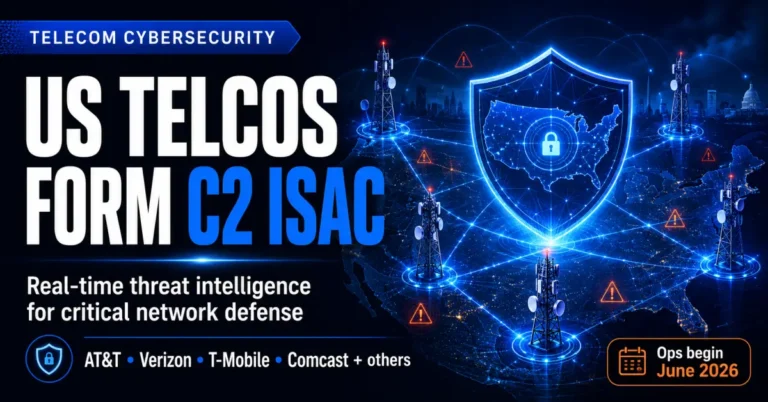
Eight of the most influential US telecommunications carriers — including AT&T, Verizon, T-Mobile, and Comcast — have established the Communications Cybersecurity Information Sharing and Analysis Center, known as C2 ISAC. Governed by the CISOs of each founding company and led by a director with CISA and FBI experience, C2 ISAC is designed to deliver real-time, actionable threat intelligence across competing carriers that collectively defend America's critical communications infrastructure. Operations are expected to begin in June 2026.
2025 has seen major telecom and tech M&A activity, including billion-dollar deals in fiber, AI, cloud, and cybersecurity. This monthly tracker details key acquisitions, like AT&T buying Lumen’s fiber assets and Google’s $32B move for Wiz, highlighting how consolidation is shaping the competitive landscape.
In 2024, the U.S. cable sector generated $568.7 billion in total economic output and supported 1.3 million jobs across the country. This footprint spans broadband networks, video programming, construction, manufacturing, and a broad vendor ecosystem. It underscores why cable remains a central pillar of America’s connectivity and media economy even as consumption shifts to IP and streaming. Cable broadband providers—led by Comcast, Charter Communications (Spectrum), Cox, Altice USA (Optimum), Mediacom, Cable One (Sparklight), and WOW!—accounted for $366 billion in total economic impact and nearly 888,000 jobs.
A fresh class action intensifies scrutiny of Charter Communications broadband strategy and disclosures following the end of the Affordable Connectivity Program (ACP) and a sharp Q2 subscriber decline. New complaints filed in the Southern District of New York allege Charter and senior executives misled investors about the operational and financial impact of ACPs expiration. ACP, which provided a $30 per month subsidy to eligible low-income households, exhausted funding in June 2024; Charter was the largest ACP participant with more than 5 million subsidized broadband customers. In Q2 2025, Charter reported a net loss of roughly 117,000 Internet subscribers, including about 50,000 disconnects associated with ACPs end.
Broadband leaders and utility companies, including CTA, NCTA, and PG&E, have extended the Voluntary Agreement for Small Network Equipment through 2028. The initiative has already improved home internet device energy efficiency by 89% since 2015, and new targets aim for an additional 10% reduction by 2026. With compliance from major ISPs and device manufacturers, this industry-led effort is making home broadband more sustainable while enhancing performance.
The FCC’s proposed CBRS changes are facing backlash from 25 organizations, including Amazon, Comcast, and Lockheed Martin, who argue that increased power levels and relaxed emissions limits would harm rural broadband, private networks, and competition. The proposal risks turning CBRS into a high-power cellular band, benefiting major carriers at the expense of small businesses, industrial users, and public access initiatives. As the debate intensifies, the future of CBRS and its diverse ecosystem remains uncertain.
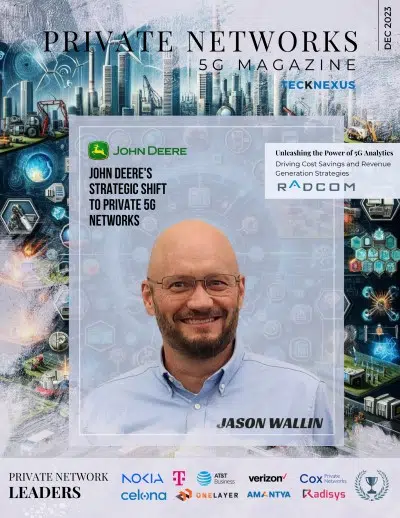
Explore the Private Network Edition of 5G Magazine, your guide to the latest in private 5G/LTE and CBRS networks. This edition spotlights 11 award categories including private 5G/LTE leader, neutral host leader, and rising startups. It features insights from industry leaders like Jason Wallin of John Deere and an analysis of RADCOM's 5G analytics. Covering sectors from manufacturing to healthcare and sustainability, it's a comprehensive read for those interested in the evolving landscape of private networks.

Your Brand. Our Intelligence Tools.

Capture leads at the point of evaluation. Talk to Us →

Sponsored by Palo Alto Networks
⚡ Utilities ⏱ 8 min ✓ Free
This tool is built and hosted by TeckNexus.
Launch Tool →
Whitepaper
This whitepaper explains how utilities can use secure AI-enabled private mobile networks to modernize operations, support distributed intelligence, improve resilience, and strengthen cybersecurity across critical infrastructure. It covers AI applications, private network advantages, zero trust principles, multilayered security architecture, and governance considerations for AI-ready utility environments....
Whitepaper
Non-terrestrial networks are rapidly evolving from experimental satellite systems into an increasingly important part of the global 5G connectivity landscape. This eBook, developed by Radisys in collaboration with TeckNexus, explores how 3GPP standardization, satellite architecture innovation, and software-driven network design are reshaping NTN deployment models. It examines the transition from...
Whitepaper
Private cellular networks are transforming industrial operations, but securing private 5G, LTE, and CBRS infrastructure requires more than legacy IT/OT tools. This whitepaper by TeckNexus and sponsored by OneLayer outlines a 4-pillar framework to protect critical systems, offering clear guidance for evaluating security vendors, deploying zero trust, and integrating IT,...
Scroll to Top