America

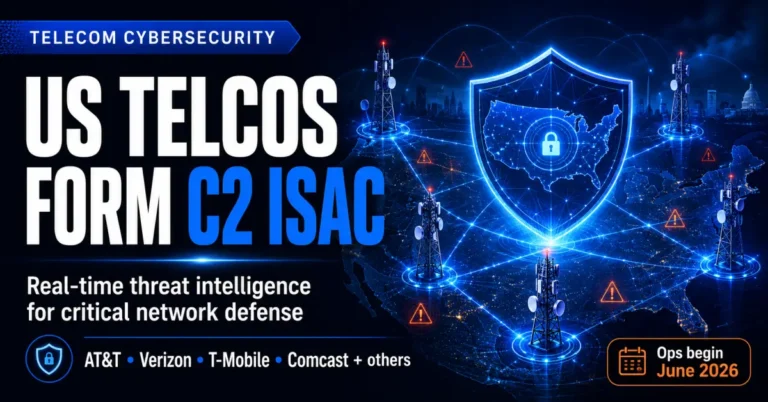
Eight of the most influential US telecommunications carriers — including AT&T, Verizon, T-Mobile, and Comcast — have established the Communications Cybersecurity Information Sharing and Analysis Center, known as C2 ISAC. Governed by the CISOs of each founding company and led by a director with CISA and FBI experience, C2 ISAC is designed to deliver real-time, actionable threat intelligence across competing carriers that collectively defend America's critical communications infrastructure. Operations are expected to begin in June 2026.
The NVIDIA-IREN partnership, announced May 7, 2026, commits both companies to jointly deploying up to 5 gigawatts of NVIDIA DSX-aligned AI factory infrastructure across IREN's global data center pipeline. A five-year, $3.4 billion managed GPU cloud services contract anchors the deal, alongside a warrant granting NVIDIA rights to purchase up to 30 million IREN shares. The Sweetwater campus in Texas serves as the reference implementation for NVIDIA's DSX architecture, signaling a new phase of vertically integrated, gigawatt-scale AI infrastructure planning that is reshaping competitive dynamics across hyperscalers, telecom operators, and enterprise IT.
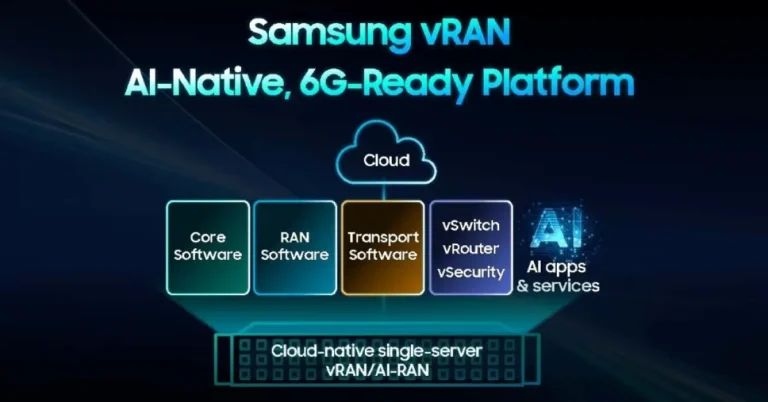
Samsung Electronics and Qualcomm Technologies have jointly validated Power Class 1 capability for 5G Fixed Wireless Access on a virtualized RAN architecture — a combination the industry has not demonstrated before. Testing showed up to ten times higher uplink throughput at the cell edge and up to 40% greater coverage range versus Power Class 1.5. With field trials already underway on a U.S. Tier-1 operator network and commercial availability targeted for 2027, this milestone signals a meaningful shift in uplink performance, coverage economics, and vRAN capability for operators and enterprise buyers alike.
A new cross-industry consortium is forming to codify how trusted technology should be built, operated, and governed across borders. On February 13, 2026, fifteen companies spanning cloud, networks, semiconductors, software, and AI launched the Trusted Tech Alliance during the Munich Security Conference. The goal: define verifiable, provider-agnostic practices for a trustworthy technology stack—from connectivity and cloud infrastructure to chips, software, and AI—so customers and governments can rely on secure, resilient services regardless of where solutions are developed or deployed. Trust, sovereignty, and resilience are now gating factors for growth as AI scales and geopolitical risk reshapes supply chains.
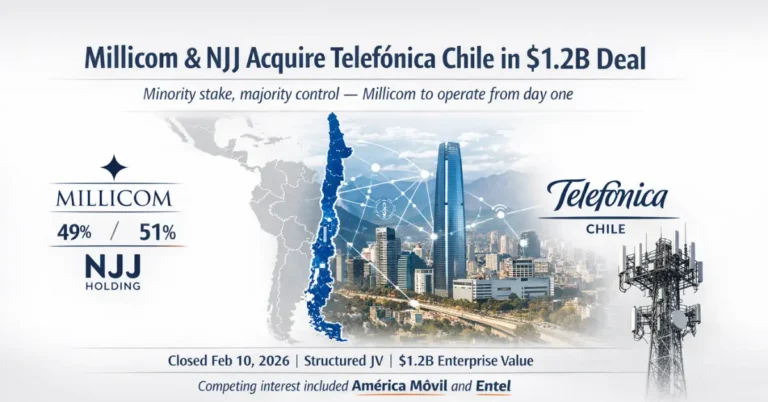
Millicom and NJJ have jointly acquired Telefónica’s Chilean operations in a structure designed to capture upside while insulating Millicom’s balance sheet. Through a jointly controlled vehicle, NJJ holds 51% and Millicom 49% of nearly all of Telefónica’s interest in Chile, with Millicom operating the asset from day one despite its minority stake. The headline value is about $1.2 billion, reflecting a challenged but strategically important footprint in one of Latin America’s most advanced telecom markets. The transaction closed on February 10, 2026, and follows months of speculation that drew interest from other regional heavyweights, including América Móvil and Entel.
ElevenLabs raised $500 million in Series D funding at an $11 billion valuation, led by Sequoia Capital with continued participation from Andreessen Horowitz and ICONIQ, and new backing from Lightspeed, Evantic Capital and BOND alongside existing investors. The company says it has surpassed key ARR milestones and reported strong enterprise adoption across sectors through 2025, with telecom emerging as a priority vertical as operators seek to modernize legacy IVR and contact center stacks. Conversational agents can replace keypad IVRs with natural dialogue that recognizes intent, confirms identity, retrieves context and executes actions across channels.
Rogers Communications has moved from beta to a commercial footprint for satellite-to-mobile in Canada, extending basic connectivity and select apps to consumer smartphones while adding an industrial IoT tier for remote operations. The new Rogers Satellite service enables a curated set of popular apps to work beyond terrestrial coverage, including WhatsApp calling, Google Maps, AccuWeather, X, and CalTopo on most modern smartphones. In parallel, Rogers introduced satellite-to-mobile for IoT businesses, targeting asset tracking along highways and rail, as well as sensor telemetry in forestry, mining, and other resource sectors where terrestrial cellular is sparse.
Paramount Skydance launched a hostile, board-bypassing tender offer to acquire all of Warner Bros. Discovery (WBD) at $30 per share, valuing the company at about $108 billion on an enterprise basis. The bid arrives days after WBD agreed to sell its studio and streaming assets—including Warner Bros. studios, HBO, and Max—to Netflix in a cash-and-stock deal valued at roughly $72 billion. Paramount’s pitch: more cash, full-company certainty, and a quicker path to close. The outcome will determine control of premium U.S. content, set the pace of streaming consolidation, and ripple into network traffic, advertising markets, and device and distribution partnerships.
Ericsson’s latest Mobility Report points to a clear shift: operators are turning 5G capabilities into differentiated, SLA-backed services rather than just selling more data at higher speeds. After years of building coverage and capacity, 5G networks are mature enough to commercialize features like guaranteed latency, uplink boosts, and application-aware prioritization. The catalysts are in place: more 5G Standalone (SA) cores, rising traffic from video creation and immersive apps, and enterprise demand for predictable performance across sites and clouds. The net result is momentum behind premium, differentiated connectivity that can be priced, assured, and exposed to partners.
New performance data shows U.S. WISPs are getting faster, but low‑Earth orbit players like Starlink are advancing just as quickly—and the competitive gap in rural markets is narrowing. Based on Speedtest Intelligence data from Q1 2021 to Q2 2025, eight of the larger WISPs—Starry, Resound Networks, Nextlink, Wisper Internet, Unwired Broadband, GeoLinks, Etheric Networks, and Rise Broadband—improved speeds, with download gains outpacing uploads. Starry led by a wide margin with a 202 Mbps median download in Q2 2025, followed by Resound at 99 Mbps and Nextlink at 68 Mbps; GeoLinks trailed at 23 Mbps. Crucially, only a minority of WISP users consistently achieve the FCC’s 100/20 Mbps fixed broadband benchmark.
Amazon has moved its low Earth orbit broadband effort out of code-name mode and into a market-facing brand with strategic implications for telecom and enterprise buyers. Project Kuiper is now Amazon Leo, a direct reference to the low Earth orbit constellation underpinning the service. The rebrand signals a transition from R&D to commercial execution. Amazon reports more than 150 satellites in orbit today—roughly 153 by recent counts—following a string of successful launches and a completed prototype mission. The company says it will light up service as it adds coverage and capacity.
NEC is moving to scale its cloud and SaaS business support capabilities with a $2.9 billion acquisition of CSG Systems International, positioning Netcracker at the center of the combined telecom monetization play. CSG brings a sizable recurring-revenue portfolio in digital BSS, billing, charging, and customer engagement used by communications, cable, media, and digital service providers, complementing Netcracker’s OSS/BSS, orchestration, and service automation strengths. The all-cash deal values CSG at approximately $2.9 billion on an enterprise value basis and has unanimous board approval, with closing targeted for 2026 pending CSG shareholder approval and customary antitrust and other regulatory reviews.

Your Brand. Our Intelligence Tools.

Capture leads at the point of evaluation. Talk to Us →

Sponsored by Palo Alto Networks
⚡ Utilities ⏱ 8 min ✓ Free
This tool is built and hosted by TeckNexus.
Launch Tool →
Whitepaper
This whitepaper explains how utilities can use secure AI-enabled private mobile networks to modernize operations, support distributed intelligence, improve resilience, and strengthen cybersecurity across critical infrastructure. It covers AI applications, private network advantages, zero trust principles, multilayered security architecture, and governance considerations for AI-ready utility environments....
Whitepaper
Non-terrestrial networks are rapidly evolving from experimental satellite systems into an increasingly important part of the global 5G connectivity landscape. This eBook, developed by Radisys in collaboration with TeckNexus, explores how 3GPP standardization, satellite architecture innovation, and software-driven network design are reshaping NTN deployment models. It examines the transition from...
Whitepaper
Private cellular networks are transforming industrial operations, but securing private 5G, LTE, and CBRS infrastructure requires more than legacy IT/OT tools. This whitepaper by TeckNexus and sponsored by OneLayer outlines a 4-pillar framework to protect critical systems, offering clear guidance for evaluating security vendors, deploying zero trust, and integrating IT,...
Scroll to Top