Intel

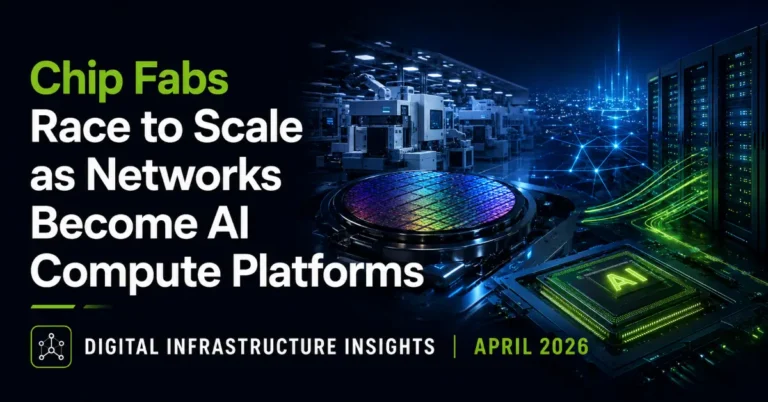
Runaway AI training demand is pushing data center fabrics past their limits, making optical networking the bottleneck to unlock GPU-scale performance and efficiency. Scale-up connects more GPUs within a box or across tightly coupled racks to form supernodes with ultra-low-latency fabrics. A new forecast from Goldman Sachs positions optical networking as the next mega-trend in AI infrastructure, with spend growing an order of magnitude as clusters densify. CPO—integrating optical engines with switch ASICs or accelerators—features prominently in the growth outlook. Expect a technology mix that also includes pluggable 800G/1.6T optics and emerging Linear Pluggable Optics (LPO) to reduce DSP power at short reaches.
Intel and Google expanded a multiyear partnership that doubles down on Xeon CPUs and custom infrastructure processing units to scale AI with better efficiency and predictability. Google committed to multiple generations of Intel Xeon for AI, inference, and general-purpose workloads across its global cloud. The latest Xeon 6 processors are already powering Google Cloud’s workload-optimized instances, including C4 and N4, to coordinate large-scale training, serve latency-sensitive inference, and run mainstream compute. In parallel, the companies will broaden co-development of custom ASIC-based IPUs that offload networking, storage, and security from host CPUs to improve utilization and deliver more stable performance at hyperscale.
A new alliance between SK Telecom (SKT), Arm, and Rebellions targets the fast-growing AI inference market with a server platform designed for sovereign AI and telecom-grade data centers. SKT will validate a new AI server that combines Arm’s AGI CPU—its first Arm-designed data center processor, based on Neoverse CSS V3—with Rebellions’ RebelCard inference accelerator in live AI data center environments. The partners will co-develop the full software stack, from firmware up, and test telco-specific models and large-scale workloads, including SKT’s proprietary foundation model, A.X K1. Industry focus is shifting from training to inference at scale, where energy, latency, and total cost of ownership (TCO) are decisive.
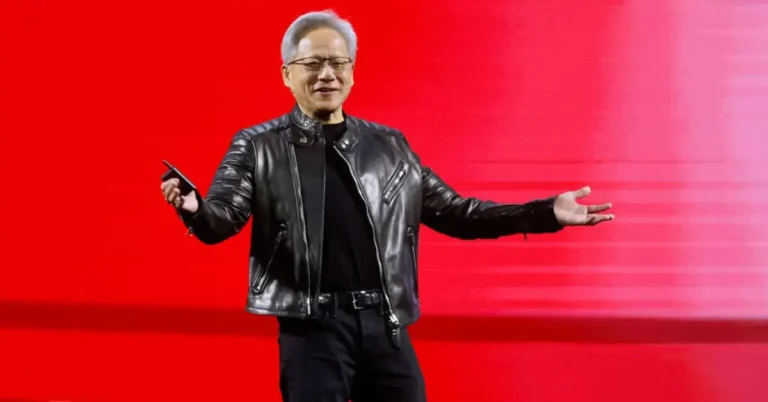
Nvidia’s CEO is publicly reaffirming confidence in OpenAI even as reports suggest the companies may narrow the scope of an ambitious, nonbinding plan announced last fall. During a visit to Taipei, Nvidia CEO Jensen Huang dismissed talk of friction with OpenAI and said Nvidia will participate in OpenAI’s next funding round. Recent reporting suggested Nvidia has emphasized the nonbinding nature of its plan to invest up to $100 billion and build roughly 10 GW of compute for OpenAI, and that both parties are re-examining scope and terms.
CEO Börje Ekholm indicated the company will keep trimming headcount after cutting roughly 5,000 positions over the last year. In Sweden, Ericsson has notified authorities and begun union talks that could affect about 1,600 roles, part of a multi‑year restructuring program. The move follows a 2023 plan to remove around 8,500 jobs worldwide—about 8% of its workforce—with further reductions last year in markets such as Spain and Canada. The rationale remains consistent: reset the cost base, protect profitability, and keep investment firepower for strategic bets amid a slower operator capex cycle.
A high-stakes policy fight has emerged in India over the 6 GHz band, pitting global device and cloud ecosystems against mobile operators over whether the band should power unlicensed Wi‑Fi or licensed mobile (IMT) networks. Apple, Amazon, Cisco, Meta, HP, and Intel have jointly urged India’s regulator, TRAI, to reserve the full 6 GHz range for Wi‑Fi, arguing the band is not technically or commercially ready for IMT and that unlicensed use will deliver immediate, widespread capacity benefits. Reliance Jio, Bharti Airtel, and Vodafone Idea have countered that delicensing upper 6 GHz would permanently foreclose India’s option to deploy wide‑area licensed broadband in prime mid‑band spectrum.
Nvidia’s CEO has warned that U.S. export controls have effectively halted the company’s China business, sharpening the stakes for AI leadership, supply chains, and enterprise buyers. He indicated the company is modeling China sales at effectively zero for the next two quarters under current rules, acknowledging that the revenue loss constrains reinvestment in R&D and manufacturing capacity. The message was blunt: a prolonged lockout weakens the U.S. AI stack abroad and cedes room to rivals at home and overseas. Huang pegged China’s accelerator market at roughly $50 billion today with potential to reach up to $200 billion by decade’s end.
Google has unveiled next‑generation TPU accelerators with up to a 4x performance boost and secured a multiyear Anthropic commitment reportedly worth billions, signaling a new phase in AI infrastructure competition. Google introduced new Tensor Processing Units that deliver roughly four times the performance of prior generations for training and inference of large models. Beyond speed, the design targets better performance-per-watt, a critical lever as AI energy costs surge. Anthropic has secured access to Google Cloud TPU capacity at massive scale, with reports citing availability up to one million TPU chips over the term of the agreement.
Vodafone named Dell Technologies a strategic infrastructure provider for a five-year Open RAN buildout across Europe, signaling a move from trials to scaled, automated 5G networks. Vodafone will expand one of Europe’s largest Open RAN footprints using Dell infrastructure as part of a multi-year radio access modernization program. Dell will supply its PowerEdge XR8000 series servers, including the XR8620t and the latest XR8720t with Intel Xeon 6 SoC. Vodafone also plans to adopt the Dell Telecom Infrastructure Automation Suite (DTIAS) to provide the Infrastructure Management Service within its Open RAN architecture, designed to automate Day 0/1/2 lifecycle operations for O-Cloud infrastructure.
Apple’s new M5 chip is a material step in local AI compute that will ripple into enterprise IT, developer tooling, and edge networking strategies. M5 is built on a third‑generation 3‑nanometer process and reworks Apple’s GPU as the center of gravity for AI. The 10‑core GPU adds a dedicated Neural Accelerator in every core, pushing peak GPU compute for AI to more than four times M4. Unified memory bandwidth jumps to 153 GB/s, and configurations with up to 32 GB allow more and larger models to remain entirely on device. On‑device inference is moving from nice‑to‑have to default, driven by privacy, latency, and cost.
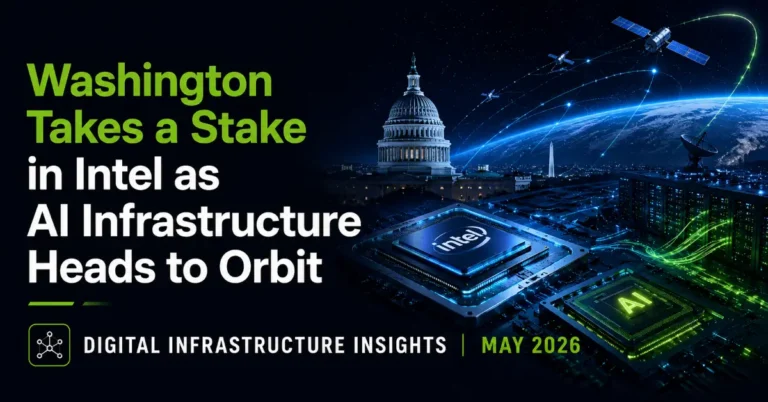
Intel detailed its first client and server products on the new 18A process, positioning the company for AI PCs and power‑efficient cloud at a time when onshore manufacturing and TCO matter more than ever. Intel previewed Core Ultra series 3 “Panther Lake,” its first client SoC line on 18A, with a multi‑chiplet design that blends new performance and efficient cores with an upgraded Arc GPU and dedicated AI acceleration across the CPU, GPU, and NPU. On the server side, Intel previewed “Clearwater Forest,” branded Xeon 6+, its next‑gen E‑core product built on 18A and targeted for launch in the first half of 2026.
A sprawling social engineering campaign tied to the Lapsus$/Scattered Spider/ShinyHunters ecosystem is extorting enterprises after allegedly siphoning close to a billion records from Salesforce customer environments. Attackers claim broad theft of personally identifiable information from organizations that use Salesforce, while the vendor states its core platform and code were not breached. Evidence points to identity-led social engineering, followed by misuse of sanctioned tools and APIs to quietly extract large data volumes. For telecom and enterprise IT, CRM data now sits on the front line of extortion economics, raising urgent questions about identity controls, SaaS hardening, and third-party risk.

Your Brand. Our Intelligence Tools.

Capture leads at the point of evaluation. Talk to Us →

Sponsored by Palo Alto Networks
⚡ Utilities ⏱ 8 min ✓ Free
This tool is built and hosted by TeckNexus.
Launch Tool →
Whitepaper
This whitepaper explains how utilities can use secure AI-enabled private mobile networks to modernize operations, support distributed intelligence, improve resilience, and strengthen cybersecurity across critical infrastructure. It covers AI applications, private network advantages, zero trust principles, multilayered security architecture, and governance considerations for AI-ready utility environments....
Whitepaper
Non-terrestrial networks are rapidly evolving from experimental satellite systems into an increasingly important part of the global 5G connectivity landscape. This eBook, developed by Radisys in collaboration with TeckNexus, explores how 3GPP standardization, satellite architecture innovation, and software-driven network design are reshaping NTN deployment models. It examines the transition from...
Whitepaper
Private cellular networks are transforming industrial operations, but securing private 5G, LTE, and CBRS infrastructure requires more than legacy IT/OT tools. This whitepaper by TeckNexus and sponsored by OneLayer outlines a 4-pillar framework to protect critical systems, offering clear guidance for evaluating security vendors, deploying zero trust, and integrating IT,...
Scroll to Top

Map your security gaps to real threat scenarios – including Salt Typhoon, Volt Typhoon, AI data poisoning, rogue devices, and unencrypted OT traffic.

Take the free 8-minute assessment built for utility operators evaluating AI-enabled private mobile networks. Get a readiness score across five critical domains, see where your gaps are, and receive a prioritized action plan for what to fix first.

Free • 8 minutes • Built for private network security