Nvidia OpenAI investment: context behind the $100B headline
Nvidia’s CEO is publicly reaffirming confidence in OpenAI even as reports suggest the companies may narrow the scope of an ambitious, nonbinding plan announced last fall.
Huang confirms Nvidia backing for OpenAI funding round
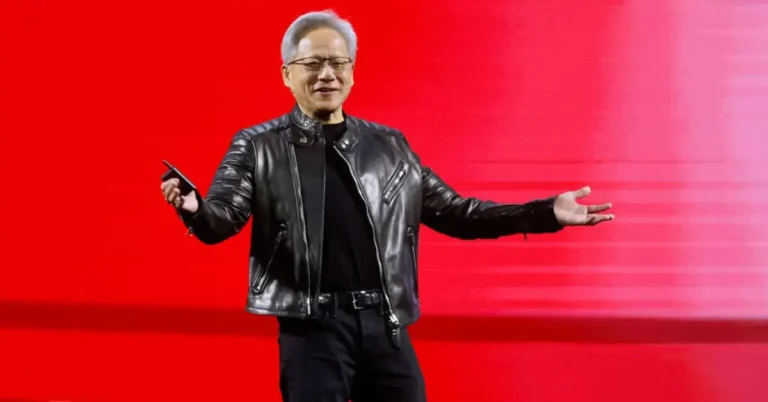
During a visit to Taipei, Nvidia CEO Jensen Huang dismissed talk of friction with OpenAI and said Nvidia will participate in OpenAI’s next funding round. He praised OpenAI’s trajectory while declining to specify the dollar amount, effectively leaving fundraising details to Sam Altman. For investors and enterprise buyers, the message is that Nvidia still views OpenAI as a core demand driver for accelerated computing, but the structure and pace of capital deployment remain flexible.

Pivot from $100B to tens of billions and phased 10‑GW compute
Recent reporting suggested Nvidia has emphasized the nonbinding nature of its plan to invest up to $100 billion and build roughly 10 GW of compute for OpenAI, and that both parties are re-examining scope and terms. Discussions have reportedly centered on a smaller equity check—still significant—and a recalibration of the overall partnership. OpenAI has signaled continuity, saying Nvidia has been foundational to its systems and will remain central as it scales. Meanwhile, major players including Amazon, Microsoft, and SoftBank have been linked to the round, underscoring that OpenAI’s capital needs and supplier relationships are now a consortium-scale exercise.
AI infrastructure and telco strategy implications
The outcome shapes who gets priority access to scarce accelerators, how fast new “AI factories” come online, and where power, networking, and data gravity concentrate.
Bottlenecks: power, cooling, and Ethernet/optical network fabrics
A 10‑GW build is not a procurement line item; it is a multi-year, multi-campus power, cooling, and network program. Even if the investment quantum adjusts, the operational bottlenecks are the same: securing utility interconnects, siting near abundant renewable or low-cost power, and standing up high-radix, low-latency fabrics at scale. For telcos and cloud providers, this wave pressures metro fiber, long‑haul backbones, and data center interconnect. Expect more 400G/800G optical deployments, tighter peering near AI campuses, and increased use of Ethernet-based AI fabrics versus InfiniBand, as the industry weighs cost, openness, and scale. Nvidia’s push with Ethernet-optimized stacks and its high-bandwidth interconnects will compete with merchant Ethernet silicon and initiatives like the Ultra Ethernet Consortium.

GPU supply allocation, pricing, and vendor lock‑in risk
In AI, allocation is strategy. Equity and long-term volume commitments often unlock preferential access to GPUs, HBM memory, and networking gear. If Nvidia concentrates capacity to OpenAI and a small group of strategic investors, others—including telcos building AI inference at the edge—may face longer lead times or higher costs. That risk heightens interest in multi-vendor roadmaps (e.g., AMD accelerators, Intel Gaudi), model portability, and open frameworks that blunt lock‑in. The specifics of the Nvidia–OpenAI arrangement—exclusivity, take‑or‑pay clauses, and delivery schedules—will ripple through procurement plans for 2026–2028.
AI ecosystem shifts: partnerships, hyperscalers, and silicon choices
Any recalibration between Nvidia and OpenAI lands amid intensifying competition among model labs, hyperscalers, and chip ecosystems.
Hyperscaler and investor roles in OpenAI’s funding round
Amazon, Microsoft, and SoftBank circling OpenAI’s round signals a shift from single-sponsor backing to a club deal that spreads risk and influence. For hyperscalers, the calculus mixes access to frontier models, differentiated AI services, and leverage in silicon roadmaps. For SoftBank and other financial investors, the bet is on AI infrastructure becoming an asset class with predictable returns. Telecom operators, many now building private or regional AI capacity, should read this as a call to partner early—either by co‑locating near hyperscale builds, joining capacity consortia, or striking forward-supply agreements that secure GPUs, optics, and high-capacity switching.
Model competition and accelerator alternatives (Nvidia, AMD, Intel)
Reports that Nvidia leadership has weighed OpenAI’s competitive position against Anthropic and Google underscore a broader reality: the model landscape is not winner‑take‑all. Anthropic’s enterprise momentum, Google’s vertically integrated stack, and open‑source model progress all shape demand elasticity for Nvidia’s platforms. At the silicon layer, Nvidia still leads, but buyers increasingly pilot alternatives to diversify risk and economics. Expect multi‑target ML pipelines, quantization and sparsity to improve inference density, and more interest in Ethernet‑based clusters that scale horizontally across data centers.
What to monitor next and how buyers should prepare
Enterprises should focus less on the headline number and more on the clauses that determine delivery, pricing, and ecosystem openness.
Key deal terms: equity size, supply, exclusivity, 10‑GW phasing
Watch for definitive terms on: the size and timing of Nvidia’s equity stake; any supply or exclusivity provisions tied to accelerator shipments, networking gear, or software stacks; the phasing of the 10‑GW build relative to power availability; and governance that might affect OpenAI’s commercial roadmap. Also monitor whether other investors secure board rights or preferential access, and how regulators view cross‑shareholdings across suppliers and downstream service providers.
Action plan for telecom and enterprise AI buyers
First, lock in capacity. If you need GPUs for training or high‑throughput inference in 2026–2027, pursue multi‑year, multi‑vendor agreements and consider reserving colocation with power commitments now. Second, architect for portability. Use framework and runtime abstractions that let you shift workloads across Nvidia and non‑Nvidia accelerators as supply and pricing evolve. Third, focus on the network. Budget for 800G optics, low‑jitter fabrics, and AI‑friendly congestion control; align with open Ethernet roadmaps where possible. Fourth, bring power to the design table early—secure substations, factor PUE and liquid cooling, and explore heat reuse to improve unit economics. Finally, align your data gravity strategy. Co‑locate AI with data sources or deploy regional inference at the edge to reduce transport costs and latency in 5G and enterprise networks.
The bottom line: Nvidia’s public stance keeps OpenAI firmly in its demand narrative, but a refined deal structure is likely. For buyers, the practical takeaway is unchanged—capacity remains scarce, power and networking are gating factors, and diversification is your best hedge while the AI stack, and its financing, continue to evolve.