

When Cargill’s platform engineering team set out to solve a connectivity problem that had dogged the company’s plant floors for years, they didn’t start with a technology. They started with a question: what does each environment actually need? Three years and more than 50 live sites later, that question has produced one of the most ambitious private 5G rollouts in industrial history, and it has reshaped how one of the world’s largest food and agriculture companies thinks about wireless infrastructure across 1,200-plus locations worldwide.
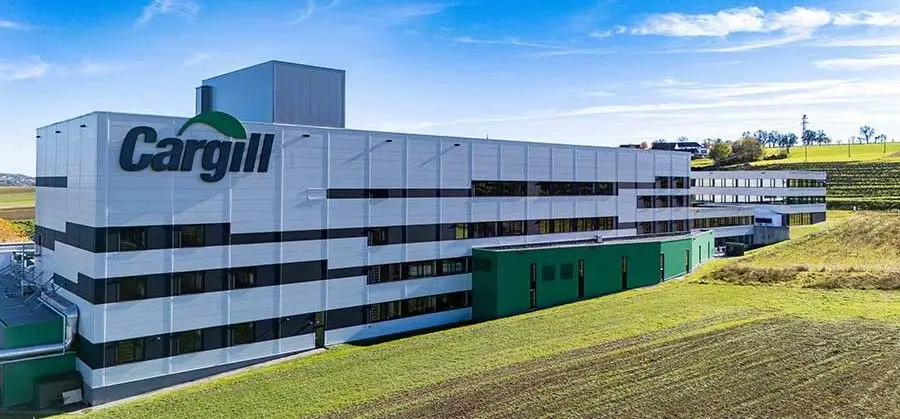
Cargill’s facilities range from small grain elevators to beef packing plants processing 5,000 head a day, to corn milling operations that sprawl across three to four square miles. No single wireless technology was ever going to serve all of them equally well. So rather than defaulting to Wi-Fi everywhere, Cargill built a “right technology for the workload” strategy, and for its toughest environments, that meant private 5G.
The Problem With One-Size-Fits-All
The plants where Cargill struggled most shared a set of brutal characteristics: metal structures that scatter RF signals, sprawling outdoor yards, temperature extremes, wash-down areas, and constant movement of people and equipment. Wi-Fi remained the right call in many parts of the business, but in these specific settings, it strained against its own limits.
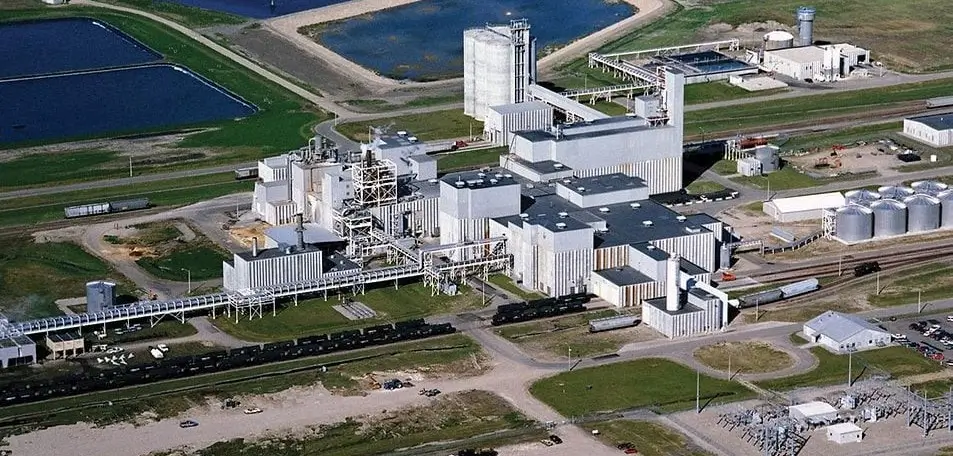
The cost of getting the mismatch wrong was steep. At one of Cargill’s largest corn milling facilities, a wireless deployment ran approximately $750,000 and still fell short of the coverage the business needed across that RF-hostile space. A tabletop comparison later showed private 5G could deliver the same coverage for roughly a third of that cost.
Security posed a separate obstacle. When a Brazilian facility partnered with a local telco on a public cellular tower, Cargill’s data classification policies blocked public networks from carrying camera feeds, OT systems, and plant-floor applications, ruling out that path entirely.
And even where private 5G looked attractive on paper, many platforms demanded dedicated fiber runs back to the core, an impractical requirement across facilities with no existing fiber and no appetite to slow deployment down while conduit went into the ground.
An Architecture Built to Plug In, Not Build Out
Cargill standardized on Celona‘s 5G LAN platform, running over CBRS shared spectrum with SIM and eSIM-based device authentication. The deployment model pairs Celona access points with a rack-mounted Celona Edge appliance, Basic Edge for smaller sites and Enterprise Edge for larger facilities and outdoor coverage, all managed centrally through the cloud-based Celona Orchestrator.
The differentiator, according to Cargill, was architectural. Celona’s access points connect directly into available ports on Cargill’s existing switches, with VLAN-based backhaul running over the standard LAN. No dedicated fiber to the core. No new switching. No dedicated closets.
“Most of the places we’re putting it in, we already have networks deployed. We partner with your engineers, look at the nearest network closet, and plug into our network switch. When I look at competitors’ products, most have to be fibered back to the core.” – Robert Greiner, Director of Platform Engineering, Cargill

That single design choice is what unlocked Cargill’s deployment velocity. Celona access points ship directly to cable installers, who mount hardware and run cabling on site. Celona’s engineering team then remotely provisions and activates each network through the Orchestrator, without requiring specialized RF staff on site. Celona’s edgeless AerFlex architecture, which keeps the control plane in the cloud while breaking out user traffic locally, extends this model economically to as much as half of Cargill’s site portfolio.
Rather than justifying the investment site by site around a single application, Cargill deploys full-site coverage and lets use cases stack on top of it, a build-it-and-they-will-come approach that has driven organic adoption across each facility.
The Results, By the Numbers
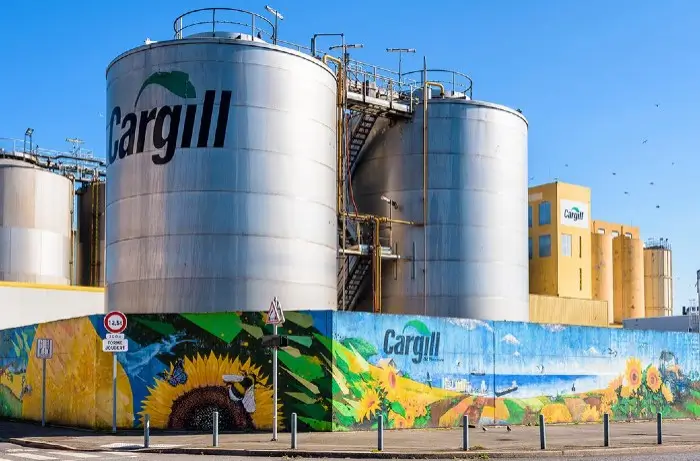
Cargill turned on its first production private 5G site in March 2025. Within roughly ten months, the company had completed more than 50 installations across the United States, Europe, and Latin America, reaching two to three site turn-ups a week at peak, a pace that would have been impossible under a fiber-to-core model.
50+ live private 5G sites across the United States, Europe, and Latin America within roughly ten months of the first production site.
The economics held up as well as the speed:
- The large corn mill mentioned above came in at roughly one-third the cost of the comparable wireless alternative.
- A small warehouse deployment cost approximately $40,000, versus $95,000 for the comparable option.
- In large open spaces, private 5G required roughly a tenth of the access points needed for a Wi-Fi refresh, in one case around 5 APs versus 60.
- At a Texas facility, two roof-mounted 5G access points replaced an estimated $50,000 to $60,000 in fiber runs for outdoor cameras, at roughly half the cost and with spare capacity for future use cases.
- Private 5G’s extended nine-to-ten-year lifecycle, spanning the 5G-to-6G transition, compares favorably to the typical three-to-five-year Wi-Fi refresh cycle. Greiner calls it “the gift that keeps on giving.”
Performance held up under the conditions that matter most on a plant floor: throughput stayed consistent at the edge of coverage as well as near the radio, and mobility handover kept forklifts, AGVs, and workers connected as they moved across large sites. SIM and eSIM authentication also removed the password-management burden of shared-key wireless, including mandated 180-day credential rotations, while adding a device-level security layer ahead of application login.
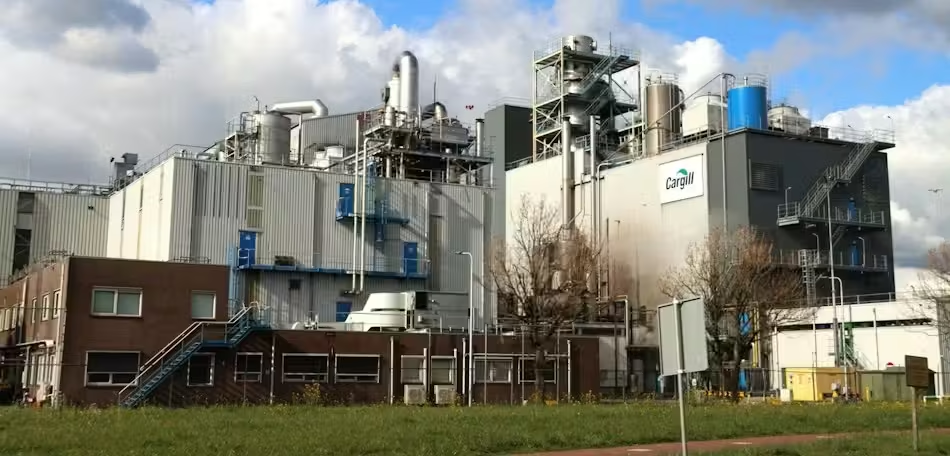
The use cases now stacking on top of Cargill’s private 5G foundation include connected-worker tablets and scan guns, outdoor and perimeter cameras, contractor and temporary connectivity that has replaced per-trailer Starlink links with 5G gateways, IT/OT convergence over VLAN segmentation, and autonomous robotics, including a Boston Dynamics Spot robot conducting plant inspections at Cargill’s advanced Amsterdam facility.
A Blueprint for the Industry
What makes Cargill’s rollout significant isn’t just its scale, it’s what that scale proves. This is not a flagship plant or a proof-of-concept confined to a single site. It is a working, repeatable model for deploying private 5G economically and operationally across hundreds of diverse brownfield facilities, using lean internal teams rather than armies of outside contractors.
Cargill built this capability in-house rather than outsourcing it: developing internal expertise, self-certifying for spectrum and installation requirements, standardizing site designs, maintaining a curated grid of 5G-compatible devices, and partnering directly with Celona’s engineers on design, turn-up, and scaling.
Cargill’s leadership sees the rollout as a signal to the wider industrial connectivity ecosystem. Its scale is pushing infrastructure vendors toward faster-deploying architectures and pressuring device manufacturers to expand native 5G support across industrial equipment, a gap Cargill identifies as the key tipping point for private 5G to become the manufacturing standard industry-wide. The company’s in-house, partner-led approach also echoes conclusions reached separately by industrial peers including John Deere, BP, and BASF.
I truly believe that 5G can become the manufacturing standard for plants. The equipment is there to cover these vast areas. What we need is about ten times the amount of devices we have now, and it’s on us as a community to push manufacturers.”
– Robert Greiner, Director of Platform Engineering at Cargill
Cargill’s platform engineering team is now extending the model further: converting existing plant wireless to private 5G as equipment reaches end of life in environments where 5G is the better fit, expanding cloud-managed AerFlex deployment for smaller sites, and working through the spectrum, regulatory, and supply chain requirements needed to take the program global toward Cargill’s full 1,200-plus location footprint.
“Private 5G does not have to be complex. It does not have to be siloed. It does not have to get stuck in POCs or pilots. It can most definitely scale with the right architecture and the right people driving the initiative.” – Puneet Shetty, SVP of Product and Field Engineering, Celona