Signal

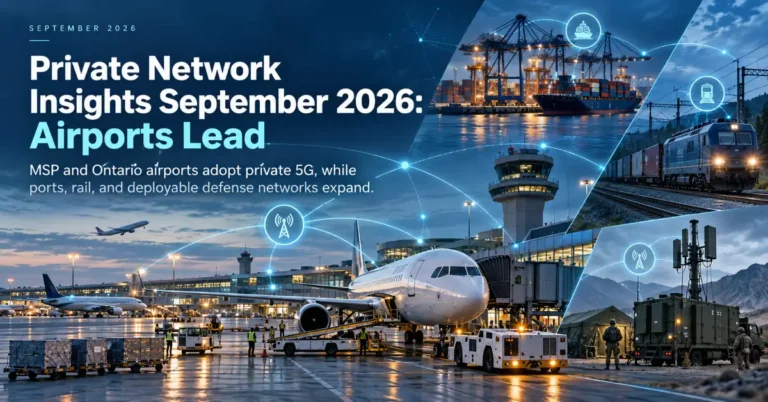
Nokia Defense and NestAI have published their first operational capabilities: AI-enabled command and control on deployable 5G, connectivity-aware mission planning, and Integrated Sensing and Communications for threat detection. The assumption they’re engineering against — that connectivity will be available and adequate — is the same assumption that limits industrial AI deployments in underground mines, complex facilities and remote critical infrastructure sites.
HHLA has activated a private 5G campus network at Container Terminal Altenwerder with Deutsche Telekom and Ericsson. The deployment is explicitly framed as a live digital test field rather than a finished solution — a platform for validating applications under real operating conditions before committing to production deployment. That sequencing is the most instructive element of the project for port operators evaluating similar investments.
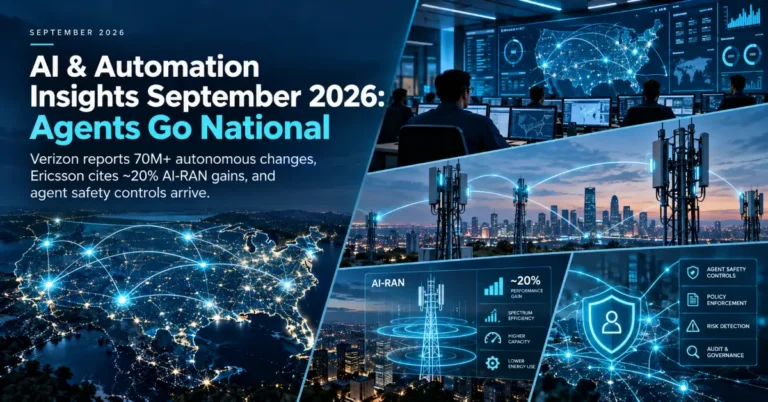
Telecom just crossed a line it spent years approaching carefully. AI agents are no longer confined to recommending fixes to network engineers — in a growing number of deployments, they're diagnosing faults and proposing remediations that a human simply signs off on, rather than performs. Nokia's work with Google Cloud is a clear marker of how far this has come: agents built on Gemini now sit inside Nokia's Assurance Center, and early results point to fault-resolution times cut by more than half, sometimes by as much as 80 percent. That's the part of the story getting the headlines. It's also, in a sense, the easy part... The harder question — the one the industry has mostly deferred — is what happens structurally once agents stop merely proposing and start acting, especially across more than one system at a time.
Walk onto almost any factory floor, port terminal, or mine site today and you'll find something that would have been a two-year, multi-vendor integration nightmare five years ago: reliable, low-latency wireless coverage across a few hundred thousand square feet of steel, concrete, and interference. Private 5G and CBRS-based LTE quietly solved that problem. Coverage, capacity, and determinism at the radio layer are no longer the hard part. And that's exactly why everything downstream of the radio is now the hard part. ...This is the pattern every infrastructure shift eventually reveals: solving the visible technical problem doesn't retire complexity, it relocates it. The radio got easy. The organization didn't.
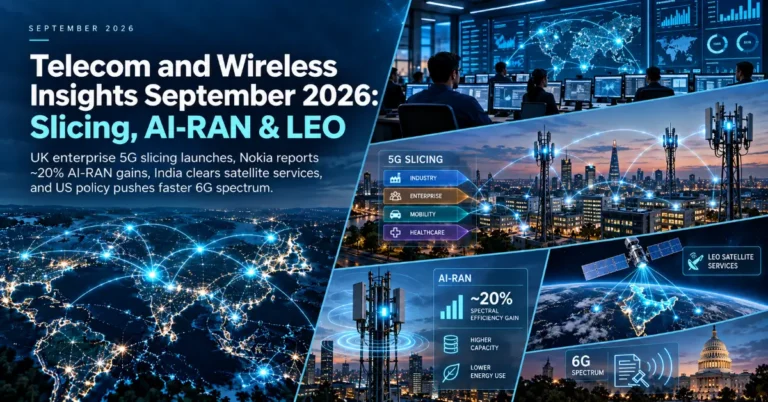
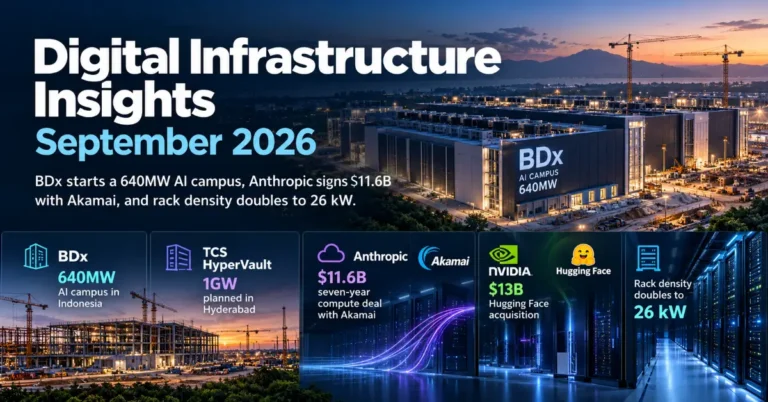
June 2026 showed agentic AI scaling from pilot to platform: industry-wide standards momentum, AI-RAN field trials from Nokia, Amdocs and KDDI, and fresh capital across data centers on three continents. This full roundup covers every deployment, partnership, funding round and governance move from the month, with tools to prioritise AI use cases and plan the network around them.
With GSA counting 2,003 private mobile network references, June 2026's story shifted from whether private cellular works to what it returns. This roundup covers TeckNexus's vertical ROI tools, 3GPP's confirmed 6G timeline, AI moving into the RF layer, CBRS SAS consolidation, and a widening set of verticals from mining to healthcare.
Private 5G became an industrial default in May 2026, with CBRS now the U.S. factory spectrum of record. This month's roundup spans deployments across manufacturing, ports, utilities, rail and defence — plus a deep utilities thread on grid AI and security — and what the shift means for buyers scoping spectrum, architecture and security.
Verizon CTO Yago Tenorio has detailed the carrier's architecture for Level 4 network autonomy: 70 million automated changes in 2025, 33,000 engineers turned into software developers with Claude Code, and a common data layer that captures what the network couldn't previously see. The instructive element for enterprise buyers is the sequence, not just the destination.
Sponsored by Palo Alto Networks
⚡ Utilities ⏱ 8 min ✓ Free
This tool is built and hosted by TeckNexus.
Launch Tool →
Whitepaper
Airports are deploying AI surveillance, biometrics, and autonomous vehicles faster than most networks can secure them. See what 100 real-world airport deployments reveal about the airside/landside security gap — and the 4-layer framework built to close it....
Palo Alto Networks
Scroll to Top