
SNCF Group is deploying its own private 5G wireless network to address the connectivity needs of industrial rail sites, particularly SNCF Voyageurs technicentres. The initiative responds to a critical transport-sector requirement: reliable, high-performance wireless connectivity for operational users, connected equipment, and emerging industrial use cases where conventional Wi-Fi or public mobile coverage, reliability, and security are not sufficient.
When Metal and Distance Break Every Signal
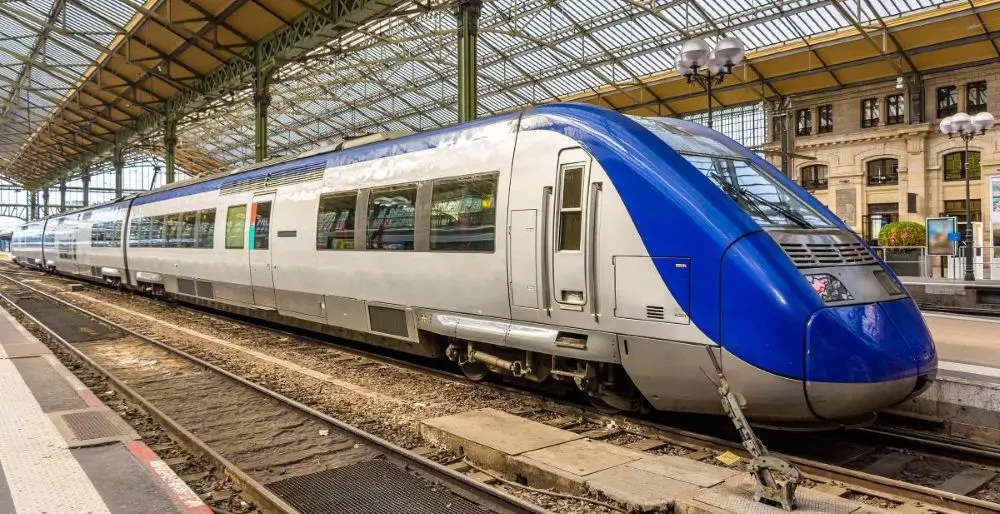
Some SNCF industrial sites experienced weak or inconsistent mobile connectivity because of building structure size and multiple metallic structures, such as train cars. Radio penetration is limited, incomplete, or unreliable with private Wi-Fi or public coverage, and in some cases multiple public-operator subscriptions were required just to achieve acceptable coverage.
The objective was to improve service continuity, reduce terminal and machine disconnections, support productivity, and give SNCF greater control over the network supporting industrial operations. For SNCF sites spanning several hectares, network rollout is also faster with private mobile than with Wi-Fi, since it requires fewer access points and less installation work.
One Network, Built and Controlled by SNCF
The innovation lies in SNCF moving from dependency on public mobile networks and best-effort Wi-Fi toward a dedicated, operator-independent enterprise 5G network built on SNCF-controlled telecom infrastructure. At the Rennes industrial technicentre, the deployment uses seven 5G antennas in the 3.8 GHz band to cover a 19,000 m² building and support connectivity for around 700 terminals, demonstrating a practical production use case for private 5G in rail maintenance environments.
The architecture is based on a central core network deployed in SNCF data centers, which can connect to all SNCF radio sites through its WAN transport links. Local core network instances are deployed at critical sites to improve reliability and reduce latency, making the solution scalable across all SNCF sites.
19,000 m² covered at the Rennes technicentre with seven 5G antennas in the 3.8 GHz band, supporting around 700 connected terminals.
Rennes and Beyond: What’s Already Live
Beyond Rennes, several other technicentres are already covered by the private mobile solution:
- Technicentre industriel de Rouen. Responsible for the maintenance and refurbishment of regional trains and railway components: 13 hectares covered with 14 access points for 600 connected devices.
- Technicentre de maintenance Est Européen. TGV maintenance for the East region: 9 hectares covered with 12 access points for 500 connected devices.
- Technicentre industriel de Bischheim. Responsible for heavy maintenance and refurbishment of TGVs: 300,000 m² covered with 9 access points for 200 connected devices.
Expected benefits across these sites include fewer disconnections for agents and machines, improved service continuity, stronger operational productivity, and better support for industrial digital use cases.
A National Rollout Already Underway
This deployment is highly scalable across rail maintenance centres and other large industrial environments where public mobile coverage and Wi-Fi are insufficient. Eiffage Energie Systèmes has stated that ten SNCF maintenance centres are expected to be involved from 2025, positioning this as one of the most significant 5G private-network deployments in France’s emerging industrial connectivity market. The model can be replicated across transport, logistics, manufacturing, and other mission-critical operational sites.
Why Public Wi-Fi and Cellular Couldn’t Deliver
SNCF selected private 5G SA because industrial sites require stronger performance, service quality, and robustness than standard office Wi-Fi can provide. The dedicated 5G approach improves indoor and outdoor coverage, supports mobility across large industrial buildings, and enables future industrial applications. SNCF also obtained its own frequencies from ARCEP, reinforcing sovereignty and control over the connectivity environment.
Nokia, e.SNCF, Eiffage, Hub One, and HPE: Who Built What
Nokia provides the 5G radio access network equipment used across the SNCF deployment, including carrier-grade indoor and outdoor radio technology designed to deliver the coverage, capacity, mobility, and service reliability required across large, metal-dense rail maintenance environments. Nokia’s RAN is interoperable with the HPE core and supports the scalable deployment model across SNCF technicentres. Nokia also contributes its private wireless and railway-sector expertise, product lifecycle support, and technical assistance to help the partners deploy, integrate, and maintain a consistent radio solution across sites.
e.SNCF Solutions leads the overall project governance and retains control of solution direction, network architecture, and radio engineering.
Eiffage and Hub One support integration and deployment across sites.
HPE (Athonet) provides the core network. Together, this structure combines SNCF’s strategic control with specialist partner expertise across deployment, radio access, and core network capabilities, an industrial-grade private 5G solution that can scale nationally while maintaining a consistent architecture and operational experience.