Salzgitter AG is one of Europe’s largest steel and technology groups, and like much of German heavy industry it is under pressure to digitalize shop-floor operations that were built for a pre-wireless era. Steel plants are among the hardest environments for wireless connectivity: high heat, dust, and dense metal structures degrade radio signals and cause the kind of interference that conventional Wi-Fi struggles to overcome even with dense access-point deployments.
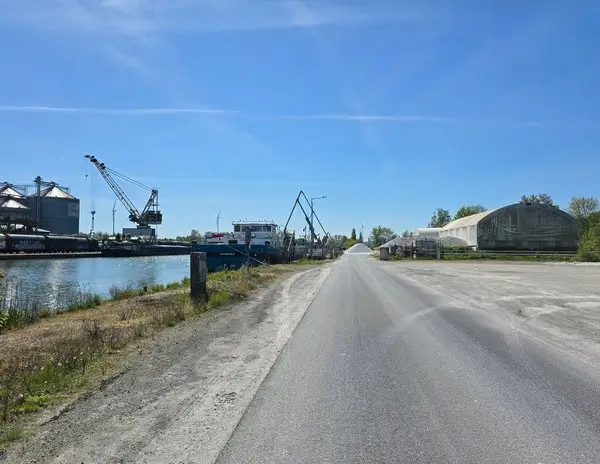
Salzgitter Digital Solutions GmbH (SZDS), the Group’s internal digitalization unit, is addressing this with a private 5G campus network built on Cocus AG’s Campus2Go platform. The rollout, led by Christian Kühlen, Head of Industrial Communications at SZDS, now spans three sites: a proof-of-concept at Ilsenburg Grobblech’s shipping hall in Ilsenburg, a live production deployment at Peiner Träger’s plant in Peine, and a planned expansion to the Group’s inland port at Salzgitter-Beddingen.
A Plant Built to Defeat Wireless Signals
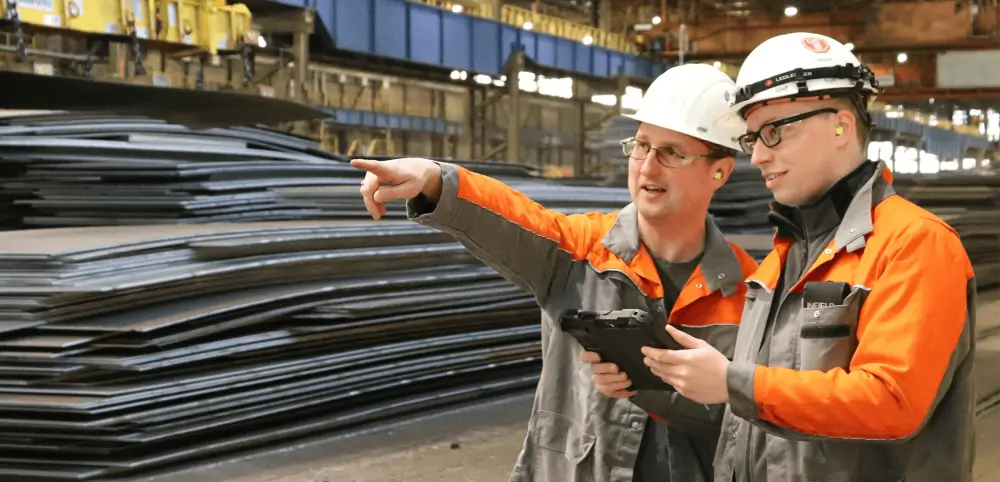
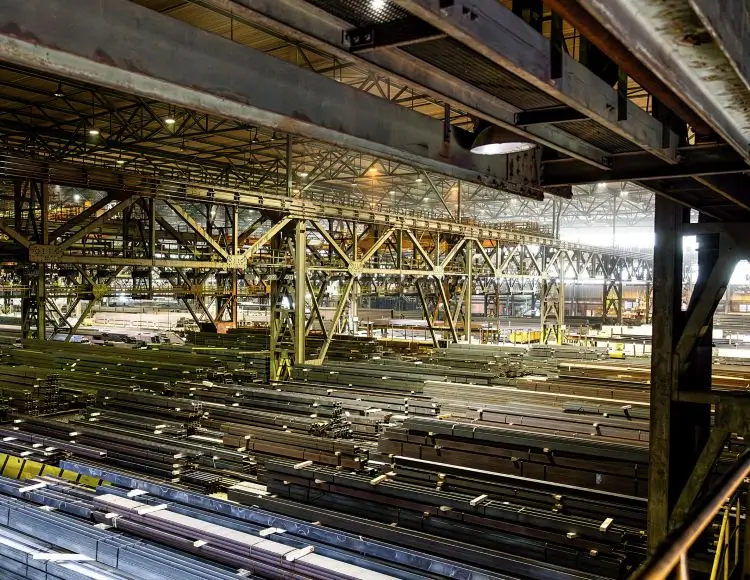
Before this project, SZDS’s operating companies relied on legacy wired systems and dense, unreliable Wi-Fi to connect equipment that increasingly needs real-time, high-bandwidth data links: crane control systems, machine-vision cameras, and mobile devices used for warehouse data entry. In the Ilsenburg shipping hall alone, seven Wi-Fi access points were required to attempt coverage of a single 350 × 70 metre hall, and even then, transmission interruptions and data loss were common, a direct consequence of the RF-hostile environment that heavy industry presents.
The urgency was twofold. Operationally, unreliable connectivity limits how far Salzgitter can push remote crane operation, automated tracking, and camera-based safety monitoring, capabilities the Group needs to raise productivity and reduce manual, on-site labour in hazardous areas. Strategically, each site was at risk of solving this problem in isolation, multiplying infrastructure cost and creating a fragmented security posture across the Group. The objective was a single, centrally managed wireless platform, licensed for interference-free operation, secure by design, and reusable across every Salzgitter Group site rather than re-engineered per location.
One Core, Three Sites, No Rebuilding Each Time
Cocus deployed its Campus2Go private 5G platform with a centralized core hosted at SZDS’s own data centre in Salzgitter, connected to each site over fibre. This is the key point of distinction from a conventional private 5G rollout, where every site typically gets its own standalone core and security stack: Salzgitter’s sites share one core, one security model, and one operations team, which is what let the project move from a single-radio proof of concept to a live production site and a planned 15-radio port deployment within roughly a year, without re-architecting the network each time.
The practicality of the approach is already demonstrated in production, not just in a lab. At Ilsenburg, one 5G radio unit replaced seven Wi-Fi access points. At Peine, the network is live and carrying real operational traffic for truck-depot warehouse management, with six radios covering indoor and outdoor areas. The network uses device-specific SIM cards rather than open smartphone access, so it functions as dedicated OT infrastructure rather than a general-purpose wireless LAN, a deliberate, practical constraint that keeps industrial control and monitoring traffic isolated from everyday IT traffic.
What Licensed Spectrum and One Shared Core Buy Salzgitter
- Licensed spectrum over Wi-Fi. SZDS holds an exclusive frequency allocation from the German Federal Network Agency (Bundesnetzagentur) for ten years. Licensed spectrum removes the contention and interference that made Wi-Fi require seven access points to cover one hall, essential in an environment dense with metal structures, cranes, and moving machinery.
- A centralized core. Campus2Go’s shared-core architecture lets SZDS operate the whole Group’s private network from one data centre, connected over fibre, avoiding rebuilding network and security infrastructure at every new site, which is what makes a three-site, 22-radio rollout economically viable for an internal digitalization unit rather than only for a single flagship location.
- Local core sites for redundancy. For manufacturing sites and ports in other parts of Germany where full reliance on central connectivity isn’t desired, local core sites able to fail over to the central core will be deployed and centrally managed.
- Device-bound SIMs and zero trust. Cocus 5G authenticates every device by SIM in combination with device ID, and applies zero-trust principles, every access request authenticated, authorised, and continuously validated, appropriate for a network carrying crane-control and safety-camera traffic, where an unauthorised device joining the network is an operational risk, not just an inconvenience.
- Multi-tenancy for future partners. Campus2Go’s multi-tenant design isolates traffic between independent groups on the same infrastructure, giving Salzgitter a path to bring contractors, logistics partners, or the Salzgitter-Beddingen port authority onto the same network without re-engineering it, directly relevant as the project expands from wholly owned production sites to a shared port environment.
“The system really works flawlessly.” – Christian Kühlen, Head of Industrial Communications, Salzgitter Digital Solutions GmbH
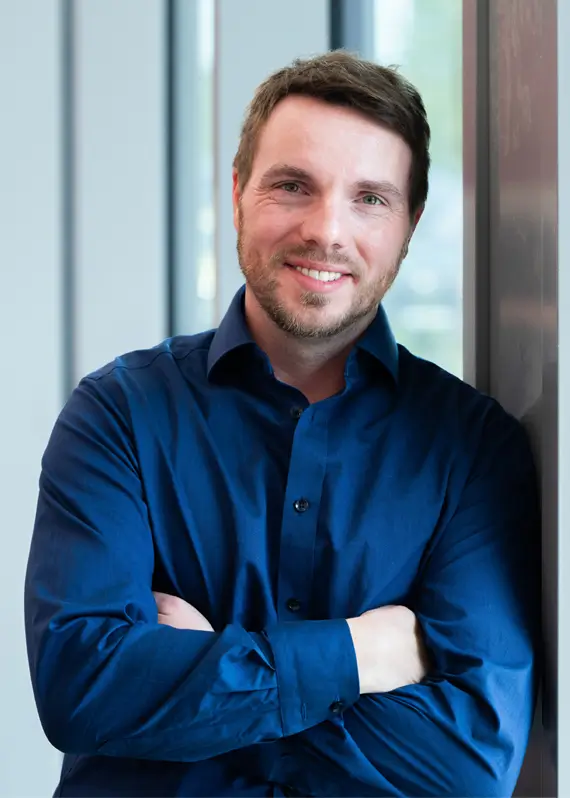
Head of Industrial Communications, Salzgitter Digital Solutions GmbH
A Platform Already Proven at Thirty Sites
Campus2Go is not a one-off build for Salzgitter: it is Cocus’s standing private 5G platform, already deployed at roughly thirty customer sites across Germany, Switzerland, and Brazil, including ports (Trier, Wismar, Wilson Sons Brazil, and Havelport Berlin) alongside manufacturing, airports, exhibition centers, and logistics customers. The Salzgitter engagement is significant to the wider industry because it shows the same platform, security model, and operating pattern being replicated inside one industrial group across three different site types, a steel-plate finishing plant, a structural-steel plant, and an inland port, with a single shared core.
Within Salzgitter Group, the architecture is explicitly designed to extend to further operating companies beyond the three named sites, and the multi-tenant model opens the door to shared use by external logistics and port partners. The Salzgitter-Beddingen port site has also submitted a funding application to the German DigiTest government programme, an independent signal of external due diligence on the project’s merit beyond Salzgitter AG and Cocus themselves. Near-term roadmap items include automatic steel-slab tracking using LiDAR and camera systems, remote crane control consolidated into central control stations, a waterway monitoring system for barge and vessel traffic at Salzgitter-Beddingen, and, as a longer-term ambition, semi-autonomous inland-vessel operation once the port’s network is in place.
Why Licensed Spectrum Beat Wi-Fi Here
85% fewer radio units needed at Ilsenburg: one 5G radio replaced seven Wi-Fi access points for equivalent hall coverage.
- Infrastructure consolidation. One 5G radio unit replaced seven Wi-Fi access points at Ilsenburg, roughly an 85% reduction in radio hardware for equivalent hall coverage.
- Reliability. A marked reduction in transmission interruptions and data loss for crane telemetry and camera feeds versus the prior Wi-Fi setup, moving operations from intermittent to, per the site lead, flawless.
- Operational leverage. Remote, camera-assisted crane operation now allows a single operator to monitor multiple cranes rather than one, reducing on-site headcount exposure in hazardous crane-yard areas.
- Rollout pace and scale. The platform grew from one radio in proof of concept to eight radios in live production within roughly a year, with a third site and fifteen further radios now planned, evidence that the architecture scales rather than needing to be re-proven at each site.
- Cost efficiency. The shared, centrally hosted core lowers the incremental infrastructure cost of each additional site compared with a standalone core per location, though SZDS has not published a specific figure.
Cocus and Salzgitter Digital Solutions: Who Built What
Cocus AG is the technology partner: it supplies and operates the Campus2Go private 5G platform, including RF and spectrum design, the centralized zero-trust core architecture, multi-tenant IP and SIM management, and ongoing platform support as the network is extended to new sites and radios. Bernd Hoffmann, 5G Business Innovation, is the account and solution lead responsible for the engagement at Cocus AG.
Salzgitter Digital Solutions GmbH (SZDS) is the Group’s internal digitalization unit and the project owner: it operates the centralized 5G core at its own data centre, coordinates rollout across Salzgitter’s operating companies, and defines the use-case roadmap under the leadership of Christian Kühlen, Head of Industrial Communications. The collaboration model is deliberately reusable: Cocus contributes a proven, multi-site-capable platform rather than a bespoke build, and SZDS embeds it into Group-wide digital strategy and operates it centrally on behalf of its operating companies, the same partner-delivery pattern behind Campus2Go’s other thirty-plus deployments.