The Port of Tyne, in partnership with BT and Ericsson, deployed the UK’s first site-wide private 5G network, replacing restrictive wired infrastructure with a flexible, high-capacity wireless foundation. Built on the Ericsson Private 5G Solution, the network drives digital transformation by enabling automated container inspections, AI-powered safety monitoring, real-time asset tracking, and smart gate operations, establishing a scalable, data-backed blueprint for 5G-enabled innovation across the global maritime industry.
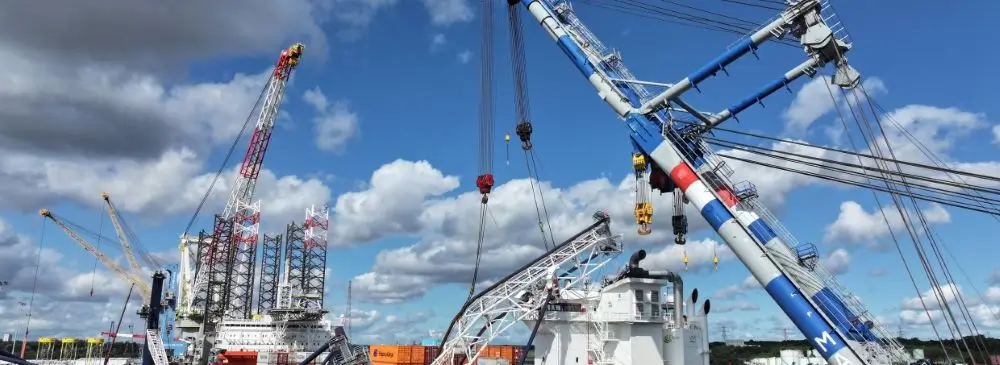
A Port That Reconfigures Faster Than Cables Can Keep Up
Maritime ports are highly dynamic, high-risk environments requiring continuous adaptation to support evolving industries, from offshore wind energy to electric vehicle logistics. As a major economic hub contributing £700 million to the regional economy and supporting 11,000 jobs, the Port of Tyne needed a more agile connectivity solution to improve worker safety and keep pace with frequent site reconfigurations. Traditional underground cabling left teams reliant on delayed data and manual inspections, limiting operational efficiency and exposing personnel to unnecessary risk.
To address these challenges, BT transformed the Port of Tyne’s connectivity infrastructure by designing and deploying a site-wide private 5G network powered by Ericsson’s mid-band Massive MIMO technology. The solution replaced the limitations of fixed, legacy networks with a secure, resilient wireless platform capable of delivering high-speed, ultra-low latency connectivity across the port, enabling AI-powered CCTV, IoT sensors, drones, and automated workflows, and providing real-time operational intelligence, 360-degree crane-mounted container inspections, asset tracking, smart gates, and site condition monitoring. The deployment also underpins the Port’s 2050 Maritime Innovation Hub, establishing a scalable blueprint for private 5G-powered digital transformation across the global maritime industry.
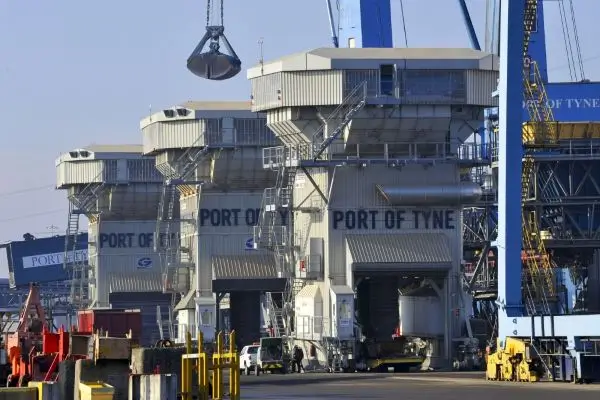
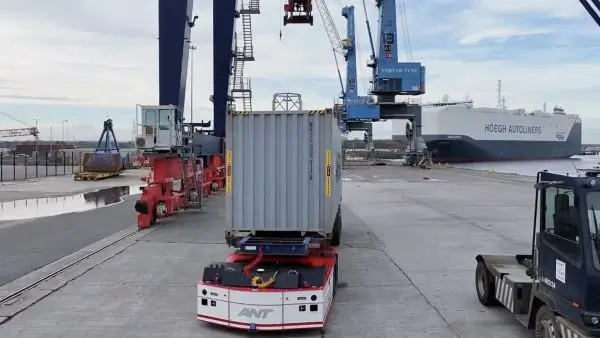
Port of Tyne uses Private 5G to digitally transform operations, safety, and sustainability (Credit: Ericsson Enterprise Wireless Solutions)
One Network, Running Two Generations of Cellular at Once
The Port of Tyne partnered with BT and Ericsson to deploy the UK’s first site-wide private wireless network. Built on the Ericsson Private 5G Solution, the network uses a dual-mode strategy running 4G (2600MHz) and 5G (3700MHz) concurrently, ensuring continuous support for legacy devices while introducing next-generation capabilities. By choosing wireless over physical cabling, the port gained the agility to reconfigure major sections of its site multiple times a year.
Managed by BT, this low-footprint infrastructure leverages mid-band Massive MIMO technology to deliver speeds 10 times faster than standard 4G with minimal latency, providing 13 times more energy efficiency per gigabyte. This network acts as the foundation for four core automated applications, along with predictive maintenance capabilities rolled out as part of the initial use case set:
- Automated Container Inspections. Crane-mounted 360-degree cameras feed AI software to instantly inspect container IDs and damage.
- Live Asset Tracking. IoT sensors on cranes and vehicles stream real-time operational data into analytics systems.
- Proactive Smart Surveillance. High-definition CCTV integrated with AI automatically identifies physical hazards to protect personnel.
- Smart Gate Security. Automated Number Plate Recognition (ANPR) validates authorized vehicles at entrances.
What 10x Speed and 13x Efficiency Actually Deliver
BT’s private 5G deployment transformed the Port of Tyne into a connected, intelligent operation capable of adapting to evolving business demands. By replacing legacy cabling with a secure, high-performance wireless network, BT established the digital foundation for AI, IoT, and automation, delivering measurable operational, safety, and sustainability outcomes:
- 13x greater energy efficiency. Mid-band Massive MIMO technology significantly reduced network power consumption, supporting the Port of Tyne’s net-zero carbon emissions target by 2030.
- 10x faster data transmission. High-speed, ultra-low latency connectivity enables seamless site-wide communications, eliminating the need for costly underground cabling and supporting frequent operational reconfigurations.
- Real-time, intelligent operations. AI-powered CCTV, IoT sensors, smart gates, automated container inspections, asset tracking, and site condition monitoring provide live operational visibility, enabling faster decision-making and more efficient resource allocation.
- Enhanced safety through automation. Connected cameras, drones, and automated inspections reduce manual work in hazardous environments, improving worker safety while strengthening site security.
- A blueprint for the future of maritime. As the connectivity backbone for the Port’s 2050 Maritime Innovation Hub, Ericsson’s private 5G platform enables continuous innovation and provides a scalable model for ports worldwide to accelerate digital transformation and reduce emissions.
“…The only 5G proof of concept that was working was with Ericsson… they didn’t want to just sell us something, they wanted to collaborate with us.”
A Blueprint Other Ports Can Follow
The Port of Tyne’s private network deployment establishes a scalable blueprint that transitions the maritime industry away from physical, cable-tethered infrastructure toward dynamic, wireless automation. By proving that a single, site-wide network can simultaneously run legacy 4G systems alongside high-capacity 5G, the solution addresses a longstanding industry challenge: modernizing legacy ports without forcing cost-prohibitive, site-wide hardware overhauls. This dual-mode approach sets a trend for global logistics hubs, demonstrating a practical pathway to adopt cutting-edge automation, AI-driven surveillance, and robotics incrementally and safely.
The project also unlocks substantial economic and commercial opportunities across the maritime sector by functioning as an active testbed. Through its 2050 Maritime Innovation Hub, the Port of Tyne actively shares its deployment data and operational insights to help other ports build their own viable business cases for 5G, a collaborative model poised to accelerate digital transformation worldwide while directly contributing to the industry’s environmental targets, specifically the overarching goal to reduce energy consumption across the UK maritime sector by 50 percent by 2050. That expansion is already underway: having evaluated multiple private 5G providers and selected BT and Ericsson for their proven proof of concept and collaborative approach, the port is now extending AI, IoT, and real-time analytics deployment across its operations, building on the smart gates, AI-powered CCTV, asset tracking, and automated inspection capabilities already live on site.
Why Cables and Wi-Fi Couldn’t Keep Pace
A private cellular network built on the Ericsson Private 5G Solution was the only viable way to break through the port’s physical infrastructure constraints. Traditional wired methods or Wi-Fi could not support a business that reconfigures its physical site multiple times per year, since buried cables are quickly rendered obsolete or end up in the wrong place. By deploying a wireless network across the entire estate, the port gained the agility to connect moving assets and dynamically reshape its operations without costly infrastructure overhauls.
- Overcomes physical rigidities. Wireless private 5G connects moving assets dynamically without the costly infrastructure overhauls that wired methods or Wi-Fi would require for a site that reconfigures multiple times a year.
- Seamless dual-mode continuity. Running 4G and 5G concurrently allowed the port to support legacy infrastructure while instantly deploying ultra-low latency 5G applications.
- Uncompromised speed and sustainability. Mid-band Massive MIMO met the dual demands of streaming high-definition video feeds, at 10 times faster than standard 4G speeds, while unlocking critical sustainability gains of 13 times greater energy efficiency.
Ericsson, BT, and the Port of Tyne: Who Built What
Ericsson served as the technology and innovation partner behind the Port of Tyne’s private 5G transformation, working alongside BT to design, validate, and deploy a solution supporting the port’s long-term operational and sustainability goals. Ericsson’s specific contributions included supplying the core infrastructure, consisting of the Ericsson Private 5G Product and the Ericsson Private 5G Software platform; deploying high-performance Ericsson Radios optimized for both 4G 2600MHz (15MHz) and 5G 3700MHz (100MHz) spectrum bands; and providing the field-proven mid-band Massive MIMO radio technology that unlocked the 13x energy efficiency gains per gigabyte, directly supporting the project’s goal of driving down maritime sector emissions.
BT, as the primary network operator, took full responsibility for planning, deploying, and managing the site-wide private wireless infrastructure, and provided the critical n77 and b7 spectrum required to operate the high-performance dual-mode network. Assuming total management of the entire 4G and 5G infrastructure, BT eliminated operational complexity for the port. BT’s smart solutions and surveillance experts also actively collaborated with the port to design and deploy practical edge applications, such as container recognition and smart gates.
The Port of Tyne, as host, provided the commercial vision, funding, and physical infrastructure required to deploy the network across its estate. Through its 2050 Maritime Innovation Hub, the port served as the launchpad and testbed for the technology. Port leadership and innovation teams defined the core business challenges, facilitated the active use cases on their cranes and gates, and committed to sharing their knowledge to create an open 5G blueprint for the wider global maritime sector.