
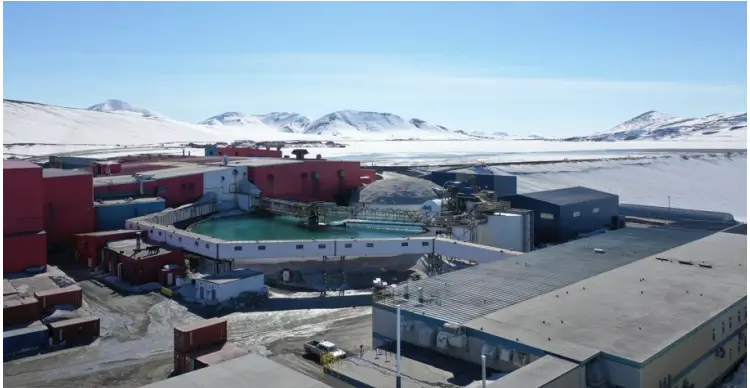
At Red Dog Mine, one of the world’s largest zinc mines, operated by Teck Alaska in a remote region of Alaska with no commercial network coverage at all, Star Solutions delivered a complete private 4G LTE network as a single organization, end to end, across a footprint that spans not just the mine site itself but a highway corridor and port facilities more than 50 miles away. Star Solutions took ownership of the end-to-end delivery, RF planning, core network, radio hardware, and ongoing support.

A Coverage Problem That Wi-Fi Could Not Solve
The core challenge was scale. Teck Alaska’s operational footprint at Red Dog stretches well beyond the mine pit, encompassing a stretch of highway and port facilities more than 50 miles distant, terrain that Wi-Fi or other communication systems could not cover consistently or reliably. With no commercial cellular network present in the region, 4G LTE offered the ability to provide reliable coverage, mobility, real-time data, and broadband data speeds to meet the mine’s operational needs.
Star Solutions worked closely with the Red Dog team to understand its requirements for coverage, network resilience, security, and scalability, then tailored a system solution to meet those needs.
One Network, Delivered End to End
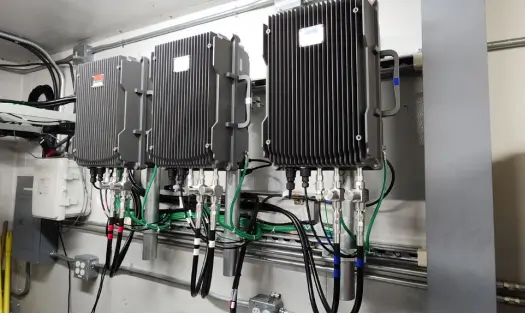
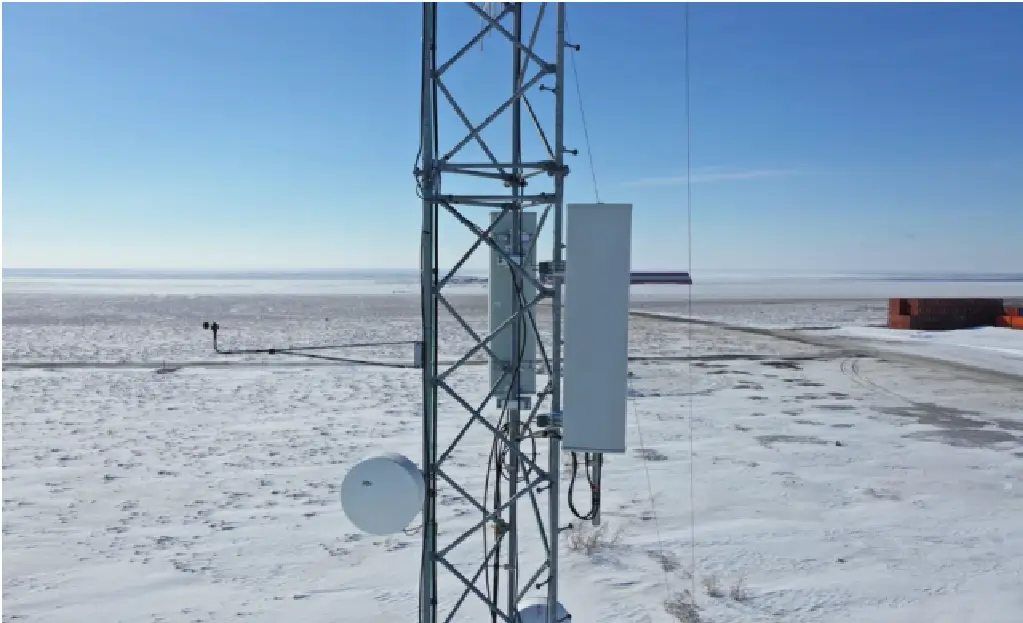
Teck Alaska deployed a complete Private 4G LTE network with all key network elements provided by Star Solutions: the Sonata EPC core network in a high-availability configuration, a number of iCell COMPAC LTE Macro eNodeB base stations providing LTE coverage over the mine, highway, and port facilities, and various technical services supporting the design, commissioning, and ongoing support of the network and equipment.
By working with the Star Solutions team, Teck Alaska was able to leverage a single organization to complete its RF planning and design, generate its engineering and commissioning documents, and produce its network acceptance documentation, with Star Solutions taking ownership of the end-to-end delivery.
Beyond the core network, Star Solutions delivered several supporting systems:
- VoLTE calling application. Lets private LTE network users place phone calls directly to the mine’s IP-PBX.
- SIM cards and eSIM activation codes. Hosted through Star Solutions’ GSMA-accredited site.
- Rapid Deployment LTE All-In-One (AIO) unit. Star Solutions’ standalone portable LTE network system, connected to Starlink, that enables Teck to bring LTE coverage to remote areas where it may be conducting operational activity outside the main coverage area. Teck has shared video of the unit being deployed to remote sites using helicopter lift.
What Reliable Coverage Changed at Red Dog
Updated plans, drawings, and real-time data are now shared across the site. The customer has described several specific benefits:
- Fleet management. Real-time visibility into driving habits, vehicle status, and location, with safety alerts reportable immediately. Reliance on satellite-based connectivity for this purpose had been cost-prohibitive.
- LTE voice. Ongoing conversations can now happen over the network without tying up two-way VHF radio resources.
- Real-time asset management. Red Dog uses vibration monitoring of heavy machinery, including mills, pumps, and compressors. Data from the sensors is sent to a centralized location over LTE, where it is analyzed and used for predictive failure analysis and automated alerting on imminent failure.
- Extended reach. The LTE All-In-One unit enables remote teams to perform exploration and construction work even when they are outside the coverage of the main deployed network.
“Limited connectivity across remote areas restricted real-time visibility, delayed decision-making, and reduced operational efficiency. The LTE network has fundamentally changed how we operate – enabling real-time communication, improving productivity in the field, and enhancing safety across the entire site.” – – Adrian Anzulovich, Manager, Digital & MIS, Teck Alaska Incorporated

“The LTE network has fundamentally changed how we operate – enabling real-time communication, improving productivity in the field, and enhancing safety across the entire site.”
Why LTE Fit This Terrain
4G LTE was the right choice because the mine was able to deploy a solution that provided large-area coverage, included mobility, and supported the wireless data performance required for its applications.
Bringing Carrier-Grade Technology to Mines of Every Size
For Star Solutions, Red Dog was another opportunity to demonstrate its capabilities as a product and solutions company in the cellular network equipment market segment, building on a long history working with carriers and mobile network operators around the world, with mining organizations representing a key addition to that base. For the industry, Star Solutions positions this deployment as evidence that viable alternatives exist to the traditional, conventional big-box network vendors, whose business remains focused on larger carrier accounts, even though mines of all sizes need to leverage the latest technology to optimize their operations.
Star Solutions’ GSMA accreditation and its own SM-DP+ platform for hosting eSIMs matter beyond this deployment too. That kind of capability has mostly been offered only to carriers, with accessibility for private network operators historically a challenge, something Star Solutions says it hopes to gradually change.
One Vendor, Full Ownership
Star Solutions delivered both the products and the services behind the deployment: the Sonata EPC LTE core network software, iCell COMPAC LTE Macro eNodeB radio hardware, the iCell COMPAC All-In-One unit for rapid deployment, the VoLTE calling application and its integration with Red Dog’s IP-PBX, custom-programmed SIM cards and eSIM profiles hosted on its own SM-DP+ platform, RF planning validation and core/IP network engineering and design, on-site installation and commissioning support, on-site and online product training, and ongoing software maintenance with 24/7 emergency technical support. Some physical equipment installation was contracted by Teck Alaska to third-party installers; Star Solutions was not directly involved in that portion of the work, though it shared its product documentation to support it.