


Exelon operates one of the largest utility footprints in the United States, delivering electricity and gas service across multiple operating companies, including Atlantic City Electric, BGE, ComEd, Delmarva Power, PECO, and Pepco. As the energy grid becomes more distributed, data-driven, and dynamic, Exelon needed a communications foundation capable of supporting grid automation, renewable energy integration, real-time monitoring, and reliable field operations at scale.
Nokia was selected to build that foundation as a single, mission-critical private wireless platform spanning Exelon’s entire operating footprint.
The Cost of Running Many Networks at Once
Historically, Exelon relied on multiple wireless networks to meet different connectivity requirements across its operations. That approach gave each individual application fit-for-purpose connectivity, but it also created real operational complexity: separate inventory to track, separate networks to manage, separate security postures to maintain, and mounting questions about long-term scalability as more of the grid became data-driven.
Exelon’s objective was to consolidate these disparate systems into a single, robust, secure, and mission-critical private wireless network, one capable of supporting both legacy grid infrastructure already in the field and future 5G-enabled devices not yet deployed, while helping the utility modernize grid performance, reliability, and efficiency across the board.
One Platform for the Entire Grid
Nokia was selected to design, deploy, manage, and maintain a private wireless network across Exelon’s operating footprint. The solution is built on a scalable private 5G architecture incorporating Nokia’s radio access network capabilities, private wireless core, cybersecurity, and network management solutions, designed to support Exelon’s chosen spectrum strategy and to leverage Exelon’s existing fixed network infrastructure rather than requiring it to be replaced.
The deployment lets Exelon converge a remarkably wide range of utility applications onto one secure, scalable communications platform. It supports communications with distribution substation routers, reclosers, switchgear, capacitor banks, voltage optimization endpoints, faulted circuit indicators, AMI collectors and meters, regulators, distribution automation endpoints, distributed energy resource endpoints, weather stations, IoT sensors, streetlights, line and pole sensors, transformer sensors, MC-PTT handsets, and other 5G-enabled sensor and control devices.
The network is designed to support major scale requirements over the life of the program, including substantial service availability needs, high throughput, hundreds of radio sites, and a broad range of mission-critical grid devices operating across Exelon’s footprint.
What Consolidation Buys a Utility This Size
The benefits of moving to a single private wireless platform touch nearly every part of grid operations:
- Reduced complexity. Consolidating communications onto one platform reduces the burden of managing multiple legacy systems side by side, replacing it with a more secure, scalable, and manageable communications foundation.
- Faster response. Improved real-time automation and monitoring support faster fault detection and service restoration across the grid.
- Better renewable integration. The network improves coordination of distributed energy resources and strengthens demand-response capabilities as more of the grid becomes distributed.
- More efficient field operations. Field workforce communications become more efficient when they run on one consistent, mission-critical network rather than a patchwork of systems.
- A bridge between old and new. The network supports integration of modern equipment with existing infrastructure, letting Exelon meet immediate operational needs while preparing for future energy demand, increased electrification, and carbon-free energy goals.
“This collaboration with Nokia marks a major step forward in Exelon’s commitment to modernizing the grid for efficiency and supporting our ambitious carbon-free energy goals by 2050. Nokia private wireless will enable real-time communications between our legacy infrastructure and modern equipment and will help us meet immediate operational needs. In doing so, we will better serve our customers today while preparing for the energy supply of tomorrow.” – Russ Ehrlich, Senior Manager, Digital Grid, Exelon

A Replicable Model for the Utility Sector
What makes this deployment significant is the role private wireless is playing within it. Rather than functioning as a single-site or isolated connectivity solution, Exelon is applying private 5G as a wide-area, mission-critical communications layer spanning multiple operating companies and utility use cases at once. That positions the project as a replicable model for other utilities facing the same combination of pressures: aging communications systems, increasing grid complexity, renewable integration, distributed energy resources, growing cybersecurity requirements, and the need for greater operational resilience. The deployment also validates private 5G as a strategic technology for utilities looking to consolidate legacy systems while enabling next-generation grid automation.
The Case for Private, Not Public, Wireless
Private 5G was the right choice because Exelon required secure, resilient, low-latency, and scalable communications for mission-critical grid operations across a wide-area utility footprint. Unlike best-effort public mobile connectivity or fragmented legacy network approaches, private wireless gives Exelon greater operational control, security, and reliability for critical infrastructure.
The selected architecture supports both current and future requirements at once: connectivity for established grid assets today, and a path to 5G-enabled field devices, automation, analytics, and distributed energy coordination tomorrow. Private wireless also supports long-term scalability, future network slicing potential, and the ability to consolidate multiple operational applications on one secure communications platform, rather than adding a new network every time a new application arrives.
Nokia, Exelon, and a Multi-Year Build
Nokia is responsible for designing, deploying, managing, and maintaining Exelon’s private wireless network. Nokia’s contribution includes private wireless radio access, scalable core capabilities, cybersecurity, network management, and services, tailored specifically for mission-critical utility operations. Nokia brings extensive experience in mission-critical networks for energy and utility customers, spanning private wireless, IP/MPLS, optical transport, network management, and cybersecurity capabilities. For Exelon, Nokia’s role is to provide the secure, high-performance, and future-ready communications foundation required to support grid modernization, automation, and operational resilience across a multi-year deployment.
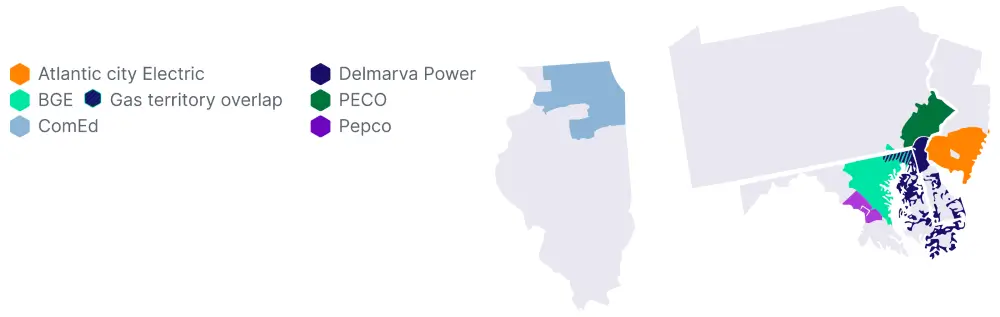
Exelon is the customer, network owner, and grid modernization leader for this deployment, defining the operational requirements, target use cases, deployment priorities, and long-term network objectives across its operating companies. The solution also leverages Exelon’s existing fixed network infrastructure, helping integrate the new private wireless platform into the broader utility communications environment already in place. The program itself is a multi-year deployment across Exelon’s operating footprint, with phased expansion across its operating companies, including Atlantic City Electric, BGE, ComEd, Delmarva Power, PECO, and Pepco, and internal planning materials pointing to a large-scale rollout across hundreds of sites over multiple years as connected grid devices and applications continue to grow.