Charter

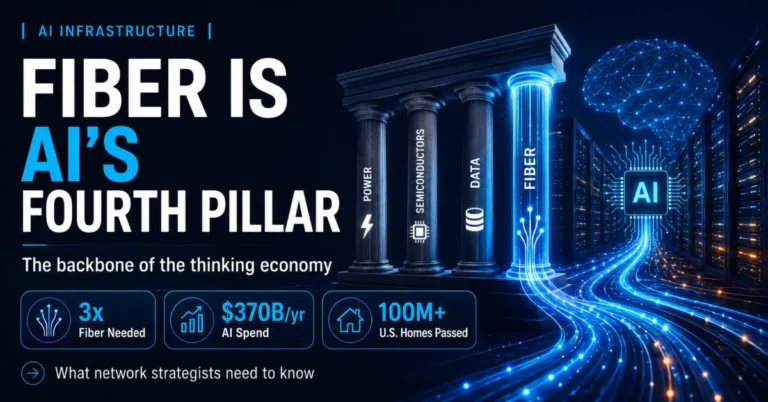
The Fiber Broadband Association's Fiber Connect 2026 conference repositioned fiber as a foundational prerequisite for AI infrastructure — not merely a consumer broadband conduit. With hyperscalers investing $370 billion annually in AI, the FBA projects demand for twice as many fiber route miles and three times total fiber deployed today. Over 100 million U.S. homes have now been passed with fiber, yet workforce shortages exceeding 200,000 workers and power constraints threaten deployment velocity precisely when AI-driven demand is accelerating fastest.
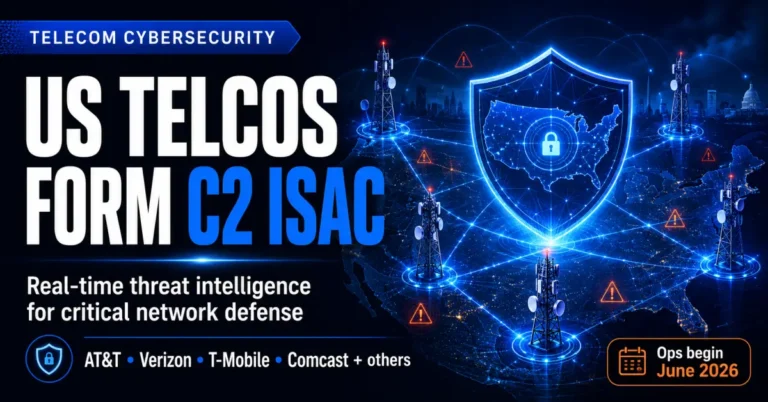
Eight of the most influential US telecommunications carriers — including AT&T, Verizon, T-Mobile, and Comcast — have established the Communications Cybersecurity Information Sharing and Analysis Center, known as C2 ISAC. Governed by the CISOs of each founding company and led by a director with CISA and FBI experience, C2 ISAC is designed to deliver real-time, actionable threat intelligence across competing carriers that collectively defend America's critical communications infrastructure. Operations are expected to begin in June 2026.
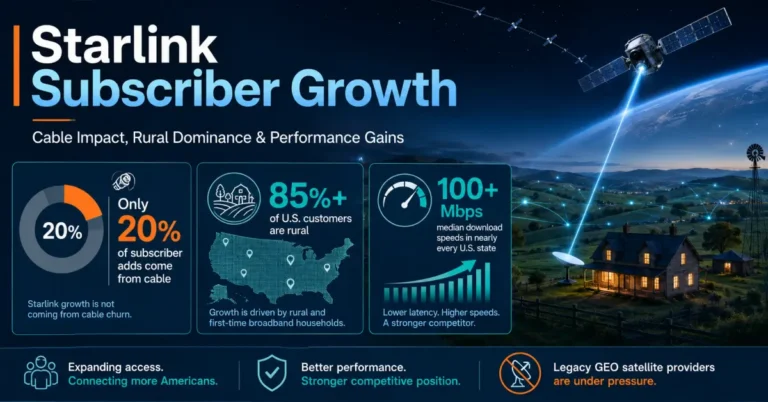
New research from New Street Research and Recon Analytics reveals that despite cable controlling roughly 60% of the US broadband market, only about 20% of Starlink's gross subscriber additions come from cable defectors. More than 85% of Starlink's US customer base is located in rural areas, and a significant share of its growth comes from first-time broadband subscribers. Meanwhile, Starlink's median download speeds now exceed 100 Mbps in nearly every US state, fundamentally shifting its competitive standing in the satellite and terrestrial broadband landscape.
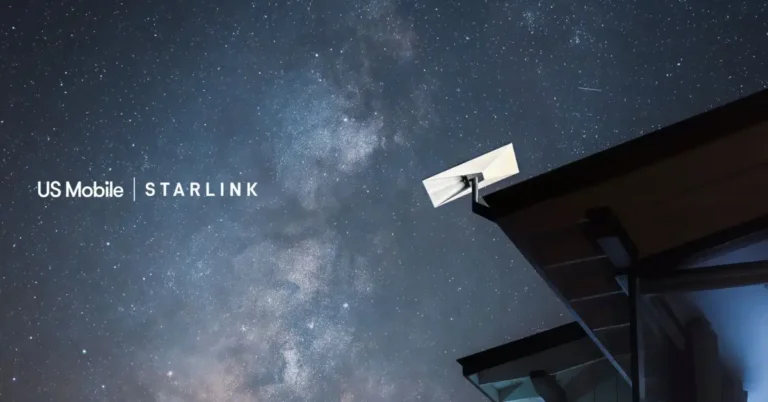
US Mobile and Starlink have launched limited-time bundles that combine Starlink residential service with US Mobile’s unlimited mobile plans under a single account and bill. Entry pricing starts at $47 per month, which effectively blends a $30 Starlink residential tier (targeted around 100 Mbps) with a $17 US Mobile base unlimited plan. Higher Starlink speed tiers are available at $77 per month for a 200 Mbps option and $117 per month for a “Max” service that targets 400 Mbps or more. Compared with Starlink’s typical standalone rates of $50, $80, and $120 for the same speed tiers, the bundles represent meaningful savings for households that want both mobile and home internet.
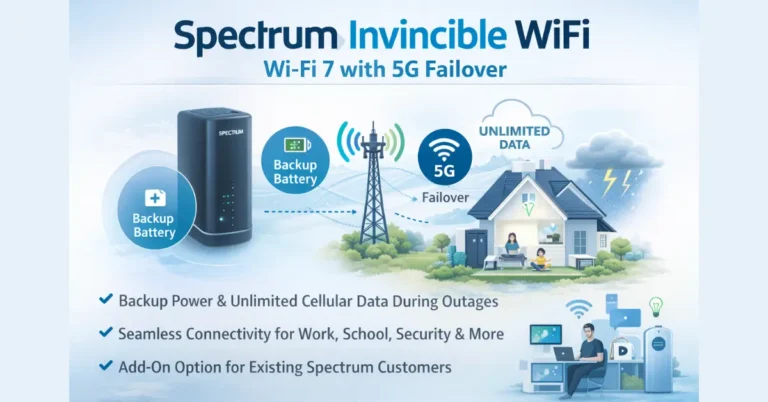
Charter introduced Spectrum Invincible WiFi, a package built around its Advanced Wi‑Fi 7 router paired with an integrated backup battery and an embedded 5G cellular pathway. The system automatically rides through local power interruptions for up to eight hours and, if the wired broadband link drops, switches to cellular with unlimited data until the primary connection returns. The offer targets households running multigig internet and dozens of smart devices, and is positioned as a simple add-on for existing Spectrum customers. Home connectivity has become mission‑critical for work, school, security and telehealth while weather-related disruptions and grid instability are rising.
More than 60% of U.S. households are now serviceable by fiber, with double‑digit millions of new homes added in 2025 as operators, co‑ops, and municipalities pushed into suburban and rural areas. Median build benchmarks show underground construction around $18 per foot and aerial around $8 per foot, based on a broad sample of operator and contractor data across dozens of states. Most builders expect costs to rise again in 2026, and many anticipate longer schedules. Labor and materials remain the top pressure points, while permitting and make‑ready feature more prominently as networks stretch into harder‑to‑build pockets.
2025 has seen major telecom and tech M&A activity, including billion-dollar deals in fiber, AI, cloud, and cybersecurity. This monthly tracker details key acquisitions, like AT&T buying Lumen’s fiber assets and Google’s $32B move for Wiz, highlighting how consolidation is shaping the competitive landscape.
Multiple media reports say Verizon plans to cut roughly 15,000 jobs and shift about 180–200 company-owned stores to franchise operators, marking its most significant restructuring to date. According to reports citing unnamed sources, Verizon is preparing layoffs equal to about 15% of its workforce, with some estimates suggesting cuts could reach up to 20,000 roles when store conversions are included. Verizon ended 2024 with roughly 100,000 U.S. employees after several years of incremental reductions. Leadership has signaled the need to simplify operations and reset the expense base following heavy 5G investment and a more promotional market.
Mint Mobile is expanding from prepaid wireless into fixed wireless access, introducing a 5G home internet offer that targets price-sensitive households and small offices with unlimited data and headline speeds up to 415 Mbps for as low as $30 per month. The company’s “MINTernet” is a self-install 5G home internet service that rides on T-Mobile’s nationwide 5G network, following T-Mobile’s acquisition of Mint’s parent Ka’ena Corporation in 2024. At a starting price of $30 per month, Mint undercuts many cable and fiber entry tiers and lands below other national 5G FWA offers, which typically range from $35 to $60 depending on mobile bundle eligibility.
In 2024, the U.S. cable sector generated $568.7 billion in total economic output and supported 1.3 million jobs across the country. This footprint spans broadband networks, video programming, construction, manufacturing, and a broad vendor ecosystem. It underscores why cable remains a central pillar of America’s connectivity and media economy even as consumption shifts to IP and streaming. Cable broadband providers—led by Comcast, Charter Communications (Spectrum), Cox, Altice USA (Optimum), Mediacom, Cable One (Sparklight), and WOW!—accounted for $366 billion in total economic impact and nearly 888,000 jobs.
With the FCC under pressure to deliver 300 MHz of auctionable spectrum, a group of Senate Republicans is urging the agency to preserve the shared 3.5 GHz CBRS band and the unlicensed 6 GHz band that underpin private 5G and next‑gen Wi‑Fi. Ten Senate Republicans, including five members of the Senate Commerce Committee, sent a letter urging the FCC to ensure existing operations in the 6 GHz and Citizens Broadband Radio Service (CBRS) bands continue “without disruption.” NTIA Administrator Arielle Roth called for preserving 6 GHz for Wi‑Fi, a stance applauded by NCTA as a recognition that unlicensed spectrum is an economic engine.
A fresh class action intensifies scrutiny of Charter Communications broadband strategy and disclosures following the end of the Affordable Connectivity Program (ACP) and a sharp Q2 subscriber decline. New complaints filed in the Southern District of New York allege Charter and senior executives misled investors about the operational and financial impact of ACPs expiration. ACP, which provided a $30 per month subsidy to eligible low-income households, exhausted funding in June 2024; Charter was the largest ACP participant with more than 5 million subsidized broadband customers. In Q2 2025, Charter reported a net loss of roughly 117,000 Internet subscribers, including about 50,000 disconnects associated with ACPs end.

Partner Hubs

Download content, access intelligence tools, and hear from executives.

Partner Events

  • M360 ASEAN
  • FutureNet Asia 2026
Scroll to Top