US Mobile–Starlink Home Internet Bundle: Pricing, Coverage, Savings
A new MVNO–LEO bundle pairs residential satellite broadband with nationwide mobile plans at aggressive price points that challenge cable and fixed wireless offers.

Bundle pricing and speed tiers
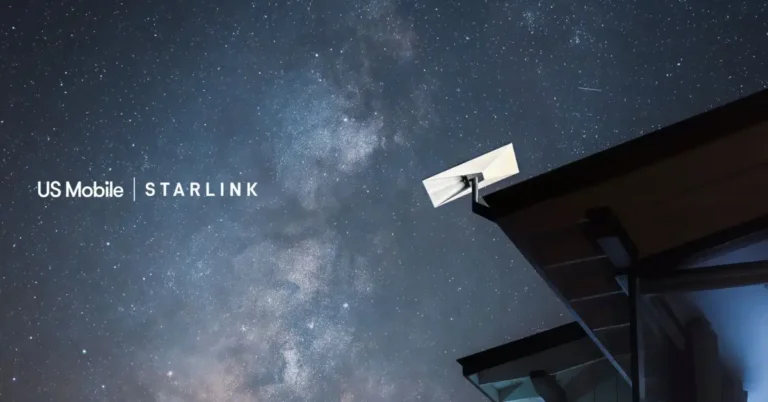
US Mobile and Starlink have launched limited-time bundles that combine Starlink residential service with US Mobile’s unlimited mobile plans under a single account and bill. Entry pricing starts at $47 per month, which effectively blends a $30 Starlink residential tier (targeted around 100 Mbps) with a $17 US Mobile base unlimited plan. Higher Starlink speed tiers are available at $77 per month for a 200 Mbps option and $117 per month for a “Max” service that targets 400 Mbps or more. Compared with Starlink’s typical standalone rates of $50, $80, and $120 for the same speed tiers, the bundles represent meaningful savings for households that want both mobile and home internet. Equipment, availability, and taxes/fees apply as usual.
Fixed–mobile convergence via MVNO + LEO
US Mobile operates as a mobile virtual network operator and can place subscribers on any of the three nationwide networks—AT&T, Verizon, or T‑Mobile—giving customers unusual flexibility in coverage selection. By folding Starlink into its catalog, the MVNO is effectively offering fixed–mobile convergence without owning either the RAN or the last‑mile access. The experience is positioned as one plan, one app, one bill, which simplifies adoption and may chip away at the perceived lock‑in of cable bundles and traditional quad‑play offers.
Target users: rural, exurban, and redundancy seekers
The value proposition is strongest for rural and exurban households where cable or fiber options are limited, as well as for cord‑cutters comparing satellite against fixed wireless access (FWA) from Verizon and T‑Mobile. Urban and suburban users who want a straightforward bundle discount and a satellite backup path for resilience may also see appeal. For US Mobile, the bundle is a customer acquisition lever; for Starlink, it is a distribution play that could accelerate net adds as SpaceX readies a public listing.
Why the US Mobile–Starlink bundle matters now
This tie‑up underscores shifting broadband economics and the accelerating convergence of satellite and terrestrial networks.
Impact on cable and FWA economics
Cable operators like Comcast and Charter have relied on mobile add‑ons to defend broadband share, while FWA growth has cooled as spectrum utilization tightens in some markets. A sub‑$50 fixed–mobile bundle anchored by LEO satellite reframes the price–performance debate, especially in regions where cable promotional pricing has expired or FWA capacity is constrained. If the uptake is material, expect sharper retention incentives from cable and more surgical FWA pricing or data management responses from mobile network operators.
Satellite–terrestrial (NTN) convergence accelerates
The bundle complements a broader industry shift toward non‑terrestrial networks (NTN) using 3GPP standards that blend satellite and cellular footprints. T‑Mobile’s direct‑to‑cell partnership with SpaceX and other NTN pilots from global operators have signaled where coverage is heading. While this US Mobile offer is for residential Starlink—not direct‑to‑device—it normalizes satellite within consumer connectivity portfolios and expands satellite’s role from niche coverage to mainstream primary access.
Timing, distribution, and capital markets
The marketing push lands as SpaceX prepares for a potential IPO, putting subscriber growth and revenue diversification in the spotlight. Retail bundles with MVNOs can be scaled quickly without new terrestrial spectrum outlays, bolstering Starlink’s top‑line trajectory and improving unit economics through channel leverage.
Risks and execution challenges
Despite strong optics, performance, operations, and ecosystem politics will determine whether this scales beyond a smart promotion.
Capacity constraints and QoE
Starlink capacity varies by cell and region, and real‑world performance can fluctuate based on subscriber density and line‑of‑sight. Typical latency is markedly better than geostationary satellite but still above fiber and cable. Managing expectations around peak‑time speeds, potential data management policies, and service variability will be crucial to avoid churn. On the mobile side, US Mobile’s experience depends on the hosting MNO’s local network quality and prioritization rules.
Hardware, installation, and support model
Residential satellite requires a dish, mounting, power, and clear sky view. That introduces installation friction, potential truck rolls, and support costs that differ from self‑install cable or FWA gateways. A single‑bill promise raises the bar for coordinated care across two providers; ticket routing, diagnostics integration, and returns logistics need tight alignment to prevent NPS hits.
Carrier dynamics and spectrum strategy
Many carriers are cautious about deep partnerships with SpaceX given competitive implications and spectrum strategy. US Mobile’s MVNO status offers a layer of separation, but hosting carriers may reassess wholesale terms if satellite bundles begin to cannibalize their own FWA or home internet ambitions. The broader debate over how terrestrial and satellite spectrum rights interact—especially as NTN expands under 3GPP Release 17/18—will continue to shape partnership boundaries.
Regulatory and subsidy considerations
Federal and state broadband programs prioritize unserved and underserved locations, with evolving rules on technology eligibility and performance thresholds. How satellite bundles qualify for subsidies, and how they are measured on reliability and latency, will affect addressable market size in rural deployments.
What telecom and enterprise buyers should do next
Evaluate where satellite‑anchored bundles fit your portfolio, your redundancy posture, and your go‑to‑market.
Actions for MNOs, MVNOs, and ISPs
Benchmark total cost of ownership against FWA and cable promos in target ZIP codes and segment by density. Consider piloting multipath home internet—satellite primary with cellular backup, or vice versa—where fiber build economics are weak. If you are an MVNO, assess whether adding satellite boosts take‑rate without eroding wholesale margins, and insist on clear SLA constructs for support handoffs.
Guidance for enterprises and multi‑site SMBs
Satellite plus mobile can harden connectivity at edge locations, pop‑up sites, and critical branches. Validate latency‑sensitive workloads, SD‑WAN policy handling, and failover times. Negotiate for bundled pricing that includes hardware, managed install, and unified support, and track jitter and packet loss, not just headline speeds.
Key metrics to monitor
Monitor Starlink net adds by region, average realized throughput at peak hours, bundle attachment rates, churn within three and six months, and any moves by cable and FWA providers to counter with deeper discounts or data policy changes. Keep an eye on NTN standardization milestones and additional operator–LEO tie‑ups.
Outlook and market impact
If execution holds, MVNO–LEO bundles will pressure incumbents to sharpen convergence strategies and could redefine home internet value in underserved markets.
Near-term expectations
Expect brisk uptake in rural and exurban ZIP codes and targeted adoption in urban areas seeking redundancy. Competitors will respond with promotional stacking, handset credits tied to home internet, or improved gateway offers on FWA. Support and installation experience will make or break customer satisfaction.
Medium-term trajectory
As satellite capacity scales and NTN matures, more operators will fold LEO options into consumer and enterprise portfolios, including backup paths in SD‑WAN and SASE offers. The dividing line between “mobile” and “home internet” will blur further, and the winners will be those who deliver predictable performance, transparent policies, and simple, converged billing across access types.