AI Agent Competitive
Intelligence
Intelligence Journeys
AI Use Cases for Utilities
Private Broadband for Utilities

Huawei

August 2026's roundup: Nvidia forms $500B+ AI compute financing platforms with the world's largest asset managers, SK Telecom's SK Hyper data centre unit and Microsoft's new Hyderabad hyperscale region both go live, the custom silicon race widens to include OpenAI's own inference chip and a reported $12.9B Nvidia bid for Hugging Face, and SpaceX's infrastructure ambitions extend from a $16.8B Texas fab to orbital data centers.
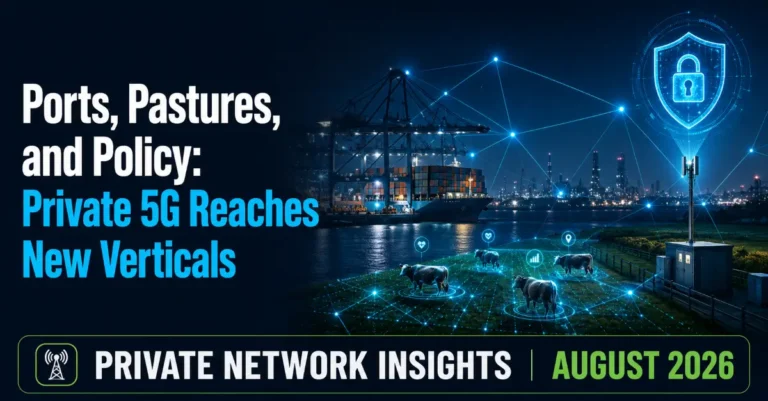
August 2026's roundup: Santos and Valenciaport advance port deployments while JNPA moves toward spectrum leasing, private 5G reaches a livestock farm in West Sussex and an enterprise HQ via Comcast, and security shifts from a vendor feature into a named line in national policy - from the UK NCSC's collaboration call to Brazil's auction-embedded network obligation.
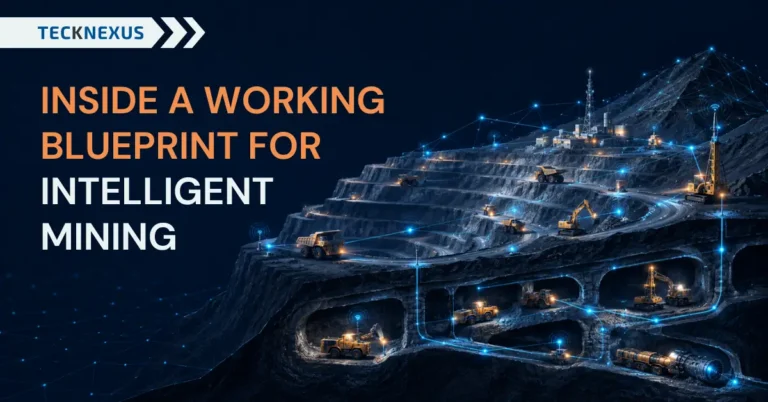
A blueprint presented at Huawei South Africa Connect 2026 lays out a layered mining connectivity and AI architecture in unusual technical detail: private 5G for open-pit operations, Wi-Fi Mesh underground, distributed fibre sensing for perimeter and conveyor monitoring, edge computer vision on existing CCTV, and a BCX-built digital twin integrating IoT, CCTV, PLC, SCADA, and MES data. TeckNexus examines what the architecture reveals — and what a companion piece on open-pit mining suggests about how far digital twin adoption has actually progressed industry-wide.
Nokia and Google Cloud's network agents no longer just recommend fixes — they diagnose faults and propose remediations that a human approves rather than performs. That single word, "approves," is where the real governance work needs to happen.
July 2026's roundup: agentic AI's accountability gap widens even as AI-RAN moves into government-backed programs, telecom builds its own AI models, and fresh capital reshapes the AI model layer — with the deeper compute and data-center buildout covered in our companion Digital Infrastructure Insights, July 2026.
June 2026's roundup: agentic AI moves from pilot to operational core across telecom networks, satellite consolidates through Rocket Lab's $8B Iridium acquisition and SpaceX's $75B IPO, AI-RAN's GPU divide matures into shipping products, US spectrum auctions return after a four-year hiatus, and telecom M&A accelerates globally.
June 2026 showed agentic AI scaling from pilot to platform: industry-wide standards momentum, AI-RAN field trials from Nokia, Amdocs and KDDI, and fresh capital across data centers on three continents. This full roundup covers every deployment, partnership, funding round and governance move from the month, with tools to prioritise AI use cases and plan the network around them.
With GSA counting 2,003 private mobile network references, June 2026's story shifted from whether private cellular works to what it returns. This roundup covers TeckNexus's vertical ROI tools, 3GPP's confirmed 6G timeline, AI moving into the RF layer, CBRS SAS consolidation, and a widening set of verticals from mining to healthcare.
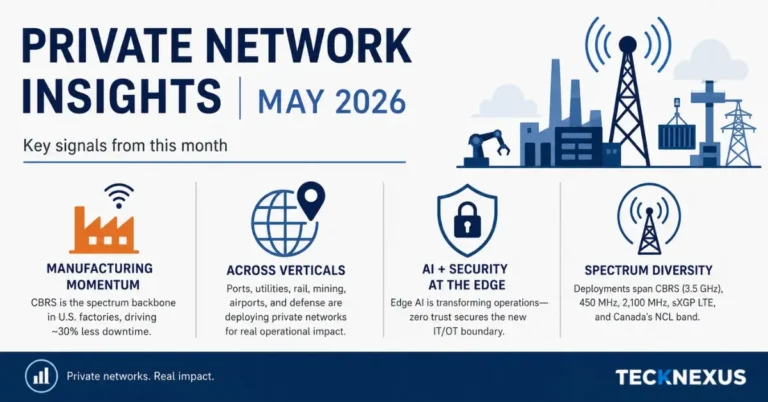
Private 5G became an industrial default in May 2026, with CBRS now the U.S. factory spectrum of record. This month's roundup spans deployments across manufacturing, ports, utilities, rail and defence — plus a deep utilities thread on grid AI and security — and what the shift means for buyers scoping spectrum, architecture and security.
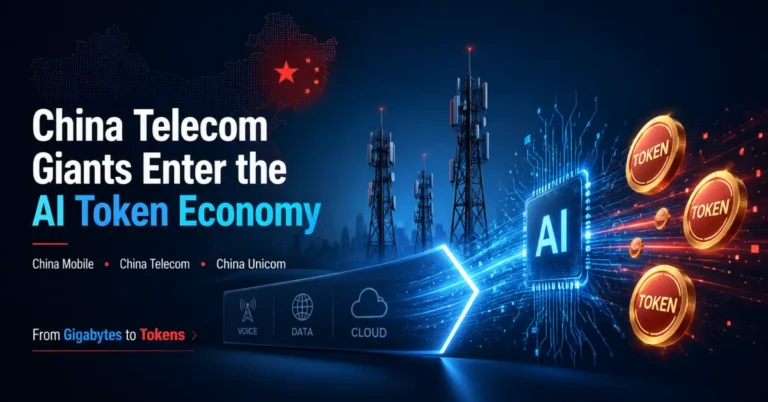
China Telecom, China Mobile, and China Unicom have each unveiled token-based service plans, ecosystem alliances, and commercial pricing structures that reframe what it means to be a telecom provider in the AI era. This is not a pilot program or a speculative roadmap. It is a structural shift in how network operators intend to generate revenue, compete for enterprise customers, and position themselves at the center of the AI economy — driven by a greater than 1,000-fold surge in daily token consumption across China between early 2024 and March 2026.
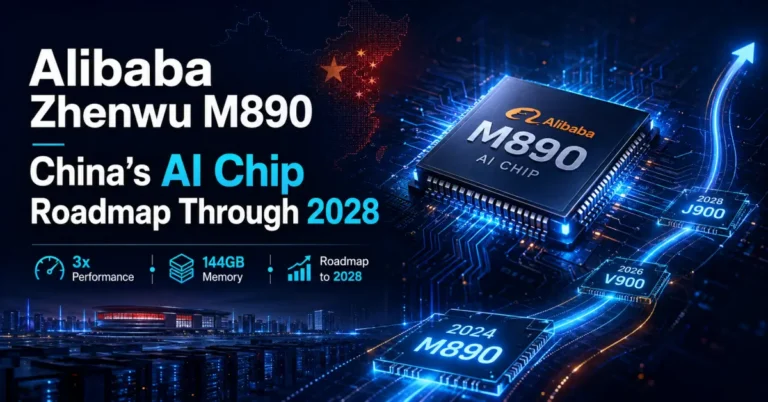
Alibaba's Zhenwu M890 AI accelerator, developed by chip unit T-Head, delivers approximately three times the performance of its predecessor and features 144GB of on-chip memory purpose-built for agentic AI workloads. Backed by a $53 billion infrastructure commitment and a published roadmap extending to the J900 chip in 2028, Alibaba is building sovereign AI infrastructure from silicon to software. With over 560,000 chips shipped to 400-plus customers across 20 industries, this is a commercially validated platform — not a prototype — signaling a maturing Chinese AI hardware ecosystem.
Deutsche Telekom's transition from Ericsson to Mavenir as its primary 5G standalone core provider represents a fundamental rethinking of how Tier 1 operators architect and operate networks in the cloud-native era. Mavenir now carries all standalone 5G traffic in Germany, while Ericsson handles legacy 4G and non-standalone 5G. Driven by the Horizontal TelCo Cloud initiative, the shift has already produced measurable results including 65% energy savings in live testing and three commercial network slicing deployments, with Apple FaceTime set to leverage these capabilities at consumer scale via iOS 26.

Partner Hubs

Download content, access intelligence tools, and hear from executives.

Partner Events

  • FutureNet Asia 2026
  • Network X Vienna 2026
Scroll to Top