










Fast-track connectivity, capacity, and success
CLOUD AND AI NETWORKING Fast-track connectivity, capacity, and success

Latest News and Insights

  • All
  • 5G
  • 6G
  • AI
  • API
  • AR
  • Assurance
  • Automation
  • Blockchain
  • Devices
  • Digital Twin
  • Edge/MEC
  • FWA
  • IoT
  • Metaverse
  • Monetization
  • Network Infrastructure
  • Network Slicing
  • Open RAN
  • Orchestration
  • OSS-BSS
  • Others
  • Predictions
  • Private Networks
  • RAN
  • SASE
  • Satellite & NTN
  • SD-WAN
  • SDN-NFV
  • Security
  • Semiconductor
  • Sustainability
  • Telco Cloud
  • Testing & QA
  • Towers & Cells
  • VNF
  • VR
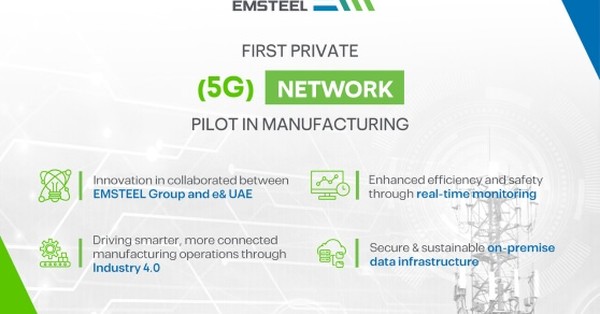
A landmark private 5G pilot at EMSTEEL with e& UAE signals how industrial networks in the region are evolving from connectivity add-ons to strategic infrastructure. The pilot delivers dedicated, high-speed wireless coverage across complex industrial spaces that are often hostile to traditional Wiโ€‘Fi and public cellular. For manufacturers in the UAE, this is a meaningful milestone: it showcases a path to secure, deterministic wireless that can carry safety-critical and time-sensitive workloads on the shop floor. Private 5G gives factories a foundation to adopt connected worker tools, real-time quality control, AI-assisted operations, and digital twins without moving sensitive data off-site.
ZTE, China Unicom Liaoning and Dalian Changhai Airport have put a 5G-Advanced private network with integrated sensing and communications into live service to address low-altitude security at an island test flight field. The partners deployed a private 5G-Advanced architecture that fuses high-throughput connectivity with precision sensing on the same infrastructure, tailored for a maritime, island airport where traditional patrols and single-sensor radars leave blind spots for โ€œlow, slow, smallโ€ targets such as drones and bird flocks. According to the partners, the network is running 24/7 at the test flight field and has lifted low-altitude detection accuracy near 98%. By consolidating connectivity and sensing on one footprint, the deployment claims about 30% less space and roughly 25% lower capital intensity versus separate radios and radars.
Hrvatski Telekom will deploy dedicated private 5G networks at Zagreb, Zadar, and Pula airports under a โ‚ฌ5.6 million โ€œNextGen 5G Airportsโ€ program co-financed by the European Commissionโ€™s CEF Digital initiative. The project was selected in a competitive CEF Digital call focused on 5G and edge for smart communities, with โ‚ฌ3.09 million in EU grant funding and the remainder financed by Hrvatski Telekom and partners. The program targets operational efficiency, safety, and a better passenger experience through dedicated, configurable, and SLA-backed wireless infrastructure. Edge computing on or near the airport premises will enable low-latency processing for video, safety systems, and time-sensitive control.
Indiaโ€™s Department of Telecommunications has ordered major messaging apps to implement continuous SIM binding and frequent web re-authentication to curb fraud, with compliance expected in early 2026. The directive applies to app-based communication platforms that use mobile numbers as identifiers, including WhatsApp, Telegram, Signal, Snapchat, ShareChat, JioChat, Josh, and regional players like Arattai. Apps must continuously verify that the SIM linked to the registered number is present and active on the device, not just at account setup. Additionally, web sessions (e.g., WhatsApp Web) must auto-logout every six hours, forcing users to re-link via QR code.
Vodafone is accelerating a multi-year resilience programme to keep emergency and critical services online during grid failures, an issue that is moving from rare-event planning to board-level risk management. In response, Vodafone fast-tracked its Enhanced Power initiative to harden more than 10,000 critical mobile access sites across Europe over the next two years, starting in Portugal. The system uses AI to predict outages, throttle non-essential loads, and place selected radio elements into low-energy modes, preserving channels for emergency calls, SMS, and priority users. More than 400 core and backbone facilities in the EU are provisioned with batteries and diesel generators for at least 72 hours of backup or guaranteed refueling within 48 hours.
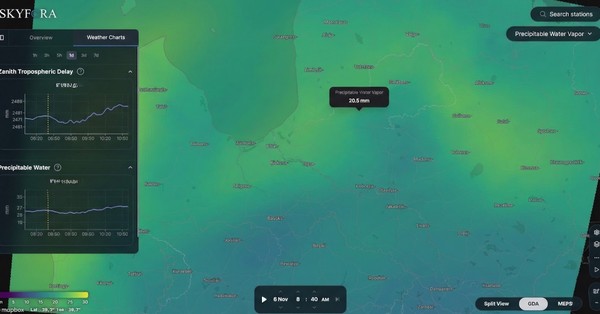
Skyfora and LMT demonstrated a real-time, kilometer-scale GNSS meteorology grid running on LMTโ€™s 5G network at NATOโ€™s Digital Backbone Experimentation (DiBaX), signaling a new class of โ€œnetwork-as-a-sensorโ€ capability for Europe. At DiBaX in Latvia, LMTโ€™s 5G sites equipped with Skyforaโ€™s Weather Engine streamed continuous atmospheric measurements derived from small, measurable delays in GNSS signals as they traverse humid air. The result was a rapid-update observation grid delivering near real-time insights into the evolution of storms, extreme rainfall, flood risk, and heat stress across large areas, without deploying new physical weather stations.
Nvidia used NeurIPS to expand an open toolkit for digital and physical AI, with a flagship reasoning model for autonomous driving and a broader stack that targets speech, safety, and reinforcement learning. Nvidia introduced DRIVE Alpamayo-R1 (AR1), an open vision-language-action model that fuses multimodal perception with chain-of-thought reasoning and path planning, aiming to push toward Level 4 autonomy in constrained domains. To lower adoption friction, Nvidia published the Cosmos Cookbook with step-by-step recipes for data curation, synthetic data generation, inference, and post-training workflows, enabling customization for diverse physical AI use cases.
Two German heavyweights are in advanced discussions to co-build large-scale AI data centre capacity in Germany, a move that would tap European Union funding and accelerate sovereign AI infrastructure. Deutsche Telekom and the Schwarz Group are exploring a joint bid to develop EU-supported โ€œAI Gigafactoryโ€ facilities, data centres purpose-built for high-density AI training and inference. According to multiple reports, the talks are well progressed but not yet final. Infrastructure investor Brookfield has been flagged as a potential financial partner alongside EU capital, adding balance-sheet depth and construction expertise to the consortium.
The relentless march of artificial intelligence is reshaping the FinTech landscape, promising to revolutionize everything from fraud detection to personalized customer experiences. However, integrating AI is complex and requires strategic navigation. The core strategic dilemma for FinTech companies is whether to build AI solutions internally, buy pre-built platforms, or forge strategic partnerships. The ideal approach depends on internal capabilities, strategic goals, and market dynamics. In many cases, strategic partnerships offer the most compelling solution, providing access to specialized expertise, reduced risk and cost, faster time-to-market, and scalability. The future of AI in FinTech is bright, with success hinging on informed strategic decisions and a collaborative approach.

TeckNexus Newsletters

I acknowledge and agree to receive TeckNexus communications in line with the T&C and privacy policy.ย 

Whitepaper
Private cellular networks are transforming industrial operations, but securing private 5G, LTE, and CBRS infrastructure requires more than legacy IT/OT tools. This whitepaper by TeckNexus and sponsored by OneLayer outlines a 4-pillar framework to protect critical systems, offering clear guidance for evaluating security vendors, deploying zero trust, and integrating IT,...
Whitepaper
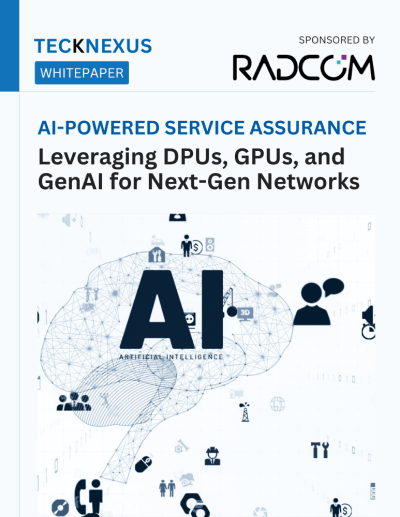
Telecom networks are facing unprecedented complexity with 5G, IoT, and cloud services. Traditional service assurance methods are becoming obsolete, making AI-driven, real-time analytics essential for competitive advantage. This independent industry whitepaper explores how DPUs, GPUs, and Generative AI (GenAI) are enabling predictive automation, reducing operational costs, and improving service quality....
Whitepaper
Explore how Generative AI is transforming telecom infrastructure by solving critical industry challenges like massive data management, network optimization, and personalized customer experiences. This whitepaper offers in-depth insights into AI and Gen AI's role in boosting operational efficiency while ensuring security and regulatory compliance. Telecom operators can harness these AI-driven...
Supermicro and Nvidia Logo
CLOUD AND AI NETWORKING Fast-track connectivity, capacity, and success Accelerate growth and monetize AI applications with industry-leading scale, simplified operations, and proven experience
CLOUD AND AI NETWORKING Fast-track connectivity, capacity, and success
Scroll to Top

Private Network Security

4 Pillars for Securing Private 5G, LTE and CBRS Cellular Networks