SCWS 2026 agenda reflects defining year for small cells
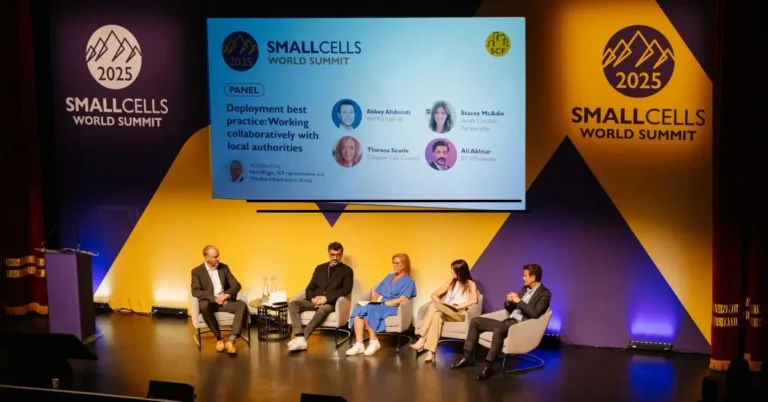
Registration is now open for Small Cells World Summit 2026, the global conference series dedicated to small cells, DAS and the wireless ecosystem. With 2026 forecast as a defining year for small cells deployment, the SCWS agenda will focus on network sharing, outdoor and venue connectivity, AI RAN, Edge AI, 6G rollout, non-terrestrial networks, private enterprise networks and neutral host in-building solutions.

Circles and OpenAI AI-Native Telco Stack
Circles and OpenAI have reached a major milestone in building the world’s first AI-native telco stack, moving beyond legacy BSS/OSS bolt-on approaches. Flagship products CareX and Xplore IQ deliver measurable outcomes — including 85% autonomous query resolution and a 22% ARPU uplift in Singapore deployments. Built on a multi-agent architecture and OpenAI’s API platform, the stack enables telecom operators across 14 countries to automate customer operations and drive proactive revenue monetization without rebuilding infrastructure from scratch.

T-Mobile Starlink D2D Usage Falls Short — What It Means for Satellite Mobile
T-Mobile CEO Srini Gopalan admitted during Q1 2026 earnings that its T-Satellite direct-to-device service is seeing far less usage than projected, largely because T-Mobile’s terrestrial network leaves few coverage gaps for consumers. With 1.8 million free beta sign-ups failing to translate into strong paid engagement, and Apple’s free Globalstar satellite messaging compressing the addressable market, T-Mobile is pivoting toward enterprise connectivity. Its new SuperBroadband offering pairs 5G with Starlink LEO broadband, targeting businesses in healthcare, retail, and energy that require resilient, always-on connectivity across distributed locations.

Telefonica Spain, Sateliot team on 5G NTN services
Telefonica Spain and Barcelona-based Sateliot have announced a strategic collaboration to integrate 5G Non-Terrestrial Networks with terrestrial 5G standalone deployments, moving NTN from standards discussion into active deployment planning. Built on the 3GPP Release 17 NTN standard and validated through a 2023 ESA-supervised interoperability test, the partnership targets defense, industrial IoT, maritime, and critical infrastructure sectors. The hybrid architecture supports unmodified NB-IoT devices connecting directly via LEO satellite, lowering enterprise adoption barriers and establishing a replicable model for operator-satellite collaboration across the telecom industry.

MTC and Rössing Uranium Use Private LTE for Mining in Namibia
Rössing Uranium and MTC Namibia have commissioned four private LTE towers at the Rössing open-pit mine to improve mine connectivity, safety alerts, truck dispatch, drill readings, GPS tracking and real-time operational visibility. The N$3.7 million LTE deployment forms part of a broader infrastructure upgrade of more than N$10 million and supports Rössing’s smart mining and digital transformation strategy.

Network X Americas 2026
Start: May 18, 2026
End: May 20, 2026
Venue: Irving Convention Center, Dallas, Texas
Location: Dallas, TX, USA

VMO2, Daisy take aim at B2B complexity with O2 Business
The rebranding of O2 Daisy to O2 Business marks a strategic shift in UK enterprise technology. Following the August 2025 merger of Virgin Media O2’s B2B division with Daisy Group, the combined entity now offers integrated connectivity, managed IT, and unified communications under a single brand. With 66 per cent of UK business leaders citing growing technology complexity and 30 per cent reporting rising costs as a result, O2 Business is positioning itself as a consolidated alternative to fragmented multi-supplier models — targeting mid-market and enterprise segments across commercial and public sector verticals.

Verizon 5G: 55K Postpaid Adds Signal Stability
Verizon posted 55,000 postpaid phone net additions, a modest beat that underscores stabilizing consumer trends and stronger execution in premium plans and broadband cross-sell. The net add beat is small in absolute terms, but strategically important: it points to improving churn and a healthier mix of high-value subscribers after several quarters of intense promotional pressure. Management coupled the result with a constructive outlook characterized by service revenue resilience and disciplined capital intensity, hinting at a tighter or modestly raised full‑year guide. For a market still digesting 5G investment cycles, this steady footing matters more than splashy net‑add gains.

Port of Tyne Autonomous Logistics on Private Networks
P‑CAL’s secure mesh provided resilient communications across a complex yard, validating control loops and telemetry in the presence of interference, variable traffic density and human activity. As deployments scale, many terminals will adopt hybrid connectivity: private 5G for wide‑area mobility and interference resilience, Wi‑Fi/Wi‑Fi 6E/7 for indoor assets, and mesh for redundancy in hard‑to‑reach zones. This mirrors global port trends, where operators are rolling out private 5G to support autonomous trucks, AI‑driven analytics, drones and mobile cranes. Expect edge compute (MEC) on‑premises to host perception, fleet orchestration and video intelligence with strict latency and data‑sovereignty requirements.