


Partner Hubs

The next evolution of Ciena’s DCOM: OOB management for diverse data center needs
2027 Intelligence Programs

Telco and Tech News and Insights

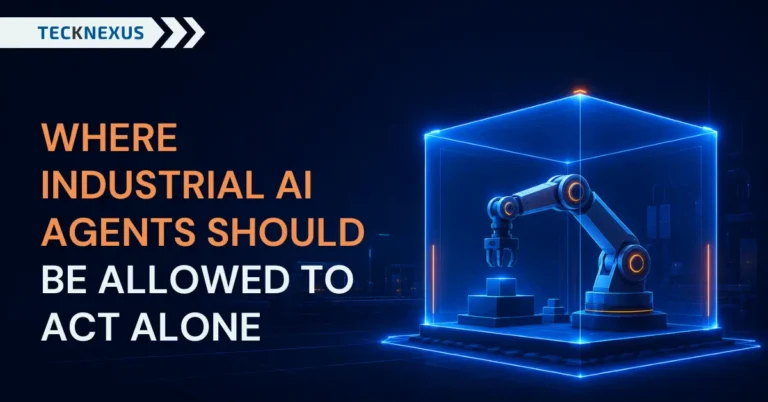
Bounded AI Agents: Where Industrial Automation Should Start

Where Industrial AI Agents Should Be Allowed to Act Alone

Honeywell’s publicly stated framework for deploying AI agents in industrial operations draws a specific, actionable line: bounded autonomy for well-defined, repeatable tasks with deterministic outcomes, human oversight for ambiguous or safety-critical decisions. TeckNexus examines the named use cases — from sensor fault handling to shift handovers — and the OT security posture Honeywell treats as inseparable from granting agents real execution authority, as a starting framework for industrial buyers prioritising their own agentic AI roadmap.
Read More »
Private Network Security for Utilities: The Growing Attack Surface

Utility Private Networks Are Growing Faster Than Their Security Models

As utilities scale private LTE, 5G, and industrial IoT across operational technology environments, the attack surface is scaling with them. TeckNexus examines the security gap documented across the sector this August, the UK NCSC’s identity-based access recommendations, and what a Tampa Electric private LTE deployment — combining Ericsson’s connectivity, OneLayer’s security layer, and Burns & McDonnell’s integration work — shows about what a properly resourced approach actually looks like in practice.

Read More »
When Your Connectivity Provider Becomes Your Compute Provider

When Your Connectivity Provider Becomes Your Compute Provider

Ooredoo Group and Indosat Ooredoo Hutchison have each launched a branded Zankore GPU-as-a-Service platform in Southeast Asia, targeting 1 gigawatt of AI capacity with Nvidia and Nokia as technical partners. TeckNexus examines the capital structure behind the build, why telecom operators are a plausible GPU-as-a-Service provider in under-served regional markets, and the network-compute bundling trade-off buyers should think through before this kind of vendor relationship reaches their own procurement conversations.

Read More »
AI Data Centre Architecture: CXL, AI Servers, and Cooling

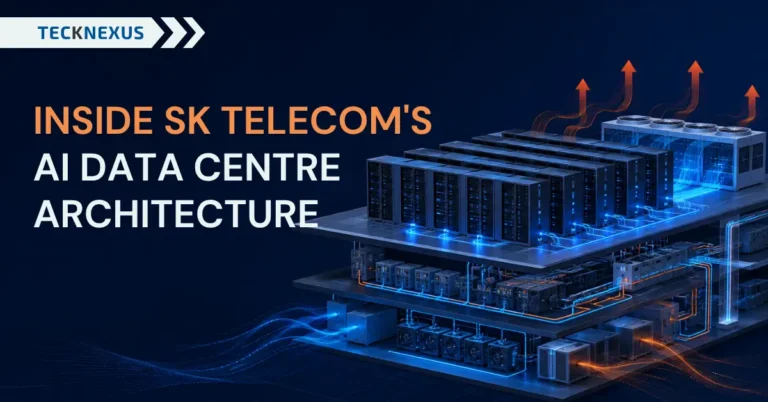
Inside SK Telecom’s AI Data Centre Architecture

SK Telecom’s SK Hyper AI data centre unit, targeting 5 gigawatts of capacity by 2029 and 15 gigawatts by 2035, comes with unusually specific technical architecture detail: a multi-silicon compute platform pairing Arm’s AGI CPU with Rebellions’ AI inference accelerator, a CXL-based memory pooling architecture built with Panmnesia, and named power and cooling partners in Supermicro and Schneider Electric. TeckNexus examines what each layer reveals, and why this level of disclosed detail is a rare and useful reference point for anyone planning AI infrastructure at any scale.

Read More »
Spectrum Leasing for Private Networks: A New Procurement Path

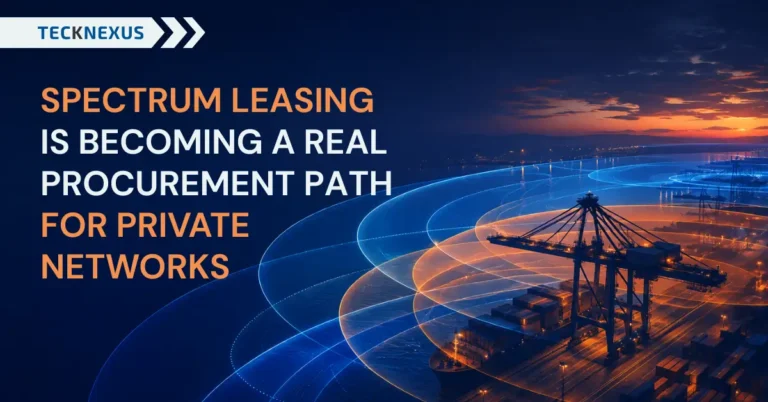
Spectrum Leasing Is Becoming a Real Procurement Path for Private Networks

A procurement step taken by an Indian port authority to lease spectrum for a private 5G deployment, following a competitive market pricing exercise, points at a third spectrum access model for industrial buyers — distinct from direct licensing and shared-spectrum frameworks like CBRS. TeckNexus examines what leased spectrum access offers, what risk it introduces, and where it fits for enterprises evaluating private network architecture in markets without accessible shared-spectrum options.

Read More »
Telecom AI Costs: Why Spend Rises Despite Falling Token Prices

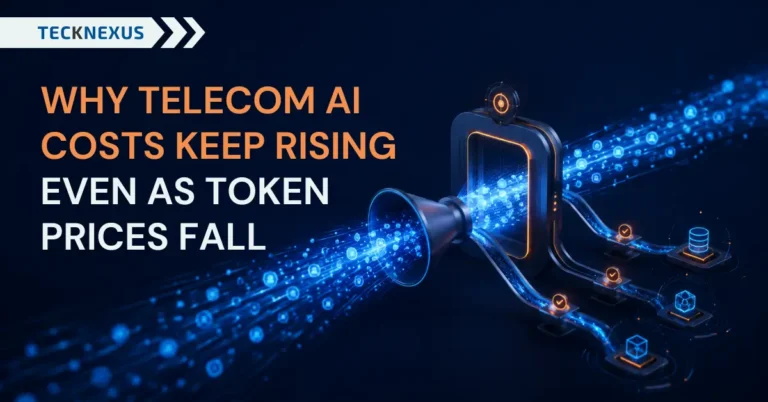
Why Telecom AI Costs Keep Rising Even as Token Prices Fall

An analysis from Pegasystems, published via TM Forum, puts real unit economics against a claim worth taking seriously: falling per-token AI prices are masking rising total inference spend for telecom operators, driven by retrieval overhead (roughly 40% of tokens), agentic loops, and expanding context windows. TeckNexus examines the numbers, the latency and auditability costs that compound alongside direct spend, and the decision-tier routing governance model Pegasystems recommends as a structural fix rather than waiting for prices to fall further.

Read More »
Level 4 Autonomous Networks Are Coming: NGMN's Roadmap Explained

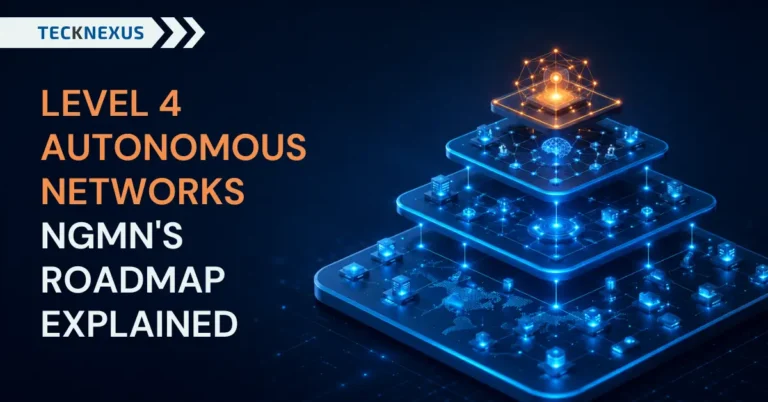
Level 4 Autonomous Networks Are Coming: NGMN’s Roadmap Explained

The NGMN Alliance’s new report treats standards, security, architecture, operations, and governance as prerequisites for genuine Level 4 network autonomy — not items to backfill after automation is already deployed. TeckNexus examines why autonomy level and governance maturity are increasingly decoupled in real deployments, and how NGMN’s five-part framework gives enterprise buyers a more rigorous test to apply against vendors making AI-native or autonomous-network claims.

Read More »
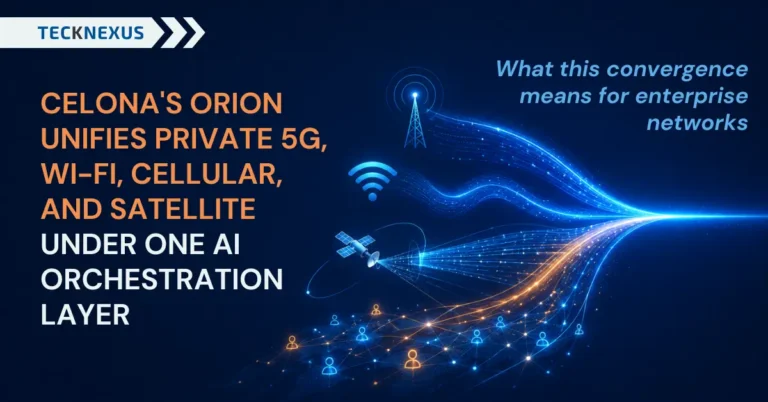
Celona Orion Signals the Convergence of Private 5G, Wi-Fi, Cellular, and Satellite

Celona’s Orion Signals the Convergence of Private 5G, Wi-Fi, Cellular, and Satellite

Celona’s launch of Orion — unifying private 5G, Wi-Fi, public cellular, and satellite under a single deterministic fabric with an added AI orchestration layer — is a useful case study in where converged wireless architecture is heading. TeckNexus examines why multi-technology convergence is a meaningful architectural advance, what Orchestrator AI can add across a converged network, and the single-vendor subscription bundling model Celona has built around it.

Read More »
Scroll to Top
TECKNEXUS MWC BARCELONA 2027
MWC27 EXECUTIVE INSIGHTS PROGRAM

Industry voices. Ideas that move.

SIX MAGAZINES. SIX BIG CONVERSATIONS.
EDITION 01 Networks as Platforms
EDITION 02 AI in the Real World
EDITION 03 The Intelligent Enterprise
EDITION 04 The Future of AI
EDITION 05 Securing the Digital Future
EDITION 06 The Next Frontier

Ways to Participate

Contributed Article Complimentary for eligible MWC sponsors
Sponsored Article & Executive Q&A
Executive Video Interview