Gaming

Deutsche Telekom's transition from Ericsson to Mavenir as its primary 5G standalone core provider represents a fundamental rethinking of how Tier 1 operators architect and operate networks in the cloud-native era. Mavenir now carries all standalone 5G traffic in Germany, while Ericsson handles legacy 4G and non-standalone 5G. Driven by the Horizontal TelCo Cloud initiative, the shift has already produced measurable results including 65% energy savings in live testing and three commercial network slicing deployments, with Apple FaceTime set to leverage these capabilities at consumer scale via iOS 26.
Nokia and Amazon Web Services (AWS) are bringing agentic AI to 5G-Advanced network slicing, moving closed‑loop, intent-based services from PowerPoint to live pilots with du and Orange. The partners unveiled an agentic AI-powered slicing solution that fuses Nokia’s RAN-to-core slicing, AirScale radio, and MantaRay SMO with AWS’s Bedrock AI platform and EKS Hybrid Nodes to turn external context—events, traffic, maps, weather—and live network KPIs into real-time policy decisions. The result is adaptive, premium slices provisioned when and where they’re needed, without manual reconfiguration.
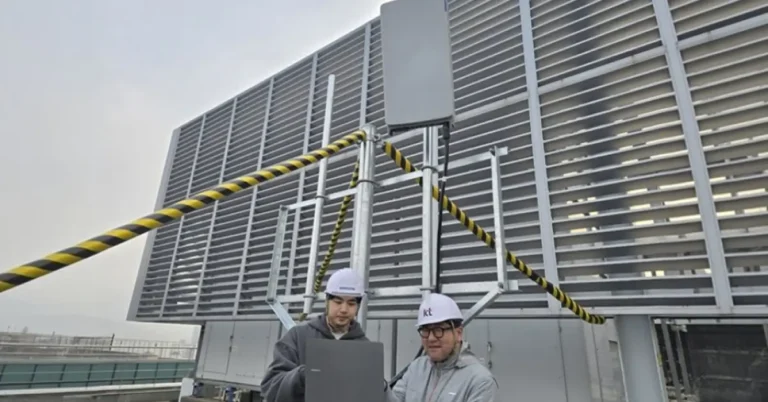
Samsung Electronics, working with KT Corporation and Keysight Technologies, has demonstrated 3 Gbps peak downlink in outdoor tests using an ultra‑dense antenna system and X‑MIMO in the 7 GHz band. The field trial took place at Samsung’s Seoul R&D Campus and pushed eight concurrent spatial streams from a base station to a single user device. The key enabler was a radio unit that packs roughly four times the antenna elements of today’s 5G massive MIMO gear into a similar physical footprint. Shorter wavelengths at 7 GHz make that density feasible without expanding the radio size.
The UK government signalled a rapid escalation of online safety measures that will bring AI chatbots squarely under the Online Safety Act and could introduce an under‑16 social media ban as early as this year. Ministers plan to amend the Online Safety Act 2023 so one‑to‑one interactions with AI systems fall within scope of illegal and harmful content controls. The government wants providers of large language model (LLM) assistants and agentic chatbots to implement safety‑by‑design, including stronger filtering, red‑teaming, abuse detection, and rapid takedown procedures for sexualised or otherwise illegal outputs.
Ericsson has introduced an agentic rApp delivered as a cloud service on Amazon Web Services (AWS), aiming to speed operators’ shift from manual automation toward truly autonomous networks. By offering an “Agentic rApp as a Service” on AWS, Ericsson is packaging policy-driven and AI-assisted RAN optimization as a managed, cloud-delivered capability. Agentic capabilities bring reasoning, planning, and action-taking to operations. Running rApps on AWS offers elasticity, global reach, and faster release cadence. The goal: faster onboarding, lower integration friction, and a more repeatable path to closed-loop assurance across multi-vendor 4G/5G networks.
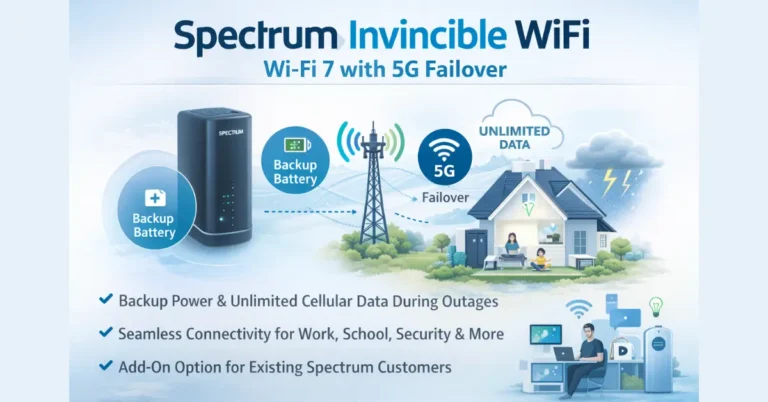
Charter introduced Spectrum Invincible WiFi, a package built around its Advanced Wi‑Fi 7 router paired with an integrated backup battery and an embedded 5G cellular pathway. The system automatically rides through local power interruptions for up to eight hours and, if the wired broadband link drops, switches to cellular with unlimited data until the primary connection returns. The offer targets households running multigig internet and dozens of smart devices, and is positioned as a simple add-on for existing Spectrum customers. Home connectivity has become mission‑critical for work, school, security and telehealth while weather-related disruptions and grid instability are rising.
An AI‑fueled land grab for advanced memory is squeezing supply for handsets, undercutting Qualcomm’s near‑term outlook even as end‑demand for premium Android devices improves. Memory suppliers are prioritizing high‑bandwidth memory (HBM) and DDR5 for AI accelerators and data center servers, diverting wafer capacity and capex away from mobile‑grade LPDDR5/5X and UFS storage. The result is a classic allocation cycle: supply chases the highest‑margin demand (HBM and enterprise SSDs), while downstream categories like smartphones and some edge devices face tighter availability and rising component costs. For Qualcomm, whose Snapdragon platforms anchor premium Android devices, the constraint limits upside volume and mix in the near term.
AI-driven experiences are flipping the traffic mix, pulling more capacity demand toward the uplink than U.S. mobile networks have historically planned for. Generative and vision-based AI are shifting usage from predominantly downloads to more continuous and bandwidth-heavy uploads. Recent benchmarking shows U.S. 5G networks prioritize downlink KPIs more than peers in Asia, even as uplink usage climbs. RootMetrics’ drive testing in late 2025 found all three U.S. carriers set roughly one-fifth of their midband Time Division Duplex (TDD) frame resources for uplink. That gap becomes material as AI, livestreaming, and enterprise camera workloads expand. U.S. carriers continued to win experience awards in early 2026, even as their uplink allocations trailed global leaders.
A new analysis of U.S. fixed wireless access shows subscriber momentum outpacing performance, a signal that capacity and management strategies are under pressure. Fixed wireless access from T-Mobile, Verizon, and AT&T added about 1.04 million net customers in Q3 2025, taking the U.S. FWA base to roughly 14.7 million. T-Mobile remains the U.S. FWA speed leader, posting a median download around 209 Mbps in Q3 2025. Median uploads dipped below 20 Mbps across providers, creating a hurdle for the FCC’s 100/20 benchmark. Urban FWA customers are more likely to meet the FCC’s 100/20 threshold than rural users due to radio geometry and site density.
Netflix plans to acquire Warner Bros. Discovery’s studio and streaming assets in a $72 billion transaction that could reshape streaming, theatrical distribution, and the broader media supply chain. The cash-and-stock offer values Warner at $27.75 per share and implies an enterprise value of $82.7 billion including debt. The combination would join Netflix’s global streaming leader with Warner’s television and motion picture divisions, including HBO, HBO Max, and DC Studios. Closing is targeted within 12–18 months, subject to regulatory clearance. The deal encompasses Warner’s studios and streaming businesses and their associated IP libraries.
Ericsson’s latest Mobility Report points to a clear shift: operators are turning 5G capabilities into differentiated, SLA-backed services rather than just selling more data at higher speeds. After years of building coverage and capacity, 5G networks are mature enough to commercialize features like guaranteed latency, uplink boosts, and application-aware prioritization. The catalysts are in place: more 5G Standalone (SA) cores, rising traffic from video creation and immersive apps, and enterprise demand for predictable performance across sites and clouds. The net result is momentum behind premium, differentiated connectivity that can be priced, assured, and exposed to partners.
India’s 5G market has entered a scale phase, with momentum pointing to more than a billion subscribers and deeper network modernization over the next six years. Ericsson’s latest Mobility Report projects over 1 billion 5G subscriptions in India by end-2031, representing about 79% of the country’s mobile base. Average mobile data usage per active smartphone in India stands near 36 GB per month and is forecast to approach 65 GB per month by 2031. Two demand-side levers stand out: affordable 5G devices and expanding Fixed Wireless Access (FWA), accelerating mainstream adoption and opening a credible substitute to wired broadband in underserved areas.

Your Brand. Our Intelligence Tools.

Capture leads at the point of evaluation. Talk to Us →

Sponsored by Palo Alto Networks
⚡ Utilities ⏱ 8 min ✓ Free
This tool is built and hosted by TeckNexus.
Launch Tool →
Whitepaper
This whitepaper explains how utilities can use secure AI-enabled private mobile networks to modernize operations, support distributed intelligence, improve resilience, and strengthen cybersecurity across critical infrastructure. It covers AI applications, private network advantages, zero trust principles, multilayered security architecture, and governance considerations for AI-ready utility environments....
Whitepaper
Non-terrestrial networks are rapidly evolving from experimental satellite systems into an increasingly important part of the global 5G connectivity landscape. This eBook, developed by Radisys in collaboration with TeckNexus, explores how 3GPP standardization, satellite architecture innovation, and software-driven network design are reshaping NTN deployment models. It examines the transition from...
Whitepaper
Private cellular networks are transforming industrial operations, but securing private 5G, LTE, and CBRS infrastructure requires more than legacy IT/OT tools. This whitepaper by TeckNexus and sponsored by OneLayer outlines a 4-pillar framework to protect critical systems, offering clear guidance for evaluating security vendors, deploying zero trust, and integrating IT,...
Scroll to Top

Map your security gaps to real threat scenarios – including Salt Typhoon, Volt Typhoon, AI data poisoning, rogue devices, and unencrypted OT traffic.

Take the free 8-minute assessment built for utility operators evaluating AI-enabled private mobile networks. Get a readiness score across five critical domains, see where your gaps are, and receive a prioritized action plan for what to fix first.

Free • 8 minutes • Built for private network security