Latest News and Insights

  • All
  • 5G
  • 6G
  • AI
  • API
  • AR
  • Assurance
  • Automation
  • Blockchain
  • Devices
  • Digital Twin
  • Edge/MEC
  • FWA
  • IoT
  • Metaverse
  • Monetization
  • Network Infrastructure
  • Network Slicing
  • Open RAN
  • Orchestration
  • OSS-BSS
  • Others
  • Predictions
  • Private Networks
  • RAN
  • SASE
  • Satellite & NTN
  • SD-WAN
  • SDN-NFV
  • Security
  • Semiconductor
  • Sustainability
  • Telco Cloud
  • Testing & QA
  • Towers & Cells
  • VNF
  • VR
June 2026 showed agentic AI scaling from pilot to platform: industry-wide standards momentum, AI-RAN field trials from Nokia, Amdocs and KDDI, and fresh capital across data centers on three continents. This full roundup covers every deployment, partnership, funding round and governance move from the month, with tools to prioritise AI use cases and plan the network around them.
Telecom AI agents share the same anatomy as any AI agent – but grounding, systems, stakes, goals, and multi-vendor interoperability set them apart. Here are the five differences that matter, plus how to evaluate an agent before you trust it on a live network.
With GSA counting 2,003 private mobile network references, June 2026’s story shifted from whether private cellular works to what it returns. This roundup covers TeckNexus’s vertical ROI tools, 3GPP’s confirmed 6G timeline, AI moving into the RF layer, CBRS SAS consolidation, and a widening set of verticals from mining to healthcare.
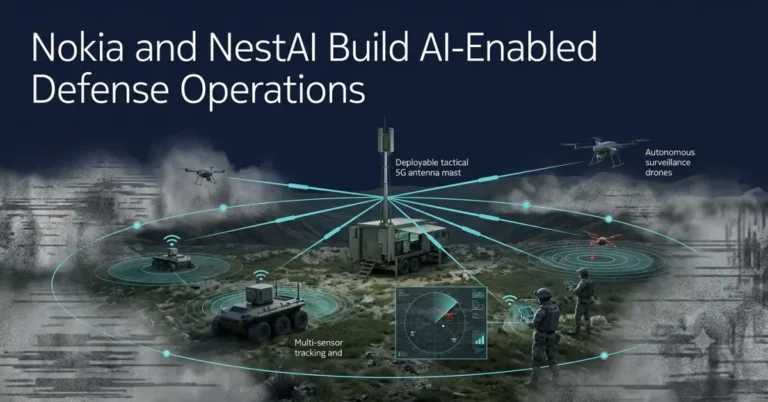
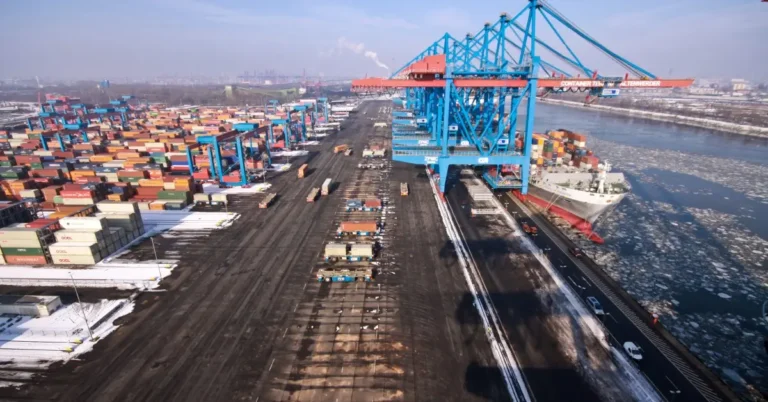
Private 5G became an industrial default in May 2026, with CBRS now the U.S. factory spectrum of record. This month’s roundup spans deployments across manufacturing, ports, utilities, rail and defence — plus a deep utilities thread on grid AI and security — and what the shift means for buyers scoping spectrum, architecture and security.
A Fiber Broadband Association and RVA white paper quantifies the fibre interconnection gap underpinning the AI data centre build-out: 2x route miles and 2.3x fibre miles needed by 2029. For enterprise private network buyers, the analysis surfaces a connectivity dependency that rarely appears in AI deployment planning — but should.
Verizon CTO Yago Tenorio has detailed the carrier’s architecture for Level 4 network autonomy: 70 million automated changes in 2025, 33,000 engineers turned into software developers with Claude Code, and a common data layer that captures what the network couldn’t previously see. The instructive element for enterprise buyers is the sequence, not just the destination.
Airport AI prioritisation is complex: multiple stakeholders, different value drivers, and AI applications that span airside operations, terminal management, and passenger experience. The TeckNexus Airport AI Prioritiser generates a ranked action plan for your specific stakeholder role and operational context.
A June 2026 Reuters/Ipsos poll found 53% of Americans fear AI will cost someone in their household a job. Recon Analytics data across 137,000+ survey responses shows fear is universal and doesn’t decrease with AI exposure – what changes is hope, and it’s hardening fast among non-users. For enterprises, this reframes AI adoption as a change management problem.
Mining AI spans a wide maturity spectrum — from proven autonomous haulage systems to emerging ore body modelling. The TeckNexus AI Use Case Prioritiser for Mining gives you a ranked action plan that reflects what is both valuable and achievable for your specific operation.
T-Mobile CTO John Saw’s ‘kinetic token’ framework describes how Physical AI — robots, autonomous vehicles, industrial automation — changes what networks must do. The public telco debate that followed misses the most immediate implication: industrial private 5G networks are already, structurally, kinetic token infrastructure.
Showing Slide 1 of 11

Your Brand. Our Intelligence Tools.

Capture leads at the point of evaluation. Talk to Us →

Sponsored by Palo Alto Networks
⚡ Utilities ⏱ 8 min ✓ Free
This tool is built and hosted by TeckNexus.
Launch Tool →
Whitepaper
This whitepaper explains how utilities can use secure AI-enabled private mobile networks to modernize operations, support distributed intelligence, improve resilience, and strengthen cybersecurity across critical infrastructure. It covers AI applications, private network advantages, zero trust principles, multilayered security architecture, and governance considerations for AI-ready utility environments....
Whitepaper
Non-terrestrial networks are rapidly evolving from experimental satellite systems into an increasingly important part of the global 5G connectivity landscape. This eBook, developed by Radisys in collaboration with TeckNexus, explores how 3GPP standardization, satellite architecture innovation, and software-driven network design are reshaping NTN deployment models. It examines the transition from...
Whitepaper
Private cellular networks are transforming industrial operations, but securing private 5G, LTE, and CBRS infrastructure requires more than legacy IT/OT tools. This whitepaper by TeckNexus and sponsored by OneLayer outlines a 4-pillar framework to protect critical systems, offering clear guidance for evaluating security vendors, deploying zero trust, and integrating IT,...
Scroll to Top