Read enough telecom physical AI announcements and one name keeps appearing. It is in the AI-RAN computers operators are testing at cell sites, in the GPU clouds they are building for industrial customers, in the simulation tools robot makers use to train their machines and, increasingly, in the processors inside the robots themselves.

NVIDIA has positioned itself at almost every layer of physical AI, from the data centre to the network edge to the robot. For telecom operators, that creates both an opportunity and a set of strategic choices. A single technology stack that runs from cloud to edge to machine makes some of the hardest parts of physical AI easier. It also shapes where operators can add value of their own.
This article explains where NVIDIA technology sits in telecom physical AI, why operators and their partners build on it, and how operators can use it while building positions that are distinctly their own.
Where NVIDIA sits in telecom physical AI
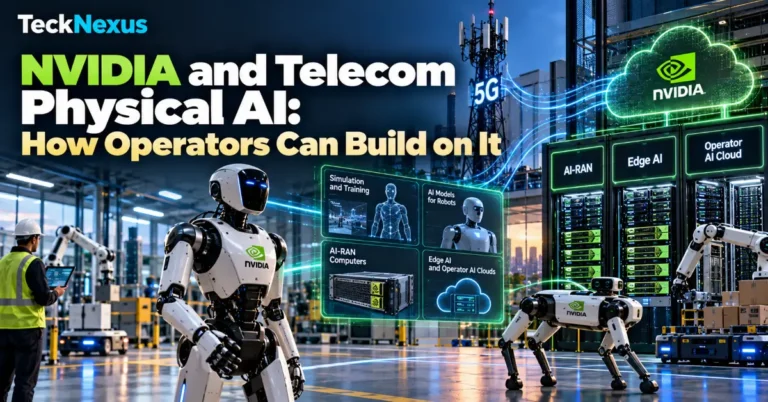
NVIDIA’s role in operator physical AI spans four layers. Most operators engage with at least one of them; the most active engage with several.
| Layer | NVIDIA technology | How operators use it |
| Radio network and edge | Aerial RAN Computer (ARC) platforms that run radio processing and AI on shared GPUs | AI-RAN trials at cell sites and aggregation points, often with Nokia software; edge AI servers for physical AI pilots |
| AI cloud and AI factories | Data centre GPUs and reference designs for large AI facilities | Sovereign industrial AI clouds and planned gigawatt-scale AI capacity that operators offer to industrial and robotics customers |
| Simulation and digital twins | Omniverse libraries, Isaac Sim and Cosmos world models | Factory and site digital twins; synthetic data and simulated training for robots before they reach a real site |
| The robot itself | Isaac robotics platform, GR00T humanoid models, Jetson Thor computers and the Halos safety platform | Used by robot makers that operators partner with; increasingly relevant as operators test splitting robot AI between robot and edge |
No other single supplier currently spans all four layers to the same extent. That breadth is the main reason NVIDIA appears so often in operator physical AI work.
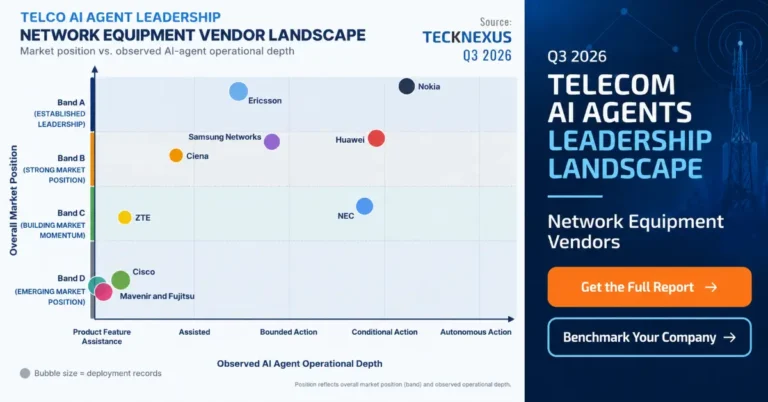
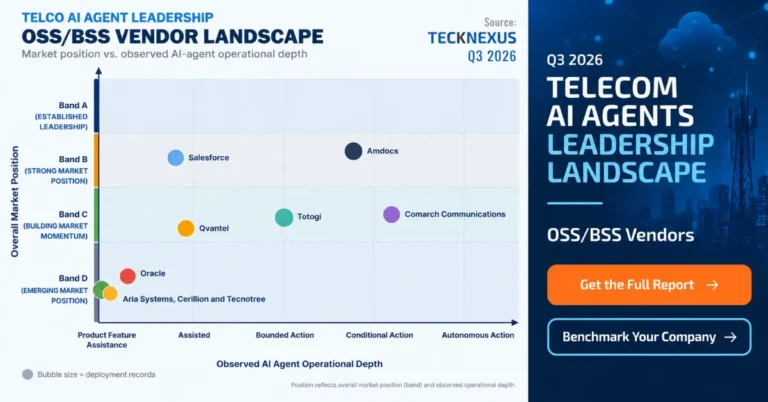
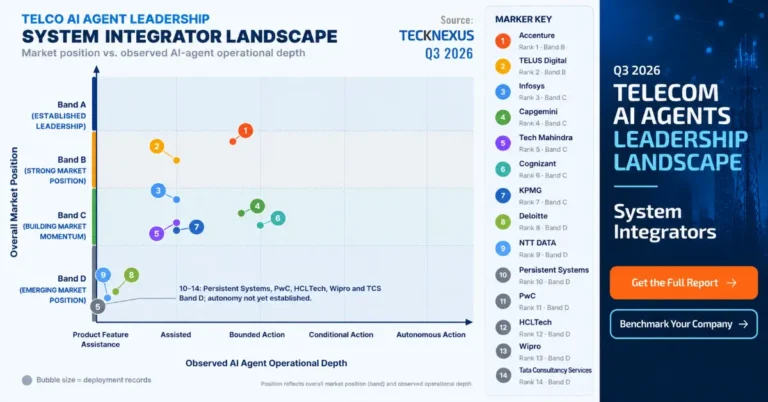
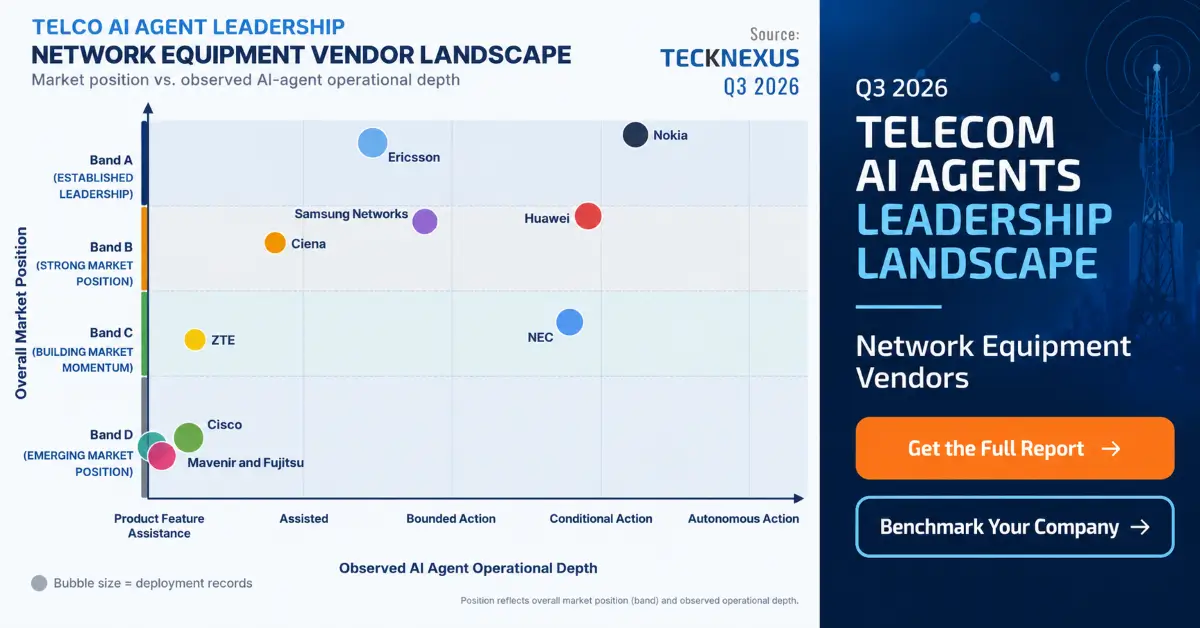
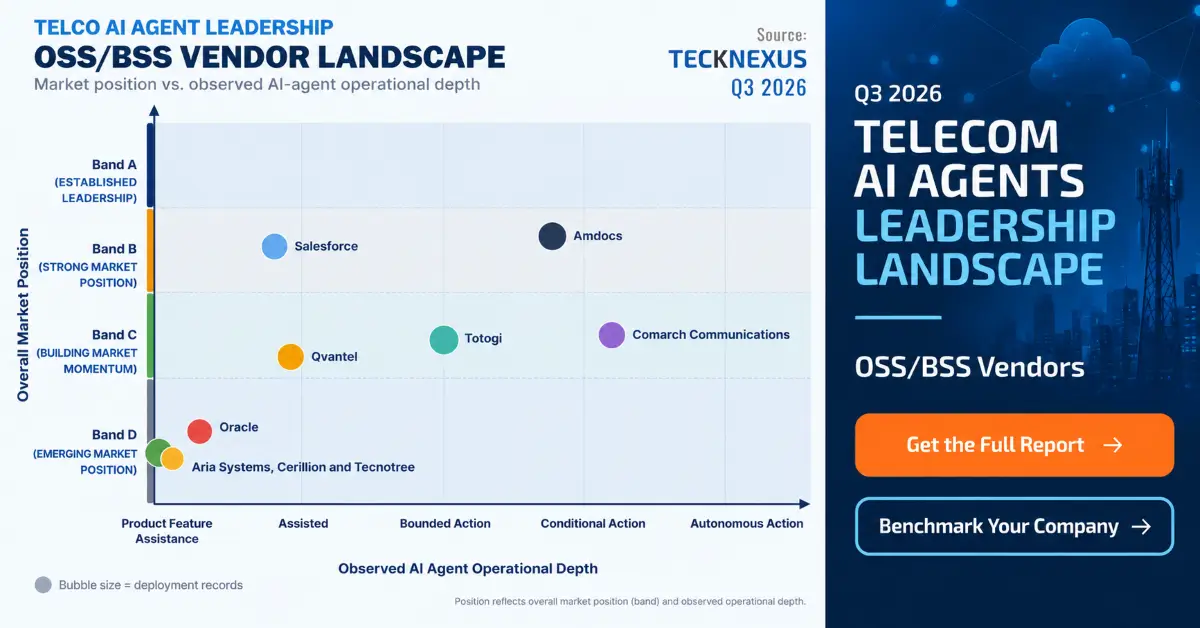
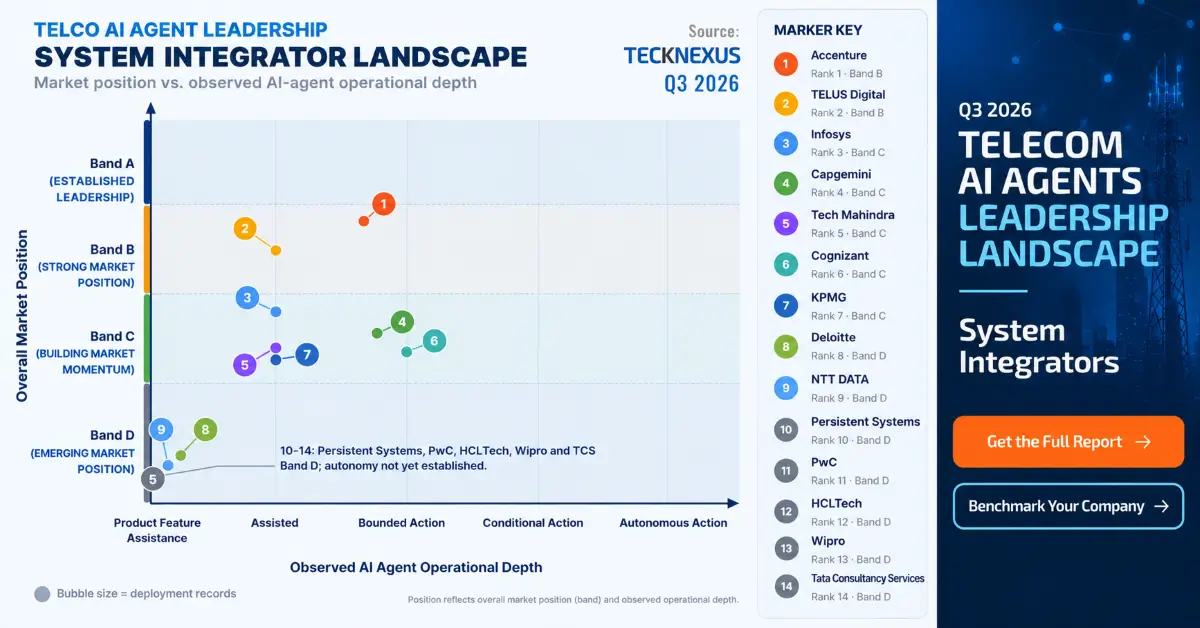
NVIDIA is the most common partner across the physical AI ecosystem. See who else operators rely on in the full Leadership Landscape →
NVIDIA in the telecom network: AI-RAN and the edge
NVIDIA’s entry into the radio network is relatively recent and closely tied to physical AI. Its Aerial RAN Computer platforms are designed to run radio processing and AI workloads on the same GPUs, so that a cell site or aggregation point can serve both mobile users and AI applications.
In October 2026 NVIDIA said that nearly 20 operators had publicly announced AI-RAN collaborations using Nokia software on its ARC platforms, with server makers including Dell Technologies, Quanta Cloud Technology and Supermicro offering ARC-ready systems. SoftBank‘s planned 2027 AI-RAN field trial with Nokia, for example, will use NVIDIA computing in its AITRAS platform, with physical AI named as a target application. T-Mobile is piloting NVIDIA edge AI servers to run physical AI applications with partners.
For physical AI, the significance is that the same GPUs serving the radio network could host part of a robot’s AI close to the machine. Whether that becomes commercially attractive depends on how well operators can share GPU capacity between radio and AI work, and on robot makers designing their machines to use it.
NVIDIA in operator AI clouds for physical AI
The second layer is the AI cloud. Several operators are building large GPU facilities and positioning them partly as platforms for physical AI.
Deutsche Telekom‘s Industrial AI Cloud in Munich, built with around 10,000 NVIDIA GPUs and available to customers since February 2026, gives industrial firms and robotics developers sovereign capacity to train and simulate AI for robots and factories. SK Telecom plans a gigawatt-scale AI cloud in Korea on NVIDIA’s DSX platform, with physical AI among the workloads it is intended to support.
These facilities give operators a product that robot makers and industrial companies need today, not only in the future. They also connect naturally to the edge: a robot model trained in an operator’s AI cloud could, in principle, be run partly on the same operator’s network edge.
NVIDIA in simulation, digital twins and robot AI
The third and fourth layers are where physical AI is built. Robot makers increasingly train their machines in simulation before deploying them, generating synthetic data and testing behaviours in virtual factories and warehouses. NVIDIA’s Omniverse, Isaac Sim and Cosmos tools are widely used for this.
The pattern shows up across operator and partner projects. Deutsche Telekom‘s ELARA project rehearses laboratory robot workflows in a digital twin built with NVIDIA simulation technology before transferring them to real robots. SK Telecom used NVIDIA Omniverse libraries for a chip factory digital twin. A humanoid robot warehouse pilot run by Accenture, Vodafone Procure & Connect and SAP used NVIDIA Omniverse and Metropolis libraries to train the robot’s visual AI.
On the robot itself, NVIDIA offers humanoid foundation models, onboard computers and a safety platform. Robot makers including ABB Robotics, KUKA and Toyota Material Handling Europe use parts of this stack, according to NVIDIA. For operators, the robot layer matters because it determines how easily a robot’s AI can be split between the machine and the network.
Why operators build physical AI on NVIDIA
Operators and their partners choose NVIDIA technology for physical AI for practical reasons:
- One stack from cloud to robot. Training, simulation, edge inference and onboard AI can use related software, which makes it easier to move workloads between them.
- Robot makers already use it. Building on the same tools as the robot industry reduces integration work for operators and their customers.
- A broad hardware ecosystem. Multiple server makers offer compatible systems, from compact cell-site units to large data centre configurations.
- Speed to market. Reference designs and established software let operators launch AI clouds and edge pilots faster than building their own stacks.
- Momentum across the industry. With many operators running AI-RAN collaborations on the same platform, lessons and tools are shared quickly.
Strategic questions NVIDIA’s role raises for operators
Building on a widely used platform brings its own strategic questions. None of them argues against using NVIDIA technology; they shape how operators use it.
Differentiation. If many operators run similar AI clouds and edge platforms on the same technology, the platform itself is not what makes one operator’s offer stand out. Operators need to differentiate on what they add: network guarantees, local presence, sovereignty, industry expertise and service.
Mixed robot fleets. Robots in the field run on processors from several suppliers. An operator serving a factory or port will meet machines built on different platforms, and its network and management services need to support all of them.
Utilisation economics. GPUs at the network edge are valuable only if they are kept busy. Sharing capacity between radio processing, robot AI and other workloads is central to the business case for AI-RAN.
Skills. Running GPU infrastructure, simulation environments and robot AI workloads requires skills many operators are still building, whatever platform they choose.
Other platforms in the physical AI stack
NVIDIA is the broadest player, but operators will work with a wider ecosystem. Several companies are building strong positions in specific layers:
| Company or approach | Focus in physical AI |
| Qualcomm | Dragonwing robot processors described as the brain of the robot, from household robots to full-size humanoids, plus a growing robotics software stack |
| Intel | Single-chip robotics platform running real-time control, AI models and sensor processing, with open-source physical AI software |
| Arm | A dedicated physical AI unit and an ecosystem programme with around 80 partners building chips and platforms for robots and autonomous machines |
| Huawei | Chips, cloud and AI models for humanoid and wheeled robots through partnerships with robot makers |
| Hyperscale clouds | Physical AI toolchains for training, simulating and deploying robot AI on AWS and Microsoft Azure, often integrating NVIDIA tools |
| Network vendors | AI-RAN software and network features for robot workloads from Nokia, Ericsson and others |
| Open-source robot software | Operator-led projects such as China Mobile’s Open-RAIL, which lets robot AI run on the robot, at the edge or in the cloud |
For operators, this wider landscape is an advantage. It means the network and service layers they control can connect robots built on many different platforms.
How operators can build on NVIDIA and keep their own position in physical AI
The operators best placed in physical AI will use NVIDIA technology where it accelerates them and build their own value on top. Five principles help:
- Own the orchestration layer. Software that decides where robot AI runs, on the robot, at the edge or in the cloud, is where operators can add value independent of the underlying hardware.
- Design for mixed fleets from the start. Network services, robot management platforms and service levels should work for robots on any processor.
- Differentiate on guarantees. Latency, uplink, positioning and reliability commitments for machine workloads are something only a network operator can provide.
- Go deep in chosen industries. Industry knowledge and customer relationships in ports, manufacturing, construction or utilities are harder to replicate than infrastructure.
- Partner across the ecosystem. Working with robot makers, chip suppliers, hyperscalers and integrators beyond a single platform keeps options open as the market develops.
What to watch in NVIDIA and telecom physical AI
- AI-RAN field trials with physical AI workloads. Several operators have field trials planned for 2027. Whether robot AI runs on cell-site GPUs in those trials will be an important signal.
- Operator AI clouds winning robotics customers. Named robot makers training their models on operator AI clouds would confirm demand for this layer.
- Interoperability across robot platforms. Tools that let robot AI move between different hardware platforms would strengthen operators’ position as neutral providers of network and edge services.
NVIDIA and telecom physical AI: frequently asked questions
What is NVIDIA’s role in telecom physical AI?
NVIDIA supplies technology across four layers used in telecom physical AI: AI-RAN and edge computers in the radio network, GPUs for operator AI clouds, simulation and digital twin tools for training robots, and AI models and computers used inside robots.
What is the NVIDIA Aerial RAN Computer?
The Aerial RAN Computer, or ARC, is an NVIDIA platform that runs radio network processing and AI workloads on shared GPUs. Operators are testing it for AI-RAN, and it could host physical AI workloads close to robots.
Do telecom operators need NVIDIA to offer physical AI services?
No. Operators can offer connectivity, positioning, robot management and managed services for robots built on any platform. NVIDIA technology is widely used for AI clouds, edge AI and robot training, but several other companies supply processors, software and cloud platforms for physical AI.
Which robot makers use NVIDIA technology?
According to NVIDIA, robot makers including ABB Robotics, KUKA and Toyota Material Handling Europe use parts of its physical AI stack, and Agile Robots offers a reference humanoid preconfigured with NVIDIA GR00T models running on Jetson Thor.
NVIDIA’s breadth has made it the common thread in telecom physical AI. For operators, the opportunity is to treat that common platform as a foundation and build distinctive services on top: the network guarantees, orchestration, industry solutions and partnerships that no technology supplier can provide on its own.
Related reads: Physical AI and telecom operators
Physical AI and Telecom Operators: Most Are Selling the Road, Not the Robot
Where operators fit in physical AI today, and why most still sell only the connection.
Can the Network Be the Robot’s Brain? Edge AI, AI-RAN and the Case for Offloading Robot AI
What it takes to run part of a robot’s AI in the network, and what operators are testing.
Physical AI Business Models for Telecom Operators: Who Pays, for What, and How
The offers operators can sell, from machine connectivity to packaged robot services.
Physical AI in China: Why Chinese Telecom Operators Are Furthest Ahead in Putting Robots to Work
How China’s operators put robots to work, and what other operators can learn from them.