

Telco Cloud

Deutsche Telekom's transition from Ericsson to Mavenir as its primary 5G standalone core provider represents a fundamental rethinking of how Tier 1 operators architect and operate networks in the cloud-native era. Mavenir now carries all standalone 5G traffic in Germany, while Ericsson handles legacy 4G and non-standalone 5G. Driven by the Horizontal TelCo Cloud initiative, the shift has already produced measurable results including 65% energy savings in live testing and three commercial network slicing deployments, with Apple FaceTime set to leverage these capabilities at consumer scale via iOS 26.
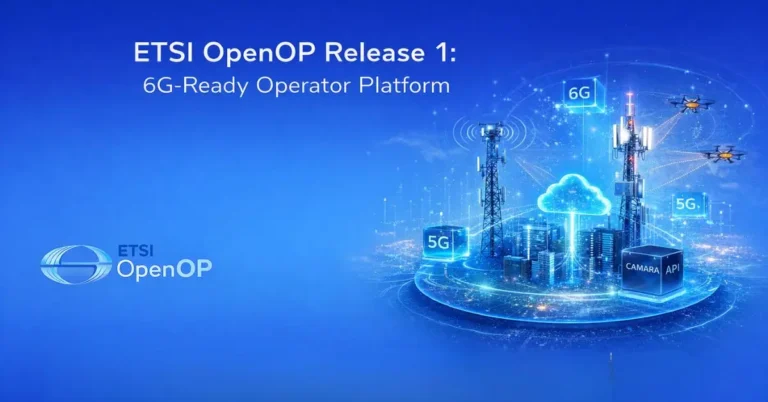
ETSI has introduced OpenOP Release 1 as an open-source operator platform for telco cloud, designed to standardize capability exposure and federation at the edge while creating a practical bridge from 5G-Advanced to early 6G experimentation. Networks are becoming software-first and distributed, but operators still face fragmented exposure of network capabilities and inconsistent approaches to multi-operator edge. OpenOP targets this gap with a standards-aligned, open implementation that lets developers consume telecom capabilities via CAMARA APIs and deploy applications across federated edge zones. Release 1 provides a working, end-to-end baseline with integrated components for exposure, orchestration, federation, and AI-assisted intent, suitable for hands-on testing and integration.
Live Streamed on Mon, 2 Mar at 11:15 - 12:45 CET

Visionary voices from around the globe take the stage to reflect on the expanding scope of connectivity, from core networks to cloud platforms to the emerging capabilities that stretch beyond our planet. Join us to explore how the interplay of innovation, leadership and global collaboration can drive meaningful transformation. Discover how bold thinking and shared ambition can build on this momentum and redefine what is possible in an increasingly connected world.
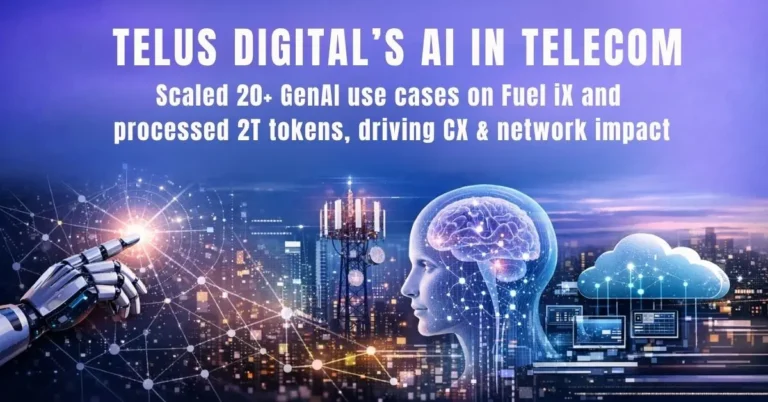
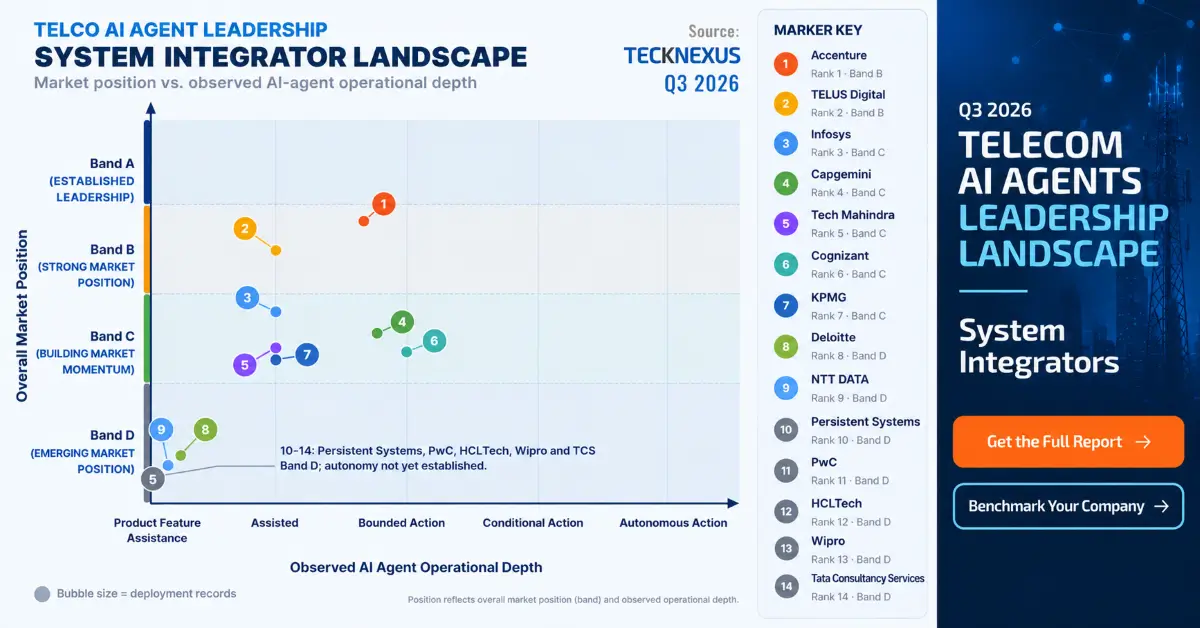
TELUS Digital is using Mobile World Congress 2026 to move the AI-in-telecom conversation from pilots to proven production at scale. TELUS Digital reports processing more than two trillion tokens in 2025 through its Fuel iX generative AI platform for TELUS operations and customers. The portfolio spans AI for customer experience, application safety, and network modernization—built and battle-tested within TELUS before client rollout. The Network Design Services practice applies AI to planning and optimization while charting a path from legacy network stacks to cloud-native, automated environments.
Deutsche Telekom’s early live results showing up to 65% energy savings in its 5G core spotlight a pragmatic path to cut opex and carbon as traffic surges and standalone 5G scales. Operators have wrung out much of the easy efficiency from hardware refreshes; the next gains come from software-driven, demand-aware control. DT is applying that logic to the core, shifting components to run only when needed rather than idling at full power. The results are enabled by DT’s “Horizontal Telco Cloud,” a unified, standards-based platform that replaces fragmented stacks with one common layer for core services. Initial live-network tests have been completed, with broader rollout planned and further detail expected at MWC Barcelona 2026.
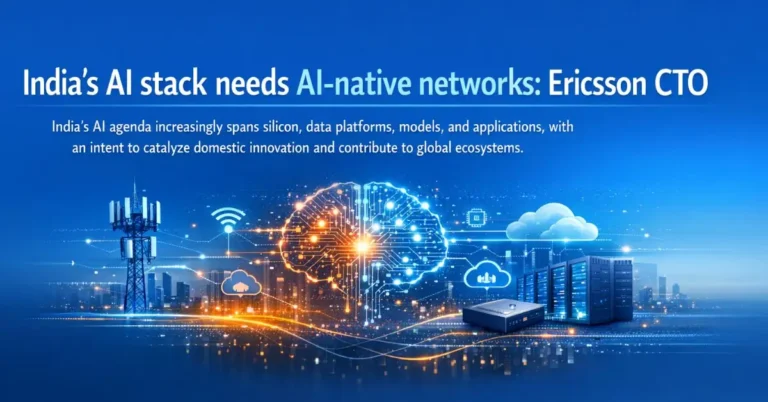
India’s AI agenda increasingly spans silicon, data platforms, models, and applications, with an intent to catalyze domestic innovation and contribute to global ecosystems. For telecom leaders, the message is clear: AI is not a bolt-on capability but a system-level transformation that touches RAN, core, transport, cloud, and the enterprise edge. The AI economy runs on connectivity—low-latency access to data, assured bandwidth, location-aware processing, and programmable control. The operators that can fuse connectivity, compute, and data into a cohesive platform will set the pace for India’s next wave of digital growth.
Singapore has confirmed an attempted cyber‑espionage campaign against its national telecom backbone, highlighting a rising class of APT activity aimed at network devices and virtualized cores rather than traditional IT endpoints. Singapore’s Cyber Security Agency (CSA) and Infocomm Media Development Authority (IMDA) disclosed that all four major operators—Singtel, StarHub, M1 and Simba Telecom—were targeted by UNC3886 in incidents last year. The threat actor gained limited access to segments of telco systems and exfiltrated a small volume of network‑related technical data. There was no service disruption, no personal data exposure and, critically, sensitive and segregated systems (including 5G networks) were not compromised.
ElevenLabs raised $500 million in Series D funding at an $11 billion valuation, led by Sequoia Capital with continued participation from Andreessen Horowitz and ICONIQ, and new backing from Lightspeed, Evantic Capital and BOND alongside existing investors. The company says it has surpassed key ARR milestones and reported strong enterprise adoption across sectors through 2025, with telecom emerging as a priority vertical as operators seek to modernize legacy IVR and contact center stacks. Conversational agents can replace keypad IVRs with natural dialogue that recognizes intent, confirms identity, retrieves context and executes actions across channels.
The global telecom B2B landscape is undergoing a fundamental shift driven by AI, automation, private 5G networks, and cloud-native architectures. Telco's can no longer survive by selling connectivity alone—they must evolve into strategic technology partners delivering scalable, intelligent, and composable services. This article explores: The rising market opportunity for B2B in telecom 1.Why private 5G, AI, cloud, and edge computing are reshaping enterprise demand 2.How Global Business Services (GBS), composable commerce, and API-first strategies enable scalability 3.Six strategic AI pillars transforming the telecom value chain 4.New monetization pathways including AI-as-a-Service and Open Gateway APIs
Palo Alto Networks is buying Chronosphere to fuse cost-efficient, large-scale observability with AI-driven automation for modern cloud and AI data centers. Palo Alto Networks agreed to acquire Chronosphere for approximately $3.35 billion in a mix of cash and replacement equity, with closing expected in the second half of PANW’s fiscal 2026 (ending July 31). Chronosphere brings a next-generation observability architecture and telemetry pipeline built for scale and cost control. Together, they aim to turn observability from passive dashboards into autonomous, governed remediation that blends performance and security insights.
Renewables are emerging as the default option for new AI campuses, but the share that is truly carbon-free around the clock will hinge on siting, storage, and market design. Annual REC matching is no longer sufficient for leading buyers; the bar is shifting toward hourly, 24/7 carbon-free energy matching initiatives. Yet diurnal and seasonal variability limits how much of a site’s load can be met by solar and batteries alone, especially in non-sunny regions or during prolonged weather events. Expect mixed portfolios: on-site renewables and batteries, off-site PPAs (solar and wind), emerging long-duration storage, and grid purchases backed by hourly certificates where available.

Your Brand. Our Intelligence Tools.

Capture leads at the point of evaluation. Talk to Us →

Sponsored by Palo Alto Networks
⚡ Utilities ⏱ 8 min ✓ Free
This tool is built and hosted by TeckNexus.
Launch Tool →
Whitepaper
This whitepaper explains how utilities can use secure AI-enabled private mobile networks to modernize operations, support distributed intelligence, improve resilience, and strengthen cybersecurity across critical infrastructure. It covers AI applications, private network advantages, zero trust principles, multilayered security architecture, and governance considerations for AI-ready utility environments....
Whitepaper
Non-terrestrial networks are rapidly evolving from experimental satellite systems into an increasingly important part of the global 5G connectivity landscape. This eBook, developed by Radisys in collaboration with TeckNexus, explores how 3GPP standardization, satellite architecture innovation, and software-driven network design are reshaping NTN deployment models. It examines the transition from...
Whitepaper
Private cellular networks are transforming industrial operations, but securing private 5G, LTE, and CBRS infrastructure requires more than legacy IT/OT tools. This whitepaper by TeckNexus and sponsored by OneLayer outlines a 4-pillar framework to protect critical systems, offering clear guidance for evaluating security vendors, deploying zero trust, and integrating IT,...
Scroll to Top

Map your security gaps to real threat scenarios – including Salt Typhoon, Volt Typhoon, AI data poisoning, rogue devices, and unencrypted OT traffic.

Take the free 8-minute assessment built for utility operators evaluating AI-enabled private mobile networks. Get a readiness score across five critical domains, see where your gaps are, and receive a prioritized action plan for what to fix first.

Free • 8 minutes • Built for private network security