Verizon

T-Mobile's Dynamic CX applies AI to its Self-Organizing Network architecture, scanning public data sources - event schedules, ticketing platforms, social activity — to anticipate high-density demand before it strains the network. Launching ahead of the 2026 FIFA World Cup across eleven U.S. host cities, the capability shifts network management from reactive triage to proactive resource allocation. Opensignal data from February through May 2026 already shows T-Mobile leading mobile experience metrics in all eleven markets, a baseline Dynamic CX is engineered to sustain under peak load conditions.
Verizon's 2026 Data Breach Investigations Report, based on analysis of more than 31,000 security incidents, finds that 31% of all breaches now originate from software vulnerability exploitation—surpassing stolen credentials as the leading initial access vector. Generative AI is accelerating this shift, with threat actors applying AI across an average of 15 distinct attack techniques. Ransomware remains pervasive, though ransom payments are declining. For telecom and enterprise IT leaders, the report signals an urgent need to treat vulnerability management as a real-time discipline and embed AI-native security tooling into defense operations.
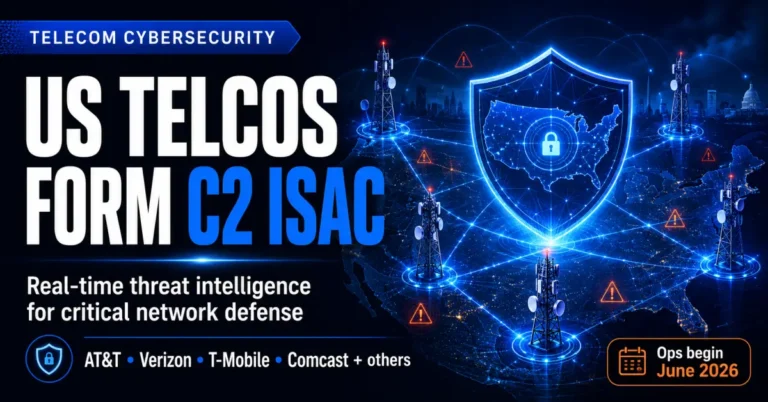
Eight of the most influential US telecommunications carriers — including AT&T, Verizon, T-Mobile, and Comcast — have established the Communications Cybersecurity Information Sharing and Analysis Center, known as C2 ISAC. Governed by the CISOs of each founding company and led by a director with CISA and FBI experience, C2 ISAC is designed to deliver real-time, actionable threat intelligence across competing carriers that collectively defend America's critical communications infrastructure. Operations are expected to begin in June 2026.
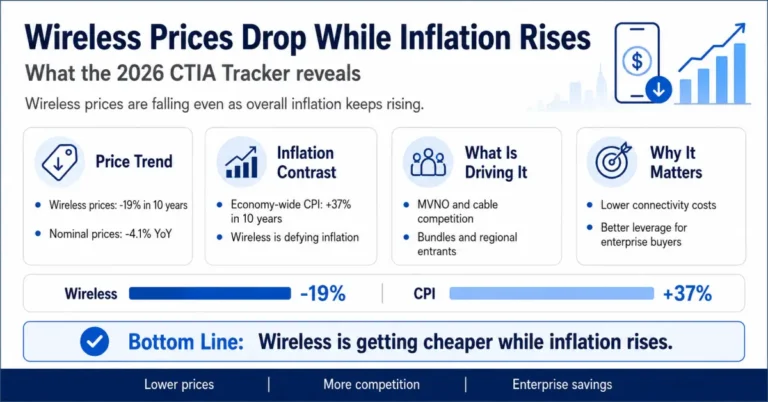
Wireless services are defying U.S. inflation trends in a way virtually no other sector is. According to CTIA's newly released More for Less: 2026 Wireless Affordability Tracker, nominal wireless prices have declined 4.1% over the past year and 19% over the past decade, while the economy-wide CPI rose more than 37% over the same period. Adjusted for inflation, postpaid unlimited plans are down roughly 10% year-over-year, and prepaid options have fallen more than 50% over five years. For enterprise decision-makers, this pricing trajectory represents a structurally favorable condition for mobile workforce and IoT connectivity planning.
Verizon has expanded its satellite asset fleet to 2,600 units in 2025, introducing a multi-orbit off-road trailer capable of switching between GEO and LEO connectivity. The carrier is also piloting permanent satellite backhaul at high-risk cell towers across Georgia, Florida, and the Carolinas. Through a $100 million partnership with AST SpaceMobile, Verizon is advancing direct-to-device satellite connectivity using standard smartphones. Satellite is positioned not as a replacement for fiber or 5G, but as a planned resilience layer and coverage extension tool for enterprise and public safety stakeholders.
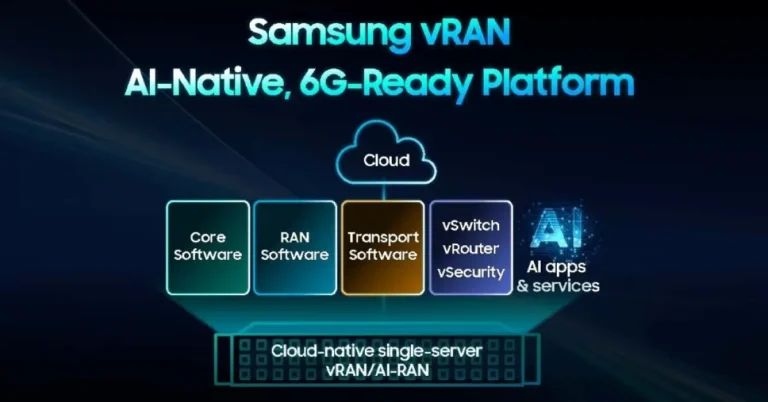
Samsung Electronics and Qualcomm Technologies have jointly validated Power Class 1 capability for 5G Fixed Wireless Access on a virtualized RAN architecture — a combination the industry has not demonstrated before. Testing showed up to ten times higher uplink throughput at the cell edge and up to 40% greater coverage range versus Power Class 1.5. With field trials already underway on a U.S. Tier-1 operator network and commercial availability targeted for 2027, this milestone signals a meaningful shift in uplink performance, coverage economics, and vRAN capability for operators and enterprise buyers alike.
Verizon posted 55,000 postpaid phone net additions, a modest beat that underscores stabilizing consumer trends and stronger execution in premium plans and broadband cross-sell. The net add beat is small in absolute terms, but strategically important: it points to improving churn and a healthier mix of high-value subscribers after several quarters of intense promotional pressure. Management coupled the result with a constructive outlook characterized by service revenue resilience and disciplined capital intensity, hinting at a tighter or modestly raised full‑year guide. For a market still digesting 5G investment cycles, this steady footing matters more than splashy net‑add gains.
Deutsche Telekom is weighing a structural overhaul that would collapse its 53% ownership of T-Mobile US into a single, unified company spanning both sides of the Atlantic. Reports indicate Deutsche Telekom is exploring an all-stock transaction in which a new holding company would acquire both Deutsche Telekom and T-Mobile US, with current shareholders of each ending up as owners of the combined entity. The new group could pursue dual listings in the U.S. and Europe, eliminating today’s parent–subsidiary setup and aligning governance, strategy, and capital allocation under one roof.
Verizon’s role as Official Telecommunication Services Sponsor for FIFA World Cup 2026 and Official Tournament Supporter for FIFA Women’s World Cup 2027 elevates mega-event connectivity into a proving ground for 5G, fiber, FWA and broadcast at unprecedented scale. The World Cup concentrates extreme traffic densities, with each match expected to generate more than 50 terabytes of in-stadium data—an order of magnitude that forces operators to optimize spectrum, radio density and backhaul in tandem. Verizon’s capacity uplift—adding 5G spectrum to deliver an estimated 3x to 5x boost across all host stadiums—will benchmark real-world 5G ROI where venue, fan, and operational requirements converge.
Enterprises need indoor mobile coverage that works like the macro, integrates with private wireless, and sets a path to 5G and AI without ripping-and-replacing infrastructure. InfiniG’s Neutral Host as a Service turns a CBRS shared-spectrum deployment into an extension of public mobile networks using a 3GPP MOCN architecture. Employees, contractors, and visitors get native service from AT&T, T-Mobile, and Verizon on their existing SIMs—no apps, no plan changes. The Nokia RAN is 5G-ready out of the box, protecting investments as operators certify 5G Standalone and VoNR on neutral host. Radios and gateways are software-upgradable, so enterprises can deploy today for LTE and move to 5G without swapping hardware.
US Mobile and Starlink have launched limited-time bundles that combine Starlink residential service with US Mobile’s unlimited mobile plans under a single account and bill. Entry pricing starts at $47 per month, which effectively blends a $30 Starlink residential tier (targeted around 100 Mbps) with a $17 US Mobile base unlimited plan. Higher Starlink speed tiers are available at $77 per month for a 200 Mbps option and $117 per month for a “Max” service that targets 400 Mbps or more. Compared with Starlink’s typical standalone rates of $50, $80, and $120 for the same speed tiers, the bundles represent meaningful savings for households that want both mobile and home internet.
AT&T’s five-year, $250 billion U.S. network commitment sets the tone for the next phase of fiber, 5G, and satellite convergence as traffic, AI workloads, and resilience requirements climb sharply. The 2026–2030 window aligns with the industry’s transition into 5G-Advanced (3GPP Release 18/19), the scaling of edge AI, and increased cloud traffic between homes, enterprises, and hyperscalers. Data growth is no longer linear, and the cost of downtime is rising. Large, front-loaded builds in fiber and 5G Radio Access Network (RAN), paired with new satellite overlays, are how national carriers will chase coverage, performance, and reliability targets simultaneously.

Your Brand. Our Intelligence Tools.

Capture leads at the point of evaluation. Talk to Us →

Sponsored by Palo Alto Networks
⚡ Utilities ⏱ 8 min ✓ Free
This tool is built and hosted by TeckNexus.
Launch Tool →
Whitepaper
This whitepaper explains how utilities can use secure AI-enabled private mobile networks to modernize operations, support distributed intelligence, improve resilience, and strengthen cybersecurity across critical infrastructure. It covers AI applications, private network advantages, zero trust principles, multilayered security architecture, and governance considerations for AI-ready utility environments....
Whitepaper
Non-terrestrial networks are rapidly evolving from experimental satellite systems into an increasingly important part of the global 5G connectivity landscape. This eBook, developed by Radisys in collaboration with TeckNexus, explores how 3GPP standardization, satellite architecture innovation, and software-driven network design are reshaping NTN deployment models. It examines the transition from...
Whitepaper
Private cellular networks are transforming industrial operations, but securing private 5G, LTE, and CBRS infrastructure requires more than legacy IT/OT tools. This whitepaper by TeckNexus and sponsored by OneLayer outlines a 4-pillar framework to protect critical systems, offering clear guidance for evaluating security vendors, deploying zero trust, and integrating IT,...
Scroll to Top

Map your security gaps to real threat scenarios – including Salt Typhoon, Volt Typhoon, AI data poisoning, rogue devices, and unencrypted OT traffic.

Take the free 8-minute assessment built for utility operators evaluating AI-enabled private mobile networks. Get a readiness score across five critical domains, see where your gaps are, and receive a prioritized action plan for what to fix first.

Free • 8 minutes • Built for private network security