Digital Twin

A digital twin is a live virtual model of a physical asset, network, or environment, continuously updated with real data so it can be monitored, simulated, and optimized. In telecom, operators use network digital twins to plan deployments, test changes, and run “what-if” scenarios before touching live infrastructure; in enterprise settings, twins model factories, ports, and facilities that private networks connect. Combined with AI, digital twins support predictive maintenance, automated optimization, and safer experimentation across complex systems. For operators and enterprises, the appeal is reducing risk and cost by testing in simulation rather than production. This channel tracks digital twin technology across networks and connected industries — planning, simulation, and operations — with analysis of where twins are delivering practical value and how they connect to private networks, edge, and AI-driven automation.

Private cellular networks are transforming industrial operations, but securing private 5G, LTE, and CBRS infrastructure requires more than legacy IT/OT tools. This whitepaper by TeckNexus and sponsored by OneLayer outlines a 4-pillar framework to protect critical systems, offering clear guidance for evaluating security vendors, deploying zero trust, and integrating IT, OT, and IoT under a unified, secure-by-design architecture.
At SK AI Summit 2025, CEO Jung Jaihun outlined plans to expand the Ulsan artificial intelligence data center (AIDC) to 1GW-class capacity, stand up a nationwide trio of hubs (Gasan in the Seoul metro, Ulsan in the south, and a new southwest site), and take the model into Southeast Asia starting with Vietnam. The operator is also deepening technology collaborations with Amazon Web Services (AWS) on Edge AI and with NVIDIA on AI-RAN and a Manufacturing AI Cloud; it intends to buy more than 2,000 NVIDIA RTX PRO 6000 Blackwell GPUs and scale Korea’s largest GPU cluster, Haein, as core compute for industrial AI workloads.
Samsung and NVIDIA are scaling a 25-year alliance into an AI-driven manufacturing platform that fuses memory, foundry, robotics and networks on a backbone of accelerated computing. Samsung plans to deploy more than 50,000 NVIDIA GPUs to infuse AI across the company’s manufacturing lifecycle—from chip design and lithography to equipment operations, logistics and quality control. The “AI factory” is designed as a unified, data-rich fabric where models continuously analyze and optimize processes in real time, shrinking development cycles and improving yield and uptime. The scope goes beyond semiconductors to include mobile devices and robotics, signaling a company-wide digital transformation anchored in accelerated computing.
Vodafone is partnering with Irish firm Zinkworks on Rapid RIC, a central platform that blends secure data analytics, a visual low-code interface, and code-generating AI to create and operate RAN applications, or rApps. The goal is ambitious but specific: cut time-to-market from months to weeks, scale deployments across markets, and improve service quality, capacity, and energy use. The platform is slated for early 2026 availability and will run primarily on Vodafone’s private Google Cloud Platform environment. Rapid RIC uses GenAI to generate production-grade code from visual designs, enabling radio engineers to turn domain knowledge directly into software without deep AI or ML skills.
The G4 family is built on NVIDIA RTX PRO 6000 Blackwell Server Edition GPUs and targets high-throughput inference, visual computing, and simulation. Each VM can be configured with 1, 2, 4, or 8 GPUs, delivering up to 768 GB of GDDR7 memory in total. Fifth-generation Tensor Cores introduce FP4 precision to drive efficient multimodal and LLM inference, while fourth-generation RT Cores double real-time ray-tracing performance over the prior generation for photorealistic rendering. Google cites up to 9x throughput over G2 instances, positioning G4 as a universal GPU platform spanning AI inference, content creation, CAD/CAE acceleration, and robotics simulation.
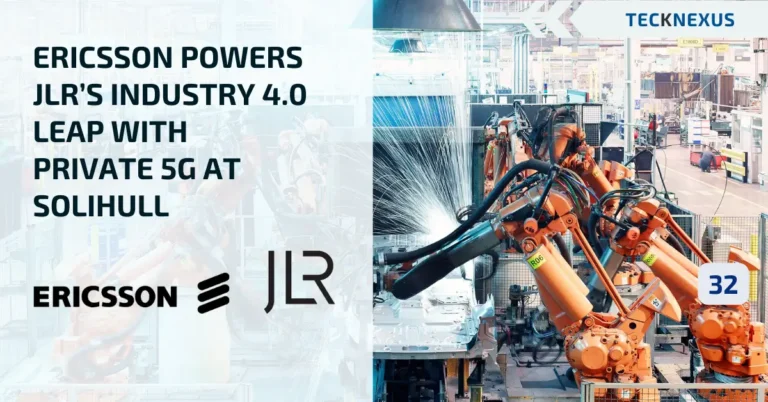
Verizon is transforming healthcare infrastructure with a dual-network approach that combines private 5G and neutral host connectivity. Hospitals like AdventHealth and Tampa General are enhancing AI-powered diagnostics, real-time telemetry, and secure staff communications—while ensuring strong public mobile coverage for patients and visitors. This hybrid model, built on Ericsson’s platform, supports HIPAA compliance, device density, and future scalability for smart hospitals.
BMW has launched a private 5G- and AI-powered EV plant in Debrecen, Hungary, its first fully AI-controlled automotive factory. With over 1,000 robots, autonomous vehicles, and digital twins integrated across a hybrid 5G network, the site sets new standards for real-time quality control, low-carbon manufacturing, and scalable production of next-gen EVs like the iX3. Operated by Magyar Telekom, the facility is a model for smart, sustainable automotive production.
Nokia has introduced a fiber-to-the-home (FTTH) digital twin and AI-powered applications inside its Altiplano platform to give operators a unified view of active and passive assets and to improve reliability with faster, first-time fixes. The core launch centers on creating a digital twin of the FTTH network that stitches together live data from active elements (OLT/ONT, IP edge, customer premises equipment) with outside-plant passive infrastructure (ducts, cables, splitters) maintained in inventory and geospatial systems. Together, these tools target the highest-impact operational pain points: early anomaly detection, automated topology audits, faster root cause analysis, and improved first-time fix rates.
Fujitsu is expanding its strategic collaboration with NVIDIA to deliver a full-stack AI infrastructure that pairs domain-specific AI agents with high-performance compute for enterprise and industrial use. The companies will co-develop an AI agent platform and a next-generation computing stack that tightly couples Fujitsu’s FUJITSU-MONAKA CPU series with NVIDIA GPUs using NVIDIA NVLink-Fusion. On the software side, Fujitsu plans to integrate its Kozuchi platform and AI workload orchestrator (built with Fujitsu AI computing broker technology) with the NVIDIA Dynamo platform.
Hitachi has launched a global AI Factory built on NVIDIA’s reference architecture to speed the development and deployment of “physical AI” spanning mobility, energy, industrial, and technology domains. Hitachi is standardizing a centralized yet globally distributed AI infrastructure on NVIDIA’s full-stack platform, pairing Hitachi iQ systems with NVIDIA HGX B200 platforms powered by Blackwell GPUs, Hitachi iQ M Series with NVIDIA RTX 6000 Server Edition GPUs, and the NVIDIA Spectrum-X Ethernet AI networking platform. The environment is designed to run production AI with NVIDIA AI Enterprise and support simulation and physically accurate digital twins using NVIDIA Omniverse libraries.
Alibaba Cloud is integrating Nvidia’s Physical AI toolchain into its Cloud Platform for AI, bringing robotics-grade simulation, training, and deployment capabilities to customers. Alibaba and Nvidia unveiled a partnership that embeds Nvidia’s embodied AI development tools directly into Alibaba’s machine learning platform. The integration targets robotics, autonomous driving, and “connected spaces” such as warehouses and factories. Physical AI refers to software that models the real world in 3D, generates synthetic data, and trains control policies with reinforcement learning before deploying to physical systems. Developers on Alibaba Cloud gain access to toolchains for data processing, simulation-based training, and real-world reinforcement learning.
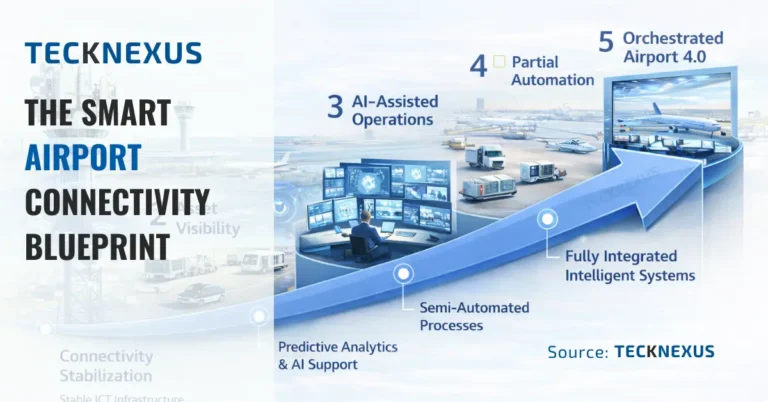
Connectivity is transforming aviation from the ground up. Airports are deploying private 5G, Wi-Fi 6, edge computing, and IoT to deliver two major outcomes: smoother passenger experiences and lower operating costs. Travelers enjoy real-time updates, biometric check-in, and AR wayfinding — while operators benefit from predictive maintenance, smarter gate usage, and energy optimization. This dual-value framework positions connectivity as more than infrastructure, it’s a strategic differentiator that enhances revenue, reduces OPEX, and elevates the brand.

Frequently Asked Questions

What is a digital twin, in practical terms?
In practical terms, a digital twin is a software model that mirrors a real physical object, system, or process closely enough, and updates frequently enough using real sensor data, that decisions can be tested against the model with meaningful confidence they’ll reflect what would actually happen in reality. Unlike a static 3D model or design blueprint, a digital twin is meant to be continuously synchronized with its physical counterpart, reflecting current conditions rather than a fixed, one-time snapshot. This makes it possible to ask ‘what happens if’ questions, like what happens if we reroute network traffic this way, and get a reasonably reliable answer without actually making that change to the real, physical system first.
How are digital twins used in telecom networks specifically?
Telecom operators build digital twins of their own networks, modeling everything from radio coverage and capacity to the behavior of virtualized core network functions, to simulate the impact of potential changes before deploying them on a live, customer-facing network. This might mean testing how a planned software update will affect performance, modeling how traffic would be rerouted during maintenance, or simulating how adding capacity in one area might affect neighboring cells, all without risking an actual outage if the simulation reveals an unexpected problem. As networks become more complex with virtualization and multi-vendor components, digital twins are increasingly valuable for catching configuration mistakes before they reach the live network.
What industries outside telecom use digital twins heavily?
Manufacturing uses digital twins extensively to simulate entire factory floors, testing how changes to production line layout would affect output before making physical changes, and to predict equipment failures by modeling wear patterns from real sensor data. Smart city initiatives use digital twins to model traffic flow, energy grids, and infrastructure systems, helping planners simulate the effects of new development before implementation. Logistics companies use digital twins to model warehouse operations and transportation networks, optimizing routes and inventory placement. Aerospace and automotive industries, where the concept originated, use digital twins extensively for design and ongoing maintenance, modeling how individual aircraft or vehicles age based on their specific real-world usage.
Why do digital twins need low-latency, high-bandwidth connectivity to work well?
A digital twin is only as useful as how current its underlying data is; if sensor data takes too long to reach the model, simulations and predictions end up being based on stale information that no longer reflects actual real-world conditions, undermining the entire premise of using the twin to make confident decisions. This is particularly critical for digital twins modeling fast-changing systems, like network traffic patterns or industrial equipment operating in real time, where conditions can shift meaningfully within seconds. Low-latency, high-bandwidth connectivity, often provided through 5G, private networks, or edge computing, ensures the constant stream of sensor data feeding a digital twin arrives quickly enough for the model to remain genuinely accurate.
What’s the difference between a digital twin and a simple simulation or 3D model?
A simple 3D model or simulation is typically a static or one-time representation, useful for visualization or testing a specific scenario at a fixed point in time, but it doesn’t automatically update as real-world conditions change. A digital twin, by contrast, is specifically designed to be continuously synchronized with its physical counterpart through an ongoing stream of real sensor data, meaning the model reflects current, evolving conditions rather than a fixed snapshot from whenever it was created. This continuous synchronization is what allows a digital twin to support ongoing operational decisions and predictive maintenance, rather than just one-time design validation, which is generally the more limited role a static simulation plays.
How accurate do digital twins actually need to be to be useful?
The required level of accuracy depends heavily on what decisions the digital twin is meant to support; a twin used for high-level capacity planning might tolerate more approximation than one used to predict the exact moment a piece of critical equipment is likely to fail. In practice, most digital twins involve a deliberate trade-off between modeling fidelity and the cost and complexity of building and maintaining that level of detail, since a perfectly accurate model of every possible variable would often be prohibitively expensive to build and keep updated. Organizations typically aim for the twin to be accurate enough that decisions made based on its predictions reliably hold up in the real world for the specific use case at hand.
What role does AI play in digital twin technology?
AI plays an increasingly central role in digital twin technology, particularly in interpreting the large volumes of sensor data feeding the twin and identifying patterns that wouldn’t be obvious through simple rule-based monitoring. Machine learning models are commonly used to predict equipment failures based on subtle patterns in sensor data that precede a breakdown, to optimize complex systems by testing many possible scenarios within the twin far faster than a human planner could manually evaluate, and increasingly, to generate realistic predictions about how a system would behave under conditions that haven’t actually been observed yet. This combination is what allows modern digital twins to move beyond simple visualization toward genuinely predictive, decision-supporting tools.
What are the biggest challenges in building and maintaining a digital twin?
Building and maintaining an accurate digital twin presents several recurring challenges. Gathering sufficiently detailed, reliable real-world sensor data across a complex system, especially older infrastructure not originally designed with extensive sensor instrumentation, can require significant upfront investment in new sensors and connectivity. Keeping the model genuinely synchronized with reality over time requires reliable, low-latency data pipelines that can become a meaningful technical undertaking in their own right, particularly at scale. There’s also an ongoing maintenance burden, since a digital twin that gradually drifts out of sync with its real-world counterpart can become actively misleading rather than simply less useful.
Sponsored by Palo Alto Networks
⚡ Utilities ⏱ 8 min ✓ Free
This tool is built and hosted by TeckNexus.
Launch Tool →
Whitepaper
Airports are deploying AI surveillance, biometrics, and autonomous vehicles faster than most networks can secure them. See what 100 real-world airport deployments reveal about the airside/landside security gap — and the 4-layer framework built to close it....
Palo Alto Networks
Scroll to Top