Chatbot

Circles and OpenAI have reached a major milestone in building the world's first AI-native telco stack, moving beyond legacy BSS/OSS bolt-on approaches. Flagship products CareX and Xplore IQ deliver measurable outcomes — including 85% autonomous query resolution and a 22% ARPU uplift in Singapore deployments. Built on a multi-agent architecture and OpenAI's API platform, the stack enables telecom operators across 14 countries to automate customer operations and drive proactive revenue monetization without rebuilding infrastructure from scratch.
Nokia and Amazon Web Services (AWS) are bringing agentic AI to 5G-Advanced network slicing, moving closed‑loop, intent-based services from PowerPoint to live pilots with du and Orange. The partners unveiled an agentic AI-powered slicing solution that fuses Nokia’s RAN-to-core slicing, AirScale radio, and MantaRay SMO with AWS’s Bedrock AI platform and EKS Hybrid Nodes to turn external context—events, traffic, maps, weather—and live network KPIs into real-time policy decisions. The result is adaptive, premium slices provisioned when and where they’re needed, without manual reconfiguration.
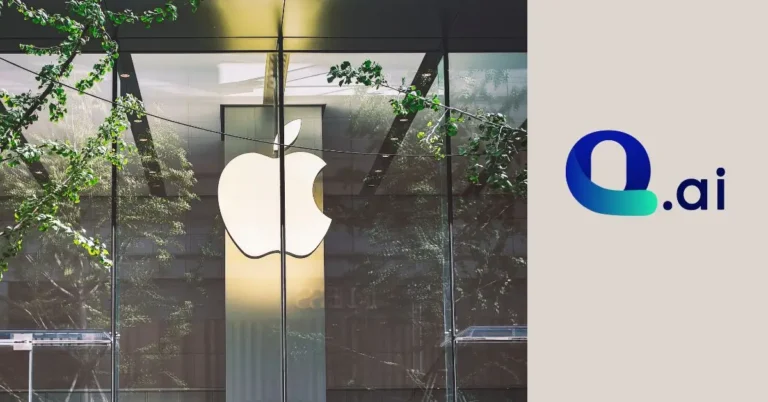
Apple’s purchase of Israeli start-up Q.ai accelerates its shift toward multimodal, audio-first wearables and tighter on-device AI. Apple acquired Q.ai, a Tel Aviv-based AI company operating in stealth since 2022, in a transaction reported around $2 billion, making it Apple’s second-largest acquisition after Beats. The move lands as Apple pushes a broader AI refresh across devices and services, including a reworked Siri due next month and a reported integration of Google’s Gemini into Apple Foundation Models. The core value is a human-computer interface designed to reduce friction between intent and AI execution. This enables “silent speech” and context awareness without overt voice commands or touch.
ServiceNow has named Anthropic’s Claude as the default model for its Build Agent and a preferred model across the ServiceNow AI Platform, signaling a shift from AI pilots to deeply embedded, production-grade automation. Embedding Claude into that fabric gives customers an on-ramp to agentic automation—systems that can reason over context, decide, and execute tasks—without stitching together point tools. Claude becomes the default model for ServiceNow Build Agent, an AI-assisted builder for apps and automations. Embedding Claude within the ServiceNow AI Platform enables access control, usage monitoring, and compliance aligned to enterprise policies. ServiceNow aims to cut implementation timelines for customers by roughly half by using Claude to accelerate configuration, adoption, and rollout.
Reliance Jio has widened its Google AI bundle from a youth-focused offer to a network-wide benefit, signaling that AI services are becoming core to 5G monetization in India. Jio is extending a complimentary 18‑month subscription to Google’s premium AI plan—marketed around access to Gemini 3—to every Jio customer on an Unlimited 5G plan. The bundle centers on expanded access to Google’s latest Gemini experience, AI‑assisted features in Gmail and Docs, 2 TB of cloud storage across Photos, Drive, and Gmail, video generation powered by Google’s Veo technology, NotebookLM at elevated limits, and developer tooling such as Gemini Code Assist and Gemini CLI.
Apple is reportedly nearing a deal to license Google’s Gemini for Siri, a move that would reshape assistant architectures and near-term AI roadmaps across devices and networks. Multiple reports indicate Apple is close to licensing a custom version of Google’s Gemini model, reportedly at a scale of around 1.2 trillion parameters, for roughly $1 billion per year. The model would power a major Siri upgrade while Apple continues building its own foundation models. The objective is clear: boost Siri’s reasoning and task execution in the near term without ceding control over Apple’s system-level integrations or search defaults.
Snap and Perplexity are joining forces to embed a conversational AI search experience directly into Snapchat’s chat interface, signaling a new distribution model for AI and a fresh monetization path for social platforms. Perplexity will integrate its AI-powered answer engine natively into Snapchat, beginning a global rollout in early 2026. Under the agreement, Perplexity will pay Snap $400 million over one year, via a mix of cash and equity, as the integration scales. Snap expects revenue contribution from the partnership to begin in 2026. The move is notable as Snap’s first large-scale integration of an external AI partner directly in-app.
OpenAI has launched ChatGPT Atlas, a MacOS AI browser built around its chatbot, positioning agentic browsing and LLM-native search as the next front in the browser wars. Atlas reframes the browser as a conversational interface. It removes the traditional address bar and orients the experience around ChatGPT, with natural language as the primary way to navigate, retrieve, and summarize information. The initial release targets Apple’s MacOS, with OpenAI emphasizing a paid “agent mode” that can autonomously search, read, and act on the user’s behalf using the live browsing context. Agent mode will be available to paying ChatGPT subscribers, extending OpenAI’s monetization beyond API usage and premium chatbot tiers.
Meta is adding new supervision tools for teen interactions with its AI features, signaling a shift toward stricter youth safeguards under intensifying regulatory and public scrutiny. The company plans to let parents disable one-on-one chats between teens and AI characters across its platforms, with options to block specific personas and review high-level conversation topics. Meta says its teen experiences will follow a PG-13-style content framework and will restrict discussions around sensitive areas such as self-harm and eating disorders. Meta is still building the controls and expects an initial rollout early next year, starting on Instagram in the United States, United Kingdom, Canada, and Australia.
South Korea is funding a national AI stack to reduce dependence on foreign models, protect data, and tune AI to its language and industries. The government has committed ₩530 billion (about $390 million) to five companies building large-scale foundation models: LG AI Research, SK Telecom, Naver Cloud, NC AI, and Upstage. Progress will be reviewed every six months, with underperformers cut and resources concentrated on the strongest until two leaders remain. The policy goal is clear: build world-class, Korean-first AI capability that supports national security, economic competitiveness, and data sovereignty. For telecoms and enterprise IT, this is a shift from “consume global models” to “operate domestic AI platforms” integrated with local data, compliance, and services.
The U.S. Federal Trade Commission has initiated a broad 6(b) study into consumer-facing AI companion chatbots, focusing on risks to children and teens and the governance controls companies have in place. The agency issued orders to seven firms operating at the center of generative AI and social platforms: Alphabet, Character Technologies (Character.AI), Instagram, Meta Platforms, OpenAI, Snap, and xAI. Under its Section 6(b) authority, the FTC is seeking detailed information on how these providers design, test, deploy, and monetize AI companions, and how they limit harms to children and adolescents. The Commission’s vote to proceed was unanimous, signaling cross-party attention on youth safety in AI.
Elon Musk’s generative AI firm, xAI, is targeting $4.3 billion in new equity funding, following its previous $6 billion raise and a $5 billion debt effort. The capital will support high-cost AI models like Grok and Aurora, expand massive GPU-powered data centers, and drive xAI’s ambition to compete with leaders like OpenAI and DeepMind. Investors remain interested despite concerns over spending, betting on Musk’s strategy to blend social media and AI under one ecosystem.

Your Brand. Our Intelligence Tools.

Capture leads at the point of evaluation. Talk to Us →

Sponsored by Palo Alto Networks
⚡ Utilities ⏱ 8 min ✓ Free
This tool is built and hosted by TeckNexus.
Launch Tool →
Whitepaper
This whitepaper explains how utilities can use secure AI-enabled private mobile networks to modernize operations, support distributed intelligence, improve resilience, and strengthen cybersecurity across critical infrastructure. It covers AI applications, private network advantages, zero trust principles, multilayered security architecture, and governance considerations for AI-ready utility environments....
Whitepaper
Non-terrestrial networks are rapidly evolving from experimental satellite systems into an increasingly important part of the global 5G connectivity landscape. This eBook, developed by Radisys in collaboration with TeckNexus, explores how 3GPP standardization, satellite architecture innovation, and software-driven network design are reshaping NTN deployment models. It examines the transition from...
Whitepaper
Private cellular networks are transforming industrial operations, but securing private 5G, LTE, and CBRS infrastructure requires more than legacy IT/OT tools. This whitepaper by TeckNexus and sponsored by OneLayer outlines a 4-pillar framework to protect critical systems, offering clear guidance for evaluating security vendors, deploying zero trust, and integrating IT,...
Scroll to Top

Map your security gaps to real threat scenarios – including Salt Typhoon, Volt Typhoon, AI data poisoning, rogue devices, and unencrypted OT traffic.

Take the free 8-minute assessment built for utility operators evaluating AI-enabled private mobile networks. Get a readiness score across five critical domains, see where your gaps are, and receive a prioritized action plan for what to fix first.

Free • 8 minutes • Built for private network security