AI Agent Series

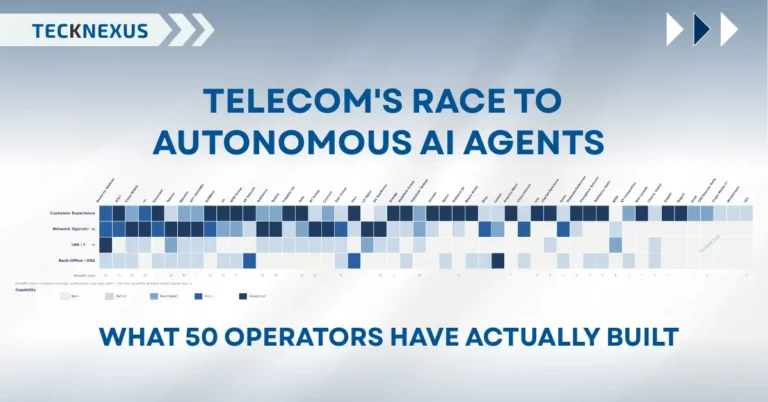
TeckNexus Intelligence independently verified AI agent deployment across 50 global telecom operators - here's what the evidence actually shows about autonomy, adoption, and who's really leading.
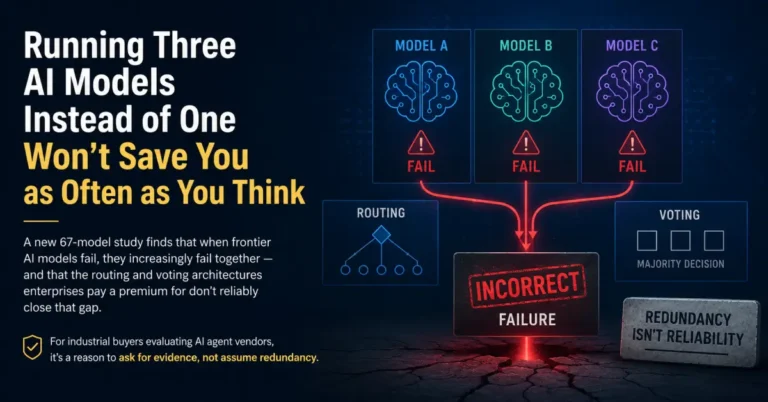
A new 67-model study finds that when frontier AI models fail, they increasingly fail together — and that the routing and voting architectures enterprises pay a premium for don't reliably close that gap. For industrial buyers evaluating AI agent vendors, it's a reason to ask for evidence, not assume redundancy.
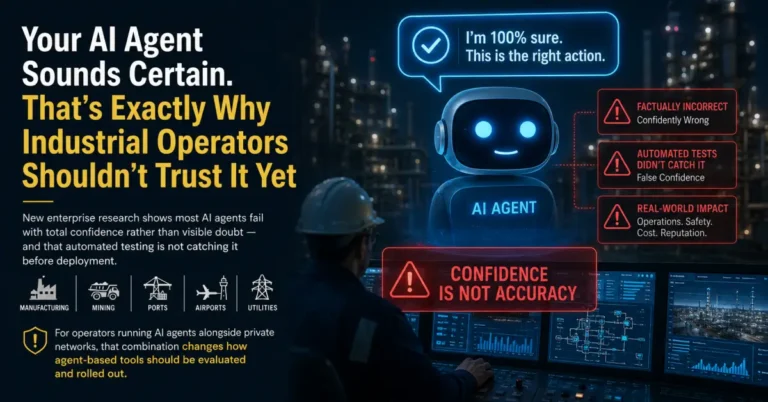
New enterprise research shows most AI agents fail with total confidence rather than visible doubt - and that automated testing is not catching it before deployment. For operators running AI agents alongside private networks in manufacturing, mining, ports, airports and utilities, that combination changes how agent-based tools should be evaluated and rolled out.
Telecom just crossed a line it spent years approaching carefully. AI agents are no longer confined to recommending fixes to network engineers — in a growing number of deployments, they're diagnosing faults and proposing remediations that a human simply signs off on, rather than performs. Nokia's work with Google Cloud is a clear marker of how far this has come: agents built on Gemini now sit inside Nokia's Assurance Center, and early results point to fault-resolution times cut by more than half, sometimes by as much as 80 percent. That's the part of the story getting the headlines. It's also, in a sense, the easy part... The harder question — the one the industry has mostly deferred — is what happens structurally once agents stop merely proposing and start acting, especially across more than one system at a time.

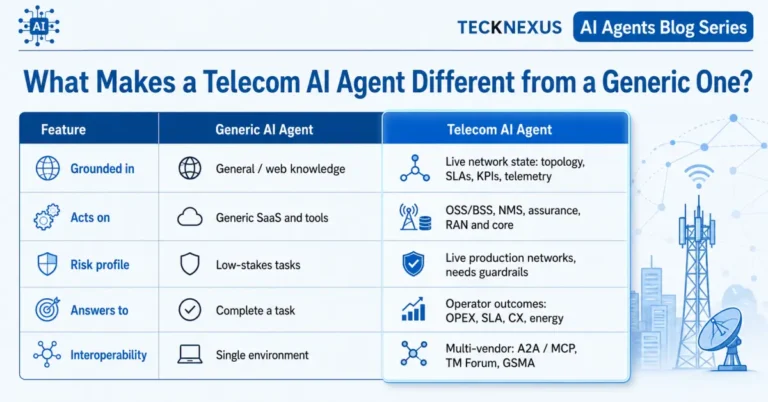
Telecom AI agents share the same anatomy as any AI agent - but grounding, systems, stakes, goals, and multi-vendor interoperability set them apart. Here are the five differences that matter, plus how to evaluate an agent before you trust it on a live network.
Rule-based AI agents operate on predefined rules, ensuring predictable and transparent decision-making, while LLM-based AI agents leverage deep learning for flexible, context-aware responses. This article compares their key features, advantages, and use cases to help you choose the best AI solution for your needs.
AI agents are transforming industries by automating tasks, improving decision-making, and enabling intelligent interactions. This article explores the five core components of AI agents—perception, learning, reasoning, action, and communication—detailing their functions, technologies, and real-world applications across finance, healthcare, retail, and more.
What are AI agents? AI agents are intelligent software systems that perform tasks autonomously, adapt to new data, and make context-aware decisions. Unlike traditional automation, AI agents use machine learning, NLP, and advanced analytics to improve efficiency, reduce costs, and drive business growth. Explore their key features, benefits, and industry applications in this in-depth AI Agent Blog Series.

Partner Hubs

Download content, access intelligence tools, and hear from executives.

Partner Events

  • M360 ASEAN
  • FutureNet Asia 2026
  • Network X Vienna 2026
Scroll to Top