
Direct-to-device satellite shifts from novelty to competitive necessity
New consumer research commissioned by Viasat and executed by GSMA Intelligence signals that non-terrestrial networks (NTN) are becoming a mainstream buying factor for mobile subscribers.
Consumer demand and willingness to pay for satellite connectivity
The survey of more than 12,000 smartphone users across 12 countries finds persistent coverage gaps: over a third of respondents lose basic cellular service multiple times per month. That pain point is translating into intent. Roughly six in ten consumers say they would pay extra for satellite-enabled connectivity on their phones, and nearly half indicate they would switch operators if out‑of‑coverage service were included in their plan. On average, those willing to pay would accept a 5–7% uplift on their current monthly bill, with outliers such as India approaching a 9% premium.

Low-ARPU markets show outsized satellite revenue potential
While average revenue per user varies widely by country—single-digit dollars in markets like India versus tens of dollars in the United States—the combination of population scale and higher stated willingness to pay points to outsized absolute revenue potential in lower-ARPU regions. The implication for operators: a one-size pricing model will leave money on the table. Portfolio design, device strategy, and partner selection should be tailored by market maturity and use-case mix.
Why NTN matters now for mobile operators and partners
The convergence of 3GPP-standardized NTN, early commercial launches, and growing consumer awareness creates a window for first movers to differentiate on coverage and resilience.
3GPP standards and devices align for NTN
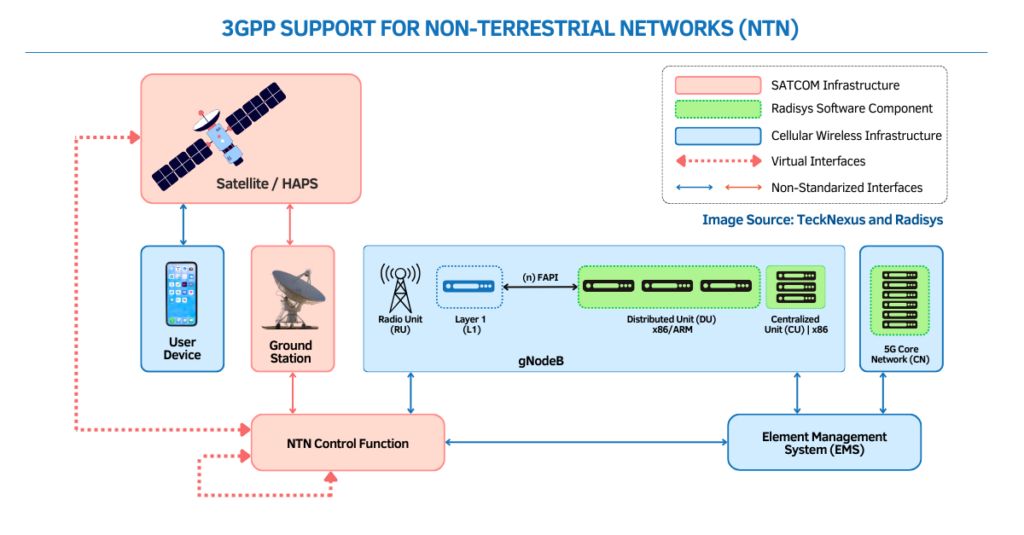
3GPP Release 17 brought NTN support into the cellular mainstream for both NR and IoT, with Release 18 enhancing performance and mobility. Handset OEMs and silicon vendors are integrating NTN capabilities, and operating systems are adding native satellite messaging workflows. In parallel, multiple constellations and service models are progressing: Apple and Globalstar have proven emergency messaging at scale; SpaceX is piloting direct‑to‑cell services with T‑Mobile US; AST SpaceMobile has demonstrated voice and broadband‑class data in trials alongside partners including AT&T and Vodafone; Lynk Global continues to expand low-rate texting for standard devices. Incumbents like Viasat (now combined with Inmarsat) and Eutelsat OneWeb are building out hybrid terrestrial–satellite propositions across mobility and enterprise.
Demand expands beyond rural: safety, messaging, and data
Survey responses suggest different service priorities by market maturity. In emerging economies, enthusiasm skews toward higher‑throughput applications such as web browsing and video calls delivered via satellite. In developed markets, early demand clusters around messaging and safety features. Awareness also differs: consumers in India report significantly higher familiarity with satellite features than peers in markets like Japan. Marketing and product roadmaps should reflect these realities—sell reliability and reach everywhere, but avoid over‑promising data‑heavy services where capacity and device support are not yet widespread.
Strategic impact: revenue growth, churn reduction, positioning
NTN is not just a feature add-on; it can be a differentiator for coverage leadership, brand trust, and new margin pools if executed with discipline.
Model and monetize the coverage premium
With almost half of consumers willing to churn for out‑of‑coverage service, satellite becomes a retention lever comparable to 5G speed and bundle perks. Operators should model the combined impact of a 5–7% ARPU uplift among adopters plus churn reduction in coverage‑sensitive segments (rural, field workers, logistics, public safety). That net value case can justify partner fees, device subsidies, and targeted marketing.
Tiered NTN offers beat one-size-fits-all pricing
Consider tiered offers: entry‑level satellite messaging/SOS bundled with mid‑tier plans; add‑on packs for occasional outdoor users; premium tiers for prosumers and enterprises needing voice and episodic data outside coverage. In lower‑ARPU markets, micro‑bundles and day passes may outperform monthly premiums. Enterprise variants for energy, transportation, agriculture, and construction can command higher margins with SLAs, coverage maps, and device kits.
Key execution challenges for NTN launches
Turning intent into revenue depends on careful orchestration across technology, policy, and go‑to‑market.
Device readiness and user experience
NTN performance depends on handset radios, antenna efficiency, and power management. Align launch timing with OEM roadmaps, certify devices rigorously, and design onboarding flows that set clear expectations around line‑of‑sight, latency, and throughput. Native OS support for satellite messaging should be integrated with care pathways (e.g., emergency services) and privacy settings.
Spectrum, regulatory compliance, and interoperability
Service models span licensed mobile bands adapted for supplemental coverage from space and traditional MSS bands in L/S. National rules on space‑to‑ground, cross‑border interference, emergency calling, and lawful intercept vary. Legal and regulatory teams should engage early to secure approvals, ensure numbering and routing work for satellite‑originated calls/messages, and clarify roaming/payment liabilities when sessions traverse satellite links.
LEO capacity economics and service design
LEO capacity is finite and unevenly distributed. Start with low‑bitrate services (messaging, narrowband telemetry), prioritize admission control, and use network policies to protect terrestrial QoE. Be explicit about fair‑use, latency ranges, and geographic availability. For higher‑rate services, target defined corridors (coastal, highways) and enterprise hotspots first.
BSS/OSS integration, assurance, and support
Rating and charging for satellite sessions, policy control across non‑terrestrial bearers, and trouble isolation across operator–satellite boundaries require new workflows. Define SLAs with partners, instrument end‑to‑end observability, and train frontline care to avoid mis‑selling and escalations. Fraud controls should cover premium SMS, emergency misuse, and international message routing.
12‑month operator playbook for NTN
Pragmatic sequencing reduces risk while capturing early differentiation benefits.
Prioritize two use cases: safety messaging and one enterprise vertical
Lead with consumer safety/messaging and one enterprise vertical where coverage gaps are acute. Align marketing, pricing, device, and care around those scenarios with clear KPIs: adoption, churn improvement, ARPU uplift, NPS in uncovered zones, and satellite session success rates.
Build the right satellite partnerships and SLAs
Evaluate multiple NTN partners for coverage footprint, device ecosystem, roadmap (messaging, voice, data), pricing, and regulatory posture. Consider multi‑partner strategies by region to mitigate risk. Negotiate co‑marketing, data sharing for service assurance, and joint incident response.
Localize pricing and positioning by market
In high‑growth markets, position satellite as everyday reach and digital inclusion; in mature markets, emphasize resilience, safety, and outdoor experiences. Use outcome‑based pricing where possible and test bundles such as family safety, fleet continuity, or field‑team kits.
NTN watchlist for 2025–2026
Several milestones will shape adoption curves and competitive dynamics.
3GPP R18, OS support, and commercial rollouts
Release 18 enhancements, broader native support in iOS and Android for satellite messaging, and the shift from pilots to paid services for messaging and voice will define customer expectations. Track device SKUs with certified NTN radios and the cadence of operator‑satellite go‑lives by market.
Policy clarity and spectrum decisions by market
National rulings on supplemental coverage from space, coordination in L/S bands, and emergency calling obligations will influence where and how operators launch. Watch for cross‑border agreements to streamline roaming and lawful intercept.
Ecosystem consolidation and early enterprise traction
Expect deeper alliances among MNOs and satellite providers, and early enterprise wins in energy, transport, and government. Success stories will hinge on predictable availability, transparent SLAs, and simple procurement and billing.
Bottom line: the consumer signal is clear—coverage everywhere is valuable enough to drive both premium and churn. Operators that move now with standards‑based NTN, realistic service tiers, and disciplined go‑to‑market can convert satellite from a novelty into durable competitive advantage.