5G Services and Monetization Strategy

Introduction to 5G Services Launched Globally

5G services, commercially launched in April 2019, have marked a significant milestone in the evolution of digital connectivity. Within the first year, various global digital service providers have introduced an array of 5G services. These services not only demonstrate the vast potential of 5G technology but also reveal diverse monetization strategies. Additionally, these services often leverage additional technologies alongside 5G to enhance delivery and functionality.

Sample 5G Services Launched by Global Service Providers

Integrated Healthcare 5G Service by AT&T and Rush University System for Health: This pioneering initiative harnesses the power of 5G and Multi-Access Edge Computing (MEC) to revolutionize healthcare. It focuses on enhancing patient care through technology-driven therapies, employing service robots equipped with artificial intelligence for various hospital tasks. The fast transmission capabilities of 5G enable quick sharing of large medical image files, facilitating better and timely medical decisions. Additionally, this collaboration aims to improve hospital energy efficiency, optimizing operations and reducing costs.
eHealth 5G Service with AT&T and VITAS Healthcare: This service addresses the unique needs of hospice care by using 5G-enabled virtual reality (VR) systems. It offers immersive experiences that help alleviate chronic pain and anxiety among patients, transporting them virtually to serene environments or historical sites for therapeutic purposes. This innovative approach introduces a new dimension to palliative care, making it more effective and humane.

Public Safety 5G Service – FirstNet with AT&T and Nellis Air Force Base: AT&T’s collaboration with Nellis Air Force Base under the FirstNet initiative provides comprehensive 5G infrastructure support. This service enhances various aspects of base operations, including advanced flight line activities, virtual reality-based training for personnel, and near real-time inventory and logistics management. It ensures that over 40,000 Air Force personnel, their families, and retirees receive efficient and secure communication services.

eRetail 5G Service by AT&T and Badger Technologies™: This collaboration is set to transform the retail sector by deploying autonomous robots for efficient inventory management and hazard detection. Leveraging 5G and MEC, these robots streamline store operations, improve customer experiences, and ensure safety by promptly identifying and addressing store hazards and stock inconsistencies.

Smart Factory 5G Service by SKT and SK Hynix: Aimed at enhancing semiconductor manufacturing, this service uses 5G and MEC to detect defects in semiconductor products swiftly. It contributes to more efficient management of production processes and logistics, significantly reducing the time and resources spent in quality control.

Remote Game Learning 5G Service by NTT DoCoMo and PGA: This unique service offers remote golf lessons, where AI technology analyzes 5G-captured footage of players’ swings. It provides golf enthusiasts with personalized feedback and improvement tips, making learning more accessible and efficient.

Digital Learning 5G Service by AT&T and Deloitte University: This service leverages 5G, Edge Compute, and immersive mixed reality to elevate corporate learning programs. It offers a more engaging and interactive educational experience, enhancing the effectiveness of corporate training and overall guest experiences at Deloitte University.

Event Experience by Verizon: Verizon is enhancing the stadium experience by introducing 5G, which allows fans to enjoy high-capacity networks with faster download speeds and reduced latency. This service significantly improves the overall event experience, enabling fans to engage with various digital offerings seamlessly while enjoying live events.

Road Learner by SKT and Seoul Metropolitan City Government: In collaboration with the Seoul Metropolitan City Government, SKT is developing a 5G-based autonomous driving infrastructure. The service focuses on maintaining up-to-date high-definition maps essential for the operation of autonomous vehicles, ensuring safer and more efficient urban transportation.

Autonomous Vehicle Safety 5G Service by SKT: SKT’s ‘Next Generation Single Photon LiDAR’ technology, integral to this service, is set to enhance the safety of autonomous vehicles. The advanced LiDAR system, with its long-range detection capabilities and accuracy even in adverse weather, ensures safer navigation for autonomous vehicles.

Vehicle Infotainment (IVI) 5G Service by SKT: This comprehensive infotainment system integrates navigation, AI, music streaming, and OTT services, providing a seamless and enriched in-vehicle entertainment experience. It caters to the evolving needs of modern drivers and passengers, offering a diverse range of entertainment options.

eSports Services by SKT: SKT has introduced several eSports services, including augmented reality experiences, VR-based live broadcasting, and VR replays. These services offer fans immersive ways to experience eSports, bringing them closer to the action and enhancing their viewing experience.

ePark 5G Service by SKT: This innovative AR service, launched in parks like Olympic Park and Yeouido Park in Seoul, uses augmented reality to create interactive experiences for park visitors. By utilizing their smartphones, users can see and interact with virtual animals and mythical creatures, such as giant cats and wyverns, superimposed onto the real-world park environment. This service not only provides a unique recreational activity but also demonstrates the potential of 5G in enhancing public spaces with digital experiences.

eGaming 5G Service by Sprint: To capitalize on the high-speed capabilities of 5G, Sprint introduced a special offer where users could enjoy a 90-day free trial to instantly play more than 100 mobile games. This service, available on 5G phones, exemplifies the potential of 5G in transforming the gaming industry by eliminating the need for lengthy downloads and enabling smoother, more responsive gameplay.

Responsive Gaming 5G Service by Verizon: Verizon’s service targets the gaming sector by offering console-quality multiplayer gaming that can be enjoyed on the go. This service takes advantage of 5G’s low latency and high-speed capabilities, providing a seamless and immersive gaming experience that rivals traditional console gaming.

Multi-view ESports 5G Service by Korea Telecom (KT): KT’s service provides a 360-degree media experience, enhancing the viewing of e-sports and high-quality music content. This service is designed to maximize user engagement by utilizing the ultra-fast, low-latency network of 5G, offering a more immersive and interactive way to enjoy eSports and music.

AR Video Call by South Korea Telecom (SKT): SKT’s ‘Callar for Sero TV’ service integrates their AR video call technology with Samsung’s Sero TV. This innovative service offers enhanced AR video calling experiences by applying facial recognition, real-time background and portrait segmentation techniques, and ultra-high-definition technology. It allows users to enjoy a more interactive and engaging video call experience by linking their smartphones to Sero TV.

Watch and Play by SKT: This service is a real-time interactive game platform that combines gaming with broadcasting. It enables users to choose between watching a game and jumping into playing it. This platform offers a unique and exciting experience, allowing users to engage more actively with the games they are interested in.

These diverse 5G services, launched by global digital service providers, highlight the extensive range of applications that 5G technology can offer across various sectors. From healthcare and public safety to retail, gaming, and entertainment, 5G is paving the way for innovative solutions that enhance efficiency, user experience, and overall quality of life.

Monetization Strategies for 5G Services

  1. 5G Access Plans: Providers like AT&T and Verizon have introduced plans that include an additional charge (e.g., $10/month) for 5G network access.

  2. Quality of Service (QoS) Based Charging: An example is Vodafone UK’s “unlimited max” plan, which offers differentiated pricing based on service quality.

  3. 5G Value-Added Service Plans: These plans include enhanced services like TV and sports in 4K, ultra-high definition, and augmented reality and virtual reality-based e-sports.

Conclusion and Future Prospects

As 5G network coverage expands globally, the adoption of these innovative 5G-based services is expected to grow. Service providers are continuously exploring new avenues for value addition, either independently or in conjunction with ecosystem partners. This first year of 5G deployment has set a strong foundation for future advancements in digital connectivity, opening doors to unprecedented service offerings and customer experiences.


Related Content

Tech News & Insight
Nvidia’s CEO is publicly reaffirming confidence in OpenAI even as reports suggest the companies may narrow the scope of an ambitious, nonbinding plan announced last fall. During a visit to Taipei, Nvidia CEO Jensen Huang dismissed talk of friction with OpenAI and said Nvidia will participate in OpenAI’s next funding round. Recent reporting suggested Nvidia has emphasized the nonbinding nature of its plan to invest up to $100 billion and build roughly 10 GW of compute for OpenAI, and that both parties are re-examining scope and terms.
Tech News & Insight
Nvidia’s CEO is publicly reaffirming confidence in OpenAI even as reports suggest the companies may narrow the scope of an ambitious, nonbinding plan announced last fall. During a visit to Taipei, Nvidia CEO Jensen Huang dismissed talk of friction with OpenAI and said Nvidia will participate in OpenAI’s next funding round. Recent reporting suggested Nvidia has emphasized the nonbinding nature of its plan to invest up to $100 billion and build roughly 10 GW of compute for OpenAI, and that both parties are re-examining scope and terms.
Tech News & Insight
With the Union Budget around the corner, the Cellular Operators Association of India (COAI) is asking for a structural fix to spectrum pricing, statutory levies, and GST that is designed to restore sector health and accelerate digital infrastructure build-out. COAI’s agenda centers on spectrum affordability, regulatory levy rationalization, and GST reform to unlock liquidity frozen as input tax credit. COAI argues for spending the sizable unused corpus first, holding the DBN levy in abeyance, and trimming license fees to roughly 0.5–1% to cover administrative costs. Cutting GST on regulatory payments from 18% to 5% would reduce the pace of new ITC build-up and meaningfully ease liquidity pressure.
Tech News & Insight
With the Union Budget around the corner, the Cellular Operators Association of India (COAI) is asking for a structural fix to spectrum pricing, statutory levies, and GST that is designed to restore sector health and accelerate digital infrastructure build-out. COAI’s agenda centers on spectrum affordability, regulatory levy rationalization, and GST reform to unlock liquidity frozen as input tax credit. COAI argues for spending the sizable unused corpus first, holding the DBN levy in abeyance, and trimming license fees to roughly 0.5–1% to cover administrative costs. Cutting GST on regulatory payments from 18% to 5% would reduce the pace of new ITC build-up and meaningfully ease liquidity pressure.
Tech News & Insight
The next wave of digital transformation will be defined by AI workloads riding on cloud and edge infrastructure over 5G networks, and that shift will change how networks are built, monetized, and secured. Generative and agentic AI move more compute into the network, creating persistent, uplink-heavy, low-latency flows rather than the mostly downlink, best-effort traffic of the smartphone era. Video from cameras, glasses, and sensors feeds models at the edge and in the cloud; results return in milliseconds to people and machines. That means tighter latency budgets, deterministic jitter control, and stronger guarantees for both throughput and reliability.
Tech News & Insight
The next wave of digital transformation will be defined by AI workloads riding on cloud and edge infrastructure over 5G networks, and that shift will change how networks are built, monetized, and secured. Generative and agentic AI move more compute into the network, creating persistent, uplink-heavy, low-latency flows rather than the mostly downlink, best-effort traffic of the smartphone era. Video from cameras, glasses, and sensors feeds models at the edge and in the cloud; results return in milliseconds to people and machines. That means tighter latency budgets, deterministic jitter control, and stronger guarantees for both throughput and reliability.
Tech News & Insight
New Delhi has unveiled a sweeping tax holiday to capture the next wave of AI and cloud build-outs, positioning India as a long-term base for exporting compute. Foreign providers that deliver cloud and data center services to customers outside India will pay zero corporate tax on those revenues through 2047, provided workloads run from facilities in India. The budget also introduces a 15% cost-plus safe harbor for Indian data center units serving related foreign parties, simplifying transfer pricing for global delivery hubs. For cloud providers, it strengthens the business case to place GPU clusters, storage, and interconnect in India to serve overseas demand, not just local workloads.
Tech News & Insight
New Delhi has unveiled a sweeping tax holiday to capture the next wave of AI and cloud build-outs, positioning India as a long-term base for exporting compute. Foreign providers that deliver cloud and data center services to customers outside India will pay zero corporate tax on those revenues through 2047, provided workloads run from facilities in India. The budget also introduces a 15% cost-plus safe harbor for Indian data center units serving related foreign parties, simplifying transfer pricing for global delivery hubs. For cloud providers, it strengthens the business case to place GPU clusters, storage, and interconnect in India to serve overseas demand, not just local workloads.
Tech News & Insight
NTT DATA and AWS have signed a multi-year strategic collaboration aimed at accelerating cloud modernization and responsible agentic AI adoption, with clear implications for APAC enterprises and telecoms. The agreement expands joint go-to-market and delivery across four pillars: AI-driven cloud transformation, industry cloud solutions, AI-enabled managed services and customer experience, and sovereign cloud for regulated workloads. NTT DATA has created a dedicated AWS Business Group with close to 11,000 AWS-certified experts and plans to certify nearly 10,000 more in three years. APAC boards want measurable AI outcomes, but legacy estates, data fragmentation, and compliance obligations slow progress.
Tech News & Insight
NTT DATA and AWS have signed a multi-year strategic collaboration aimed at accelerating cloud modernization and responsible agentic AI adoption, with clear implications for APAC enterprises and telecoms. The agreement expands joint go-to-market and delivery across four pillars: AI-driven cloud transformation, industry cloud solutions, AI-enabled managed services and customer experience, and sovereign cloud for regulated workloads. NTT DATA has created a dedicated AWS Business Group with close to 11,000 AWS-certified experts and plans to certify nearly 10,000 more in three years. APAC boards want measurable AI outcomes, but legacy estates, data fragmentation, and compliance obligations slow progress.
Tech News & Insight
Apple’s purchase of Israeli start-up Q.ai accelerates its shift toward multimodal, audio-first wearables and tighter on-device AI. Apple acquired Q.ai, a Tel Aviv-based AI company operating in stealth since 2022, in a transaction reported around $2 billion, making it Apple’s second-largest acquisition after Beats. The move lands as Apple pushes a broader AI refresh across devices and services, including a reworked Siri due next month and a reported integration of Google’s Gemini into Apple Foundation Models. The core value is a human-computer interface designed to reduce friction between intent and AI execution. This enables “silent speech” and context awareness without overt voice commands or touch.
Tech News & Insight
Apple’s purchase of Israeli start-up Q.ai accelerates its shift toward multimodal, audio-first wearables and tighter on-device AI. Apple acquired Q.ai, a Tel Aviv-based AI company operating in stealth since 2022, in a transaction reported around $2 billion, making it Apple’s second-largest acquisition after Beats. The move lands as Apple pushes a broader AI refresh across devices and services, including a reworked Siri due next month and a reported integration of Google’s Gemini into Apple Foundation Models. The core value is a human-computer interface designed to reduce friction between intent and AI execution. This enables “silent speech” and context awareness without overt voice commands or touch.
Tech News & Insight
ServiceNow has named Anthropic’s Claude as the default model for its Build Agent and a preferred model across the ServiceNow AI Platform, signaling a shift from AI pilots to deeply embedded, production-grade automation. Embedding Claude into that fabric gives customers an on-ramp to agentic automation—systems that can reason over context, decide, and execute tasks—without stitching together point tools. Claude becomes the default model for ServiceNow Build Agent, an AI-assisted builder for apps and automations. Embedding Claude within the ServiceNow AI Platform enables access control, usage monitoring, and compliance aligned to enterprise policies. ServiceNow aims to cut implementation timelines for customers by roughly half by using Claude to accelerate configuration, adoption, and rollout.
Tech News & Insight
ServiceNow has named Anthropic’s Claude as the default model for its Build Agent and a preferred model across the ServiceNow AI Platform, signaling a shift from AI pilots to deeply embedded, production-grade automation. Embedding Claude into that fabric gives customers an on-ramp to agentic automation—systems that can reason over context, decide, and execute tasks—without stitching together point tools. Claude becomes the default model for ServiceNow Build Agent, an AI-assisted builder for apps and automations. Embedding Claude within the ServiceNow AI Platform enables access control, usage monitoring, and compliance aligned to enterprise policies. ServiceNow aims to cut implementation timelines for customers by roughly half by using Claude to accelerate configuration, adoption, and rollout.
Tech News & Insight
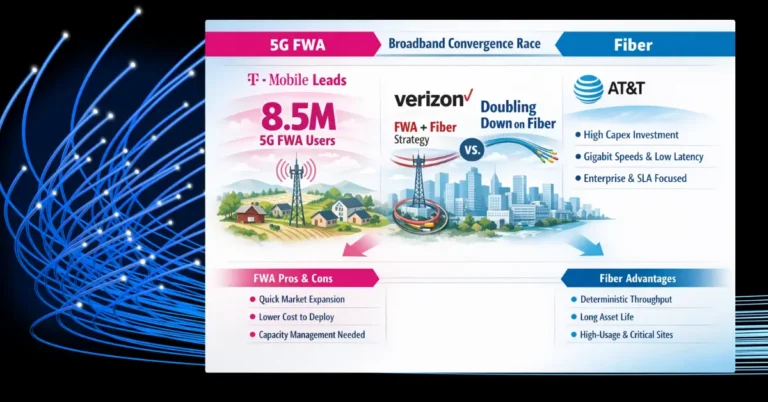
Verizon exits 2025 with standout subscriber growth and a leaner 2026 investment plan that shifts dollars from network build to integration, efficiency and customer retention. Verizon posted more than 1 million net additions in the fourth quarter, including 616,000 postpaid phone net adds—the best showing since 2019—and 372,000 broadband net adds driven by 319,000 fixed wireless access (FWA) additions and the strongest Fios Internet quarter since 2020. After years of 5G coverage build, Verizon is pivoting to densification, fiber integration and operating efficiency, allowing capex to step down without undermining network competitiveness. Capital will concentrate on fiber-led convergence, FWA capacity, and experience-centric technologies that reduce churn and support revenue quality.
Tech News & Insight
Verizon exits 2025 with standout subscriber growth and a leaner 2026 investment plan that shifts dollars from network build to integration, efficiency and customer retention. Verizon posted more than 1 million net additions in the fourth quarter, including 616,000 postpaid phone net adds—the best showing since 2019—and 372,000 broadband net adds driven by 319,000 fixed wireless access (FWA) additions and the strongest Fios Internet quarter since 2020. After years of 5G coverage build, Verizon is pivoting to densification, fiber integration and operating efficiency, allowing capex to step down without undermining network competitiveness. Capital will concentrate on fiber-led convergence, FWA capacity, and experience-centric technologies that reduce churn and support revenue quality.
Tech News & Insight
Telenor is monetizing its 25-year run in Thailand by selling its entire stake in True Corporation, signaling a strategic refocus and a maturing Asian portfolio. Telenor agreed to sell 24.95% of True Corporation to Arise Digital Technology Company Limited at THB 11.70 per share, with a mutual put/call option to transfer the remaining 5.35% two years after closing. The agreed valuation implies proceeds of roughly NOK 39 billion (about US$3.9 billion) and represents a notable premium—around 36% over True’s first post-merger trading day close and about 4% over the recent three-month VWAP. The sale aligns with a broader pivot toward capital discipline, structural simplification, and a tighter Nordic focus.
Tech News & Insight
Telenor is monetizing its 25-year run in Thailand by selling its entire stake in True Corporation, signaling a strategic refocus and a maturing Asian portfolio. Telenor agreed to sell 24.95% of True Corporation to Arise Digital Technology Company Limited at THB 11.70 per share, with a mutual put/call option to transfer the remaining 5.35% two years after closing. The agreed valuation implies proceeds of roughly NOK 39 billion (about US$3.9 billion) and represents a notable premium—around 36% over True’s first post-merger trading day close and about 4% over the recent three-month VWAP. The sale aligns with a broader pivot toward capital discipline, structural simplification, and a tighter Nordic focus.
Tech News & Insight
TeraWave combines 5,280 low Earth orbit satellites with 128 medium Earth orbit satellites—5,408 spacecraft in total—tied together via optical inter-satellite links. The design targets global coverage with two distinct performance tiers: up to 144 Gbps symmetrical RF links per enterprise customer using Q/V-band in LEO, and optical links in MEO delivering up to 6 Tbps for high-throughput trunking between hubs. Blue Origin positions the service for point-to-point private links and enterprise-grade internet access, with an initial target of up to 100,000 customers. The company intends to launch on its own New Glenn vehicles and leverage reusable engines to scale deployment.
Tech News & Insight
TeraWave combines 5,280 low Earth orbit satellites with 128 medium Earth orbit satellites—5,408 spacecraft in total—tied together via optical inter-satellite links. The design targets global coverage with two distinct performance tiers: up to 144 Gbps symmetrical RF links per enterprise customer using Q/V-band in LEO, and optical links in MEO delivering up to 6 Tbps for high-throughput trunking between hubs. Blue Origin positions the service for point-to-point private links and enterprise-grade internet access, with an initial target of up to 100,000 customers. The company intends to launch on its own New Glenn vehicles and leverage reusable engines to scale deployment.
Tech News & Insight
France’s three other mobile network operators—Bouygues Telecom, Free-iliad and Orange—have reopened negotiations with Altice to carve up most of SFR, reviving a complex deal that could reshape competition, capex and customer experience across the market. The operators confirmed they are conducting due diligence with Altice after re-engaging in early January 2026, stressing that legal and financial terms remain undecided and that there is no assurance of a transaction. A successful transaction would compress the French market from four to three MNOs, with material consequences for pricing power, 5G/fiber investment, vendor ecosystems and enterprise buyers. Consolidation momentum is building across Europe, evidenced by recent approvals of large transactions with stringent remedies. Altice has been under sustained pressure to reduce debt following restructurings and asset sales.
Tech News & Insight
France’s three other mobile network operators—Bouygues Telecom, Free-iliad and Orange—have reopened negotiations with Altice to carve up most of SFR, reviving a complex deal that could reshape competition, capex and customer experience across the market. The operators confirmed they are conducting due diligence with Altice after re-engaging in early January 2026, stressing that legal and financial terms remain undecided and that there is no assurance of a transaction. A successful transaction would compress the French market from four to three MNOs, with material consequences for pricing power, 5G/fiber investment, vendor ecosystems and enterprise buyers. Consolidation momentum is building across Europe, evidenced by recent approvals of large transactions with stringent remedies. Altice has been under sustained pressure to reduce debt following restructurings and asset sales.
Tech News & Insight
CEO Börje Ekholm indicated the company will keep trimming headcount after cutting roughly 5,000 positions over the last year. In Sweden, Ericsson has notified authorities and begun union talks that could affect about 1,600 roles, part of a multi‑year restructuring program. The move follows a 2023 plan to remove around 8,500 jobs worldwide—about 8% of its workforce—with further reductions last year in markets such as Spain and Canada. The rationale remains consistent: reset the cost base, protect profitability, and keep investment firepower for strategic bets amid a slower operator capex cycle.
Tech News & Insight
CEO Börje Ekholm indicated the company will keep trimming headcount after cutting roughly 5,000 positions over the last year. In Sweden, Ericsson has notified authorities and begun union talks that could affect about 1,600 roles, part of a multi‑year restructuring program. The move follows a 2023 plan to remove around 8,500 jobs worldwide—about 8% of its workforce—with further reductions last year in markets such as Spain and Canada. The rationale remains consistent: reset the cost base, protect profitability, and keep investment firepower for strategic bets amid a slower operator capex cycle.
Tech News & Insight
Ericsson is signaling a strategic shift toward defence, mission-critical, and AI-era network architectures as traditional RAN spending stays flat. Management expects the global RAN market to remain flat in 2026, sustaining a multi-year trend that now pegs annual spend at roughly the low-$30 billions. Ericsson is building for a traffic mix shift where AI applications push uplink throughput and latency to the forefront. Defence, utilities, transport, and public safety are moving from proprietary systems to standards-based 3GPP networks.
Tech News & Insight
Ericsson is signaling a strategic shift toward defence, mission-critical, and AI-era network architectures as traditional RAN spending stays flat. Management expects the global RAN market to remain flat in 2026, sustaining a multi-year trend that now pegs annual spend at roughly the low-$30 billions. Ericsson is building for a traffic mix shift where AI applications push uplink throughput and latency to the forefront. Defence, utilities, transport, and public safety are moving from proprietary systems to standards-based 3GPP networks.
Tech News & Insight
Tech News & Insight
Tech News & Insight
BlueBird 7 is slated to lift off in late February from Launch Complex 36 at Cape Canaveral Space Force Station on the New Glenn-3 mission. It is AST SpaceMobile’s first payload on New Glenn and the second satellite in its next-generation “Block 2” campaign, following BlueBird 6. BlueBird 7 mirrors BlueBird 6 and carries a deployable array of about 2,400 square feet—the company positions it as the largest commercial communications aperture in low Earth orbit. The design, backed by thousands of patent and patent-pending claims, is engineered to deliver peak downlink rates up to 120 Mbps directly to standard, unmodified devices for voice, data, and video.
Tech News & Insight
BlueBird 7 is slated to lift off in late February from Launch Complex 36 at Cape Canaveral Space Force Station on the New Glenn-3 mission. It is AST SpaceMobile’s first payload on New Glenn and the second satellite in its next-generation “Block 2” campaign, following BlueBird 6. BlueBird 7 mirrors BlueBird 6 and carries a deployable array of about 2,400 square feet—the company positions it as the largest commercial communications aperture in low Earth orbit. The design, backed by thousands of patent and patent-pending claims, is engineered to deliver peak downlink rates up to 120 Mbps directly to standard, unmodified devices for voice, data, and video.
Tech News & Insight
GlobalGPT’s new mobile app signals a step change in how multimodal AI is consumed—shifting advanced reasoning, image and video generation, and research assistance into a pocketable, enterprise-ready workflow. With app availability on Google Play and support for both Android and iOS ecosystems, enterprises can plan for cross-device continuity, enabling employees to start a task on desktop and continue on mobile with minimal friction. GlobalGPT routes user prompts to advanced models such as GPT-5.2, Claude Opus 4.5, and Gemini 3 Pro to tackle analysis, explanations, and decision support beyond basic Q&A.
Tech News & Insight
GlobalGPT’s new mobile app signals a step change in how multimodal AI is consumed—shifting advanced reasoning, image and video generation, and research assistance into a pocketable, enterprise-ready workflow. With app availability on Google Play and support for both Android and iOS ecosystems, enterprises can plan for cross-device continuity, enabling employees to start a task on desktop and continue on mobile with minimal friction. GlobalGPT routes user prompts to advanced models such as GPT-5.2, Claude Opus 4.5, and Gemini 3 Pro to tackle analysis, explanations, and decision support beyond basic Q&A.
Tech News & Insight
This edition of TeckNexus Private Network: Innovation & Ecosystem Solutions spotlights the platforms, partnerships, and deployment models accelerating private 5G, LTE, and CBRS at scale. Through feature stories, executive interviews, and award-winning case studies, it reveals how collaboration is turning private networks into secure, production-ready ecosystems.
Tech News & Insight
This edition of TeckNexus Private Network: Innovation & Ecosystem Solutions spotlights the platforms, partnerships, and deployment models accelerating private 5G, LTE, and CBRS at scale. Through feature stories, executive interviews, and award-winning case studies, it reveals how collaboration is turning private networks into secure, production-ready ecosystems.
Tech News & Insight
Private cellular networks are moving beyond pilots into mission-critical infrastructure. Derived from a conversation with Peter Cappiello, CEO of Future Technologies, this article explores how AI modernization, industrial scale, and hybrid network models are reshaping private LTE and 5G, often as an extension of existing enterprise networks—across energy, manufacturing, ports, and logistics.
Tech News & Insight
Private cellular networks are moving beyond pilots into mission-critical infrastructure. Derived from a conversation with Peter Cappiello, CEO of Future Technologies, this article explores how AI modernization, industrial scale, and hybrid network models are reshaping private LTE and 5G, often as an extension of existing enterprise networks—across energy, manufacturing, ports, and logistics.
Tech News & Insight
OneLayer wins “Excellence in Private Network Security” for its innovative platform providing device-level visibility, Zero Trust access control, and real-time threat detection across LTE and 5G enterprise environments. Purpose-built for private cellular networks, OneLayer enables IT and OT teams to secure and manage all connected assets—including non-cellular devices—through unified device identities and context-aware security.
Tech News & Insight
OneLayer wins “Excellence in Private Network Security” for its innovative platform providing device-level visibility, Zero Trust access control, and real-time threat detection across LTE and 5G enterprise environments. Purpose-built for private cellular networks, OneLayer enables IT and OT teams to secure and manage all connected assets—including non-cellular devices—through unified device identities and context-aware security.
Tech News & Insight
Palo Alto Networks wins “Excellence in Private Network Security” for its AI-powered Zero Trust platform securing private 4G and 5G networks. Built for mission-critical environments, the solution delivers end-to-end protection across core, edge, and cloud—enabling carriers, enterprises, and critical infrastructure operators to deploy private wireless networks securely, at scale, and with confidence.
Tech News & Insight
Palo Alto Networks wins “Excellence in Private Network Security” for its AI-powered Zero Trust platform securing private 4G and 5G networks. Built for mission-critical environments, the solution delivers end-to-end protection across core, edge, and cloud—enabling carriers, enterprises, and critical infrastructure operators to deploy private wireless networks securely, at scale, and with confidence.
Tech News & Insight
Boingo Wireless marks 25 years of innovation in neutral host wireless networks, winning global recognition for private 5G, DAS, and Wi-Fi 6/6E/7 deployments across airports, military bases, healthcare facilities, and venues. Boingo’s converged architecture combines secure, high-performance wireless infrastructure with AI, zero-trust security, and green initiatives for future-ready connectivity.
Tech News & Insight
Boingo Wireless marks 25 years of innovation in neutral host wireless networks, winning global recognition for private 5G, DAS, and Wi-Fi 6/6E/7 deployments across airports, military bases, healthcare facilities, and venues. Boingo’s converged architecture combines secure, high-performance wireless infrastructure with AI, zero-trust security, and green initiatives for future-ready connectivity.
Tech News & Insight
Telstra and Aqura Technologies are transforming industrial connectivity across Australia with over dozens of private 4G and 5G networks deployed in mining, logistics, ports, and defense. Aqura earns the “Private Network Excellence in System Integration” award for delivering scalable, rugged, and locally managed private cellular solutions. These deployments power automation, AI, robotics, and real-time operations across some of the world’s most challenging environments.
Tech News & Insight
Telstra and Aqura Technologies are transforming industrial connectivity across Australia with over dozens of private 4G and 5G networks deployed in mining, logistics, ports, and defense. Aqura earns the “Private Network Excellence in System Integration” award for delivering scalable, rugged, and locally managed private cellular solutions. These deployments power automation, AI, robotics, and real-time operations across some of the world’s most challenging environments.
Tech News & Insight
Spirent and Telefónica are transforming 5G private networks with automated, continuous testing through Spirent’s Landslide platform. Integrated directly into Telefónica’s 5G Automation Platform, the cloud-native solution accelerates validation, improves reliability, and reduces cost. This joint effort won “Private Network Excellence in Testing and Assurance” for advancing CI/CD/CT methodologies in enterprise 5G deployments.
Tech News & Insight
Spirent and Telefónica are transforming 5G private networks with automated, continuous testing through Spirent’s Landslide platform. Integrated directly into Telefónica’s 5G Automation Platform, the cloud-native solution accelerates validation, improves reliability, and reduces cost. This joint effort won “Private Network Excellence in Testing and Assurance” for advancing CI/CD/CT methodologies in enterprise 5G deployments.
Tech News & Insight
Telefónica Tech selected Nearby Computing’s NearbyOne OSS platform to power its Neutral Host 5G deployments. Purpose-built for Mobile Private Networks (MPNs), the cloud-native, vendor-neutral orchestration platform enables end-to-end automation, secure multitenancy, and full-stack observability. The result is a more agile and scalable Neutral Host model—delivering approximately 30% OPEX savings, faster service delivery, and the flexibility to support enterprise use cases across multiple industries.
Tech News & Insight
Telefónica Tech selected Nearby Computing’s NearbyOne OSS platform to power its Neutral Host 5G deployments. Purpose-built for Mobile Private Networks (MPNs), the cloud-native, vendor-neutral orchestration platform enables end-to-end automation, secure multitenancy, and full-stack observability. The result is a more agile and scalable Neutral Host model—delivering approximately 30% OPEX savings, faster service delivery, and the flexibility to support enterprise use cases across multiple industries.
Article & Insights
Beam Hopping in 5G NTN enables dynamic allocation of satellite beams to high-demand areas, enhancing coverage efficiency and resource utilization. This blog by Rajiv Gupta of Radisys explores the technical requirements, scheduling challenges, QoS considerations, and key system components behind this advanced satellite communication strategy, while highlighting how Radisys’ 3GPP Release 18-compliant Multi-RAN software empowers operators to implement it effectively.
Article & Insights
Beam Hopping in 5G NTN enables dynamic allocation of satellite beams to high-demand areas, enhancing coverage efficiency and resource utilization. This blog by Rajiv Gupta of Radisys explores the technical requirements, scheduling challenges, QoS considerations, and key system components behind this advanced satellite communication strategy, while highlighting how Radisys’ 3GPP Release 18-compliant Multi-RAN software empowers operators to implement it effectively.
Tech News & Insight
The European Commission’s Digital Networks Act (DNA) is a sweeping proposal to harmonize telecom rules, catalyze next‑generation investment, and turn 27 national markets into a functional single market for connectivity. The DNA is timed to underpin an AI‑driven economy that depends on fiber, 5G/6G, and low‑latency cloud‑edge fabrics spanning borders. Longer licence durations and more flexible sharing are intended to reduce renewal risk and unlock investment in 5G densification and 6G prep. Mandatory national plans to phase out copper between 2030 and 2035 will free OPEX and energy, but require careful migration of regulated wholesale products, vulnerable users, and critical services.
Tech News & Insight
The European Commission’s Digital Networks Act (DNA) is a sweeping proposal to harmonize telecom rules, catalyze next‑generation investment, and turn 27 national markets into a functional single market for connectivity. The DNA is timed to underpin an AI‑driven economy that depends on fiber, 5G/6G, and low‑latency cloud‑edge fabrics spanning borders. Longer licence durations and more flexible sharing are intended to reduce renewal risk and unlock investment in 5G densification and 6G prep. Mandatory national plans to phase out copper between 2030 and 2035 will free OPEX and energy, but require careful migration of regulated wholesale products, vulnerable users, and critical services.

Tech News & Insight
Comcast is recasting how it engages consumers by rolling out Xfinity Membership, a loyalty experience that ties perks and rewards to broadband, mobile, and media usage while expanding its retail footprint with new Xfinity Stores in South DeKalb, Georgia, and Chehalis, Washington. The strategy is straightforward: keep customers longer by making Xfinity more valuable the more services they use. Xfinity Membership packages ongoing perks and periodic rewards across Comcast’s portfolio, aligning incentives to broadband, Xfinity Mobile (MVNO on Verizon’s network), and NBCUniversal’s media assets such as Peacock.
Tech News & Insight
Comcast is recasting how it engages consumers by rolling out Xfinity Membership, a loyalty experience that ties perks and rewards to broadband, mobile, and media usage while expanding its retail footprint with new Xfinity Stores in South DeKalb, Georgia, and Chehalis, Washington. The strategy is straightforward: keep customers longer by making Xfinity more valuable the more services they use. Xfinity Membership packages ongoing perks and periodic rewards across Comcast’s portfolio, aligning incentives to broadband, Xfinity Mobile (MVNO on Verizon’s network), and NBCUniversal’s media assets such as Peacock.
Tech News & Insight
More than 60% of U.S. households are now serviceable by fiber, with double‑digit millions of new homes added in 2025 as operators, co‑ops, and municipalities pushed into suburban and rural areas. Median build benchmarks show underground construction around $18 per foot and aerial around $8 per foot, based on a broad sample of operator and contractor data across dozens of states. Most builders expect costs to rise again in 2026, and many anticipate longer schedules. Labor and materials remain the top pressure points, while permitting and make‑ready feature more prominently as networks stretch into harder‑to‑build pockets.

Tech News & Insight
More than 60% of U.S. households are now serviceable by fiber, with double‑digit millions of new homes added in 2025 as operators, co‑ops, and municipalities pushed into suburban and rural areas. Median build benchmarks show underground construction around $18 per foot and aerial around $8 per foot, based on a broad sample of operator and contractor data across dozens of states. Most builders expect costs to rise again in 2026, and many anticipate longer schedules. Labor and materials remain the top pressure points, while permitting and make‑ready feature more prominently as networks stretch into harder‑to‑build pockets.
Tech News & Insight
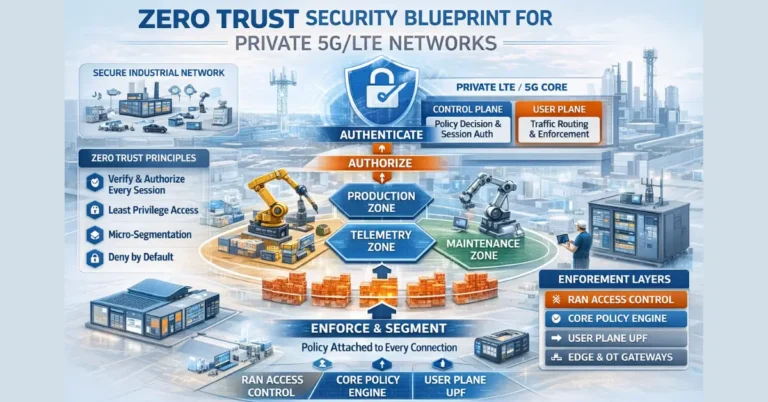
Enterprises are moving fast to private 5G to digitize operations, but the payoff only materializes if security scales with the new connectivity footprint. Private 5G brings deterministic wireless to factories, hospitals, ports, and energy sites, connecting robots, AGVs, cameras, and critical control systems. Security must follow identities and workloads, not subnets. Adopt a Zero‑Trust approach aligned to NIST SP 800‑207 with a single source of truth for identity and policy. Shift from perimeter controls to context-driven segmentation. Build on open standards and APIs to avoid lock‑in and simplify operations. Security must be foundational, measurable, and auditable from day one.
Tech News & Insight
Enterprises are moving fast to private 5G to digitize operations, but the payoff only materializes if security scales with the new connectivity footprint. Private 5G brings deterministic wireless to factories, hospitals, ports, and energy sites, connecting robots, AGVs, cameras, and critical control systems. Security must follow identities and workloads, not subnets. Adopt a Zero‑Trust approach aligned to NIST SP 800‑207 with a single source of truth for identity and policy. Shift from perimeter controls to context-driven segmentation. Build on open standards and APIs to avoid lock‑in and simplify operations. Security must be foundational, measurable, and auditable from day one.
Tech News & Insight
AI-driven experiences are flipping the traffic mix, pulling more capacity demand toward the uplink than U.S. mobile networks have historically planned for. Generative and vision-based AI are shifting usage from predominantly downloads to more continuous and bandwidth-heavy uploads. Recent benchmarking shows U.S. 5G networks prioritize downlink KPIs more than peers in Asia, even as uplink usage climbs. RootMetrics’ drive testing in late 2025 found all three U.S. carriers set roughly one-fifth of their midband Time Division Duplex (TDD) frame resources for uplink. That gap becomes material as AI, livestreaming, and enterprise camera workloads expand. U.S. carriers continued to win experience awards in early 2026, even as their uplink allocations trailed global leaders.
Tech News & Insight
AI-driven experiences are flipping the traffic mix, pulling more capacity demand toward the uplink than U.S. mobile networks have historically planned for. Generative and vision-based AI are shifting usage from predominantly downloads to more continuous and bandwidth-heavy uploads. Recent benchmarking shows U.S. 5G networks prioritize downlink KPIs more than peers in Asia, even as uplink usage climbs. RootMetrics’ drive testing in late 2025 found all three U.S. carriers set roughly one-fifth of their midband Time Division Duplex (TDD) frame resources for uplink. That gap becomes material as AI, livestreaming, and enterprise camera workloads expand. U.S. carriers continued to win experience awards in early 2026, even as their uplink allocations trailed global leaders.

Your Brand. Our Intelligence Tools.

Capture leads at the point of evaluation. Talk to Us →

Sponsored by Palo Alto Networks
⚡ Utilities ⏱ 8 min ✓ Free
This tool is built and hosted by TeckNexus.
Launch Tool →
Whitepaper
This whitepaper explains how utilities can use secure AI-enabled private mobile networks to modernize operations, support distributed intelligence, improve resilience, and strengthen cybersecurity across critical infrastructure. It covers AI applications, private network advantages, zero trust principles, multilayered security architecture, and governance considerations for AI-ready utility environments....
Palo Alto Networks
Whitepaper
Non-terrestrial networks are rapidly evolving from experimental satellite systems into an increasingly important part of the global 5G connectivity landscape. This eBook, developed by Radisys in collaboration with TeckNexus, explores how 3GPP standardization, satellite architecture innovation, and software-driven network design are reshaping NTN deployment models. It examines the transition from...
Whitepaper
Private cellular networks are transforming industrial operations, but securing private 5G, LTE, and CBRS infrastructure requires more than legacy IT/OT tools. This whitepaper by TeckNexus and sponsored by OneLayer outlines a 4-pillar framework to protect critical systems, offering clear guidance for evaluating security vendors, deploying zero trust, and integrating IT,...

It seems we can't find what you're looking for.

Featured Content

Article & Insights
Article & Insights
Article & Insights
Article & Insights
Article & Insights
Article & Insights
Article & Insights
Article & Insights
Article & Insights
Article & Insights
Article & Insights
Article & Insights
Article & Insights
Scroll to Top