MWC 2026 Keynote 7: Peering Into Culture’s Crystal Ball

Live Streamed on Tues, 3 Mar at 2:00 - 13:15 CET
This keynote peers into culture’s crystal ball to explore the long-range forces reshaping technology, medicine, and digital life. Frrom breakthroughs in health and personalised care to the evolving dynamics of online worlds, entertainment, Marketing and identity, this session brings together visionary leaders to examine how innovation is transforming not only what we build, but how we live, work, and connect. Together, they will unpack the signals, shifts, and emerging patterns that will define the next chapter of human experience, wellbeing, and culture.


Session Description

This keynote peers into culture’s crystal ball to explore the long-range forces reshaping technology, medicine, and digital life. From breakthroughs in health and personalised care to the evolving dynamics of online worlds, entertainment, Marketing and identity, this session brings together visionary leaders to examine how innovation is transforming not only what we build, but how we live, work, and connect. Together, they will unpack the signals, shifts, and emerging patterns that will define the next chapter of human experience, wellbeing, and culture.

Moderator: Cathy Hackl, Spatial AI Expert & CEO, Future Dynamics 

Keynote: AI as Infrastructure  – Azeem Azhar, Founder, Exponential View

Keynote: The Intelligence Dividend: Governing AI at Scale – Andrew Feinberg, CEO, BostonGene; CEO & Chairman, Netcracker

Keynote: Made to Create: How To Handle The AI Centric Customer Revolution – Rachel Thornton, CMO Enterprise, Adobe 

Fireside Chat: Beyond the Game: How Blizzard Is Engineering the Future of Digital Experience  – Johanna Faries, CEO, Blizzard

As entertainment, technology, and community continue to converge, Blizzard is undergoing a major evolution. This fireside conversation will explore how the company is transforming iconic franchises — World of Warcraft, Diablo, and Overwatch — from live games into interactive experiences that transcend a single platform. Themes include culture and leadership transformation, platform innovation, and the future of immersive entertainment.

Keynote Speakers

Cathy Hackl – Future Dynamics, Tech & Gaming Executive, CEO

Azeem Azhar – Exponential View, Founder

Andrew Feinberg – Co-Founder, President & CEO, BostonGene Corporation, Co-Founder, Chairman & CEO, Netcracker Technology

Rachel Thornton – Adobe, CMO, Enterprise

Johanna Faries – Blizzard Entertainment, President

Recent Content

Start: Sep 9, 2026
End: Sep 10, 2026
Venue: Kuala Lumpur, Malaysia
Location: Malaysia
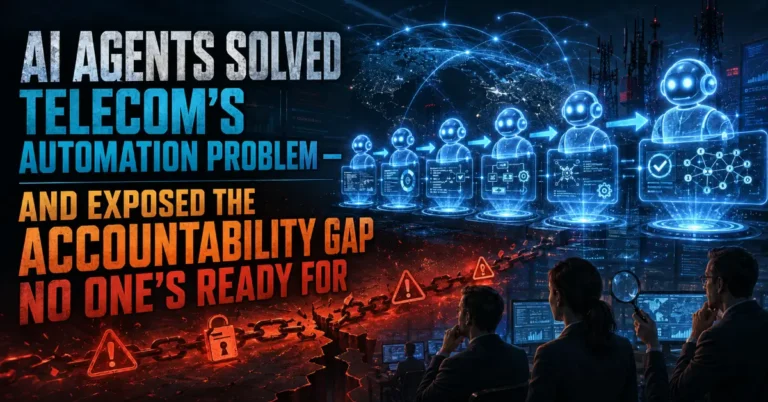
Telecom just crossed a line it spent years approaching carefully. AI agents are no longer confined to recommending fixes to network engineers — in a growing number of deployments, they're diagnosing faults and proposing remediations that a human simply signs off on, rather than performs. Nokia's work with Google Cloud is a clear marker of how far this has come: agents built on Gemini now sit inside Nokia's Assurance Center, and early results point to fault-resolution times cut by more than half, sometimes by as much as 80 percent. That's the part of the story getting the headlines. It's also, in a sense, the easy part... The harder question — the one the industry has mostly deferred — is what happens structurally once agents stop merely proposing and start acting, especially across more than one system at a time.
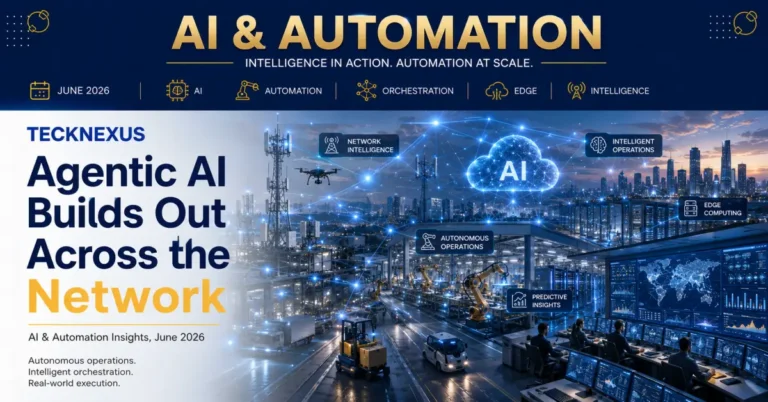
June 2026 showed agentic AI scaling from pilot to platform: industry-wide standards momentum, AI-RAN field trials from Nokia, Amdocs and KDDI, and fresh capital across data centers on three continents. This full roundup covers every deployment, partnership, funding round and governance move from the month, with tools to prioritise AI use cases and plan the network around them.
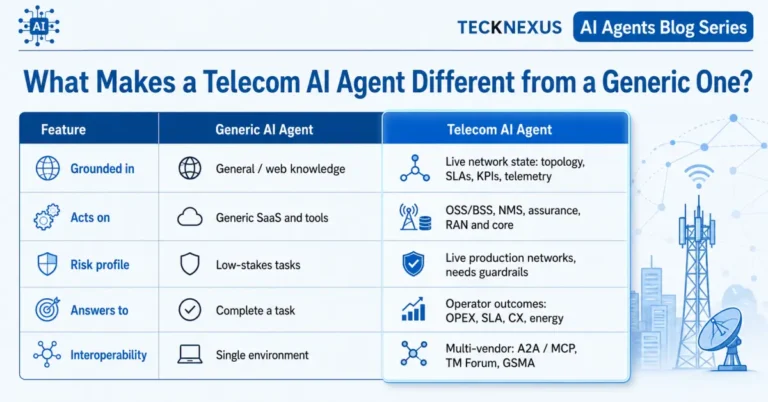
Telecom AI agents share the same anatomy as any AI agent - but grounding, systems, stakes, goals, and multi-vendor interoperability set them apart. Here are the five differences that matter, plus how to evaluate an agent before you trust it on a live network.
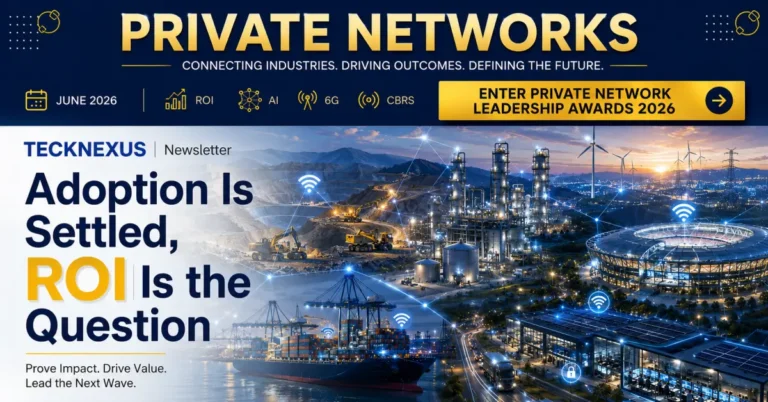
With GSA counting 2,003 private mobile network references, June 2026's story shifted from whether private cellular works to what it returns. This roundup covers TeckNexus's vertical ROI tools, 3GPP's confirmed 6G timeline, AI moving into the RF layer, CBRS SAS consolidation, and a widening set of verticals from mining to healthcare.
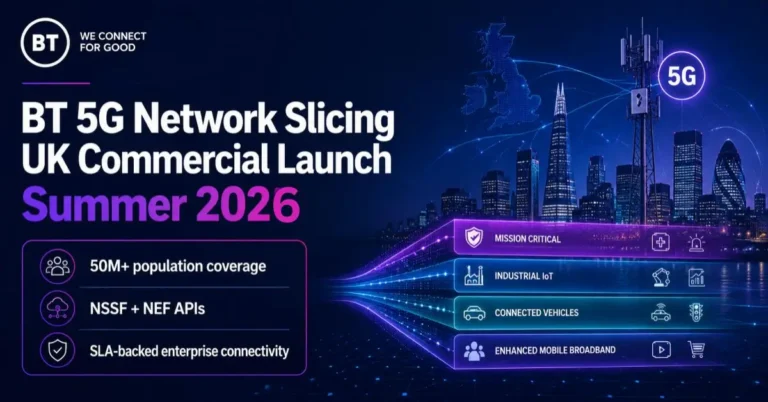
BT is set to launch commercial 5G network slicing services before the end of summer 2026, marking a significant milestone for the UK's 5G Standalone market. Built on Ericsson's dual-mode 5G Core and underpinned by dynamic slice selection via NSSF and programmable network access through NEF APIs, BT's offer targets both enterprise and consumer segments. With 5G SA coverage already reaching 50 million people and a 90% population threshold defining national availability, BT is positioning slicing as a credible, SLA-backed connectivity service — not a proof-of-concept.

Your Brand. Our Intelligence Tools.

Capture leads at the point of evaluation. Talk to Us →

Sponsored by Palo Alto Networks
⚡ Utilities ⏱ 8 min ✓ Free
This tool is built and hosted by TeckNexus.
Launch Tool →
Whitepaper
This whitepaper explains how utilities can use secure AI-enabled private mobile networks to modernize operations, support distributed intelligence, improve resilience, and strengthen cybersecurity across critical infrastructure. It covers AI applications, private network advantages, zero trust principles, multilayered security architecture, and governance considerations for AI-ready utility environments....
Palo Alto Networks
Whitepaper
Non-terrestrial networks are rapidly evolving from experimental satellite systems into an increasingly important part of the global 5G connectivity landscape. This eBook, developed by Radisys in collaboration with TeckNexus, explores how 3GPP standardization, satellite architecture innovation, and software-driven network design are reshaping NTN deployment models. It examines the transition from...
Whitepaper
Private cellular networks are transforming industrial operations, but securing private 5G, LTE, and CBRS infrastructure requires more than legacy IT/OT tools. This whitepaper by TeckNexus and sponsored by OneLayer outlines a 4-pillar framework to protect critical systems, offering clear guidance for evaluating security vendors, deploying zero trust, and integrating IT,...
Scroll to Top