Why 3GPP Issue 11 matters for telecom strategy and ROI
The latest 3GPP cycle consolidates 5G-Advanced (Release 18), sets the agenda for Release 19, and frames early 6G studies, with direct implications for operator investment, enterprise use cases, and vendor roadmaps.
5G-Advanced R18 implemented; R19 sets priorities
Release 18, the first phase of 5G-Advanced, is moving from standards completion into implementation, bringing carrier-grade enhancements in spectral efficiency, energy savings, and mobility performance. On the network side, R18 codifies AI/ML-assisted radio optimizations, enhanced positioning, more efficient multicast-broadcast services (MBS), sidelink relay for coverage extension, and tighter integration of non-terrestrial networks (NTN). For devices, RedCap (NR-Light) gains practical mobility and power improvements, making mid-tier IoT and industrial modules commercially viable. Release 19 now builds on these foundations, prioritizing further RAN efficiency, XR and video delivery at scale, richer analytics/exposure in the core (NWDAF, NEF/CAPIF), and enterprise-grade reliability across private and public networks.

Early 6G (R20) studies with pragmatic 5G evolution
3GPP stakeholders are initiating Release 20 studies aligned to ITU-R IMT‑2030, while insisting on evolutionary steps that preserve 5G investments. Expect the first 6G study items to look like ambitious 5G-Advanced extensions—network sensing, tighter AI-native control loops, extreme positioning, and greener RAN/core—rather than disruptive clean breaks. For executives, the message is pragmatic: sweat 5G assets harder through R18/R19 features while shaping requirements for R20 and beyond.
Key 3GPP technical themes for 2025 deployments
Several cross-TSG priorities will shape operator and vendor roadmaps as R18 transitions to deployments and R19 work accelerates.
RAN AI/ML optimization and energy savings
R18 introduces standardized hooks for AI/ML-assisted link adaptation, mobility robustness, and scheduling, with vendor implementations targeting Massive MIMO pairing and traffic prediction. R19 extends model management and inference placement, balancing what lives in RU/DU/CU versus near-real-time RIC (O‑RAN) and cloud. Pair these with R18 power-saving features (wake-up signaling, smarter DRX, channel-state overhead reduction) to bend the opex curve without sacrificing user experience.
RedCap (NR-Light) for cost-effective IoT and industrial
RedCap evolved from a paper spec (R17) to deployable profiles (R18) with better mobility, positioning, and battery life; R19 adds richer feature subsets and co-existence improvements. This is the sweet spot for wearables, industrial sensors, and video-capable IoT that outgrow LTE Cat‑M/NB‑IoT but don’t need full NR complexity. Chipset ecosystems (e.g., Qualcomm, MediaTek, UNISOC) are aligning, enabling operators to streamline SKU portfolios and accelerate 4G-to-5G IoT migrations.
NTN and direct-to-device satellite integration
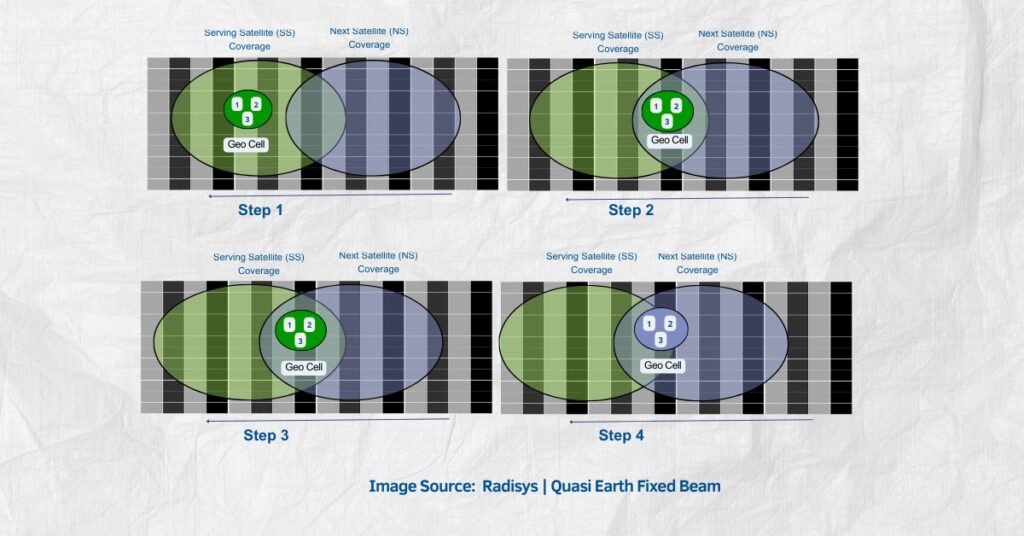
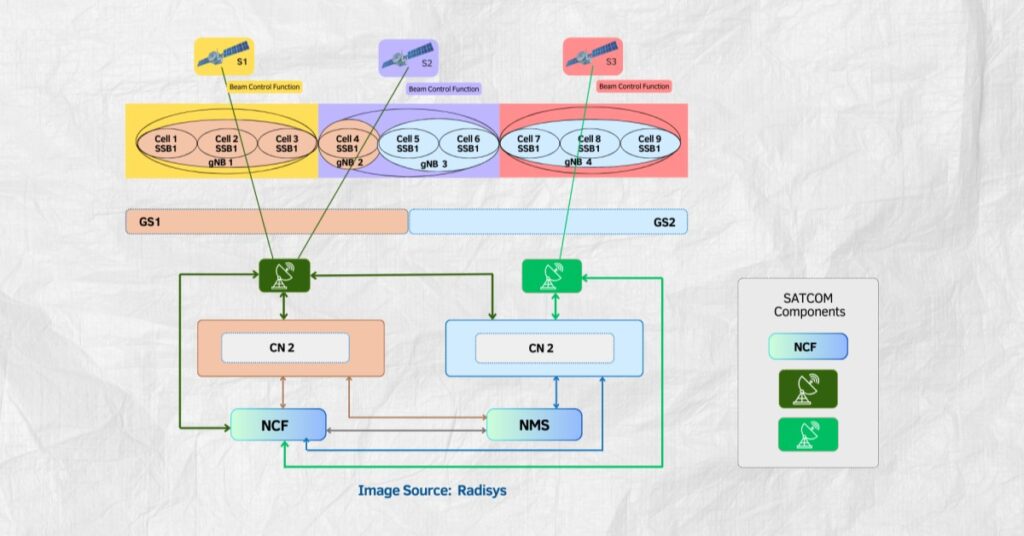
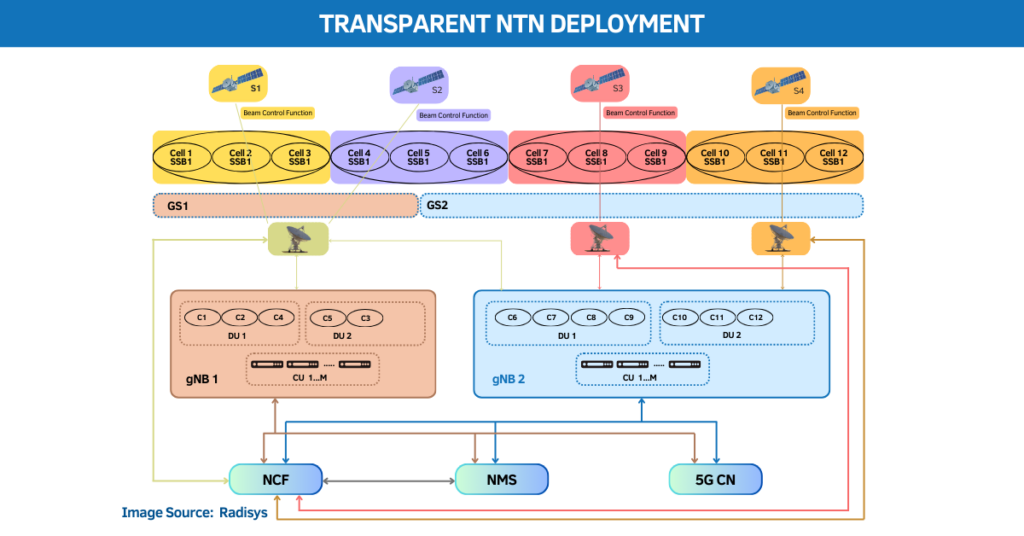
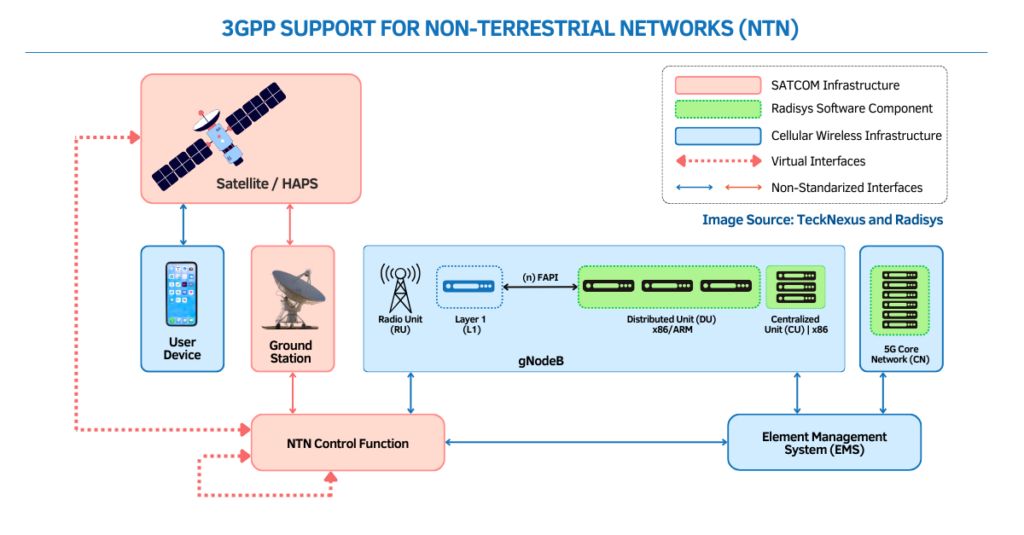
R17 put NTN on the map; R18/R19 evolve link budgets, mobility, emergency messaging, and device antenna constraints to make handheld-capable services viable over LEO/MEO. The near-term strategy is hybrid: terrestrial 5G for bandwidth, NTN for resilience and coverage in rural, maritime, and disaster scenarios. Watch for tighter mobility anchoring, broadcast assist, and roaming constructs between space and ground that keep core upgrades minimal.
Enhanced MBS for XR, venues, and automotive updates
Enhanced MBS in R18 enables spectrum-efficient content delivery for stadiums, software updates, and V2X map distribution; R19 targets better QoE control and mixed unicast/multicast sessions to support XR and dense venues. The economic lever is straightforward: offload repeat content from unicast to multicast while preserving session-level policy and analytics in the 5GC.
Edge, slicing, and exposure (NEF/CAPIF) to production
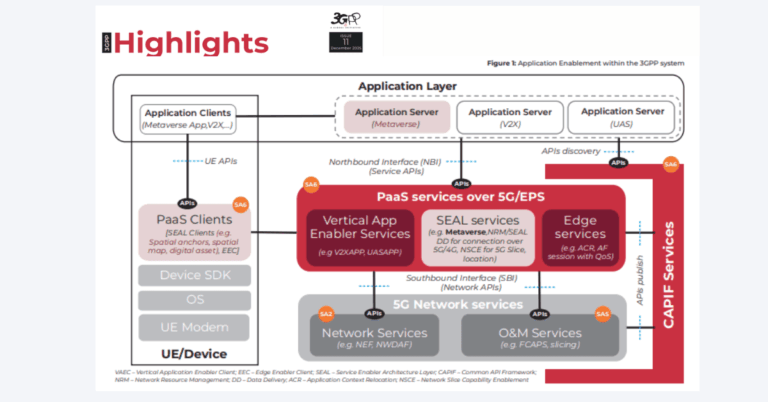
3GPP’s NEF and CAPIF give consistent northbound exposure; GSMA Open Gateway and CAMARA map these into developer-friendly APIs. R18/R19 enhancements to NWDAF analytics, policy feedback, and QoS/QoE monitoring make SLAs for enterprises and NPNs enforceable. Tie this with ETSI MEC alignment and you have the basis for revenue-grade slices and edge runtimes for manufacturing, logistics, and media.
5G security hardening and post-quantum readiness
SA3 continues hardening 5G with supply-chain attestation, SUCI privacy, and interconnect protections, while assessing post-quantum cryptography migration paths. R19 guidance will emphasize crypto-agility and phased upgrades that avoid forklift swaps in cores and UEs; start inventories and crypto-policy planning now.
Strategic implications for operators and vendors
Translating 3GPP progress into competitive advantage requires disciplined sequencing across spectrum, RAN, core, and partner ecosystems.
RAN optimization and spectrum planning
Prioritize R18 features with clear ROI: Massive MIMO AI optimizations, energy-saving modes, enhanced carrier aggregation, and MBS for offload. Align device roadmaps with RedCap and NTN timelines to avoid marooned spectrum. For mid-band densification, evaluate 6 GHz scenarios alongside existing 3.5 GHz and mmWave footprints, using R18 uplink and coverage features to right-size small-cell plans.
Core analytics, exposure, and enforceable SLAs
Deploy NWDAF domains for traffic prediction, anomaly detection, and QoE assurance, feeding PCC/PCF for closed-loop policy. Stabilize NEF/CAPIF as the substrate under GSMA Open Gateway APIs, and work early with anchor ISVs on rate limiting, tenant isolation, and observability to make slice/edge offers contract-ready. Use MOCN/MORAN plus roaming to extend enterprise reach before nationwide slice ubiquity.
Interoperability, certification, and operational governance
Budget for conformance and IOT with GCF/PTCRB-labeled features across R18 profiles; schedule IODT with strategic device partners for RedCap, NTN, and MBS. In operations, fold energy KPIs, ML model drift monitoring, and RIC policy governance into existing CI/CD and change-control workflows; treat AI in the RAN as a living software asset, not a one-off optimization.
Next steps and 2025–2026 priorities
Use Issue 11 as a checkpoint to lock 2025–2026 priorities and de-risk multi-release execution.
Action plan for mobile operators
– Select a focused R18 feature bundle for commercial launch in 2025 (energy efficiency, MBS, RedCap) and publish a device acceptance plan.
– Stand up an exposure/NWDAF pilot linked to one enterprise vertical, proving KPI-backed SLAs and monetizable APIs via Open Gateway.
– Launch an NTN trial with a satellite partner for resilience and extended coverage; validate mobility and emergency use cases with regulators.
– Start a post-quantum readiness assessment: inventory algorithms, define crypto-agility policies, and identify upgrade checkpoints in core and SIM/eSIM flows.
Action plan for enterprises and ecosystem partners
– Align private 5G and Wi‑Fi strategies with RedCap device roadmaps; target SKUs that reduce retrofit costs while enabling deterministic performance.
– For media, venues, and automotive, pilot enhanced MBS to cut unicast costs for updates and live content, with QoS-backed entitlements.
– Build to CAPIF/NEF-compatible APIs (via CAMARA) to avoid per-operator integrations and accelerate multi-country service rollout.
– Factor NTN options into business continuity designs for critical sites and mobile fleets, especially where fiber redundancy is impractical.
Bottom line and strategic takeaway
Release 18 moves 5G-Advanced from promise to products, Release 19 deepens performance and enterprise credibility, and Release 20 studies shape a pragmatic path to 6G—all offering concrete levers for operators to grow revenue and cut cost if they execute with discipline across RAN, core, and developer exposure. Link to the 3GPP Highlights Report