CAMARA

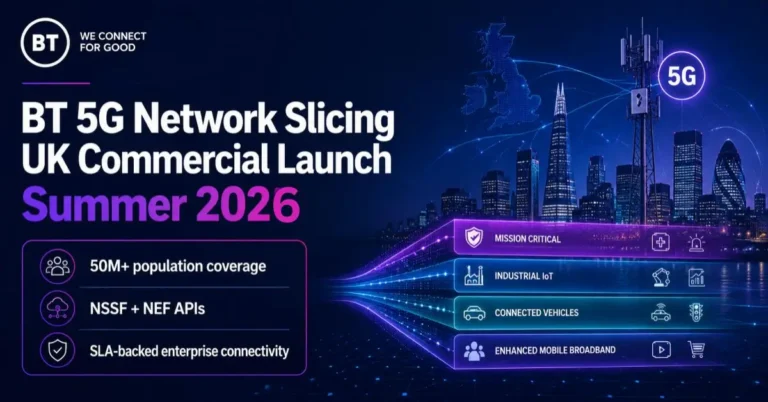
BT is set to launch commercial 5G network slicing services before the end of summer 2026, marking a significant milestone for the UK's 5G Standalone market. Built on Ericsson's dual-mode 5G Core and underpinned by dynamic slice selection via NSSF and programmable network access through NEF APIs, BT's offer targets both enterprise and consumer segments. With 5G SA coverage already reaching 50 million people and a 90% population threshold defining national availability, BT is positioning slicing as a credible, SLA-backed connectivity service — not a proof-of-concept.

Verizon posted 55,000 postpaid phone net additions, a modest beat that underscores stabilizing consumer trends and stronger execution in premium plans and broadband cross-sell. The net add beat is small in absolute terms, but strategically important: it points to improving churn and a healthier mix of high-value subscribers after several quarters of intense promotional pressure. Management coupled the result with a constructive outlook characterized by service revenue resilience and disciplined capital intensity, hinting at a tighter or modestly raised full‑year guide. For a market still digesting 5G investment cycles, this steady footing matters more than splashy net‑add gains.
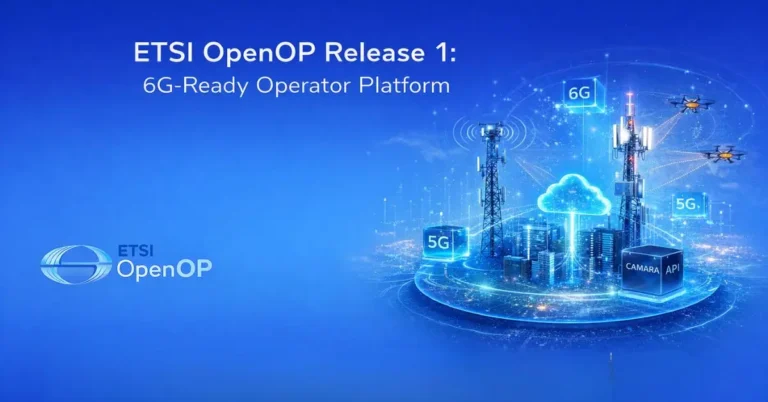
ETSI has introduced OpenOP Release 1 as an open-source operator platform for telco cloud, designed to standardize capability exposure and federation at the edge while creating a practical bridge from 5G-Advanced to early 6G experimentation. Networks are becoming software-first and distributed, but operators still face fragmented exposure of network capabilities and inconsistent approaches to multi-operator edge. OpenOP targets this gap with a standards-aligned, open implementation that lets developers consume telecom capabilities via CAMARA APIs and deploy applications across federated edge zones. Release 1 provides a working, end-to-end baseline with integrated components for exposure, orchestration, federation, and AI-assisted intent, suitable for hands-on testing and integration.
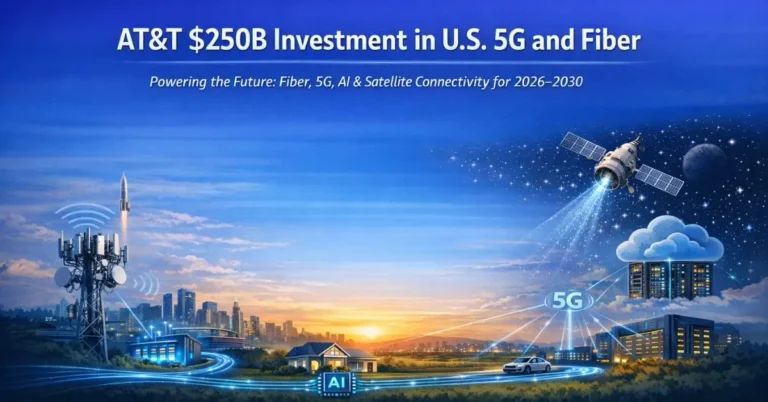
AT&T’s five-year, $250 billion U.S. network commitment sets the tone for the next phase of fiber, 5G, and satellite convergence as traffic, AI workloads, and resilience requirements climb sharply. The 2026–2030 window aligns with the industry’s transition into 5G-Advanced (3GPP Release 18/19), the scaling of edge AI, and increased cloud traffic between homes, enterprises, and hyperscalers. Data growth is no longer linear, and the cost of downtime is rising. Large, front-loaded builds in fiber and 5G Radio Access Network (RAN), paired with new satellite overlays, are how national carriers will chase coverage, performance, and reliability targets simultaneously.
Deutsche Telekom, Orange, Telefónica, TIM, and Vodafone unveiled a live, pan‑European edge federation at MWC 2026, marking a practical step toward an interoperable edge cloud that spans national borders. The five largest European operators demonstrated the European Edge Continuum, a federated edge capability now running in lab and pre‑production environments. The initiative provides a single entry point to deploy and manage applications across multiple operators’ edge nodes, with automated placement, security controls, and mobility‑aware continuity. The platform draws on components developed under the IPCEI‑CIS program backed by the EU’s NextGenerationEU funds, and is positioned for industrialization and commercial rollout next.
Telefónica and Nokia are piloting agentic AI to make network APIs easier to expose, discover, and consume, aligning with GSMA Open Gateway’s push for interoperable, developer-ready telecom capabilities. Industry efforts like GSMA Open Gateway and CAMARA have raised awareness of standardized network APIs, but uptake hinges on practical tooling that abstracts network complexity while preserving telco-grade security and control. Telefónica and Nokia are now testing agent-to-agent orchestration and context-sharing protocols to let AI “agents” reliably find, chain, and call network functions in a repeatable way.
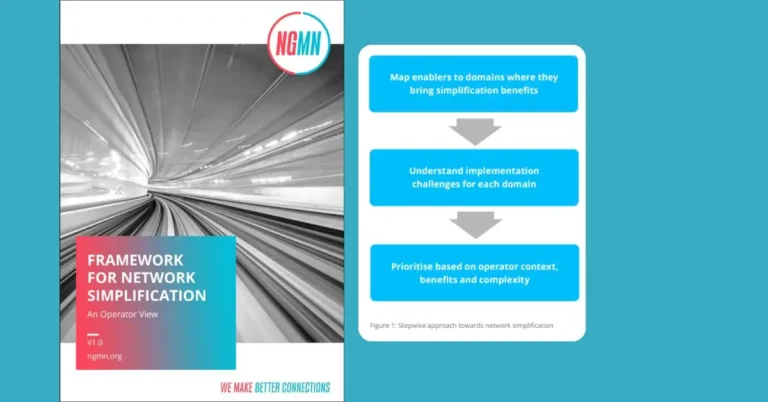
NGMN’s latest operator-led guidance frames simplification as a precondition for 5G efficiency, sustainability and service agility—not an optional clean-up exercise. NGMN’s new Framework for Network Simplification – An Operator View argues for targeted simplification across radio, core and transport to contain this sprawl while preserving the ability to launch differentiated services. The alliance places cloud‑native design, federated service exposure and AI‑driven operations at the center of that shift, supported by agile ways of working. Simplification is how operators square the circle—cut carbon and cost, while accelerating innovation. The publication offers a practical, non-prescriptive method to decide where simplification delivers the most benefit, and when complexity risk outweighs near-term gains.
GlobalGPT’s new mobile app signals a step change in how multimodal AI is consumed—shifting advanced reasoning, image and video generation, and research assistance into a pocketable, enterprise-ready workflow. With app availability on Google Play and support for both Android and iOS ecosystems, enterprises can plan for cross-device continuity, enabling employees to start a task on desktop and continue on mobile with minimal friction. GlobalGPT routes user prompts to advanced models such as GPT-5.2, Claude Opus 4.5, and Gemini 3 Pro to tackle analysis, explanations, and decision support beyond basic Q&A.
A European 6G-XR consortium led by Capgemini, Ericsson, i2CAT and Vicomtech demonstrated holographic calling and edge-anchored XR services on live standalone 5G, signaling how networks will evolve to support immersive collaboration at 6G scale. The team executed end-to-end trials of real-time holographic communication and distributed XR experiences spanning edge nodes across Barcelona and Madrid. To keep spatial media stable under cell load, the partners implemented proactive congestion detection and an on-demand quality mechanism that prioritizes holographic traffic. Notably, the consortium has referenced IMS Data Channel as a vehicle to anchor real-time holographic streams within operator service frameworks.
The latest 3GPP cycle consolidates 5G-Advanced (Release 18), sets the agenda for Release 19, and frames early 6G studies, with direct implications for operator investment, enterprise use cases, and vendor roadmaps. Release 18, the first phase of 5G-Advanced, is moving from standards completion into implementation, bringing carrier-grade enhancements in spectral efficiency, energy savings, and mobility performance. Release 19 now builds on these foundations, prioritizing further RAN efficiency, XR and video delivery at scale, richer analytics/exposure in the core (NWDAF, NEF/CAPIF), and enterprise-grade reliability across private and public networks.
India’s Department of Telecommunications has ordered major messaging apps to implement continuous SIM binding and frequent web re-authentication to curb fraud, with compliance expected in early 2026. The directive applies to app-based communication platforms that use mobile numbers as identifiers, including WhatsApp, Telegram, Signal, Snapchat, ShareChat, JioChat, Josh, and regional players like Arattai. Apps must continuously verify that the SIM linked to the registered number is present and active on the device, not just at account setup. Additionally, web sessions (e.g., WhatsApp Web) must auto-logout every six hours, forcing users to re-link via QR code.
Nvidia used NeurIPS to expand an open toolkit for digital and physical AI, with a flagship reasoning model for autonomous driving and a broader stack that targets speech, safety, and reinforcement learning. Nvidia introduced DRIVE Alpamayo-R1 (AR1), an open vision-language-action model that fuses multimodal perception with chain-of-thought reasoning and path planning, aiming to push toward Level 4 autonomy in constrained domains. To lower adoption friction, Nvidia published the Cosmos Cookbook with step-by-step recipes for data curation, synthetic data generation, inference, and post-training workflows, enabling customization for diverse physical AI use cases.

Partner Hubs

Download content, access intelligence tools, and hear from executives.

Partner Events

  • M360 ASEAN
  • FutureNet Asia 2026
Scroll to Top