Why Agentic AI Needs Efficient, Transparent, Controllable Stacks
As enterprises move from single-model chatbots to collaborative multi-agent systems, the economic and operational burden of reasoning at scale is becoming the dominant constraint.
From Chatbots to Multi‑Agent AI: Infrastructure and Cost Challenges
Agentic AI composes multiple specialized models to plan, retrieve, reason and act, but each step adds context-passing overhead, latency and cost. In telecom and other real-time environments, this manifests as rising GPU minutes per ticket, unpredictable tail latency and opaque decision chains that are hard to audit against policy or regulatory norms. Traditional dense models also struggle to maintain coherence across million-token, multi-hop tasks such as network diagnostics or customer journey remediation.

Nemotron 3: Open, Right‑Sized Stack for Agentic AI
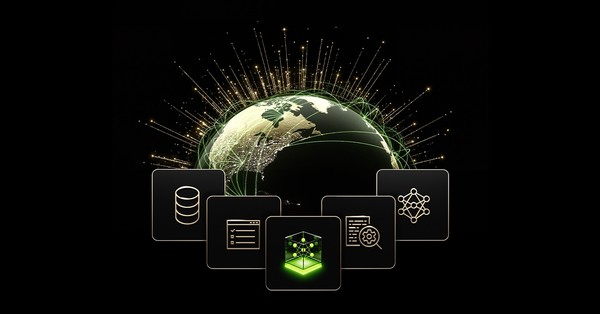
NVIDIA’s Nemotron 3 family introduces open models and tools designed to keep multi-agent systems fast, affordable and inspectable. The lineup spans Nano, Super and Ultra variants and is paired with open training data, reinforcement learning libraries and evaluation utilities so teams can customize agents for their own domains while managing safety and token-level cost.
Nemotron 3: Key Features and Upgrades
Nemotron 3 blends architectural efficiency with an open tooling stack aimed at long-horizon reasoning and multi-agent orchestration.
Hybrid MoE + Mamba‑Transformer for Long‑Context Reasoning
The models use a hybrid latent mixture‑of‑experts design to activate only a fraction of parameters per token, combining it with a Mamba‑Transformer approach optimized for long sequences. The result is higher token throughput, better long‑range dependency handling and lower inference cost for complex workflows with extended context windows.
Model Sizes: Nano, Super and Ultra
Nemotron 3 Nano is a small, roughly 30B‑parameter model that activates up to 3B parameters per token, making it efficient for retrieval, summarization, assistants and software debugging. Nemotron 3 Super scales to about 100B parameters with up to 10B active per token to support low‑latency coordination across many agents. Nemotron 3 Ultra targets advanced reasoning at roughly 500B parameters with up to 50B active, geared for complex planning and deep research tasks. Nano also brings a 1M‑token context window, enabling long‑horizon workflows with fewer context handoffs.
NVFP4 on Blackwell for Training Efficiency
Nemotron 3 Super and Ultra adopt NVIDIA’s 4‑bit NVFP4 format on the Blackwell architecture, reducing memory footprint and accelerating training without sacrificing accuracy relative to higher‑precision formats. This matters for teams aiming to train or adapt larger models on existing clusters, extending the usable life of deployed infrastructure.
Open Data, RL Libraries and Evaluation Tools
NVIDIA is releasing roughly 3T tokens of pretraining, post‑training and reinforcement learning datasets with rich examples of reasoning, coding and multi‑step workflows. The Nemotron Agentic Safety Dataset provides telemetry to evaluate agent behavior under real-world conditions. New open-source libraries — NeMo Gym and NeMo RL — supply training environments and post‑training foundations, while NeMo Evaluator streamlines performance and safety validation. The stack integrates with LM Studio, llama.cpp, SGLang and vLLM, and is available on GitHub and Hugging Face for broad access.
Why Nemotron 3 Matters for Telecom, 5G and Edge AI
Networks are becoming software-defined, distributed and data-saturated, which makes scalable, auditable reasoning a strategic capability.
Closed‑Loop Automation across RAN, Core and NOC
Multi-agent systems can triage alarms, correlate faults, and execute change with policy guardrails across RAN, transport and core. A hybrid MoE model like Nemotron 3 Nano can handle high-volume, short-context tasks (ticket classification, log summarization, playbook retrieval) at low cost, while a larger agent (Super or Ultra) plans root-cause analyses or orchestrates end-to-end service remediation. The 1M-token context helps preserve situational awareness across topology maps, time-series KPIs and runbooks — reducing context fragmentation that often causes drift.
Cost‑Aware Model Routing and Tokenomics
Enterprises increasingly route tasks between proprietary “frontier” models and efficient open models to balance accuracy and cost. Nemotron 3 is designed for this pattern: use Ultra or a proprietary model for hard reasoning spikes, and Nano or Super for the bulk of routine steps. This approach stabilizes GPU utilization, improves cost per resolved incident and shortens time-to-answer in TM Forum ODA-aligned workflows and ETSI ENI-like closed loops.
Sovereign AI: Data Locality, Auditability and Control
Operators in Europe and Asia pursuing sovereign AI need transparent models that can be adapted to local data and regulations. With open weights, open RL environments and deployment via NVIDIA NIM microservices on on-prem GPU estates, Nemotron 3 supports data residency, auditability and supply-chain flexibility across telco clouds and edge sites.
Ecosystem Partners and Availability
A broad partner network is forming around Nemotron 3, spanning clouds, ISVs and enterprise platforms.
Early Adopters, ISVs and Use Cases
Organizations such as Accenture, Cadence, CrowdStrike, Cursor, Deloitte, EY, Oracle Cloud Infrastructure, Palantir, Perplexity, ServiceNow, Siemens, Synopsys and Zoom are engaging with Nemotron to power workflows across manufacturing, cybersecurity, software development and communications. Developer ecosystems including Prime Intellect and Unsloth are integrating NeMo Gym training environments to speed reinforcement learning pipelines.
Deployment Options: Cloud, On‑Prem and NIM
Nemotron 3 Nano is available on Hugging Face and through inference services like Baseten, DeepInfra, Fireworks, FriendliAI, OpenRouter and Together AI. It is coming to AWS via Amazon Bedrock (serverless) and is supported across Google Cloud, CoreWeave, Crusoe, Microsoft Foundry, Nebius, Nscale and Yotta. For controlled deployments, NVIDIA NIM microservices allow secure rollout on NVIDIA‑accelerated infrastructure, enabling on‑prem and edge inference with consistent APIs. Nemotron 3 Super and Ultra are expected in the first half of 2026.
Next Steps for Telecom and Enterprise IT
Teams should test agentic patterns on cost-efficient models now and plan for staged upgrades as larger variants arrive.
Near‑Term Actions and Pilots
– Pilot Nemotron 3 Nano for high-volume workflows: ticket triage, log summarization, RAN KPI narratives, and knowledge retrieval.
– Stand up an agent router to dynamically split tasks across open and proprietary models based on cost, latency and accuracy targets.
– Use NeMo Gym, NeMo RL and NeMo Evaluator to build domain-tailored RL loops and establish safety gates aligned to operational policy.
– Prepare for on-prem rollout via NIM on existing H100/B200-class GPU nodes to meet data locality and availability requirements.
KPIs and Success Metrics
– Cost per 1,000 tokens by task class; agent handoff rate; average and 95th-percentile latency; false remediation rate; model switch accuracy; audit coverage for safety policies; and MTTR improvement for service incidents.
Risks, Gaps and Open Questions
Agentic AI introduces new operational risks that demand disciplined evaluation and governance.
Safety, Drift and Evaluation Debt Mitigation
Multi-agent chains can amplify errors if guardrails or evaluators are weak. Invest early in scenario libraries, adversarial tests and policy audits using Nemotron’s safety datasets, and track drift as network conditions change. Align observability with TM Forum and ETSI ENI practices to keep closed loops verifiable.
Timelines, Portability and Avoiding Vendor Lock‑In
Super and Ultra arrive in 2026, so plan for a two-phase roadmap: optimize with Nano now, then reassess routing and model mix upon release. Favor portable runtimes (vLLM, SGLang, llama.cpp) and NIM abstractions to hedge against lock-in across CSPs and on-prem estates. Keep an eye on memory economics with NVFP4 and how Blackwell capacity affects training and fine-tuning queues.