AI-Native 6G Executive Summary
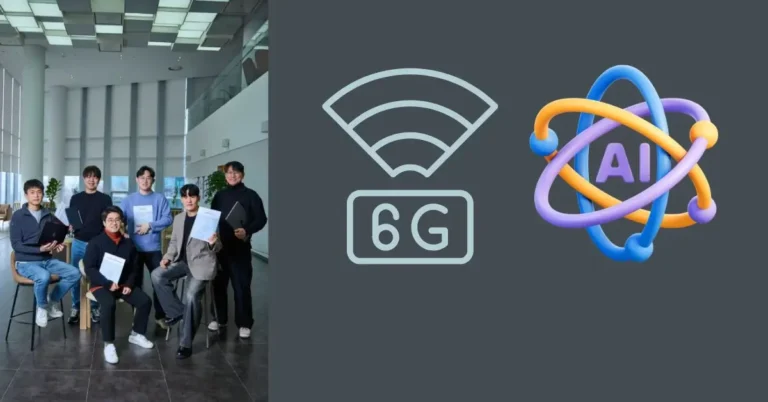
SK Telecom’s third 6G white paper, ATHENA, sets a pragmatic blueprint for AI-native networks that blend security, openness, and cloud-scale automation as the industry advances toward commercialization beyond 2030.

ATHENA Announcement and Scope
SK Telecom introduced ATHENA—an architecture grounded in AI-native operations, Zero Trust security, hyper-connectivity, openness, and cloud-native design—to guide mid- to long-term evolution across RAN, core, transport, and network data platforms. The operator positions “AI for network” and “network for AI” as dual tracks: the former embeds AI into decision loops for autonomous optimization, while the latter tunes the network fabric to serve AI workloads efficiently. SK Telecom will showcase related technologies at MWC Barcelona 2026, including AI agents for networks, AI-RAN for combined connectivity and compute, device-side AI for antenna tuning, and integrated sensing-and-communications. The company is engaging in 3GPP, ITU, the O-RAN Alliance, and serves on the AI-RAN Alliance board to align its architecture with emerging standards.
Why AI-Native 6G Matters Now
AI workloads are straining today’s networks, driving demand for deterministic performance, dynamic slicing, edge acceleration, and pervasive telemetry—capabilities that 5G-Advanced is only beginning to deliver. As operators chart 6G roadmaps and enterprises evaluate AI-driven operations, ATHENA offers an operator-grade reference for marrying automation with Zero Trust, using open ecosystems to compress time-to-value and reduce vendor lock-in.
ATHENA Pillars Explained
ATHENA is a strategic stack that codifies how SK Telecom intends to industrialize AI across the end-to-end network while preserving core values of security, stability, and quality.
AI-Native Automation and Agility
AI becomes intrinsic to control loops across all domains: forecasting traffic, allocating resources in real time, diagnosing anomalies, and orchestrating closed-loop actions via cloud-native pipelines. Agility comes from containerized microservices, CI/CD, and policy-driven automation that reduce change windows and opex.
Zero Trust Security and Ubiquitous Connectivity
Zero Trust reframes security as continuous verification at every layer, with identity-based controls, posture assessment, and encrypted east–west traffic. Ubiquity targets seamless continuity across terrestrial 5G/6G, non-terrestrial satellite links, private networks, and device-to-device paths to support mobile robots, industrial systems, and immersive applications.
Open Ecosystems and SLA-Driven Experience
Open interfaces and general-purpose hardware underpin multi-vendor integration aligned with O-RAN and cloud-native core norms. The customer experience imperative shifts from best-effort connectivity to outcome-centric SLAs, where telemetry and AI agents translate intent into service quality and revenue.
AI-Native 6G Architecture Blueprint
ATHENA details how radio, core, transport, and data platforms evolve to support autonomous networks and AI-heavy applications.
Virtualized Open RAN and Self-Optimizing Radio
RAN functions move to cloud infrastructure with open fronthaul/midhaul, enabling vendor diversity and flexible placement of compute. AI-RAN co-locates inference and training tasks near radios for real-time optimization—such as beamforming, interference mitigation, and device-specific antenna tuning—while supporting AI inference at the edge for enterprise and consumer use cases.
Cloud-Native Core and Deterministic Transport
The 5G/6G core advances through microservices and service meshes, enriching network exposure for intent-based management and application integration. Transport adopts segment routing and time-sensitive mechanisms to guarantee low-latency flows for AI pipelines, with telemetry feeding closed loops that balance cost and performance across IP/optical layers.
Unified Network Data Platform for AI
A unified data plane aggregates RAN, core, and transport telemetry, normalizes features, and serves AI agents for assurance, capacity planning, and security analytics. This platform also exposes datasets and APIs to enable ecosystem innovation and targeted monetization across consumer, enterprise, and developer segments.
Security and Openness Built In
ATHENA embeds Zero Trust and open ecosystems to mitigate risk while accelerating innovation and standards alignment.
Zero Trust Roadmap
Continuous authentication, identity-based segmentation, secure software supply chains, and encrypted observability are treated as baseline. The approach addresses advanced threats against AI models, control planes, and APIs, ensuring that automation does not widen the attack surface.
Standards Alignment and Ecosystem Strategy
Active roles in 3GPP and ITU keep ATHENA consistent with IMT-2030 priorities, while O-RAN participation advances open RAN maturity. Board membership in the AI-RAN Alliance positions SK Telecom to shape how AI workloads share infrastructure with radio functions, influencing RIC use cases, model lifecycle management, and interoperability profiles.
Business and Operational Impact
The white paper ties architecture choices to monetization, opex efficiency, and enterprise growth vectors as 6G timelines unfold.
6G Monetization Paths
AI-ready connectivity enables premium tiers: deterministic slices for inference traffic, integrated sensing for industrial automation, satellite augmentation for mobility, and managed private networks. Exposure of network capabilities via APIs can unlock partner-led applications that pay for performance guarantees.
Opex Efficiency through Automation
Closed-loop operations reduce ticket volumes, energy consumption, and time-to-repair. Virtualization and general-purpose hardware lower lifecycle costs while enabling faster feature velocity through CI/CD and A/B testing of AI models in production.
Risks, Governance, and Challenges
Key hurdles include model drift and governance, data residency and privacy, multi-vendor integration across O-RAN components, and securing software supply chains. Operators will need robust MLOps, standardized RIC interfaces, and clear policies for human-in-the-loop overrides.
Roadmap to MWC26 and Beyond
Near-term demos will preview how autonomic operations and AI-RAN translate into real network KPIs, ecosystem readiness, and enterprise adoption.
Near-Term Milestones and KPIs
Expect proof points at MWC26 on AI agents managing RAN/Core parameters in real time, on-device AI for RF optimization, and integrated sensing pilots. Watch for progress on multi-vendor interoperability under O-RAN profiles and tangible paths to align with 3GPP timelines for 6G study and specification phases.
Action Plan for Operators and Vendors
Start with AI-observable networks: invest in high-fidelity telemetry, a unified data platform, and model governance. Pilot RIC xApps/rApps in targeted clusters, align Zero Trust controls with AI pipelines, and prepare for mixed terrestrial–satellite footprints. For vendors and hyperscalers, prioritize open APIs, reproducible MLOps, and reference implementations that map to ATHENA-style architectures.
SK Telecom’s Strategic Context
Beyond technology showcase, SK Telecom’s push aligns with its broader AI infrastructure strategy and data center ambitions, aiming to convert automation and AI services into sustained revenue while de-risking operations through openness and security-by-design.