Rogers launches direct-to-device satellite for consumers and industrial IoT
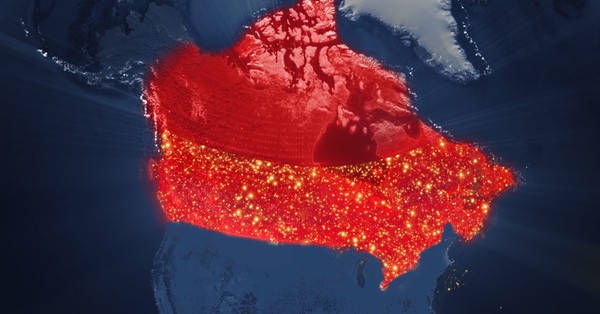
Rogers Communications has moved from beta to a commercial footprint for satellite-to-mobile in Canada, extending basic connectivity and select apps to consumer smartphones while adding an industrial IoT tier for remote operations.
Consumer apps now supported over satellite
The new Rogers Satellite service builds on its nationwide beta of satellite texting and text-to-911 by enabling a curated set of popular apps to work beyond terrestrial coverage, including WhatsApp calling, Google Maps, AccuWeather, X, and CalTopo on most modern smartphones.

Rogers positions this as “use the apps you already know” in dead zones, with the experience anchored in messaging-first services and lightweight data flows that are resilient to the higher latency and lower throughput of satellite links.
The company says the app catalog will expand as developers optimize their clients for satellite paths, a signal that Rogers is curating and testing app behavior to protect limited capacity while improving usability.
Industrial IoT tier for tracking and telemetry
In parallel, Rogers introduced satellite-to-mobile for IoT businesses, targeting asset tracking along highways and rail, as well as sensor telemetry in forestry, mining, and other resource sectors where terrestrial cellular is sparse.
This tier focuses on small payloads and periodic updates, aligning with low duty-cycle devices that can tolerate higher latency while prioritizing battery life and coverage reach.
Availability, plans, and pricing
Rogers reports more than one million satellite text messages sent during its free beta and is now offering Rogers Satellite to all Canadians for $15 per month, with select consumer plans including the service during promotional periods and beta users receiving a $5 monthly discount for 12 months.
The roadmap includes expanded data and full voice services, including 911 voice support for all Canadians, which would move the offer from “basic reachability” toward a more complete continuity layer.
Why it matters: the direct-to-device and NTN shift
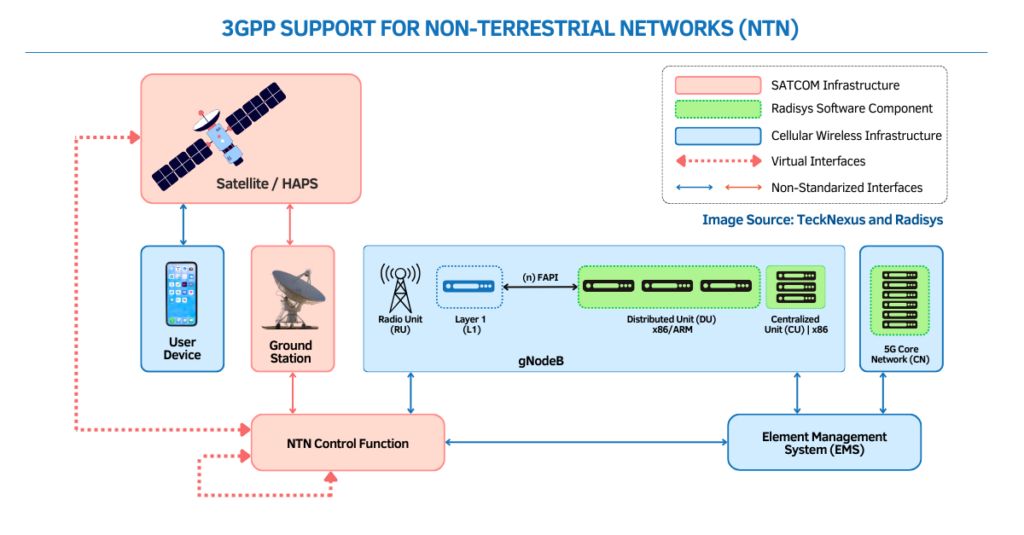
Rogers’ move is part of a broader industry shift toward non-terrestrial networks (NTN) that connect unmodified smartphones and IoT modules directly to satellites, shrinking North America’s coverage gaps without new end-user hardware.
From pilots to production service design
Early satellite-to-phone pilots proved feasibility; operators are now productizing around real-world constraints, including link budgets, intermittent coverage windows, and limited capacity per beam, which explains the phased rollout from texting to select apps and eventually to broader data and voice.
For enterprises, this translates into service levels that look more like a continuity or safety net than a full terrestrial replacement, requiring application and policy tuning.
Competitive landscape and market context
Across North America, carriers and satellite players are converging on direct-to-device models, with ecosystems forming around 3GPP NTN evolutions, device firmware support, and app optimization; Rogers’ first-to-market positioning in Canada sets a high bar for Bell and Telus while echoing global moves such as smartphone-based emergency messaging and operator-satellite tie-ups in the U.S. and Europe.
Enterprise and public sector impact
For operations leaders in transportation, energy, utilities, forestry, and public safety, the practical benefit is coverage assurance for people and machines in remote locations without deploying separate satellite terminals.
Priority use cases in remote operations
Fleet and rail operators can maintain breadcrumb trails, driver check-ins, and exception alerts across northern routes; miners and foresters can push sensor telemetry and worker safety pings from camps and cut blocks; municipalities and agencies gain a low-friction backup channel for field teams during wildfires, floods, or fiber cuts.
For field workforces, app continuity for maps and weather improves navigation, situational awareness, and time-on-task in fringe zones where conventional cellular fades.
Readiness checklist for deployments
Enterprises should audit their remote operations for coverage gaps, classify traffic by priority and payload size, and select apps that are satellite-tolerant by design; they should also test multi-path failover policies on smartphones and gateways, tune telemetry frequencies to conserve capacity, and embed satellite-aware SOPs into safety and business continuity plans.
Technical and operational considerations
Direct-to-device satellite brings new constraints that affect UX, app behavior, and economics, and understanding them will prevent surprises in the field.
Capacity, latency, and supported apps
Satellite links have higher latency and far lower per-user throughput than macro LTE/5G, so messaging and low-bandwidth voice/video codecs fare better than heavy real-time apps; organizations should favor compact payloads, retry logic, and offline-first designs, and expect a curated app list while the network scales.
Coverage, sky view, and device behavior in field
Service quality depends on sky visibility, location, and device orientation, with intermittent sessions likely at higher latitudes or dense canopy; users should expect session-based connectivity and plan for store-and-forward patterns, and mobility teams should include field training and battery impact monitoring in pilots.
Emergency services readiness and compliance
Text-to-911 support is live and 911 voice is on the roadmap, which will raise bar-setting expectations for reliability, location delivery, and regulatory compliance; public safety stakeholders should engage early to test call routing, location accuracy, and PSAP workflows under satellite conditions.
Next steps for decision-makers
Treat satellite-to-mobile as a strategic continuity layer and start structured pilots now to validate performance, policies, and ROI before scaling.
For telecom and network leaders: integration priorities
Map satellite coverage to critical routes and sites, define traffic classes that should use satellite vs defer, and integrate satellite as a policy target in SD-WAN/MDO and MDM; establish KPIs for message delivery times, time-to-first-fix, and power draw, and negotiate enterprise pricing for pooled IoT lines and field-worker add-ons.
For operations and IT leaders: app and policy actions
Select target use cases with clear value at low bandwidth, harden field apps for offline-first operation and small payloads, and integrate satellite events into SOC/NOC observability; update safety protocols to leverage satellite messaging for check-ins and SOS, and align procurement on devices and accessories that optimize sky view without increasing complexity.
Rogers’ launch marks a pragmatic step toward ubiquitous reach in a country defined by distance, and the organizations that operationalize it first will reap resilience gains while informing how the service matures from messaging to voice and richer data.