Vizag AI data city to bridge India’s compute deficit
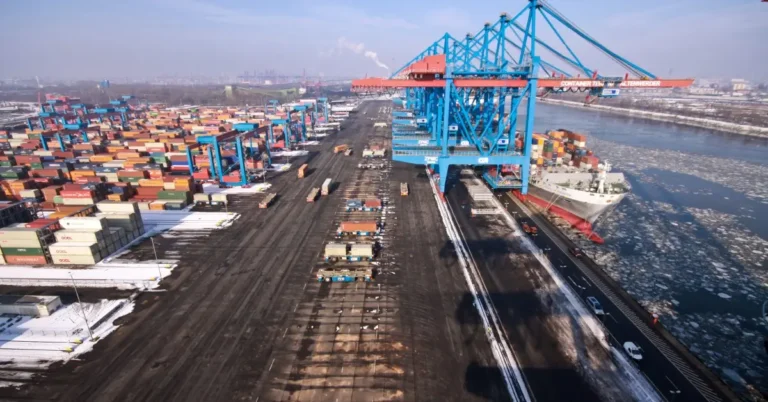
Visakhapatnam is being positioned as a 100-kilometer, integrated AI and data infrastructure cluster designed to anchor India’s next phase of digital growth.
100-km Vizag AI cluster: design, connectivity, and utilities
The plan centers on Visakhapatnam, a port city on India’s east coast, as a tightly coupled zone for data centers, subsea cable landings, power, water, and the digital supply chain. State leadership wants the cluster to be more than rack space. It aims to bring in server assemblers, power and cooling vendors, and specialized logistics to create end-to-end capability. The city is also being pitched as a landing point for new subsea systems toward Singapore, which would diversify India’s international connectivity beyond Chennai and Mumbai and lower latency into Southeast Asia.

Investments, incentives, and hyperscaler commitments
According to state officials, Andhra Pradesh has inked hundreds of investment commitments tied to the initiative. Google is said to be preparing a multi-billion-dollar spend for what would be its largest AI infrastructure hub outside the United States. A joint venture between Reliance Industries, Brookfield, and Digital Realty has announced an $11 billion data center program in the city. Nationally, Microsoft has outlined $17.5 billion to expand AI infrastructure in India, signaling hyperscalers’ intent to localize compute. The state is pairing these announcements with aggressive incentives, including nominal-cost land allocations for strategic projects, to catalyze a self-reinforcing ecosystem.
6GW capacity goal and power strategy
The target is six gigawatts of data center capacity in Andhra Pradesh, with roughly half reportedly committed and the balance in the pipeline. Power provisioning is central to the thesis. New Delhi has granted in-principle approval for six 1.2 GW nuclear units at Kovvada in the state, which, if realized, would underpin long-term baseload. Officials also point to monsoon water capture and reuse for cooling to relieve strain on municipal supplies. Expect a mix of grid upgrades, renewables-backed power purchase agreements, and advanced thermal designs such as liquid cooling to align with PUE and WUE targets demanded by hyperscalers and financiers.
Why Vizag matters for India’s AI infrastructure
If executed, Vizag’s “data city” could move India from AI consumer to AI infrastructure producer at meaningful scale.

Compute density as a strategic advantage
India sits just behind the US and China in several AI indicators, but access to high-end compute and energy-dense campuses remains a bottleneck. Consolidating subsea capacity, GPU-ready data halls, and power at an east-coast locus improves India’s reach into APAC routes and reduces the cost of AI training and inference for domestic and regional users. The timing aligns with a surge in generative AI investments, when proximity to capacity can decide where models are trained and where data gravity forms.
Localizing the AI stack and supply chain
The strategy signals a push to localize more of the AI stack. Beyond hyperscale halls, the state is courting server manufacturing, power distribution units, advanced chillers, and direct-to-chip liquid cooling vendors. That expands value capture, spreads jobs across construction, manufacturing, and operations, and reduces import friction in a geopolitically sensitive supply chain. It also dovetails with India’s broader electronics and semiconductor ambitions, standards like OCP-compliant designs, and adherence to ASHRAE TC 9.9 thermal guidelines for high-density deployments.
Execution risks, policy, and ESG considerations
Scale brings complexity, and the program’s success will hinge on power, water, workforce, and governance choices made in the next 12–24 months.
Power, water, and grid constraints at scale
Nuclear approvals are multi-year endeavors with permitting, financing, and grid integration hurdles. Near term, data centers will lean on the existing grid and renewables PPAs, with reliability and cost as critical watchpoints. Cooling water plans must account for monsoon variability and coastal ecology, balancing WUE gains with environmental impact. Expect investor scrutiny of PUE and WUE disclosures, heat reuse opportunities, and adherence to emerging sustainability reporting frameworks.
Workforce, skilling, and inclusive growth
Steady-state data center operations do not employ large numbers, raising questions about net job impact. The state’s broader cluster plan—construction, component manufacturing, facilities engineering, and network operations—can change that math if skilling keeps pace. Priority areas include HV electrical, liquid-cooling maintenance, DCIM automation, fiber deployment, and AI/ML ops. Partnerships with universities and workforce programs will be pivotal to avoid a talent bottleneck.
Land governance, ESG, and data protection
Ultra-low-cost land allocations accelerate buildouts but heighten scrutiny on land acquisition practices, community impact, and coastal resilience. Operators will need robust ESIA processes, climate risk assessments for cyclones and sea-level rise, and certifications such as Uptime Tier ratings and ISO 14001. Data protection and sovereignty requirements under India’s Digital Personal Data Protection Act will shape facility design, peering, and data residency strategies for regulated sectors.
Demand outlook and overbuild risk
Six gigawatts is ambitious. Demand from AI training, sovereign workloads, and enterprise cloud repatriation must materialize at pace to absorb it. Factors to monitor include GPU supply chains, interest rates and financing costs, cross-connect pricing at new IXPs, and the trajectory of model efficiency and inference offload to edge sites. Overbuild would pressure returns; underbuild would push workloads offshore.
What carriers, clouds, and enterprises should do now
Early movers can shape standards, secure scarce capacity, and lock in cost advantages as the cluster takes form.
Actions for carriers and subsea consortia
Prioritize new landing stations, diverse east–west backhaul across Andhra Pradesh, and open-access meet-me facilities to anchor peering. Explore participation in forthcoming subsea systems toward Singapore and beyond, and pre-provision dark fiber and spectrum on key terrestrial routes to Hyderabad, Chennai, and Bengaluru. Establish neutral IXPs to attract hyperscalers and CDNs from day one.
Steps for cloud, AI, and hardware vendors
Engage early with the Reliance–Brookfield–Digital Realty JV and state agencies to shape power profiles, liquid cooling readiness, and rack densities for GPU clusters. Consider onshoring server assembly and power/cooling components to benefit from incentives and shorten supply chains. Align designs with OCP and liquid cooling standards to accelerate approvals and scale.
Guidance for enterprises and systems integrators
Map regulated workloads to prospective Vizag availability zones to meet data residency and latency needs. Pre-negotiate capacity, renewable-backed PPAs, and cross-region DR between east and west coast cities. Design hybrid architectures that burst AI training to Vizag while keeping sensitive inference at the edge or on-prem.
Key signals and milestones to track
Track final investment decisions and construction starts, GPU import and export policies, long-term PPAs tied to nuclear and renewables, water reuse mandates, and the pace of new subsea cable announcements. Monitor state and central incentives, carbon accounting rules, and interconnect pricing at neutral exchanges.
Bottom line for India’s Vizag AI data city
Visakhapatnam’s “data city” is India’s boldest attempt yet to concentrate compute, connectivity, and energy at scale for AI. The opportunity is real, the execution bar is high, and the winners will be those who lock in power, cooling, fiber, and skills ahead of demand while meeting rising ESG and data sovereignty expectations.