2027 Intelligence Programs

5G Services and Monetization Strategy

Introduction to 5G Services Launched Globally

5G services, commercially launched in April 2019, have marked a significant milestone in the evolution of digital connectivity. Within the first year, various global digital service providers have introduced an array of 5G services. These services not only demonstrate the vast potential of 5G technology but also reveal diverse monetization strategies. Additionally, these services often leverage additional technologies alongside 5G to enhance delivery and functionality.

Sample 5G Services Launched by Global Service Providers

Integrated Healthcare 5G Service by AT&T and Rush University System for Health: This pioneering initiative harnesses the power of 5G and Multi-Access Edge Computing (MEC) to revolutionize healthcare. It focuses on enhancing patient care through technology-driven therapies, employing service robots equipped with artificial intelligence for various hospital tasks. The fast transmission capabilities of 5G enable quick sharing of large medical image files, facilitating better and timely medical decisions. Additionally, this collaboration aims to improve hospital energy efficiency, optimizing operations and reducing costs.
eHealth 5G Service with AT&T and VITAS Healthcare: This service addresses the unique needs of hospice care by using 5G-enabled virtual reality (VR) systems. It offers immersive experiences that help alleviate chronic pain and anxiety among patients, transporting them virtually to serene environments or historical sites for therapeutic purposes. This innovative approach introduces a new dimension to palliative care, making it more effective and humane.

Public Safety 5G Service – FirstNet with AT&T and Nellis Air Force Base: AT&T’s collaboration with Nellis Air Force Base under the FirstNet initiative provides comprehensive 5G infrastructure support. This service enhances various aspects of base operations, including advanced flight line activities, virtual reality-based training for personnel, and near real-time inventory and logistics management. It ensures that over 40,000 Air Force personnel, their families, and retirees receive efficient and secure communication services.

eRetail 5G Service by AT&T and Badger Technologies™: This collaboration is set to transform the retail sector by deploying autonomous robots for efficient inventory management and hazard detection. Leveraging 5G and MEC, these robots streamline store operations, improve customer experiences, and ensure safety by promptly identifying and addressing store hazards and stock inconsistencies.

Smart Factory 5G Service by SKT and SK Hynix: Aimed at enhancing semiconductor manufacturing, this service uses 5G and MEC to detect defects in semiconductor products swiftly. It contributes to more efficient management of production processes and logistics, significantly reducing the time and resources spent in quality control.

Remote Game Learning 5G Service by NTT DoCoMo and PGA: This unique service offers remote golf lessons, where AI technology analyzes 5G-captured footage of players’ swings. It provides golf enthusiasts with personalized feedback and improvement tips, making learning more accessible and efficient.

Digital Learning 5G Service by AT&T and Deloitte University: This service leverages 5G, Edge Compute, and immersive mixed reality to elevate corporate learning programs. It offers a more engaging and interactive educational experience, enhancing the effectiveness of corporate training and overall guest experiences at Deloitte University.

Event Experience by Verizon: Verizon is enhancing the stadium experience by introducing 5G, which allows fans to enjoy high-capacity networks with faster download speeds and reduced latency. This service significantly improves the overall event experience, enabling fans to engage with various digital offerings seamlessly while enjoying live events.

Road Learner by SKT and Seoul Metropolitan City Government: In collaboration with the Seoul Metropolitan City Government, SKT is developing a 5G-based autonomous driving infrastructure. The service focuses on maintaining up-to-date high-definition maps essential for the operation of autonomous vehicles, ensuring safer and more efficient urban transportation.

Autonomous Vehicle Safety 5G Service by SKT: SKT’s ‘Next Generation Single Photon LiDAR’ technology, integral to this service, is set to enhance the safety of autonomous vehicles. The advanced LiDAR system, with its long-range detection capabilities and accuracy even in adverse weather, ensures safer navigation for autonomous vehicles.

Vehicle Infotainment (IVI) 5G Service by SKT: This comprehensive infotainment system integrates navigation, AI, music streaming, and OTT services, providing a seamless and enriched in-vehicle entertainment experience. It caters to the evolving needs of modern drivers and passengers, offering a diverse range of entertainment options.

eSports Services by SKT: SKT has introduced several eSports services, including augmented reality experiences, VR-based live broadcasting, and VR replays. These services offer fans immersive ways to experience eSports, bringing them closer to the action and enhancing their viewing experience.

ePark 5G Service by SKT: This innovative AR service, launched in parks like Olympic Park and Yeouido Park in Seoul, uses augmented reality to create interactive experiences for park visitors. By utilizing their smartphones, users can see and interact with virtual animals and mythical creatures, such as giant cats and wyverns, superimposed onto the real-world park environment. This service not only provides a unique recreational activity but also demonstrates the potential of 5G in enhancing public spaces with digital experiences.

eGaming 5G Service by Sprint: To capitalize on the high-speed capabilities of 5G, Sprint introduced a special offer where users could enjoy a 90-day free trial to instantly play more than 100 mobile games. This service, available on 5G phones, exemplifies the potential of 5G in transforming the gaming industry by eliminating the need for lengthy downloads and enabling smoother, more responsive gameplay.

Responsive Gaming 5G Service by Verizon: Verizon’s service targets the gaming sector by offering console-quality multiplayer gaming that can be enjoyed on the go. This service takes advantage of 5G’s low latency and high-speed capabilities, providing a seamless and immersive gaming experience that rivals traditional console gaming.

Multi-view ESports 5G Service by Korea Telecom (KT): KT’s service provides a 360-degree media experience, enhancing the viewing of e-sports and high-quality music content. This service is designed to maximize user engagement by utilizing the ultra-fast, low-latency network of 5G, offering a more immersive and interactive way to enjoy eSports and music.

AR Video Call by South Korea Telecom (SKT): SKT’s ‘Callar for Sero TV’ service integrates their AR video call technology with Samsung’s Sero TV. This innovative service offers enhanced AR video calling experiences by applying facial recognition, real-time background and portrait segmentation techniques, and ultra-high-definition technology. It allows users to enjoy a more interactive and engaging video call experience by linking their smartphones to Sero TV.

Watch and Play by SKT: This service is a real-time interactive game platform that combines gaming with broadcasting. It enables users to choose between watching a game and jumping into playing it. This platform offers a unique and exciting experience, allowing users to engage more actively with the games they are interested in.

These diverse 5G services, launched by global digital service providers, highlight the extensive range of applications that 5G technology can offer across various sectors. From healthcare and public safety to retail, gaming, and entertainment, 5G is paving the way for innovative solutions that enhance efficiency, user experience, and overall quality of life.

Monetization Strategies for 5G Services

  1. 5G Access Plans: Providers like AT&T and Verizon have introduced plans that include an additional charge (e.g., $10/month) for 5G network access.

  2. Quality of Service (QoS) Based Charging: An example is Vodafone UK’s “unlimited max” plan, which offers differentiated pricing based on service quality.

  3. 5G Value-Added Service Plans: These plans include enhanced services like TV and sports in 4K, ultra-high definition, and augmented reality and virtual reality-based e-sports.

Conclusion and Future Prospects

As 5G network coverage expands globally, the adoption of these innovative 5G-based services is expected to grow. Service providers are continuously exploring new avenues for value addition, either independently or in conjunction with ecosystem partners. This first year of 5G deployment has set a strong foundation for future advancements in digital connectivity, opening doors to unprecedented service offerings and customer experiences.


2027 Intelligence Programs

Related Content

Tech News & Insight
AI clusters require dramatically more optical interconnect per unit of compute than previous data center generations, pulling transceiver speeds from 800G toward 1.6T and driving early adoption of co-packaged optics. TeckNexus examines the technology shift, why AI workloads consume so many more optical ports, and the electro-absorption laser supply constraint that has become a genuine lead-time risk for AI infrastructure buildouts.
Tech News & Insight
AI training and inference clusters are built from two architecturally distinct interconnect layers: scale-up, tightly coupling accelerators within a server or rack via technologies like NVLink and NVSwitch, and scale-out, connecting racks together via InfiniBand or RDMA-enabled Ethernet. This guide explains how each layer works, why modern AI clusters combine both, and the ongoing Ethernet-versus-InfiniBand debate at the scale-out layer.
Tech News & Insight
AI agent vendor lock-in isn’t determined by which language model powers the agent, that layer is increasingly commoditised. It’s determined by three architectural choices made well below the model layer: how the business context layer is stored, whether system integrations use open standards, and how portable the orchestration logic actually is. This guide sets out a practical checklist for evaluating agent portability before committing to a platform, not after.
Tech News & Insight
Token pricing gets the most attention in AI agent cost discussions, but it’s often the smallest lever available. This guide extends TeckNexus’s earlier token economics analysis specifically to AI agents, covering how model tier choice, retrieval design, and escalation handling costs combine to determine an agent deployment’s real economics, and how to build a cost model that captures all three rather than token spend alone.
Tech News & Insight
A proposed industry framework for AI agent incident reporting is a useful starting point, but it only protects a specific buyer once its principles are written into an enforceable contract. This guide sets out the four things effective incident-reporting contract language needs to specify, and how to introduce that language into both new vendor contracts and existing agreements at renewal.
Tech News & Insight
Human-in-the-loop is the default governance answer to AI agent risk, but a human formally approving decisions and a human genuinely evaluating them are not the same thing once volume and speed increase. This guide identifies the warning signs that review has degraded into rubber-stamping, and sets out practical design choices, sampling, interface friction, reviewer rotation, and volume limits, that keep human oversight functioning as a real control rather than a formality.
Tech News & Insight
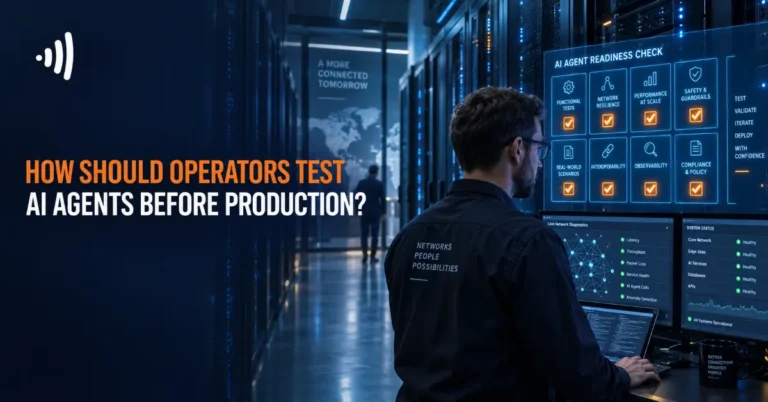
A benchmark score or a successful demo tells you almost nothing about whether an AI agent is ready for production in a live telecom environment. This guide sets out the four dimensions a genuine pre-production test plan needs to cover — repeatability across multiple runs, exception handling for novel scenarios, a tested rollback path, and a human override mechanism that actually works under real time pressure.
Tech News & Insight
Network operations AI agents, however they’re marketed, run on a common sense-decide-act control loop. This guide breaks down the architecture, examines a real closed-loop assurance deployment, and explains why multi-vendor coordination between agents is a harder and more consequential architectural problem in telecom than in most other enterprise AI environments.
Tech News & Insight
The term ‘AI agent’ spans an enormous range of actual capability in telecom, from suggestion-only assistance to fully independent execution. This guide uses TM Forum’s Autonomous Networks levels framework to give a structured way to evaluate where any specific vendor or operator claim actually sits, and why network operations, back-office workflows, and customer-facing AI tend to sit at different points on that spectrum.
Tech News & Insight
M360 ASEAN closes with a call for governments and industry to connect national digital strategies into a more integrated, interoperable regional digital economy.
Tech News & Insight
M360 ASEAN closes with a call for governments and industry to connect national digital strategies into a more integrated, interoperable regional digital economy.
Tech News & Insight
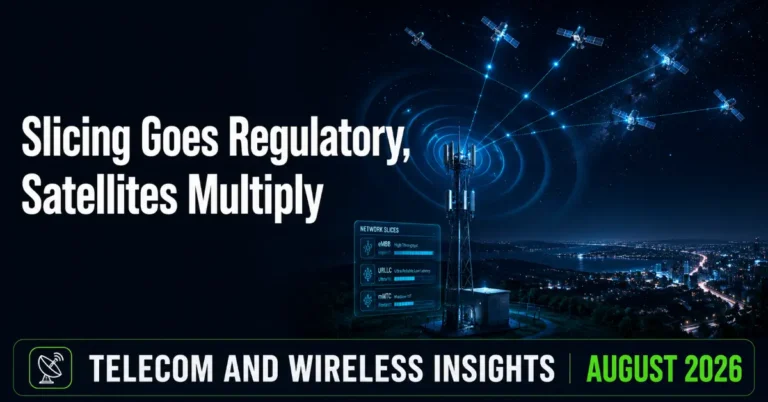
August 2026’s roundup: EE launches the UK’s first commercial 5G slicing service as India’s regulator moves first to mandate per-slice tariffs and disclosed speeds, AI-RAN validation reaches SoftBank’s live Japanese network, satellite operators from AST SpaceMobile to Elveo Mobile jockey for direct-to-device position, and Charter’s completed Cox mega-merger reshapes the US cable map.
Tech News & Insight
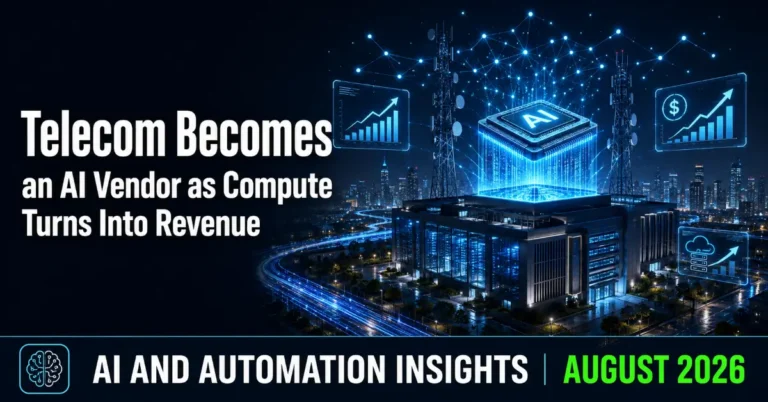
August 2026’s roundup: operators from SK Telecom to Ooredoo built or monetized AI infrastructure directly, AI-RAN validation reached the device and per-user level, agentic AI moved deeper into live network operations, and governance caught up with a watermarking mandate, an incident-reporting coalition, and a hard look at why AI inference costs keep rising even as token prices fall.
Tech News & Insight
AI agents rely on five core components: perception, learning, reasoning, action, and communication. This guide explains how each component works, how memory, planning, and tool use fit into modern agent architectures, and how these capabilities are applied across industries. See how your own company compares across the broader telecom AI agent ecosystem — vendors, OSS/BSS providers, system integrators, and operators.
Tech News & Insight
One week until the ministers, regulators, operator CEOs, technology leaders and investors transforming ASEAN’s digital future convene in Kuala Lumpur
Tech News & Insight
One week until the ministers, regulators, operator CEOs, technology leaders and investors transforming ASEAN’s digital future convene in Kuala Lumpur
Tech News & Insight
Private 5G business cases are usually built with care: radios counted, spectrum priced, TCO compared against the Wi-Fi estate it replaces. What they rarely price is the cost of operating a mobile network, which the enterprise has just acquired along with the radios. This article sets out the five operational disciplines an enterprise inherits on day one, why managed-service SLAs thin out around year two, indicative five-year cost ranges for fully managed, hybrid and in-house models, and eight questions worth answering before signing.



Tech News & Insight
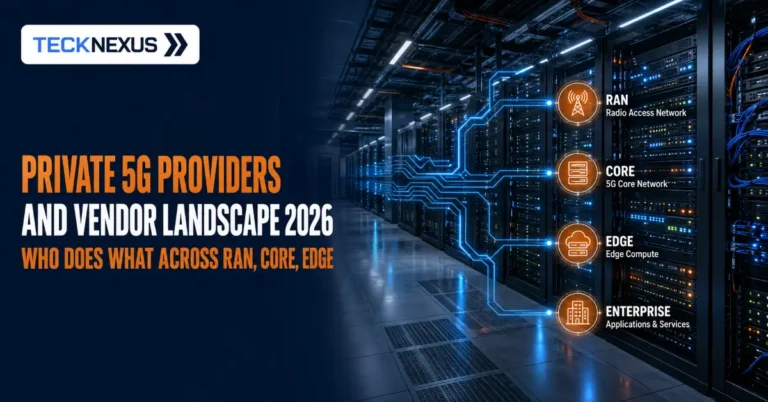
Private 5G deployments are built from four distinct vendor layers — RAN, core, edge, and systems integration — each with its own specialist vendor landscape and evaluation criteria. This guide breaks down what each layer covers and who operates in it, as a foundation for structured, comparable vendor evaluation rather than an unstructured single-vendor comparison.
Tech News & Insight
Spectrum access shapes cost, control, and deployment speed more than almost any other private 5G decision. This guide compares directly licensed spectrum, CBRS-style shared access, other national shared frameworks, and the emerging leased spectrum model, including how a 2026 port authority procurement proved the leasing path out in practice, to help enterprises choose the right model for their market and deployment scale.
Tech News & Insight
Private 5G has become mainstream industrial infrastructure, but the decisions behind a deployment — architecture ownership, spectrum access, vendor selection, cost modelling, and rollout planning — are still frequently evaluated in isolation. This pillar guide lays out how the five core decisions fit together, giving enterprises a starting framework before going deeper into any single decision area.
Tech News & Insight
Telecom operators cutting headcount while pouring capital into AI infrastructure, and chipmakers financing fabs at infrastructure scale, are two sides of the same reallocation. TeckNexus traces the connections across SK Telecom, KT, LG Uplus, T-Mobile, AT&T, Verizon, Nvidia, SK hynix, and SpaceX to show how the AI buildout has become the organising logic the telecom and semiconductor industries are restructuring around.
Tech News & Insight
Glide.id’s MagicalAuth, launched in public beta with AT&T, T-Mobile US, and Verizon, replaces SMS one-time passcodes with hardware-rooted authentication anchored in the SIM or eSIM itself, verified through open network APIs. TeckNexus examines how this differs structurally from SMS OTP, why the three-carrier coverage threshold matters, and why the underlying infrastructure is likely to become directly relevant to enterprise IoT and OT device identity verification, even though today’s launch is consumer-facing.
Tech News & Insight
India’s telecom regulator now requires operators to treat each 5G eMBB network slice as its own tariff, with mandated disclosure of measured — not advertised — speeds, and defined non-compliance. TeckNexus examines what this regulatory precedent means for network slicing as a commercial product, how it differs from the enterprise-grade slicing arrangements industrial buyers typically negotiate directly, and why the underlying principle — measured, disclosed, and enforceable slice performance — is worth building into SLA negotiations regardless of where a buyer operates.
Tech News & Insight
Lockheed Martin’s upcoming 5G drone detection service on Verizon’s network, and AT&T’s cloud-managed Video Intelligence platform, both point at physical security AI capabilities moving from owned, standalone systems toward managed services delivered over carrier 5G networks. TeckNexus examines what that delivery shift means for procurement decisions at airports, ports, and utilities — and where the dependency trade-offs sit relative to standalone systems.
Tech News & Insight
A coalition of more than 120 organisations, including Nvidia, Cisco, and CrowdStrike, has proposed a standardised framework for documenting and sharing AI agent security and operational incidents — modelled on existing incident-reporting standards in cybersecurity and aviation. TeckNexus examines what the framework would standardise, what those established precedents suggest about whether it can achieve broad, honest participation, and why it matters as a concrete due-diligence tool rather than an abstract governance principle.
Tech News & Insight
A blueprint presented at Huawei South Africa Connect 2026 lays out a layered mining connectivity and AI architecture in unusual technical detail: private 5G for open-pit operations, Wi-Fi Mesh underground, distributed fibre sensing for perimeter and conveyor monitoring, edge computer vision on existing CCTV, and a BCX-built digital twin integrating IoT, CCTV, PLC, SCADA, and MES data. TeckNexus examines what the architecture reveals — and what a companion piece on open-pit mining suggests about how far digital twin adoption has actually progressed industry-wide.
Tech News & Insight
Honeywell’s publicly stated framework for deploying AI agents in industrial operations draws a specific, actionable line: bounded autonomy for well-defined, repeatable tasks with deterministic outcomes, human oversight for ambiguous or safety-critical decisions. TeckNexus examines the named use cases — from sensor fault handling to shift handovers — and the OT security posture Honeywell treats as inseparable from granting agents real execution authority, as a starting framework for industrial buyers prioritising their own agentic AI roadmap.
Tech News & Insight
As utilities scale private LTE, 5G, and industrial IoT across operational technology environments, the attack surface is scaling with them. TeckNexus examines the security gap documented across the sector this August, the UK NCSC’s identity-based access recommendations, and what a Tampa Electric private LTE deployment — combining Ericsson’s connectivity, OneLayer’s security layer, and Burns & McDonnell’s integration work — shows about what a properly resourced approach actually looks like in practice.
Tech News & Insight
Ooredoo Group and Indosat Ooredoo Hutchison have each launched a branded Zankore GPU-as-a-Service platform in Southeast Asia, targeting 1 gigawatt of AI capacity with Nvidia and Nokia as technical partners. TeckNexus examines the capital structure behind the build, why telecom operators are a plausible GPU-as-a-Service provider in under-served regional markets, and the network-compute bundling trade-off buyers should think through before this kind of vendor relationship reaches their own procurement conversations.
Tech News & Insight
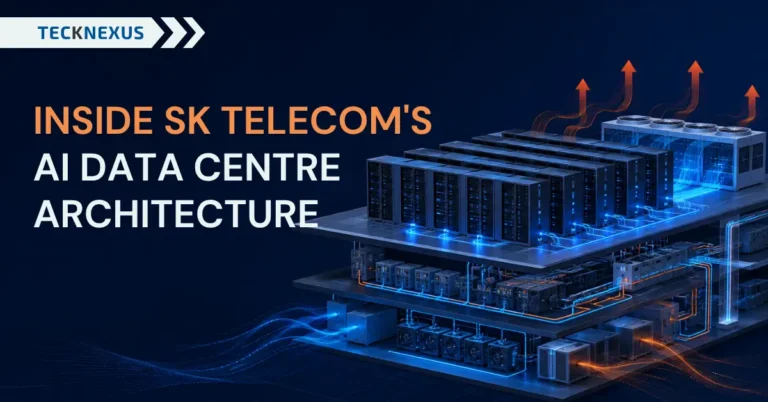
SK Telecom’s SK Hyper AI data centre unit, targeting 5 gigawatts of capacity by 2029 and 15 gigawatts by 2035, comes with unusually specific technical architecture detail: a multi-silicon compute platform pairing Arm’s AGI CPU with Rebellions’ AI inference accelerator, a CXL-based memory pooling architecture built with Panmnesia, and named power and cooling partners in Supermicro and Schneider Electric. TeckNexus examines what each layer reveals, and why this level of disclosed detail is a rare and useful reference point for anyone planning AI infrastructure at any scale.
Tech News & Insight
An analysis from Pegasystems, published via TM Forum, puts real unit economics against a claim worth taking seriously: falling per-token AI prices are masking rising total inference spend for telecom operators, driven by retrieval overhead (roughly 40% of tokens), agentic loops, and expanding context windows. TeckNexus examines the numbers, the latency and auditability costs that compound alongside direct spend, and the decision-tier routing governance model Pegasystems recommends as a structural fix rather than waiting for prices to fall further.
Tech News & Insight
The NGMN Alliance’s new report treats standards, security, architecture, operations, and governance as prerequisites for genuine Level 4 network autonomy — not items to backfill after automation is already deployed. TeckNexus examines why autonomy level and governance maturity are increasingly decoupled in real deployments, and how NGMN’s five-part framework gives enterprise buyers a more rigorous test to apply against vendors making AI-native or autonomous-network claims.

Your Brand. Our Intelligence Tools.

Capture leads at the point of evaluation. Talk to Us →

Sponsored by Palo Alto Networks
⚡ Utilities ⏱ 8 min ✓ Free
This tool is built and hosted by TeckNexus.
Launch Tool →
Whitepaper
This whitepaper explains how utilities can use secure AI-enabled private mobile networks to modernize operations, support distributed intelligence, improve resilience, and strengthen cybersecurity across critical infrastructure. It covers AI applications, private network advantages, zero trust principles, multilayered security architecture, and governance considerations for AI-ready utility environments....
Palo Alto Networks
Whitepaper
Non-terrestrial networks are rapidly evolving from experimental satellite systems into an increasingly important part of the global 5G connectivity landscape. This eBook, developed by Radisys in collaboration with TeckNexus, explores how 3GPP standardization, satellite architecture innovation, and software-driven network design are reshaping NTN deployment models. It examines the transition from...
Whitepaper
Private cellular networks are transforming industrial operations, but securing private 5G, LTE, and CBRS infrastructure requires more than legacy IT/OT tools. This whitepaper by TeckNexus and sponsored by OneLayer outlines a 4-pillar framework to protect critical systems, offering clear guidance for evaluating security vendors, deploying zero trust, and integrating IT,...

It seems we can't find what you're looking for.

The next evolution of Ciena’s DCOM: OOB management for diverse data center needs

Featured Content

Article & Insights
Scroll to Top
TECKNEXUS MWC BARCELONA 2027
MWC27 EXECUTIVE INSIGHTS PROGRAM

Industry voices. Ideas that move.

SIX MAGAZINES. SIX BIG CONVERSATIONS.
EDITION 01 Networks as Platforms
EDITION 02 AI in the Real World
EDITION 03 The Intelligent Enterprise
EDITION 04 The Future of AI
EDITION 05 Securing the Digital Future
EDITION 06 The Next Frontier

Ways to Participate

Contributed Article Complimentary for eligible MWC sponsors
Sponsored Article & Executive Q&A
Executive Video Interview