Two product launches from August 2026, from different carriers and aimed at different problems, point at the same underlying shift: physical security capabilities that industrial and critical-infrastructure sites have historically built and owned — drone detection, video analytics — are increasingly being offered as managed services riding on a carrier’s existing 5G network, rather than as standalone systems the site operator procures, deploys, and maintains itself.

Drone Detection as a Carrier-Delivered Service
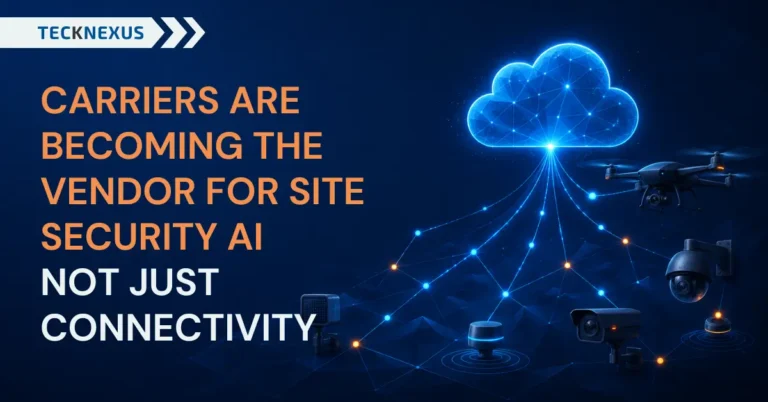
Lockheed Martin will offer a 5G-enabled drone detection service beginning next year, built on Verizon‘s network and incorporating technology from Nvidia, ODC, Keysight, and Lockheed’s own Astris AI subsidiary. The service model detail is the significant part here: this is not Lockheed Martin selling a drone detection system for a site operator to install and run, it’s a service delivered over Verizon‘s existing 5G infrastructure — meaning the site doesn’t need to build or own the network layer the detection system runs on, only subscribe to the capability. For airports, ports, utilities, and other sites where unauthorised drone activity is an increasing operational and safety concern, that’s a meaningfully lower barrier to adoption than a traditional owned-system procurement, which typically requires the site to fund, install, and maintain its own dedicated sensor and processing infrastructure regardless of whether drone incidents are frequent enough to justify that capital outlay on their own.
Video Intelligence Moves Further Into Managed Cloud
AT&T’s parallel move is a cloud-management layer added to an existing capability rather than a new product category. AT&T Video Intelligence with EdgeVis Cloud adds a cloud-managed administrative back-end to AT&T’s existing IoT Video Intelligence platform, centralising video monitoring and analytics administration in the cloud under AT&T’s operational oversight, while the existing platform continues to ingest footage and audio from site-level endpoints to generate the underlying data insights. The shift here is administrative and operational rather than purely technical: a site operator using this service is handing more of the ongoing management burden — configuration, monitoring, updates — to the carrier, rather than running that layer with in-house IT or security staff.
Why the Managed-Service Model Matters More Than Either Product on Its Own
Neither drone detection nor video analytics is a new capability — both have existed as standalone, site-owned systems for years, sold by specialist security vendors independent of any telecom relationship. What’s changed is the delivery model, and that shift carries real implications for how a site operator should be evaluating these capabilities going forward. A carrier-delivered, network-native security service changes the procurement conversation from which security vendor’s hardware and software should we buy, deploy, and maintain, to which carrier’s managed service should we subscribe to, and what does that carrier’s network reliability and coverage mean for the reliability of the security capability riding on top of it. The site’s security posture becomes partially dependent on network uptime and coverage in a way it wasn’t when the detection or analytics system was a standalone, locally hosted system with its own dedicated connectivity.
That dependency cuts both ways. For a site that already has strong 5G coverage from a carrier it trusts, subscribing to a security capability riding on that same network reduces the number of separate systems, vendors, and maintenance relationships the site has to manage — a real simplification, and one that likely lowers total cost of ownership relative to standing up a fully independent system from scratch. For a site that places a premium on air-gapped, fully independent security systems for critical infrastructure, or one still building out its network coverage, a standalone system remains the better fit for now, with a managed service worth revisiting as coverage matures — the right choice depends on the specific site’s existing infrastructure and priorities rather than one model being universally preferable.
What This Signals for Airport, Port, and Utility Security Procurement
For sites in the airport, port, and utility verticals evaluating physical security AI capabilities over the next procurement cycle, these two launches are worth treating as an early signal of where carrier product roadmaps are heading, not as a reason to default to a carrier-delivered service over a specialist standalone vendor. The right evaluation question isn’t which model is universally better, it’s whether the site’s existing carrier relationship and network coverage make a managed service delivered over 5G a genuine simplification for that specific site. Sites with a strong existing carrier relationship and reliable coverage are well positioned to capture real operational value from a managed service; sites earlier in their network buildout, or with a strong existing preference for independently owned infrastructure, may find a standalone system remains the better fit for now, with a managed service worth revisiting as their own network coverage matures.
The Broader Pattern These Two Launches Sit Inside
Neither launch is isolated. Carriers across the industry have spent the past two years extending their addressable market beyond raw connectivity into managed application layers running on top of it — video, IoT device management, and now physical security-specific capabilities like drone detection. The commercial logic is straightforward from the carrier’s side: connectivity pricing faces continual downward pressure as a largely commoditised product, while managed application services sitting on top of that connectivity carry meaningfully better margins and, just as importantly, deepen the customer relationship in ways that make switching carriers a more consequential decision than simply comparing coverage maps and per-gigabyte pricing. For a site operator, that same dynamic is worth recognising from the buyer’s side: subscribing to a carrier’s managed security service is not just a purchasing decision about that one capability, it’s a step toward a broader, stickier commercial relationship with that carrier across an expanding set of services, which is worth factoring into vendor selection alongside the immediate technical merits of the drone detection or video intelligence capability itself.
Explore the full TeckNexus Intelligence Platform — independent, buyer-neutral tools for private network and industrial AI decisions. https://tecknexus.com/intelligence/