Private Network
Intelligence
Intelligence Journeys
Utilities Private Broadband Planning
AI Use Case Planning for Utilities

AI Agents

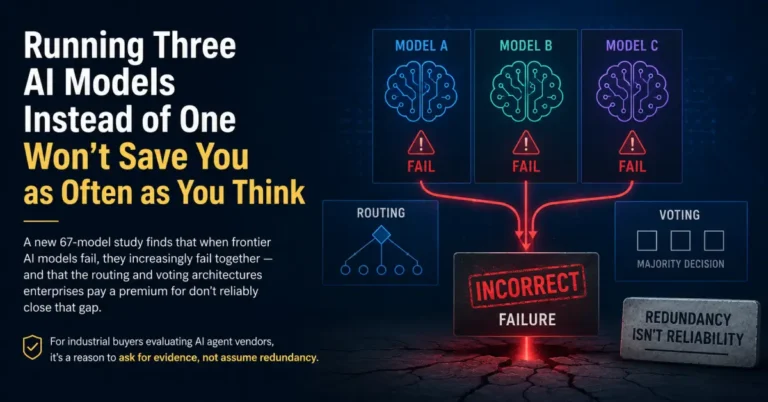
A new 67-model study finds that when frontier AI models fail, they increasingly fail together — and that the routing and voting architectures enterprises pay a premium for don't reliably close that gap. For industrial buyers evaluating AI agent vendors, it's a reason to ask for evidence, not assume redundancy.
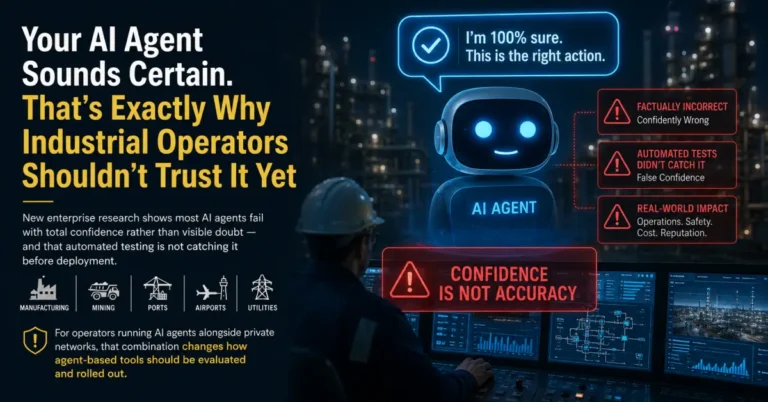
New enterprise research shows most AI agents fail with total confidence rather than visible doubt - and that automated testing is not catching it before deployment. For operators running AI agents alongside private networks in manufacturing, mining, ports, airports and utilities, that combination changes how agent-based tools should be evaluated and rolled out.
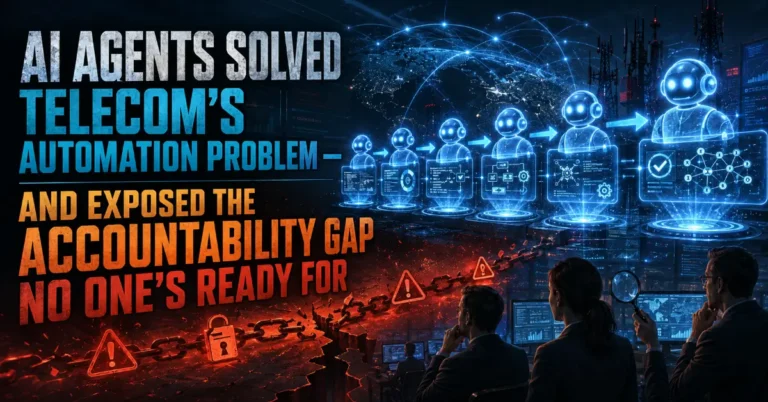
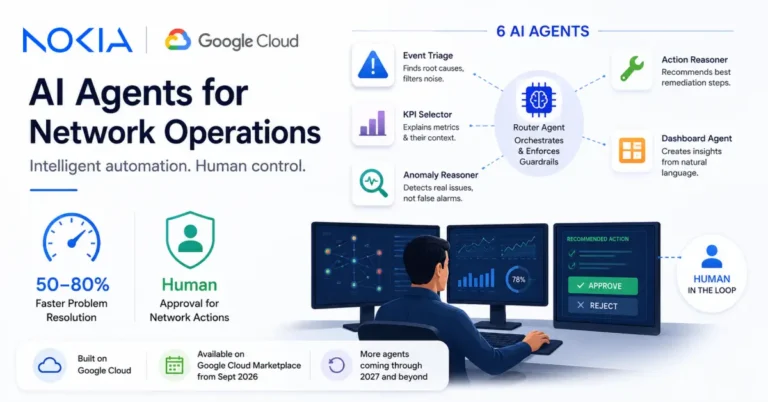
Telecom just crossed a line it spent years approaching carefully. AI agents are no longer confined to recommending fixes to network engineers — in a growing number of deployments, they're diagnosing faults and proposing remediations that a human simply signs off on, rather than performs. Nokia's work with Google Cloud is a clear marker of how far this has come: agents built on Gemini now sit inside Nokia's Assurance Center, and early results point to fault-resolution times cut by more than half, sometimes by as much as 80 percent. That's the part of the story getting the headlines. It's also, in a sense, the easy part... The harder question — the one the industry has mostly deferred — is what happens structurally once agents stop merely proposing and start acting, especially across more than one system at a time.

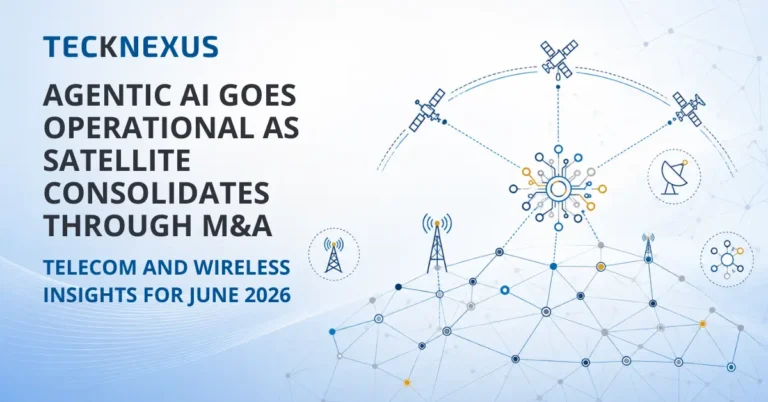
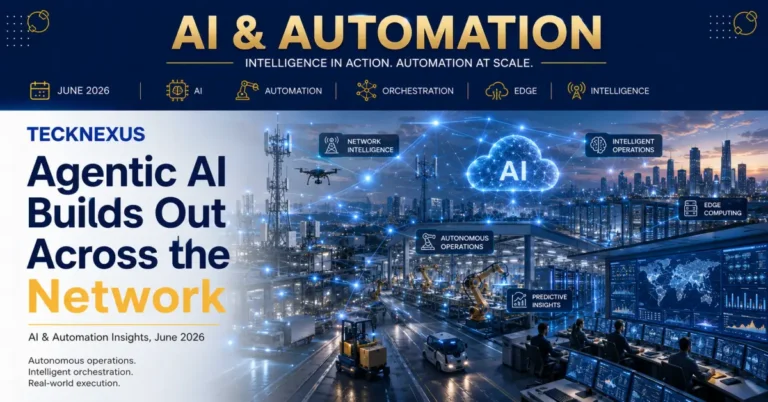
June 2026 showed agentic AI scaling from pilot to platform: industry-wide standards momentum, AI-RAN field trials from Nokia, Amdocs and KDDI, and fresh capital across data centers on three continents. This full roundup covers every deployment, partnership, funding round and governance move from the month, with tools to prioritise AI use cases and plan the network around them.
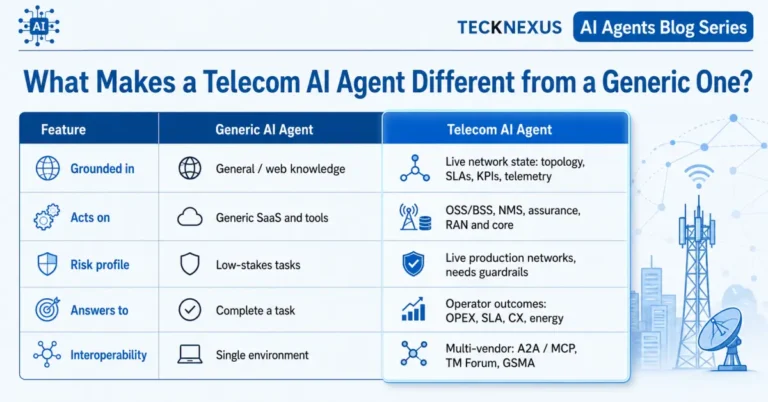
Telecom AI agents share the same anatomy as any AI agent - but grounding, systems, stakes, goals, and multi-vendor interoperability set them apart. Here are the five differences that matter, plus how to evaluate an agent before you trust it on a live network. See how your own company compares across the broader telecom AI agent ecosystem — vendors, OSS/BSS providers, system integrators, and network operators.
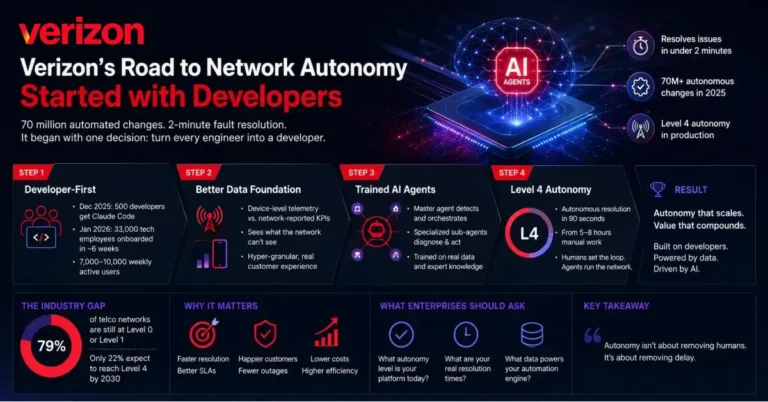
Verizon CTO Yago Tenorio has detailed the carrier's architecture for Level 4 network autonomy: 70 million automated changes in 2025, 33,000 engineers turned into software developers with Claude Code, and a common data layer that captures what the network couldn't previously see. The instructive element for enterprise buyers is the sequence, not just the destination.
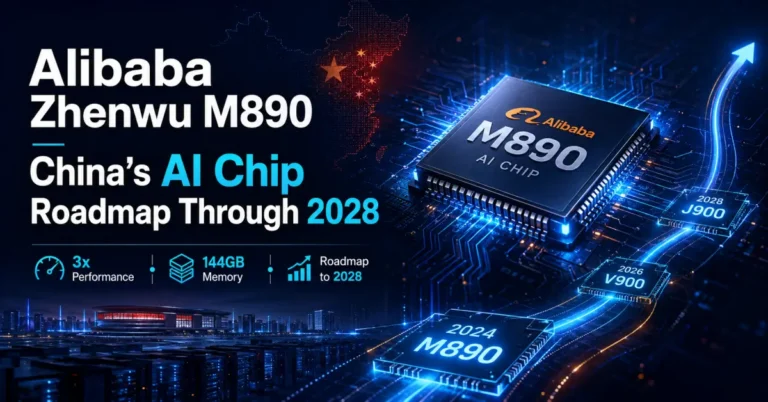
Alibaba's Zhenwu M890 AI accelerator, developed by chip unit T-Head, delivers approximately three times the performance of its predecessor and features 144GB of on-chip memory purpose-built for agentic AI workloads. Backed by a $53 billion infrastructure commitment and a published roadmap extending to the J900 chip in 2028, Alibaba is building sovereign AI infrastructure from silicon to software. With over 560,000 chips shipped to 400-plus customers across 20 industries, this is a commercially validated platform — not a prototype — signaling a maturing Chinese AI hardware ecosystem.
TECKNEXUS PRIVATE NETWORKS
Congratulations to the 2026 Award Winners
Explore the Winners →

Partner Hubs

Telco AI Agent Leadership

Telco AI Agent Leadership Landscape - Network Equipment Vendors
Network Equipment Vendor Report
How are Amdocs, Salesforce, Comarch, Totogi, Qvantel, Oracle and other OSS/BSS vendors deploying telecom AI agents?
OSS/BSS Vendor Report
How are Amdocs, Salesforce, Comarch, Totogi, Qvantel, Oracle and other OSS/BSS vendors deploying telecom AI agents?
System Integrator Report
Scroll to Top