Private Network
Intelligence
Intelligence Journeys
Utilities Private Broadband Planning
AI Use Case Planning for Utilities

AI Agents

Vodafone Business and Google Cloud expanded their $1 billion, ten-year partnership with two launches aimed squarely at small and mid-sized businesses: a managed detection and response service and an agentic AI concierge. Vodafone Business and Google Cloud are packaging hyperscaler security analytics and agentic AI into carrier-delivered services that SMBs can adopt quickly. The launch markets, technology choices, and managed wrap indicate a pragmatic path to better protection and always-on customer engagement. Leaders should pilot now with tight KPIs, validate compliance early, and build an integration roadmap that scales across markets as the offer expands through Europe.
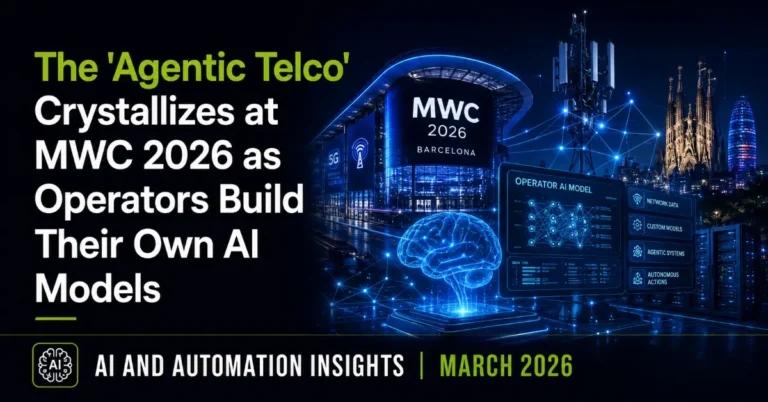
March 2026's roundup: GSMA, Google Cloud, Huawei, and AWS all converge on an "agentic telco" framing at MWC Barcelona, SoftBank and SK Telecom build proprietary telecom-specific AI models and infrastructure, and physical AI reaches airports, drones, and network edge sites — with AI-RAN and connectivity infrastructure covered separately in our companion Advanced Connectivity Insights, March 2026.
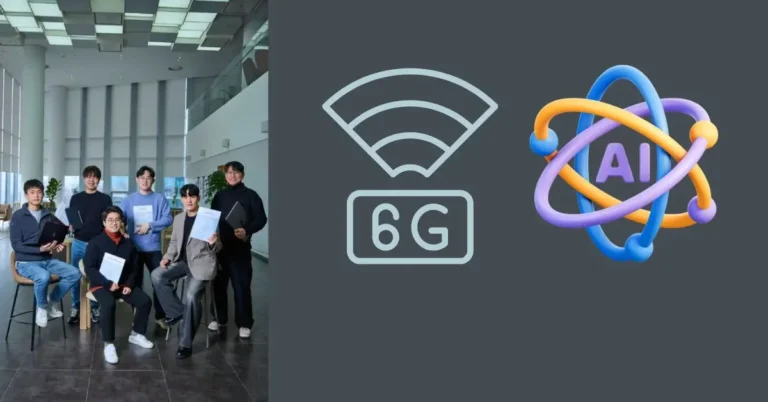
SK Telecom introduced ATHENA—an architecture grounded in AI-native operations, Zero Trust security, hyper-connectivity, openness, and cloud-native design—to guide mid- to long-term evolution across RAN, core, transport, and network data platforms. The operator positions “AI for network” and “network for AI” as dual tracks: the former embeds AI into decision loops for autonomous optimization, while the latter tunes the network fabric to serve AI workloads efficiently. SK Telecom will showcase related technologies at MWC Barcelona 2026, including AI agents for networks, AI-RAN for combined connectivity and compute, device-side AI for antenna tuning, and integrated sensing-and-communications.
Nokia and Amazon Web Services (AWS) are bringing agentic AI to 5G-Advanced network slicing, moving closed‑loop, intent-based services from PowerPoint to live pilots with du and Orange. The partners unveiled an agentic AI-powered slicing solution that fuses Nokia’s RAN-to-core slicing, AirScale radio, and MantaRay SMO with AWS’s Bedrock AI platform and EKS Hybrid Nodes to turn external context—events, traffic, maps, weather—and live network KPIs into real-time policy decisions. The result is adaptive, premium slices provisioned when and where they’re needed, without manual reconfiguration.
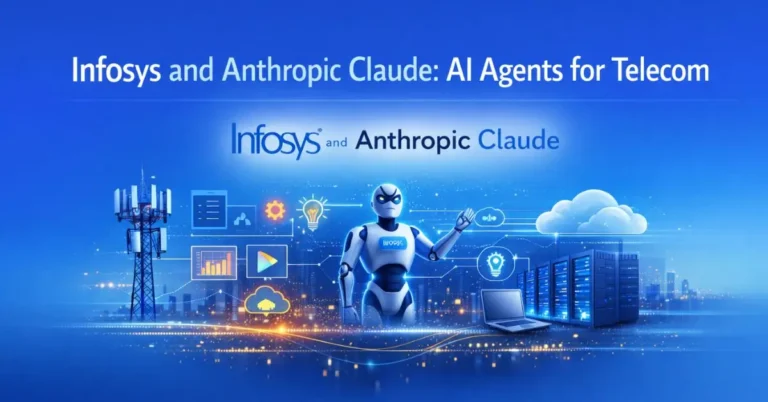
A new partnership between Infosys and Anthropic brings agentic AI into regulated, process-heavy industries, with telecom squarely in scope. Infosys will integrate Anthropic’s Claude models and Claude Code with its Topaz portfolio to build and operate enterprise-grade AI solutions across telecom, financial services, manufacturing, and software engineering. The collaboration emphasizes agentic AI—systems that can plan, call tools, and execute multi-step workflows with oversight—delivered with the controls, auditability, and policy enforcement that regulated sectors demand. Pairing Infosys’s domain depth with Claude’s reasoning and long-context capabilities gives operators a path to pragmatic automation that respects regulatory, safety, and transparency requirements.
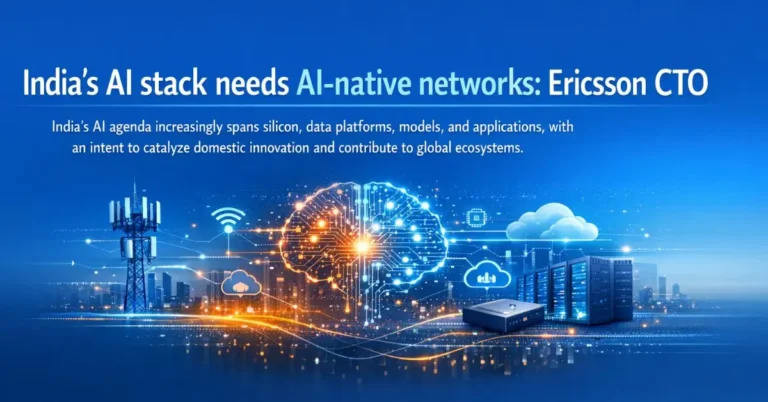
India’s AI agenda increasingly spans silicon, data platforms, models, and applications, with an intent to catalyze domestic innovation and contribute to global ecosystems. For telecom leaders, the message is clear: AI is not a bolt-on capability but a system-level transformation that touches RAN, core, transport, cloud, and the enterprise edge. The AI economy runs on connectivity—low-latency access to data, assured bandwidth, location-aware processing, and programmable control. The operators that can fuse connectivity, compute, and data into a cohesive platform will set the pace for India’s next wave of digital growth.

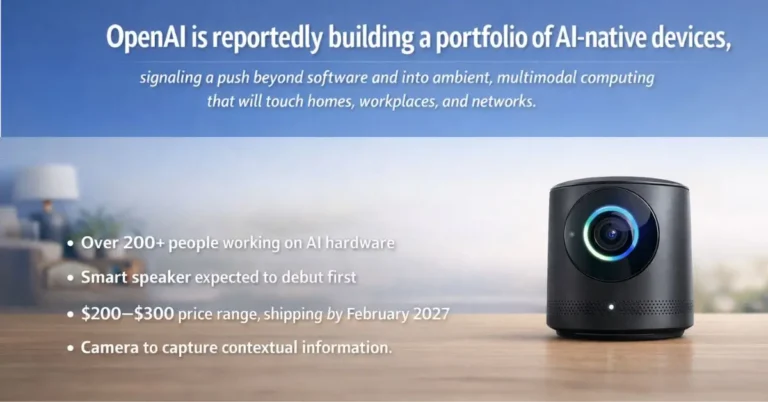
OpenAI is reportedly building a portfolio of AI-native devices, signaling a push beyond software and into ambient, multimodal computing that will touch homes, workplaces, and networks. Multiple reports indicate OpenAI has over 200 people developing a family of AI-enabled hardware, with a smart speaker expected to debut first. Early guidance points to a price in the $200–$300 range and a ship window no earlier than February 2027. The device is said to include a camera to capture contextual information about users and surroundings—an explicit bet on multimodal AI that fuses voice, vision, and environment for richer interactions.
Ericsson and Mistral AI are aligning telecom-grade engineering with customizable foundation models to push AI deeper into network operations and RAN automation. The pairing marries Mistral AI’s fast-evolving model stack with Ericsson’s domain expertise across radio, cloud-native networking, and service management. For European operators, it signals a path to AI capabilities that respect data residency, security, and compliance expectations under the EU AI Act without ceding control to generic, hyperscaler-led platforms. The outcome operators want is simple: measurable gains in performance, efficiency, and resiliency with governance baked in.
Telefónica and Nokia are piloting agentic AI to make network APIs easier to expose, discover, and consume, aligning with GSMA Open Gateway’s push for interoperable, developer-ready telecom capabilities. Industry efforts like GSMA Open Gateway and CAMARA have raised awareness of standardized network APIs, but uptake hinges on practical tooling that abstracts network complexity while preserving telco-grade security and control. Telefónica and Nokia are now testing agent-to-agent orchestration and context-sharing protocols to let AI “agents” reliably find, chain, and call network functions in a repeatable way.
T-Mobile is introducing a network-native AI translation service that activates during voice calls, signaling a new phase where AI runs inside the mobile network rather than on apps or devices. T-Mobile announced a beta of Live Translation, a voice-call feature that translates conversations in over 50 languages by activating an AI agent within its 5G Advanced network. The service is initiated by the T-Mobile subscriber using *87* during a call; only one caller needs to be on T-Mobile, and it also works while roaming on supported networks.
LG Uplus is moving from rule-based automation to closed-loop autonomy, using AI agents and digital twins to accelerate toward a fully autonomous network by 2028. Its core platform, the AI Orchestration Nexus (AION), is already automating repetitive operations and has contributed to a reported 70% reduction in customer complaints about network quality—an early signal that the approach is translating into measurable outcomes. The company plans to showcase these capabilities at MWC Barcelona 2026, underscoring growing operator interest in operational AI as 5G matures and traffic patterns become more volatile.
TECKNEXUS PRIVATE NETWORKS
Congratulations to the 2026 Award Winners
Explore the Winners →

Partner Hubs

Telco AI Agent Leadership

Telco AI Agent Leadership Landscape - Network Equipment Vendors
Network Equipment Vendor Report
How are Amdocs, Salesforce, Comarch, Totogi, Qvantel, Oracle and other OSS/BSS vendors deploying telecom AI agents?
OSS/BSS Vendor Report
How are Amdocs, Salesforce, Comarch, Totogi, Qvantel, Oracle and other OSS/BSS vendors deploying telecom AI agents?
System Integrator Report
Scroll to Top