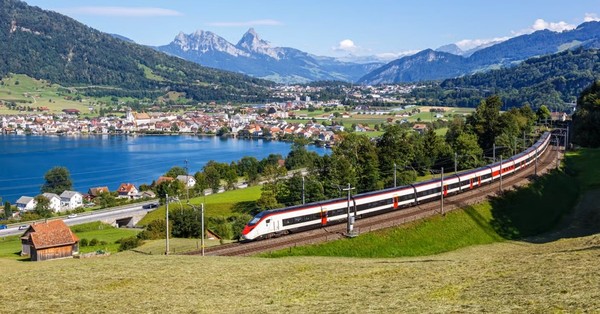
Ericsson IMS/VoLTE bridges GSM-R to secure Swiss rail voice post-3G
Switzerland’s SBB has deployed an Ericsson IMS/VoLTE platform that interworks with legacy GSM-R, delivering Europe’s first live bridge between public 4G voice and mission-critical railway communications.
Deployment overview and results
Ericsson and SBB completed a nationwide IMS/VoLTE integration that extends reliable voice communications across Switzerland’s 3,100 km rail network and removes dependency on public 3G roaming for coverage gaps outside GSM-R footprints.

The program went from platform installation in mid-2023 to first VoLTE-to–GSM-R calls in early 2024, then through field trials certified by the Swiss Federal Office of Transport in January 2025, before going live nationwide ahead of schedule in April 2025.
By December 2025, about 450 trains and 1,000 operational devices had migrated to VoLTE, and SBB upgraded onboard 4G connectivity on around 1,000 trains to support the transition.
The IMS core integrates multi-supplier elements and preserves EIRENE features such as functional numbering, group calls, emergency stop calls, and onboard announcements, ensuring safety-critical behavior is maintained.
3G shutdown urgency and business impact
With Swisscom retiring 3G and European operators accelerating legacy shutdowns, railways that still rely on 2G/3G fallbacks face service risk unless they move voice onto 4G or prepare for FRMCS on 5G.
This project provides a pragmatic bridge: it keeps GSM-R in service for rail-specific features while enabling public VoLTE to cover gaps, smoothing the path to a 5G-based FRMCS in the next cycle.
It also demonstrates that mission-critical requirements can be met over modern IP telephony when engineered with the right interworking, governance, and testing.
IMS/VoLTE–GSM-R interworking architecture
The solution links standards-based IMS and VoLTE with GSM-R using interworking functions that translate signaling and preserve rail operational behavior.
IMS core integration and VoLTE interworking
Ericsson supplied and integrated a central IMS core that anchors VoLTE services across public 4G networks while mediating calls to GSM-R endpoints for controllers, drivers, and operational staff.
The system consolidates components from multiple suppliers behind the IMS core, simplifying operations and creating a consistent policy layer for numbering, routing, and service logic.
By moving to IP-based telephony, SBB builds a service foundation that can evolve toward FRMCS without a disruptive cutover.
EIRENE safety features preserved
Railway-specific functions specified by EIRENE are retained, including functional numbering for roles, broadcast and group communications, emergency stop calls, and integration with onboard announcement systems.
These capabilities are critical for operations and incident response and are delivered with deterministic behavior even when calls traverse public VoLTE and GSM-R domains.
Train upgrades and operations readiness
To ensure consistent performance, SBB upgraded onboard 4G systems on roughly 1,000 trains and trained operational teams to support the migration and new procedures.
The staged approach reduces change risk and aligns device readiness, network behavior, and operational processes.
Deployment timeline, certification, and stakeholders
A phased rollout, strong governance, and regulatory oversight underpinned the accelerated delivery.
Key milestones and regulatory certification
The deployment began with platform installation in June 2023, progressed to the first end-to-end VoLTE-to–GSM-R calls in early 2024, and completed pilot train field tests in January 2025 under certification by the Federal Office of Transport.
Nationwide service went live in April 2025, earlier than planned, and adoption continued through the year, reaching hundreds of trains and operational devices by December 2025.
Stakeholders and roles
SBB led the operational requirements, Ericsson delivered the IMS platform and integration, and Swisscom provided the public mobile network on which VoLTE runs as 3G retired.
The framework aligns rail safety standards with telecom-grade availability, creating a reference model for cross-industry programs where public networks support mission-critical use cases.
Strategy: bridging GSM-R to FRMCS and 5G
The Swiss project offers a blueprint to sustain voice today while building a credible runway to FRMCS and 5G tomorrow.
Practical bridge to FRMCS on 5G
Most European railways plan to replace GSM-R over the next decade, but spectrum, standards, device ecosystems, and funding cycles vary by country.
An IMS/VoLTE interworking approach lets operators stabilize services immediately, reduce reliance on sunsetting networks, and phase migration to FRMCS when ready.
Opportunities for MNOs and solution vendors
Mobile operators can monetize public 4G as a carrier-grade platform for critical voice with clear SLAs, priority handling, and agreed coverage obligations along rail corridors.
Vendors that prove multi-supplier integration, E2E testing, and standards compliance will be better positioned for FRMCS tenders and lifecycle transitions.
Next steps and risk watchpoints
Execution details over the next 12–24 months will determine how repeatable this model is across markets.
QoS and resilience on public 4G VoLTE
Monitor service KPIs in tunnels and rural corridors, redundancy design, priority/preemption policies, and fallbacks between VoLTE and GSM-R during incidents or maintenance windows.
FRMCS pilots and interworking roadmap
Track FRMCS readiness across devices, radio trials, and how interworking profiles evolve to bridge EIRENE services with 5G-based mission-critical frameworks.
GSM-R lifecycle and decommission planning
Watch asset retirement schedules, dual-running strategies, and the timing for decommissioning legacy nodes without exposing operational risk.
Recommendations for rail operators, MNOs, and vendors
Rail operators, mobile networks, and vendors should act now to lock in continuity and de-risk the shift to 5G-era rail communications.
Actions for rail infrastructure managers
Audit GSM-R coverage and identify operational blackspots; model traffic and priority classes; and define interworking requirements for functional numbering, group calls, and emergency procedures.
Stand up an IMS testbed with your integration partner, certify end-to-end behavior with the national transport authority, and sequence trainborne upgrades and staff training.
Actions for mobile network operators
Map and harden 4G coverage along rail corridors, implement priority and preemption for railway traffic, and agree SLAs that reflect mission-critical thresholds.
Prepare for FRMCS-era features such as network slicing or equivalent QoS isolation, lawful intercept alignment, and cross-border continuity where applicable.
Actions for vendors and integrators
Offer open, standards-aligned interworking, rigorous interoperability testing, and lifecycle roadmaps that extend from GSM-R interop to native FRMCS.
Provide tools for monitoring, incident simulation, and regression testing so railways can sustain certification through change cycles.
Ericsson and SBB have shown that mission-critical rail voice can run over VoLTE today without compromising safety, creating a clear, lower-risk path toward FRMCS on 5G when the ecosystem is ready.